Ryugyong Hotel
by the TopOfHotel team
Ryugyong is the 105-floor pyramid that's been Pyongyang's skyline icon for nearly 40 years without ever hosting a single overnight guest — a landmark to photograph, not a hotel to book.
Ryugyong is the 105-floor pyramid that's been Pyongyang's skyline icon for nearly 40 years without ever hosting a single overnight guest — a landmark to photograph, not a hotel to book.
In-Depth Review
Rooms and decor
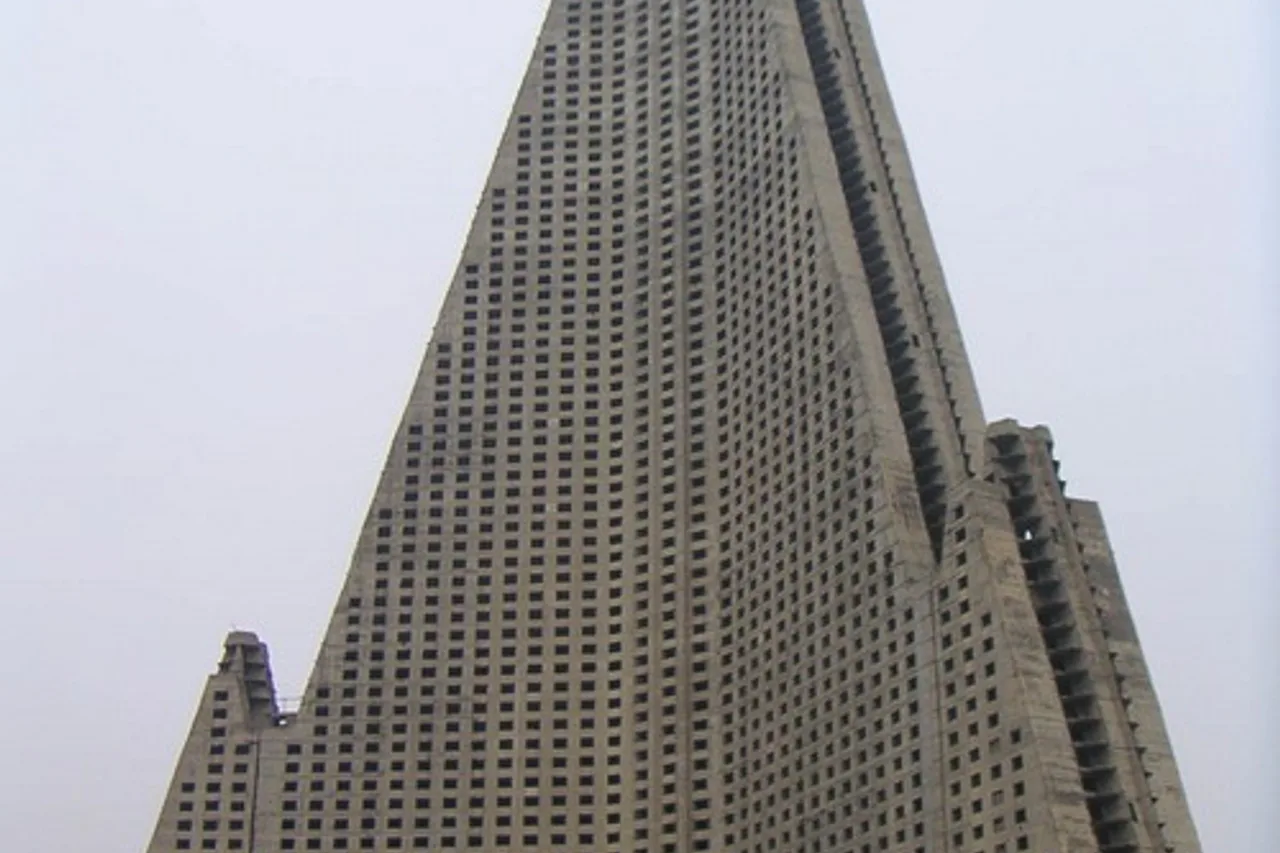
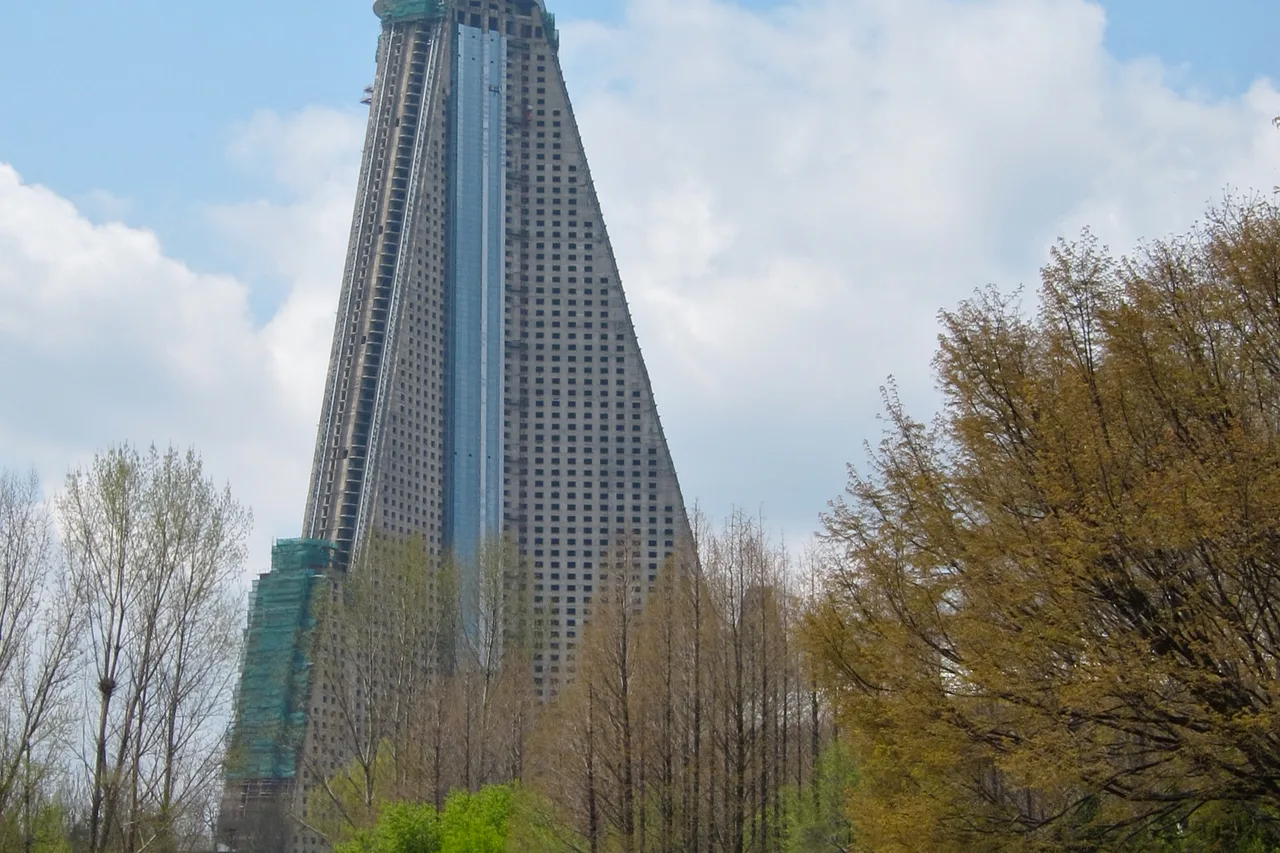
There are no rooms to review. That's the honest opening line, because Ryugyong Hotel has never accepted a single overnight guest in nearly 40 years. The original blueprints called for roughly 3,000 rooms across 105 floors, five rotating restaurants stacked in the cone at the top, ballrooms, a swimming pool, and conference space — all wrapped inside a three-sided pyramid 330 metres tall. The design came from Baikdoosan Architects & Engineers in the late 1980s, and the choice of a pyramid wasn't only symbolic. The three wings angle inward at 75 degrees, which made the shell structurally rigid and visually unmistakable from any angle in the city. What you actually see today, almost four decades later, is the outer envelope — finished, glassed, lit at night — and an interior that remains a concrete skeleton. Lifts run only to a handful of floors used by maintenance crews. Plumbing and electrical fit-out is incomplete. Foreign diplomats who have requested tours have been politely refused.
Food and amenities
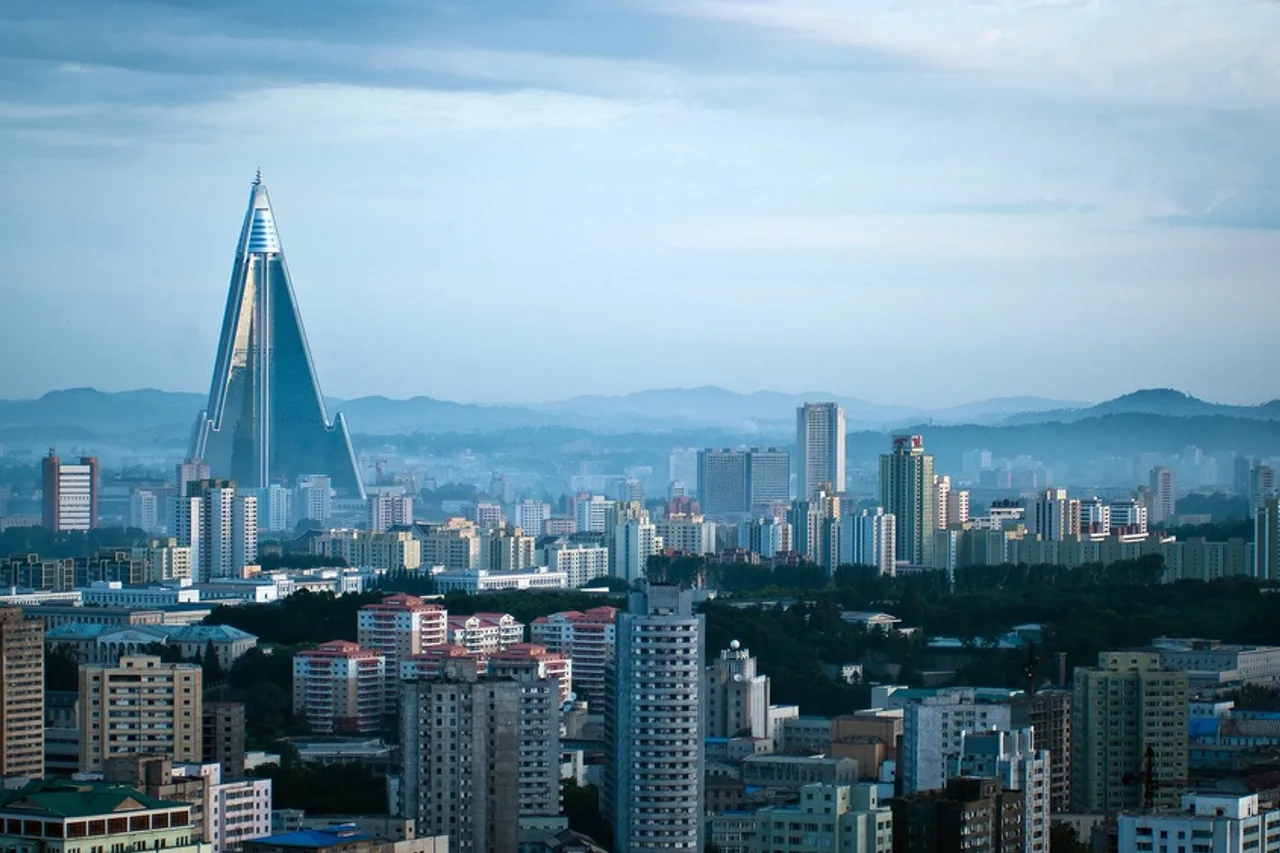
Again — none of the planned five rotating restaurants, none of the ballrooms, none of the spa or pool ever opened. The amenity worth flying for, if any, is the exterior. Since 2008, the building has been wrapped in green reflective glass installed by Egypt's Orascom in partnership with the state, transforming what foreign press had spent two decades nicknaming the Hotel of Doom into a building that genuinely catches light. The skin shifts colour through the day — pale blue in early morning, deep emerald around noon, amber at sunset. Since 2018, the tower has worn an LED light wrapper that projects flags, doves, fireworks, and propaganda animations against the night sky. Tour groups time their evening transfers to catch the show; locals treat it as part of the city's skyline routine. The only food and drink you'll get here is whatever your guide packs in the van.
Location and getting there
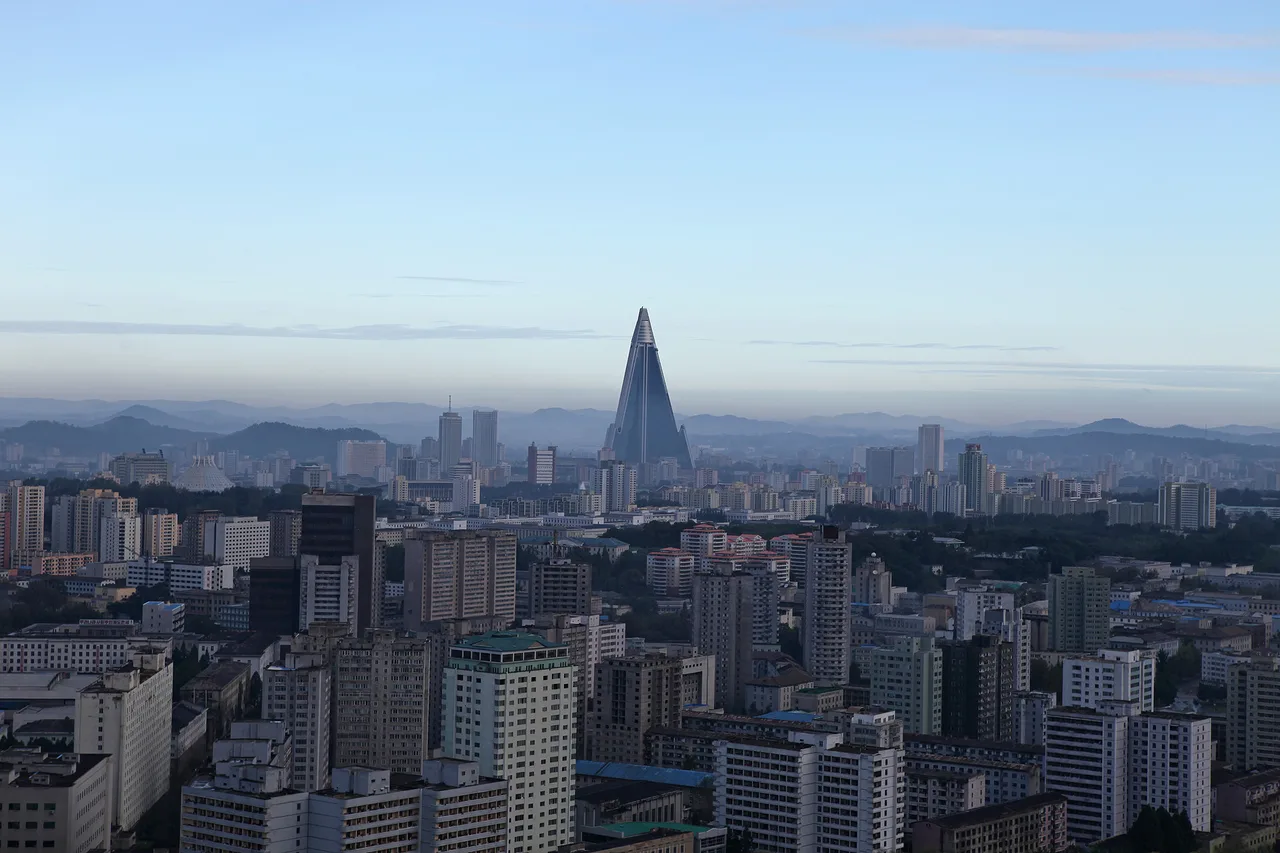
Ryugyong sits in Potonggang district, on the west side of the river that shares the name, about 3 km from Kim Il-sung Square in the city centre. The closest metro stop is Konguk on the Chollima line, roughly 1 km away, though foreign visitors are almost never allowed on the metro unaccompanied. The surrounding blocks are a mix of high-rise apartments, riverside parks, and government buildings — pleasantly low traffic compared with central Pyongyang. The standard tourist approach is by van from your hotel (usually Yanggakdo or Koryo), pulling up at a designated photo stop across the river. From that single vantage point you also catch the Potonggang's surface reflection on still days. From here, your tour will typically continue to the Juche Tower across the Taedong, the Arch of Triumph (taller than the Paris original), Munsu Water Park, or one of the metro stations decorated with mosaics of Korean history — all within a 10-15 minute drive of Ryugyong, which is why every approved tour itinerary loops past this building at some point.
Things to know before booking
Bluntly, to help you decide — you cannot book this hotel. It has been closed to all guests since construction began in 1987, and there is still no official opening date. The interior remains incomplete: lifts, plumbing, and electrical systems are not finished, and the tower retains its Guinness title of largest unoccupied building on Earth. If you want a real bed in Pyongyang, the standard tour options are Yanggakdo International Hotel (the 47-floor island tower most visitors use) or Koryo Hotel (the twin-tower property in the city centre near Pyongyang Station). Approaching Ryugyong itself is also heavily restricted — foreigners cannot enter the construction perimeter, and all photography happens from state-assigned vantage points across the river. Reaching Pyongyang requires an approved tour operator, government visa pre-approval (typically several weeks), and acceptance that most Western governments still rate North Korea at the highest travel advisory tier (do not travel). A 2024 report mentioned the government negotiating with foreign investors about converting parts of the tower into a casino, but nothing has been confirmed publicly.
Our take
We include Ryugyong in this Pyongyang list as a historical landmark, not as a place you can stay. The 105-floor pyramid that has dominated the western skyline for nearly four decades is the single most recognisable shape in the country, and the story behind it — Soviet-era ambition, 16 years of bare concrete, an Egyptian rescue in 2008, LED lights in 2018, still no opening — is genuinely one of the most unusual architectural narratives of the 20th century. If you are an adventurous traveller who has secured a place on an approved tour, do not skip the photo stop on the Potonggang River bank in late afternoon light. The shot of green glass turning amber against a purple sky is one you simply cannot reproduce anywhere else on Earth. Our symbolic rating is 8.5/10 as a landmark — best suited to history buffs, architecture obsessives, and travellers who love the story behind the structure. For an actual room, look at the other entries on this list.
Score Breakdown
Assessed by our editorial team from data and real guest reviews
The Honest Verdict — pros & what to know
- The single most recognisable landmark in Pyongyang — a three-sided pyramid 330 metres tall, visible from almost any street in the city and used as a navigation anchor by both locals and tour groups.
- The green reflective glass skin installed in 2008 shifts colour through the day — cool blue in the morning, emerald at midday, amber at sunset. Photographers love the colour swing.
- Since 2018, LED light shows wrap the tower at night with animated flags, doves, and fireworks — now the most photographed nighttime scene in Pyongyang.
- The story is genuinely unmatched: construction started in 1987, halted in 1992 after the Soviet collapse, restarted in 2008, and the building still holds the Guinness record for the largest unfinished building on Earth.
- Located in Potonggang on the western side of the city, within easy reach of Kim Il-sung Square, Juche Tower, and the Chollima metro line — easy to slot into a half-day touring loop.
- It has never opened. No rooms, no booking system, no functional lifts or full utilities — and despite nearly four decades and multiple restart reports, there is still no announced opening date.
- Foreign visitors cannot approach the building. Photography is permitted only from state-approved vantage points — typically across the Potonggang River or wherever your government-assigned guide tells you to stand.
- Just reaching Pyongyang is heavily restricted: most Western governments rate North Korea at the highest travel advisory tier (do not travel), entry is permitted only through state-approved tour operators, and visa processing can take weeks.
Who It’s For
Match Score by travel style
Amenities
Location & Nearby Spots
Things to do near Pyongyang
Day tours, attraction tickets and experiences around Pyongyang — book ahead on Klook with mobile e-tickets.
See activities in PyongyangAffiliate link — we may earn a commission at no extra cost to you.
Insider Tips
- Shoot from the Potonggang River bank about an hour before sunset — the green glass turns amber against a purple sky and you get the building's reflection on the water.
- If your tour overnights in Pyongyang, ask the guide to route past Ryugyong after dark — the LED light show usually starts about an hour after sunset and runs for 20-30 minutes.
- Don't bother asking to go inside. Even foreign diplomats are turned away; the only realistic photo is exterior, from across the river, at the spot your guide picks.