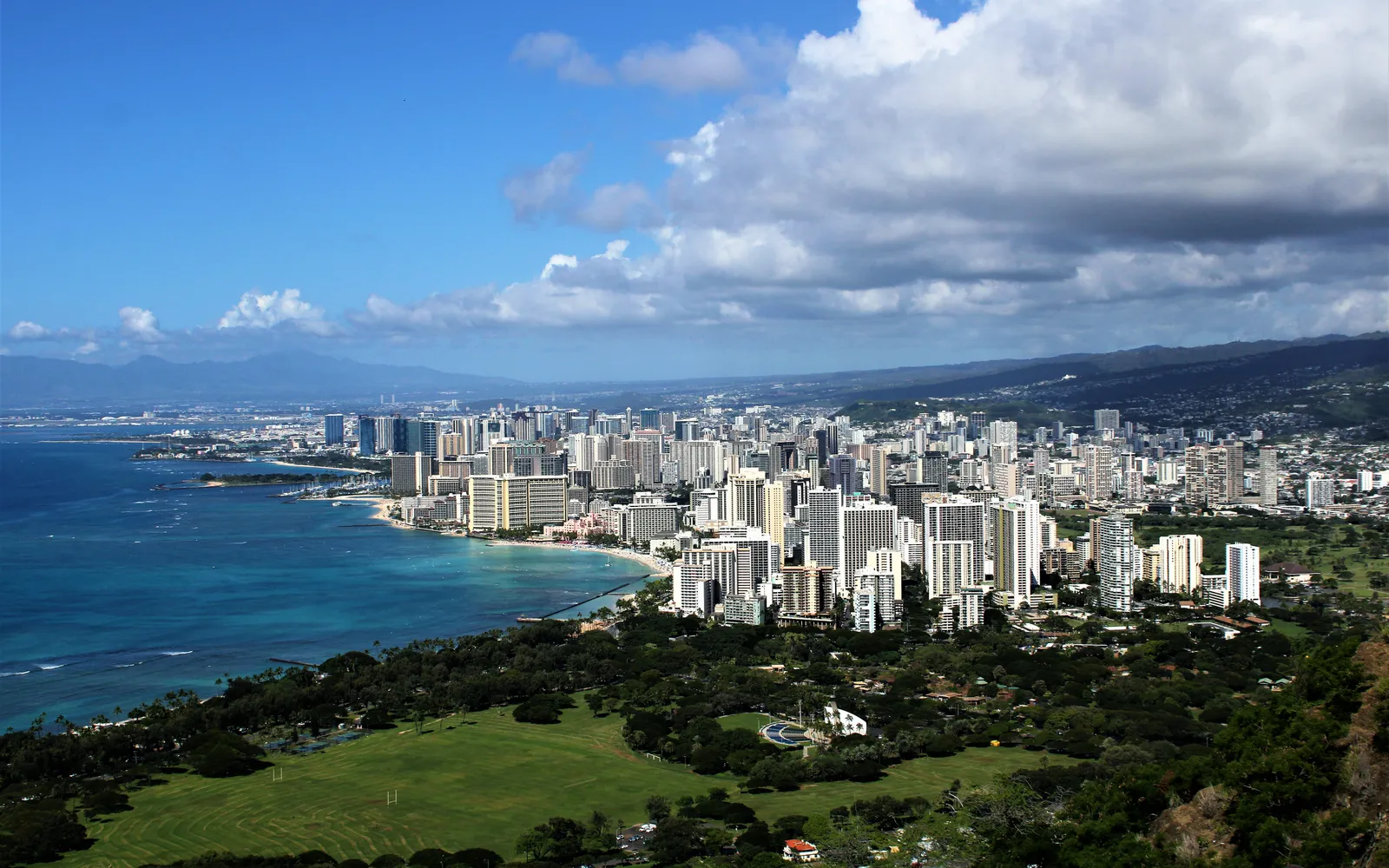
Hawaiian food is a story of cultural layering — indigenous Polynesian people, plantation workers from Japan, China, the Philippines, and Portugal all left their mark on the island kitchen. Poke may have become a global trend, but eating it in Honolulu is the original article, and the difference in quality is stark. Prices in Honolulu run about 30–40% higher than the US mainland, because virtually everything ships in by sea.
 #1
#1 Poke Bowl
An indigenous Hawaiian dish that Polynesian people ate for centuries before it became a global food trend. The word <em>poke</em> means 'to cut crosswise' in Hawaiian. Ahi (yellowfin tuna) or octopus is cubed and tossed with shoyu, sesame oil, Hawaiian sea salt, green onion, and seaweed. Poke in Honolulu tastes fresher than anywhere else on earth because the fish comes off the boat every morning. Prices run about $12–18 per pound at a local supermarket.
- Head to Foodland Farms or Times Supermarket instead of a beachfront restaurant — the poke is equally fresh at half the price.
- Order shoyu poke (soy sauce style) as the classic first choice, then move on to spicy ahi or kimchi poke.
- Ask for Hawaiian sea salt on top if the shop carries it — the flavor difference compared with ordinary table salt is immediately noticeable.
 #2
#2 Loco Moco
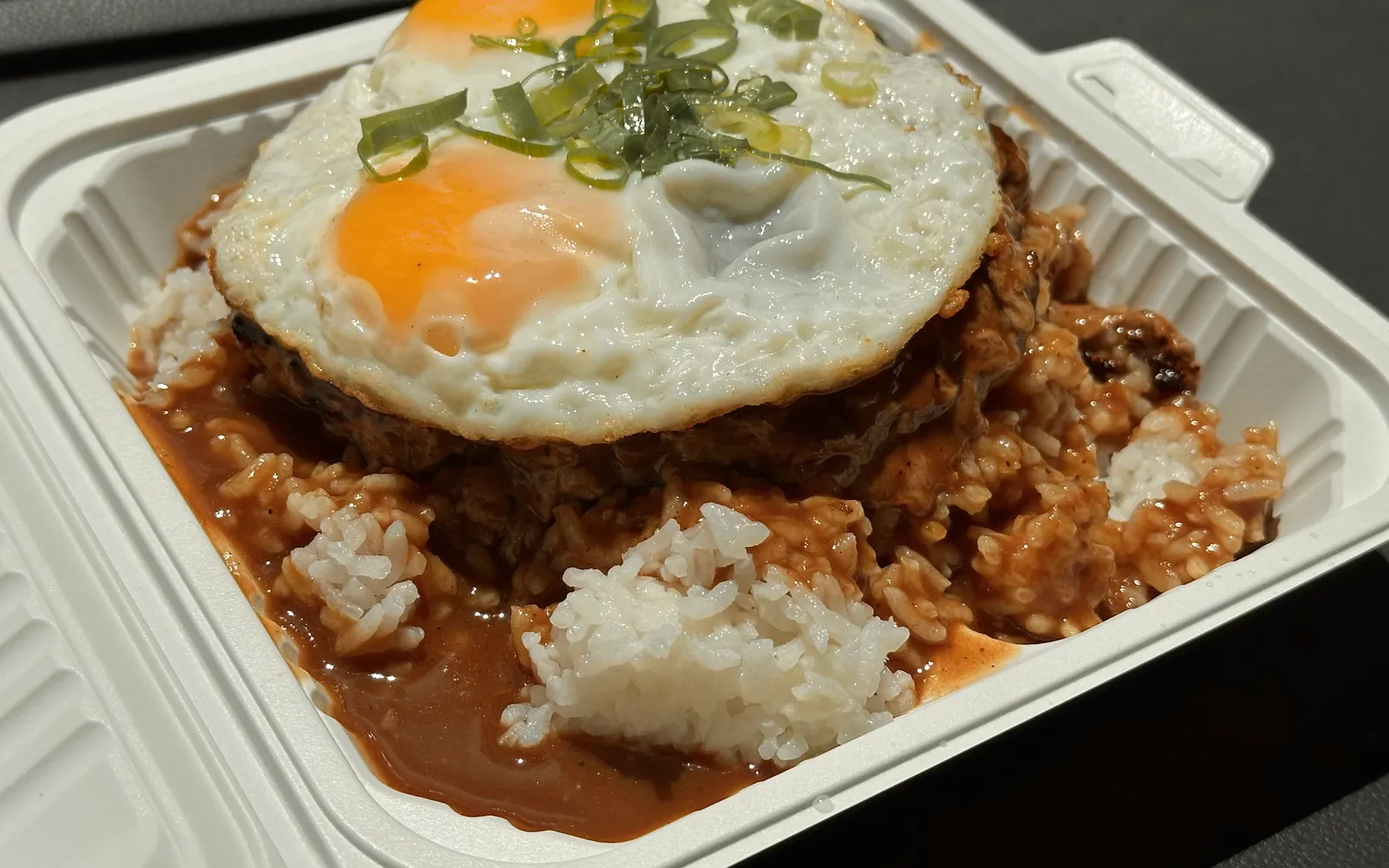
A Hawaiian comfort dish invented in 1949 in Hilo on the Big Island, originally designed to give teenagers a filling, cheap meal. A base of white rice holds a beef hamburger patty, one or two fried eggs, and a plate-covering pour of brown gravy. The flavors are unpretentious and deeply satisfying — this is Hawaii's soul food. Some restaurants offer deluxe versions with mushrooms, sautéed onions, or chorizo. Expect to pay around $12–16 per plate.
- Order the eggs over easy so the yolk runs down into the gravy — that combination is the whole point.
- Liliha Bakery is open 24 hours and is the classic spot locals actually go to: low prices, no-frills atmosphere.
- If you are very hungry, a double burger patty costs only $2–3 more but makes a real difference.
 #3
#3 Spam Musubi
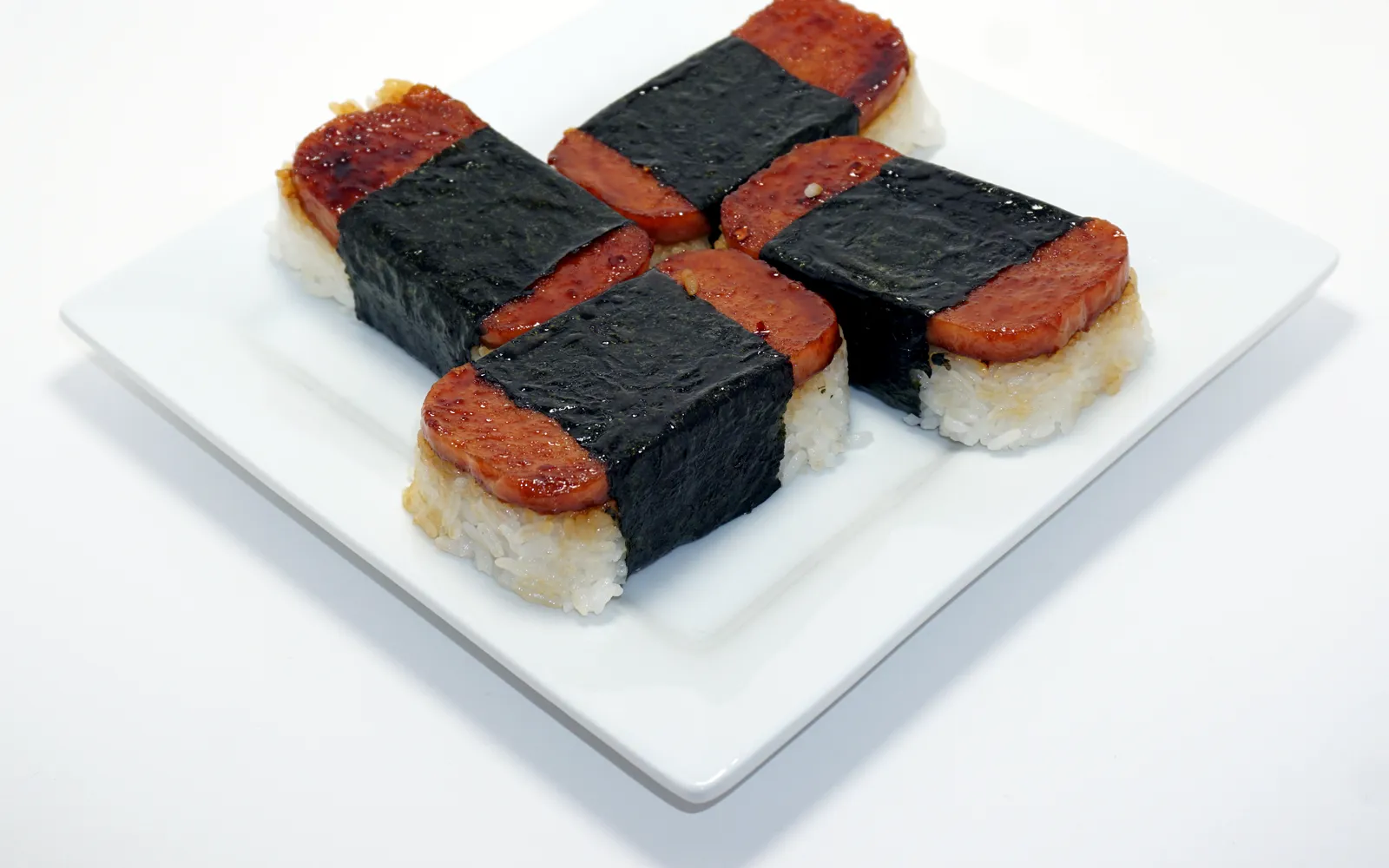
A Hawaiian rice snack born from the collision of Japanese onigiri culture and the Spam craze left over from World War II — Hawaii is the highest per-capita Spam-consuming state in the US. Compressed Japanese rice is topped with a slice of Spam pan-fried in teriyaki sauce, then wrapped in nori. At $1.50–3 at a 7-Eleven or Family Mart, it is one of the most cost-efficient snacks on the island. Eat it warm.
- Hawaii's 7-Elevens stock fresh spam musubi every morning from 6:00 a.m., kept warm in a case — grab it fresh rather than cold.
- Try the furikake spam musubi (rice mixed with dried seaweed flakes), available at Musubi Cafe in Ala Moana.
- Buy a couple as breakfast before a long day of sightseeing — cheapest calories on the island and filling enough to carry you through midday.
 #4
#4 Shave Ice
Hawaiian shave ice differs from ordinary shaved ice because the block is shaved to an almost powdery, snow-like texture — no gritty crunch. Traditional Hawaiian syrups are made from tropical fruits: guava, lilikoi (passion fruit), coconut, and strawberry. The most popular build adds vanilla ice cream and azuki beans (Japanese-style) buried in the center. Matsumoto's on the North Shore is the most famous shop, but the lines are long; Waikiki shops are far more convenient.
- Request ice cream inside and azuki beans hidden in the center for the authentic version — not just ice with syrup poured on top.
- Waiola Store in Moiliili is a local neighborhood shop with better flavor than most Waikiki spots, lower prices, and shorter queues.
- Eat immediately after receiving it — the ice melts fast in Honolulu's afternoon heat.
 #5
#5 Plate Lunch
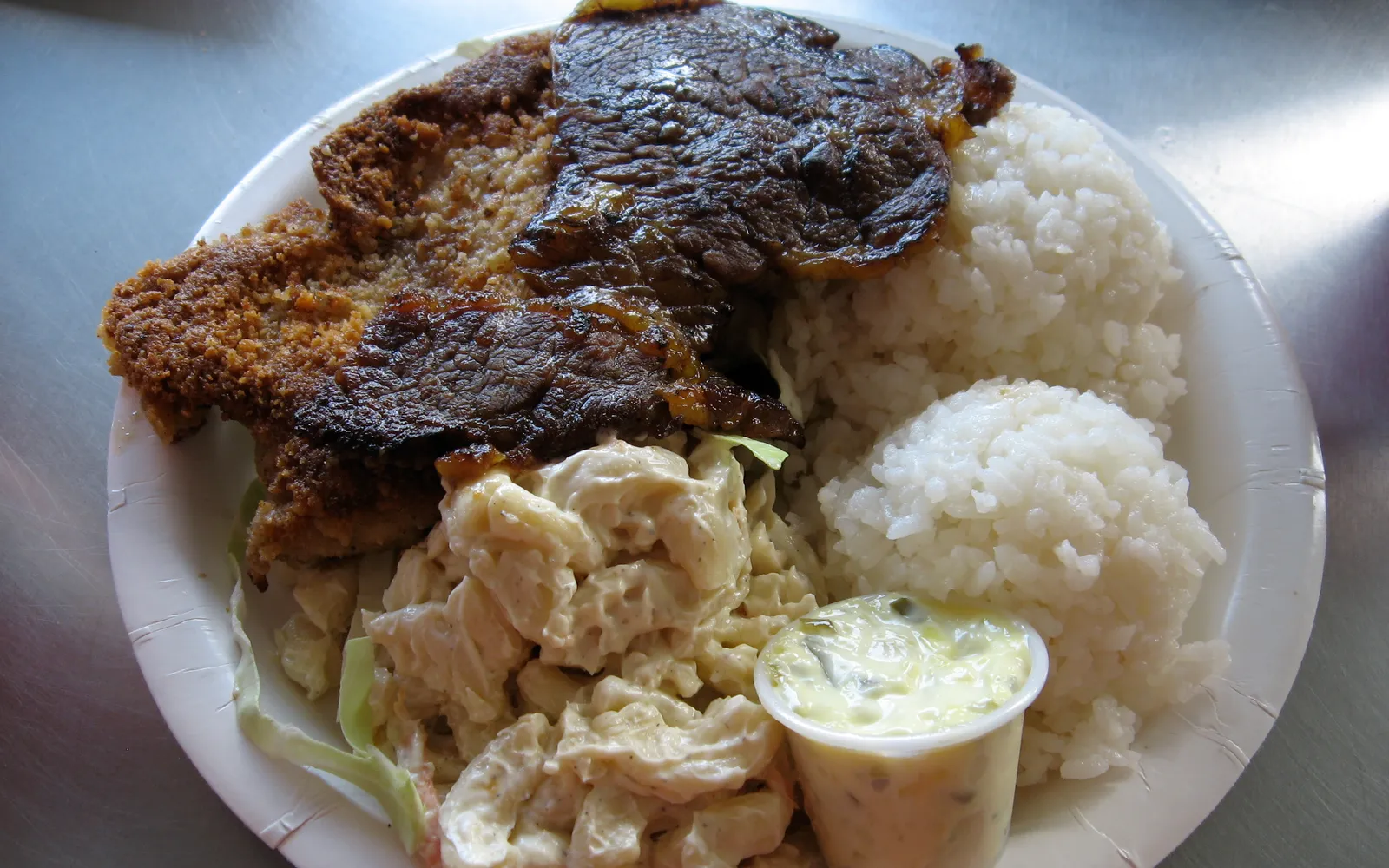
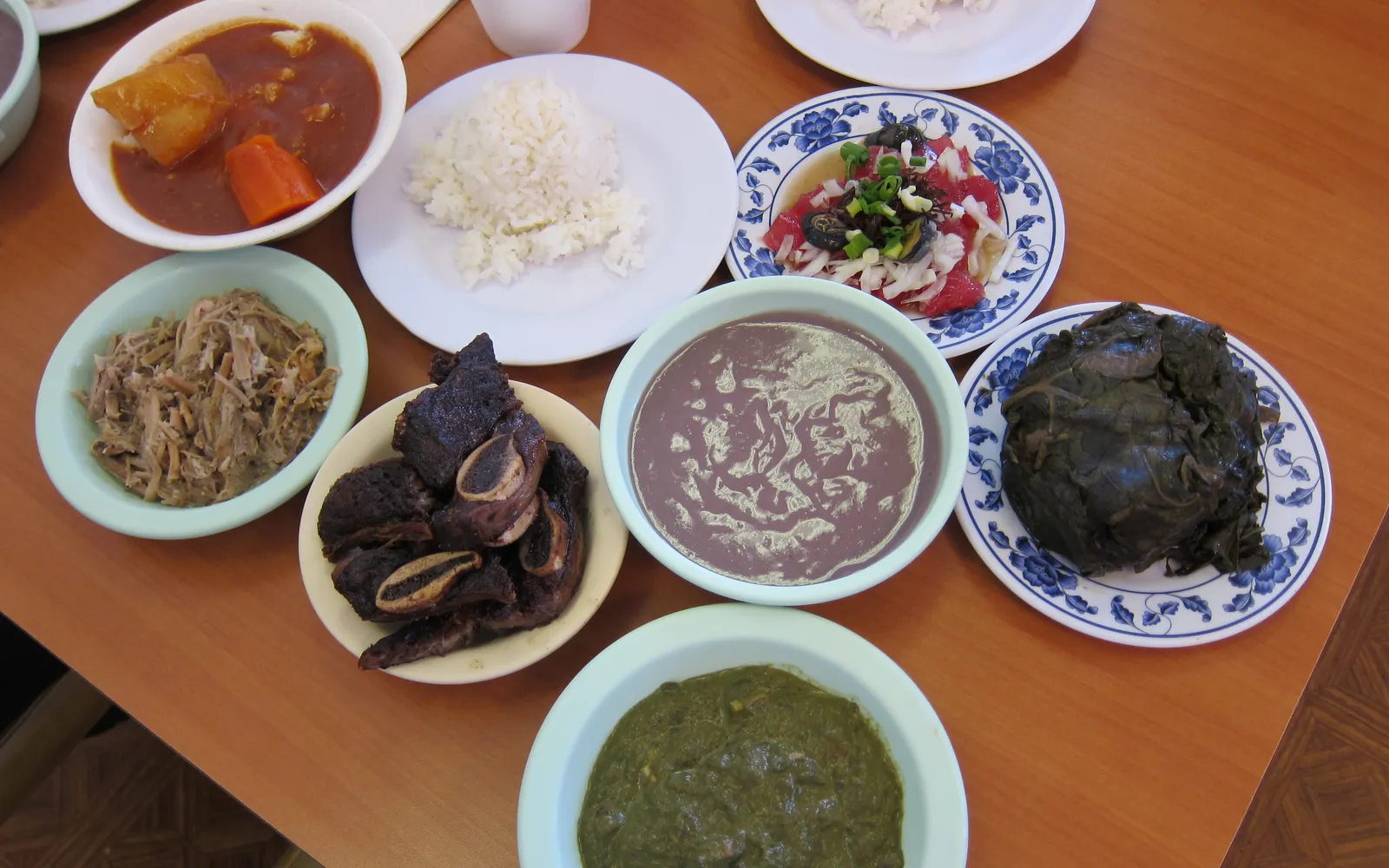
A Hawaiian lunch tradition that traces back to 19th-century sugar plantation workers from multiple countries who ate and shared food side by side. Every plate comes with two fixed items: two scoops of white rice and macaroni salad. The main protein is your choice — chicken katsu, kalua pork, beef teriyaki, garlic shrimp, or lau lau (pork wrapped in taro leaf). At $10–15, you get a genuinely filling meal. This is workers' food that actually tastes good.
- The garlic shrimp food trucks on North Shore are legendary, but the drive is worth planning around. In Honolulu proper, L&L Hawaiian Barbecue is the reliable go-to.
- Order Kalua Pig and Cabbage at least once — pork slow-cooked underground in the traditional Hawaiian imu style, tasting like pulled pork but lighter and smokier.
- Portions are large. If you are not very hungry, ask for a mini plate — most shops offer it.
 #6
#6 Malasada
A Portuguese-style fried doughnut brought to Hawaii in the 19th century by workers from Madeira, Portugal. No hole, crisp outside, soft and airy inside, rolled in granulated sugar straight from the fryer. Leonard's Bakery has been making them since 1952 and is the definitive Honolulu version. The flavor is simple and addictive. Filled options include custard, haupia (coconut cream), or guava. Each one costs $1.25–2, and locals buy them by the dozen on Sunday mornings.
- Go on a weekend morning between 7:00 and 9:00 a.m. to catch malasadas fresh off the fryer. The line moves fast.
- Order one custard-filled alongside the plain sugar version to compare — they are quite different.
- Leonard's Bakery opens at 5:30 a.m. and closes at 9:00 p.m. daily, but the doughnuts are hottest in the morning and again in the late afternoon.
Where to stay in Honolulu for this trip
A well-located hotel means less commuting and more sightseeing. Here are real, top-rated stays in Honolulu — compare Agoda · Booking · Trip.com in one click.
Aulani, A Disney Resort & Spa
Affiliate links — we may earn a commission at no extra cost to you. Details
Alohilani Resort Waikiki Beach
Affiliate links — we may earn a commission at no extra cost to you. Details
Outrigger Waikiki Beach Resort
Affiliate links — we may earn a commission at no extra cost to you. Details
Hilton Garden Inn Waikiki Beach
Affiliate links — we may earn a commission at no extra cost to you. Details
Tours, tickets & activities in Honolulu
Day tours, attraction tickets and travel essentials for Honolulu — book ahead on Klook with mobile e-tickets.
Affiliate links — we may earn a commission at no extra cost to you.
Before You Pack
The best authentic Hawaiian food tends to live in small shops inside malls or at local supermarkets — not at the pricey restaurants along Waikiki Beach. Foodland Farms, Times Supermarket, and Don Quijote are the local grocery chains with the freshest poke and the best prices on native Hawaiian snacks.