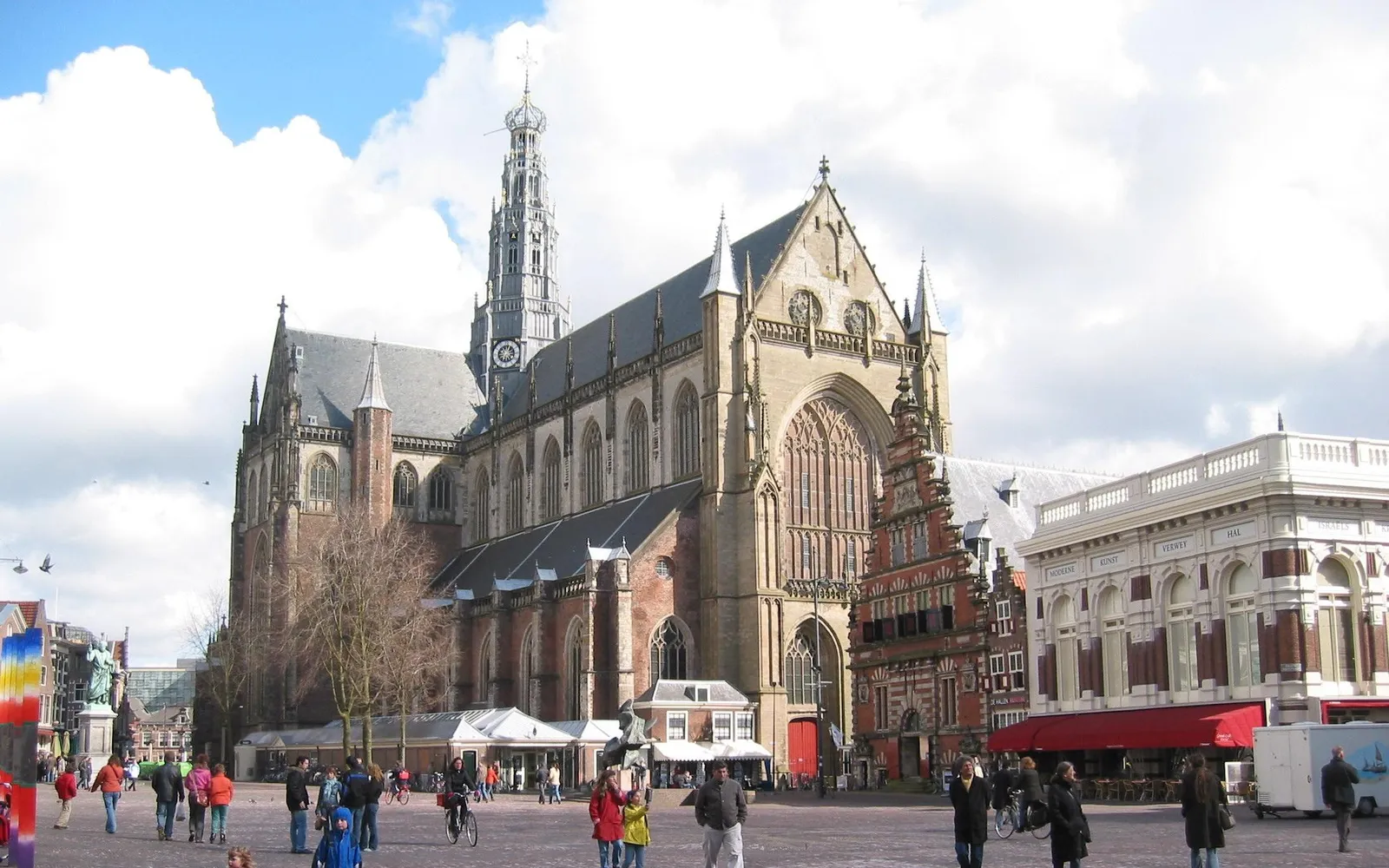
Dutch food rarely gets the same attention as French or Italian, but there are genuine finds here if you know where to look. A freshly baked Stroopwafel from Haarlem's Saturday market is a completely different thing from the packaged version in any supermarket, and Haarlem is widely regarded as one of the best cities in the country for raw herring. Dutch food is built on fresh ingredients, quality produce, and a simplicity that hides real flavour in every bite.
 #1
#1 Stroopwafel
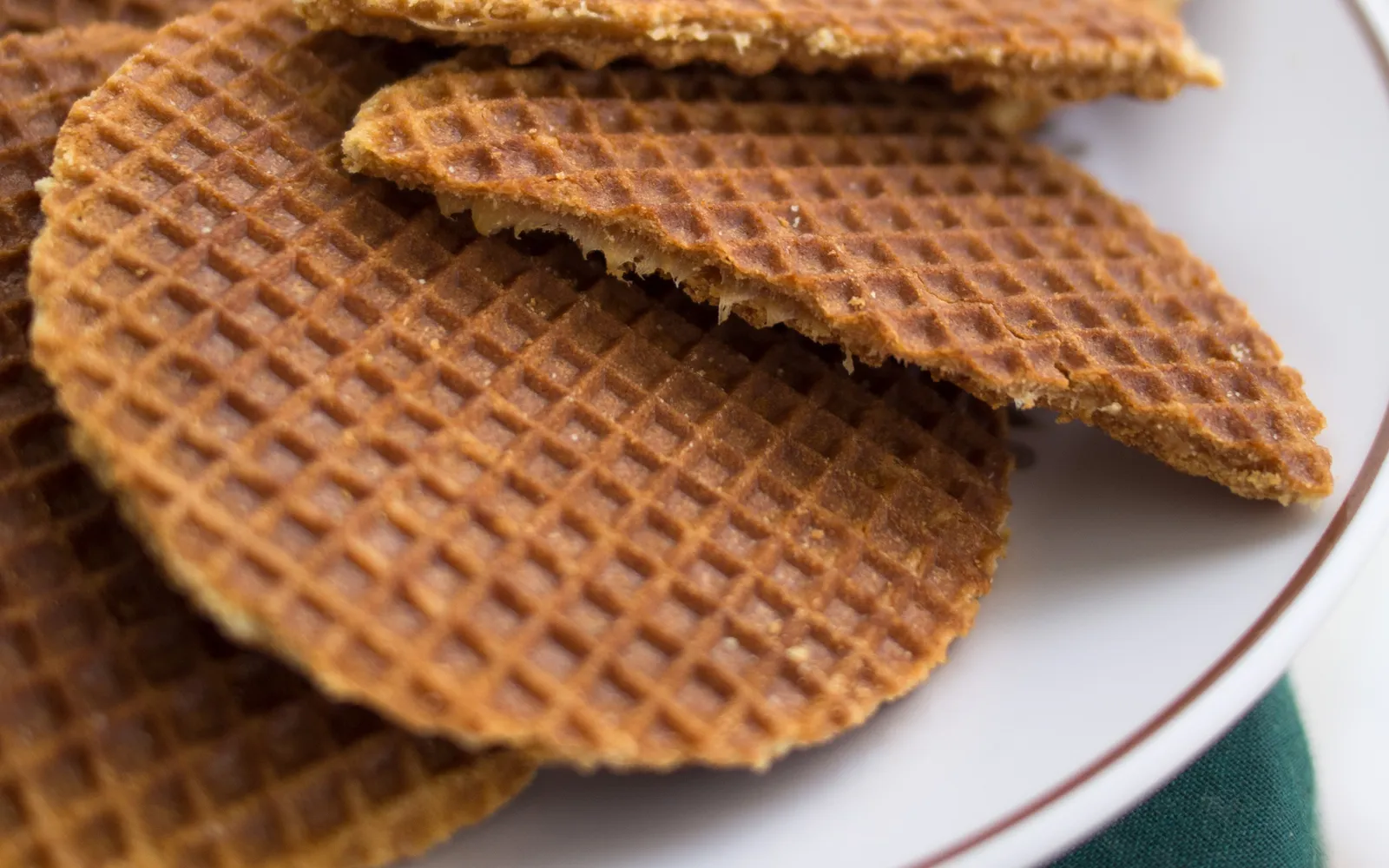
The best Dutch biscuit in existence, invented in Gouda in 1810, but best eaten fresh at Haarlem's street market. Two thin, crisp waffle rounds are sandwiched around a soft caramel syrup. Rest one on the rim of a hot coffee or tea for a minute or two and the filling softens and becomes fragrant. This is the experience every Dutch person means when they say the supermarket version doesn't come close.
- Buy from a stall at the Saturday Grote Markt market — the one with the longest queue is the one baking fresh every hour. Skip the pre-packaged bags.
- The Dutch way: balance it on the rim of your coffee cup and wait 1-2 minutes before biting. The caramel reaches just the right consistency.
- You can pick up gift-box versions at any Albert Heijn around town, but the flavour gap between fresh-baked and packaged is significant.
 #2
#2 Soused herring
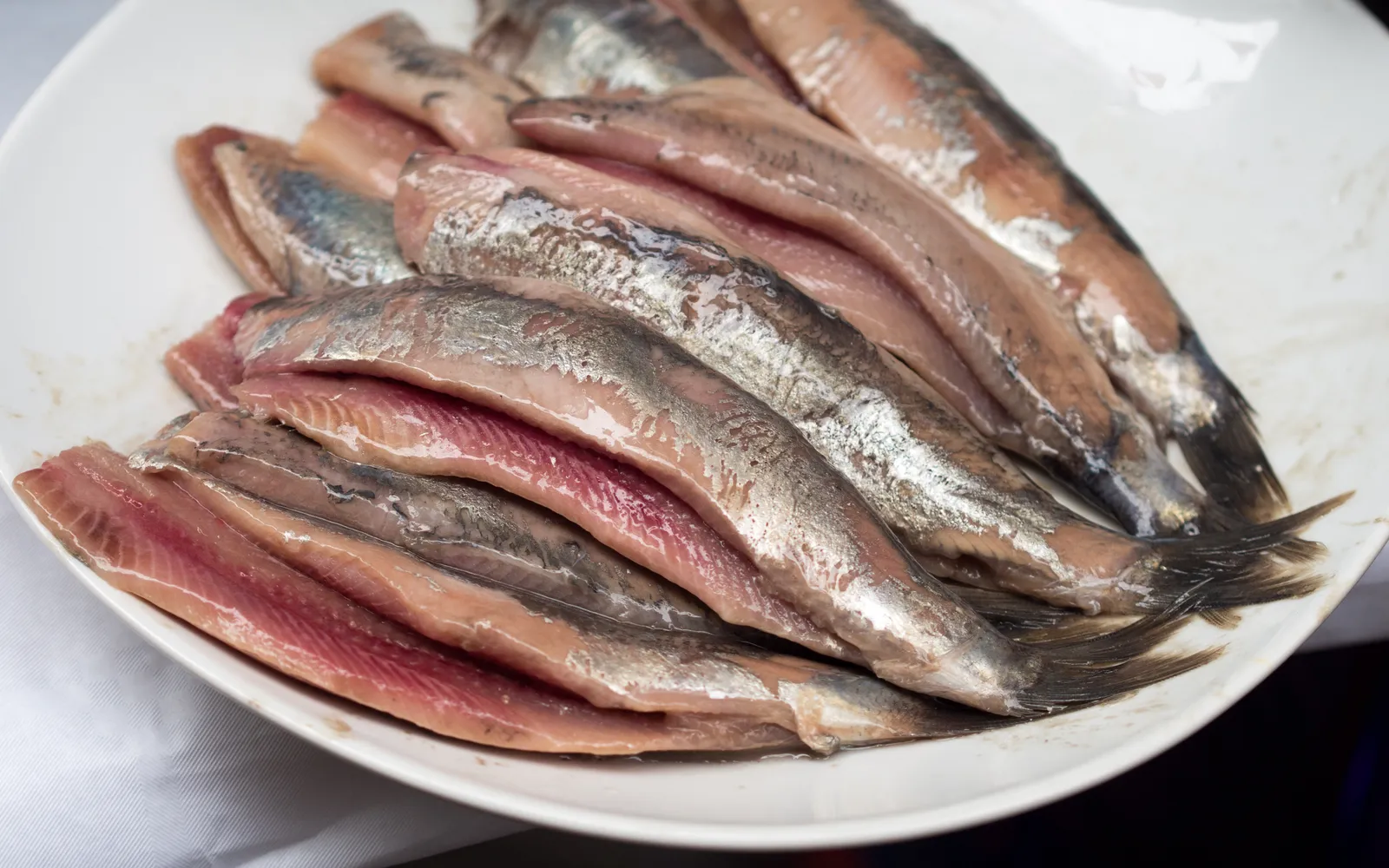
The most authentically Dutch food experience that most visitors are too nervous to try — and therefore miss. North Sea herring, lightly brined, mild and smooth with almost no fishiness, with a texture closer to Dutch sashimi than anything you might be expecting. The traditional way to eat it is to hold it by the tail and lower it into your mouth, topped with coarsely chopped raw onion and pickled cucumber. The Hollandse Nieuwe season opens in June, when locals queue up for the year's first batch.
- June-July is the season for Hollandse Nieuwe — the freshest catch of the year. Outside the season it's still available but the flavour shifts slightly.
- If you're hesitant, order a broodje haring (herring sandwich) instead — easier to eat and arguably more complete in flavour.
- The best fish stalls in Haarlem are at the Saturday Grote Markt market; look for the ones where locals are already eating standing up out front.
 #3
#3 Gouda cheese
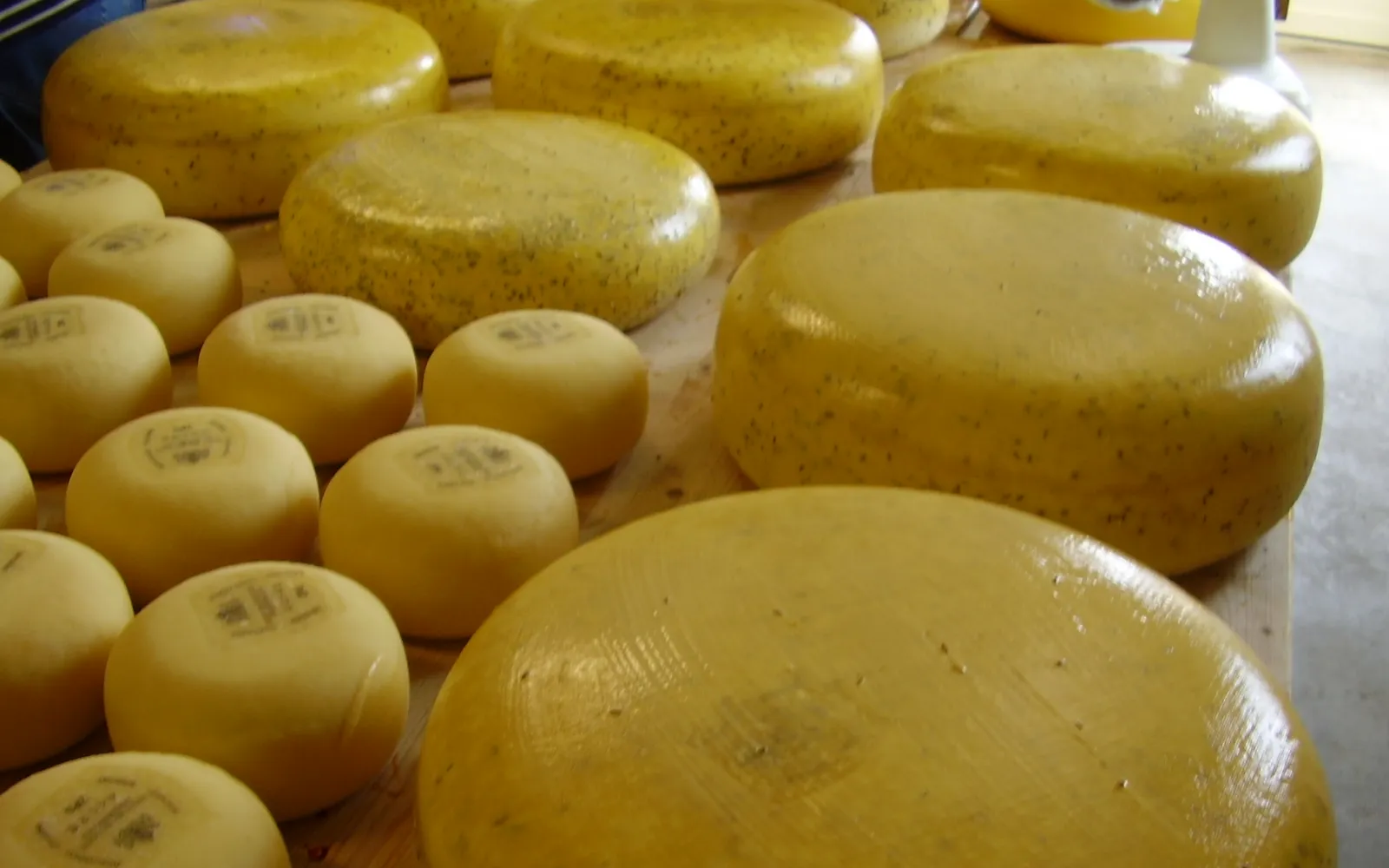
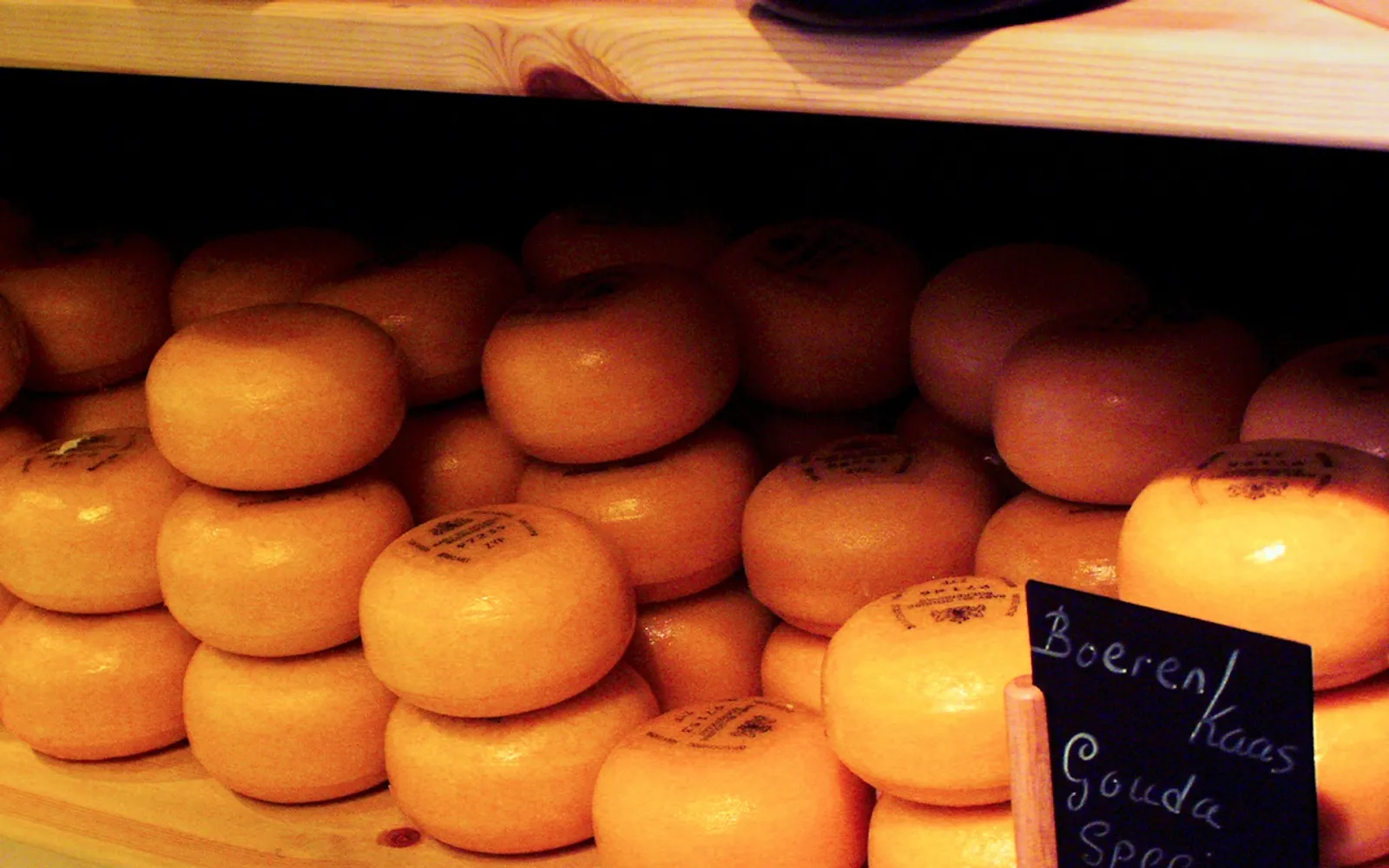
The Netherlands' most famous cheese and its biggest export, but a 2-to-5-year Extra Old Gouda from a traditional Haarlem cheese shop is an entirely different product from what you find in a supermarket. The texture is firm and dry, the flavour complex — sweet and salty with crunchy tyrosine crystals, not unlike Parmesan. Good cheese shops in Haarlem will let you taste before you buy; compare a few ages to find your level.
- Always ask to taste before buying, especially the difference between Old Gouda (18 months) and Extra Old (36+ months) — the gap is significant.
- If you want to take some home, a good cheese shop will vacuum-seal it for you; it keeps for several weeks at room temperature.
- Pair it with a Stroopwafel or Dutch rye bread (roggebrood) — that is the traditional Dutch way to eat it.
 #4
#4 Bitterballen
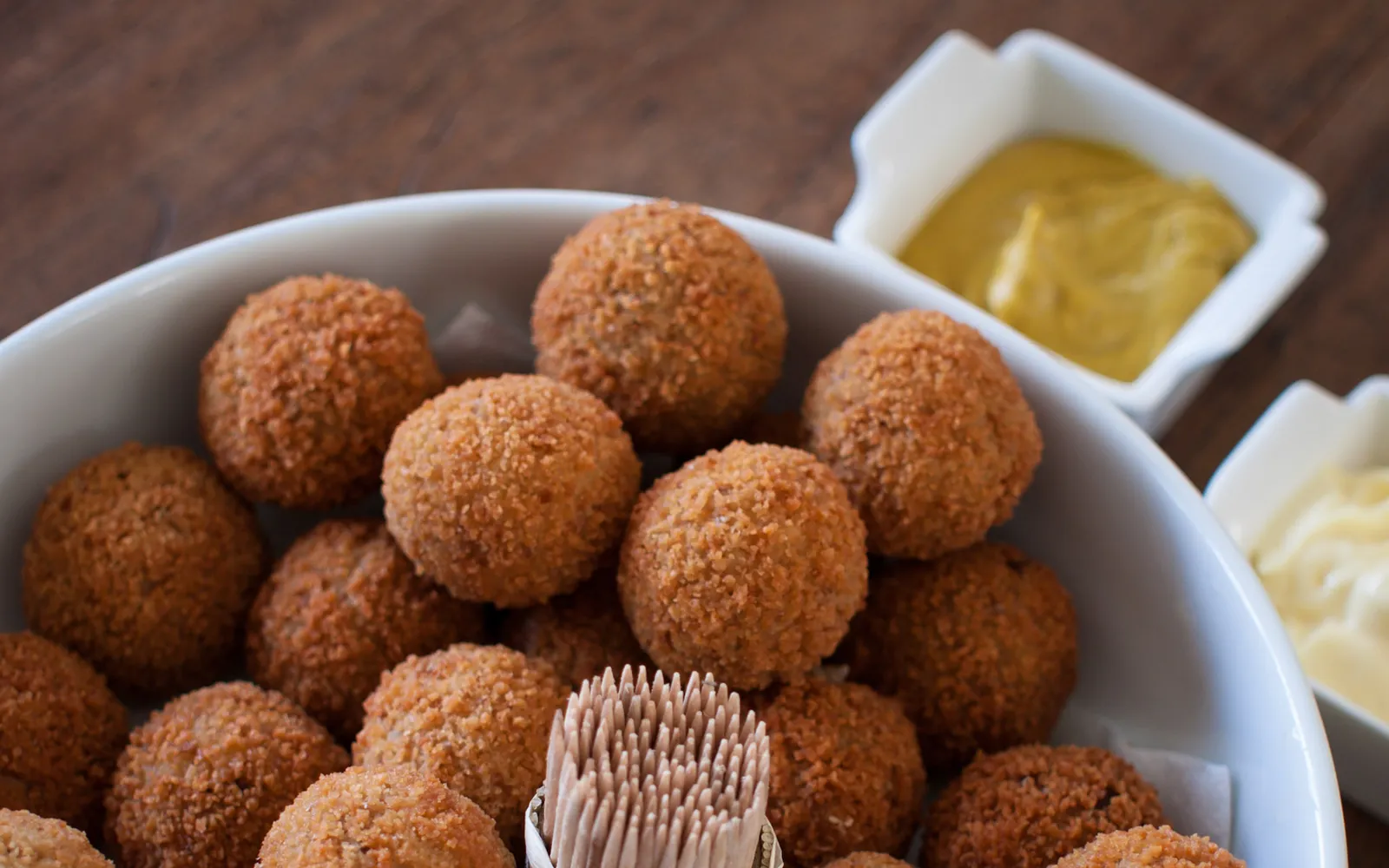
The Dutch bar snack that locals have been eating alongside beer since the 17th century. The outside is a crunchy breadcrumb crust; the inside is a hot, liquid-creamy filling of beef or chicken. You need to wait a minute after they arrive or the heat will burn your mouth. Dip in Dutch mustard — mild-spicy — and eat in a bar, a restaurant, or a brown café (kroeg). Best atmosphere is at a table by the square or inside the Jopenkerk brewery.
- Wait 2-3 minutes after they are served before biting. The filling is hot enough to burn — Dutch people call this a bitterballen burn.
- Order with a Jopen beer at Jopenkerk or a local draught beer at a bar near Grote Markt; it is the right pairing.
- Some places offer Gouda cheese bitterballen or mushroom versions for non-meat eaters — just ask.
 #5
#5 Poffertjes
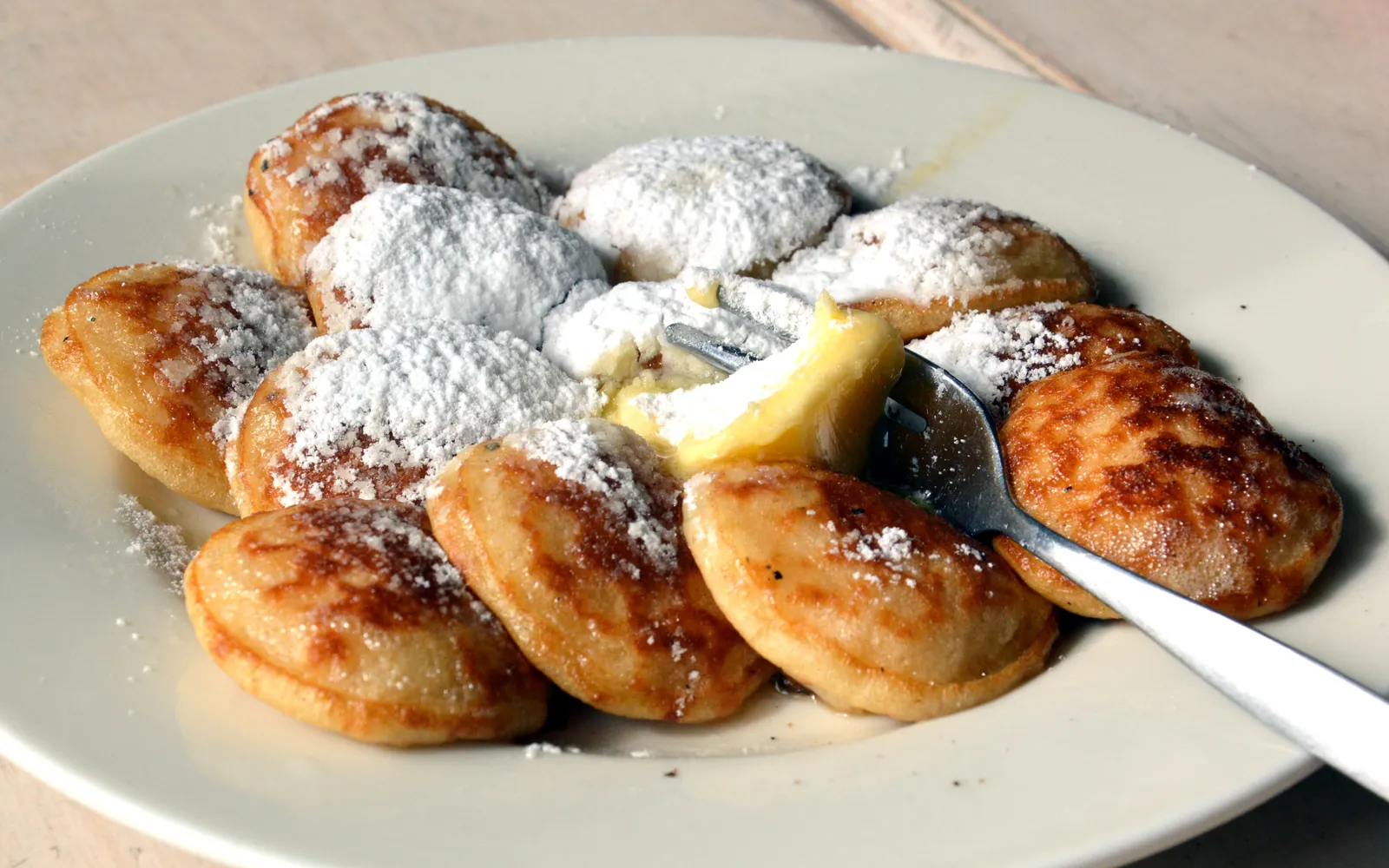
The most lovable Dutch sweet — miniature, puffy, and hard to stop eating. A buckwheat-style fermented batter is poured into small round moulds on a hot iron plate, fried until both sides are puffed and golden, then served immediately with a heavy dusting of powdered sugar and a pat of butter melting on top. Mildly sweet, buttery, and best eaten several at a time. They work for kids and adults equally, and cost considerably less here than the same thing sold in Amsterdam.
- Expect to pay around €3-5 per plate (12-15 pieces) — noticeably cheaper than Amsterdam.
- Eat them immediately while hot; the batter deflates as it cools and takes the flavour with it.
- A market stall making poffertjes fresh in front of you with a long queue is a reliable quality signal.
 #6
#6 Dutch cuisine
The traditional Dutch winter soup that locals have been eating since cold weather hits. Split peas are simmered until they dissolve into a thick, dense green mass with carrots, celery, onion, and — non-negotiable — rookworst, a Dutch smoked sausage. A single bowl is a full meal. The flavour is deep and warming, the genuine Dutch comfort food. Many places serve it with brown bread and butter. Travelers who try it almost always enjoy it more than they expected.
- This is a cold-weather dish — autumn and winter. Some places take it off the menu in summer.
- Ask the restaurant if there is a vegetarian version; some make it with vegetables only and no sausage.
- Eat it with roggebrood (dense Dutch black rye bread) and appelstroop (thick apple syrup) for a fully traditional Dutch meal.
Where to stay in Haarlem for this trip
A well-located hotel means less commuting and more sightseeing. Here are real, top-rated stays in Haarlem — compare Agoda · Booking · Trip.com in one click.
Bed & Breakfast Hotel Malts
Affiliate links — we may earn a commission at no extra cost to you. Details
Brasss Hotel Suites
Affiliate links — we may earn a commission at no extra cost to you. Details
Boutiquehotel Staats
Affiliate links — we may earn a commission at no extra cost to you. Details
Hotel ML
Affiliate links — we may earn a commission at no extra cost to you. Details
Tours, tickets & activities in Haarlem
Day tours, attraction tickets and travel essentials for Haarlem — book ahead on Klook with mobile e-tickets.
Affiliate links — we may earn a commission at no extra cost to you.
Before You Pack
The best Dutch food in Haarlem tends to be found at the Saturday morning market at Grote Markt and in the small shops tucked into the lanes around the square. If you catch the smell of fresh-baked Stroopwafel or a wave of aged cheese from an open door, follow it — no reviews needed.