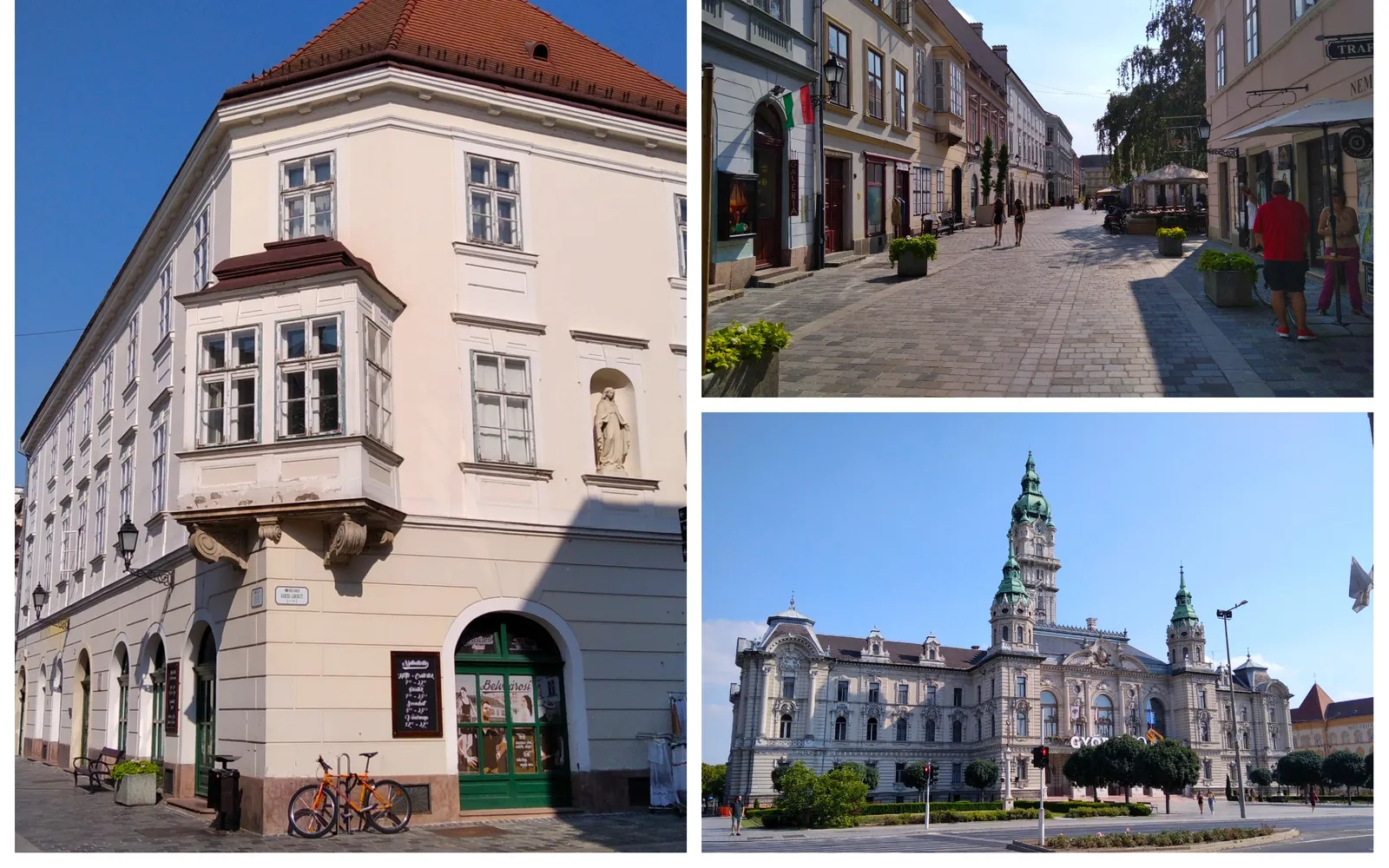
Győr is the city most travelers pass through on the way between Budapest and Vienna — but anyone who stays even one night discovers one of Central Europe's most intact medieval cores. More than 300 years of Baroque architecture lines the cobblestone lanes, with almost no through traffic, while Pannonhalma Archabbey — standing on its hilltop a thousand years running — adds a UNESCO World Heritage anchor that makes Győr worth far more than a day trip.
 #1
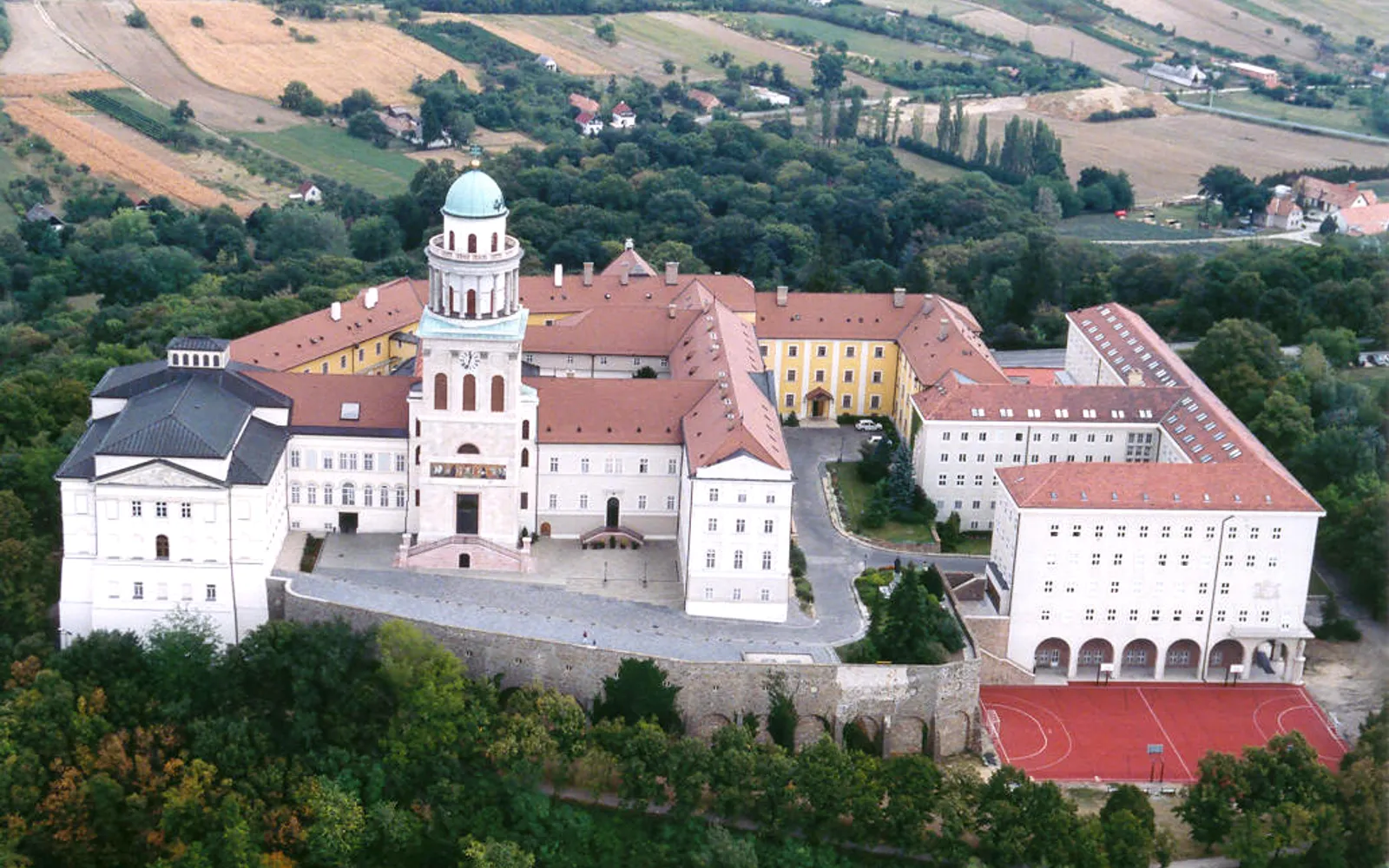
#1 Pannonhalma Archabbey
One of the oldest Catholic abbeys in Central Europe, founded in 996 and in continuous operation for over a thousand years. It was inscribed on the UNESCO World Heritage List in 1996. Set on a hill 282 metres above the surrounding Hungarian plains, the abbey contains an ancient library holding more than 360,000 rare manuscripts and a monastery vineyard whose wines have earned a strong reputation to this day.
- English-language guided tours depart every hour. Admission covering the library and church is around 4,000 HUF — guided tour only, no independent access.
- Pannonhalma Rizling white wine, produced by the monks, is sold in the abbey shop — a solid gift to bring home.
- Classical music concerts are held in the ancient church during summer — check the calendar before you visit.
 #2
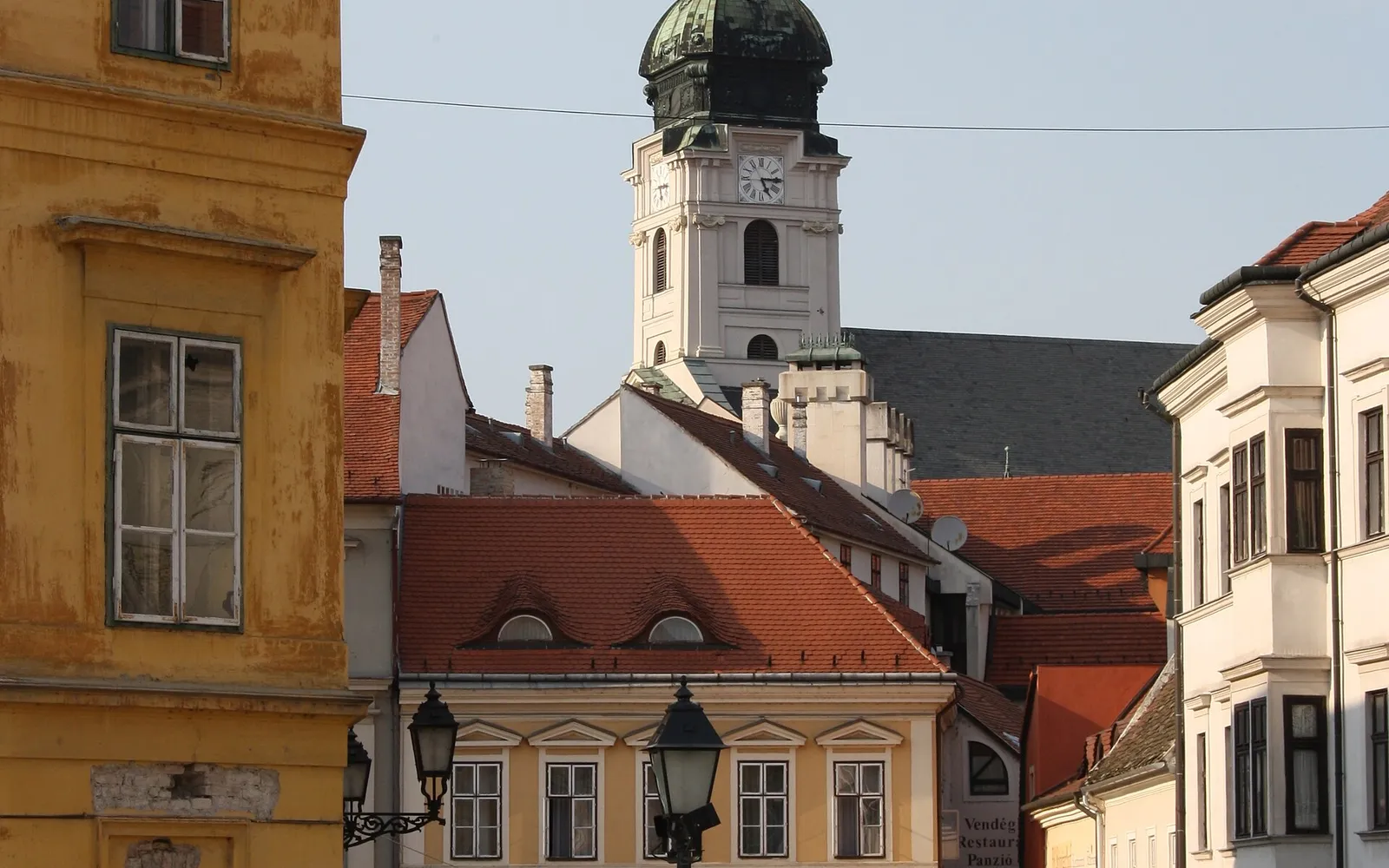
#2 Győr Basilica
The largest and most important cathedral in Győr, construction began in the Romanesque style in the 11th century and was built over repeatedly until it reached the Baroque form seen today. Inside, the most notable religious artefact is the gilded reliquary holding the skull of Saint László — regarded by Hungarians as one of their most sacred objects. Marble altars and high dome frescoes give the interior a genuinely grand atmosphere.
- Free entry throughout the day, except during Mass (mornings and Sundays) — check the schedule before arriving.
- The terrace in front of the basilica offers a panoramic view of the city without needing to go inside.
- The basilica sits immediately next to Bishop's Castle — visit both in one go.
 #3
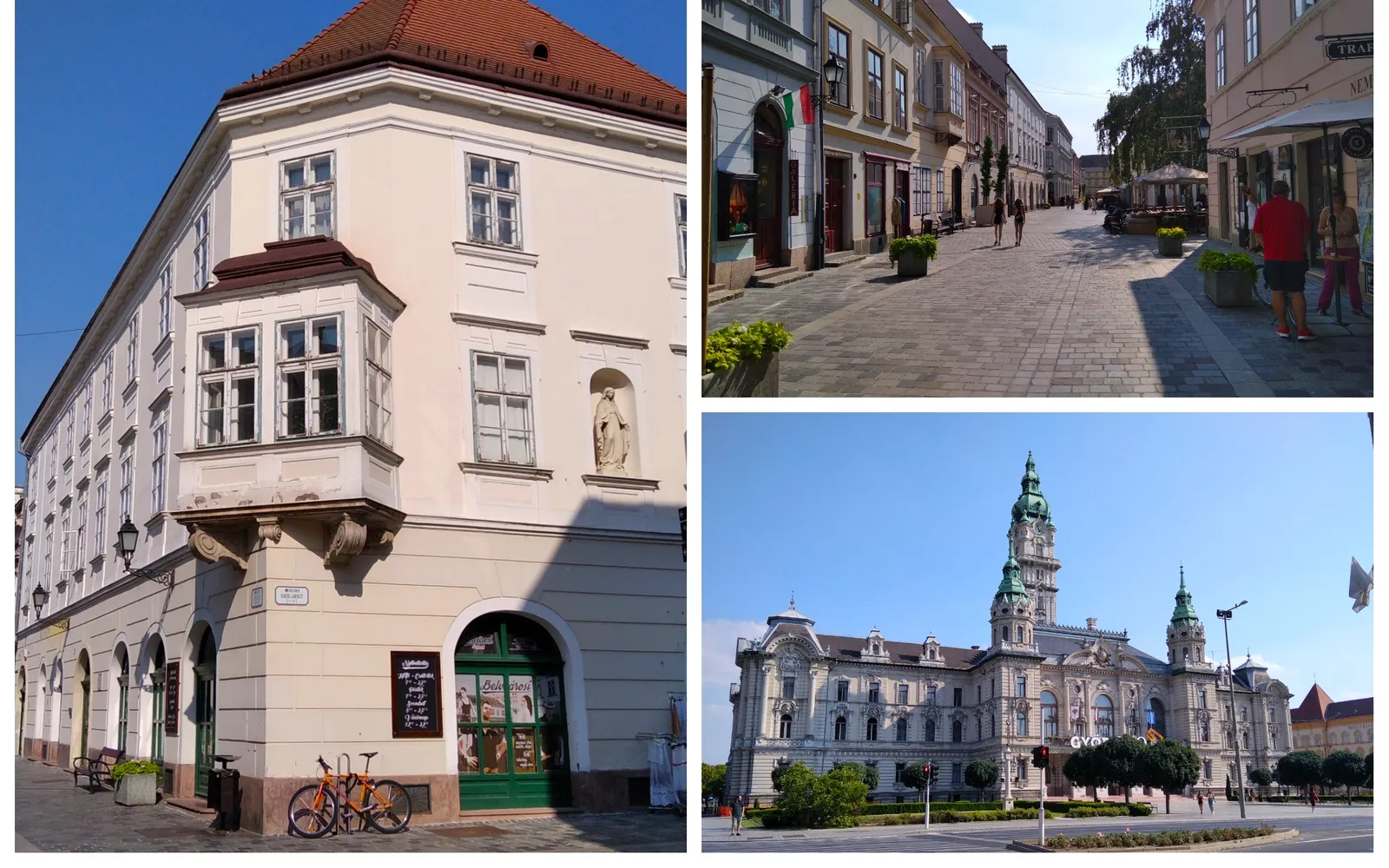
#3 Bishop's Castle, Győr
An ancient fortress on a rocky outcrop above the confluence of three rivers, strategically important since Roman times. It was built and rebuilt through the medieval, Ottoman and Habsburg periods; the walls visible today date mainly from the 16th and 17th centuries. The interior is now a city history museum, with walkways around the ramparts and good views over the rivers.
- Museum entry is 1,500–2,000 HUF, but walking around the outer walls is free.
- The best river photography spot is the north balcony of the castle — clear views of the three-river confluence.
- Combine this with the basilica and an old-town café for a comfortable half-day loop.
 #4
#4 Széchenyi Square
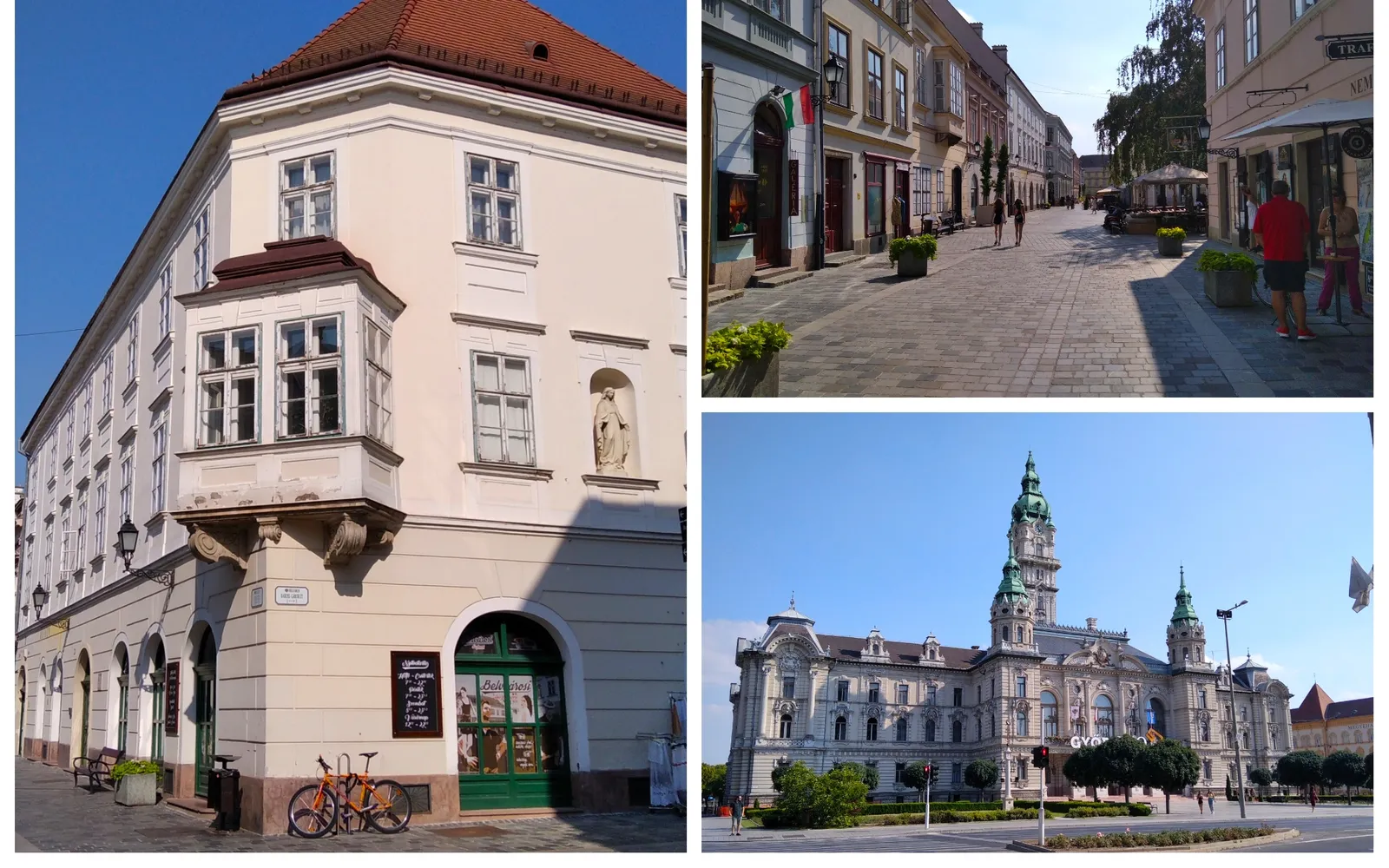
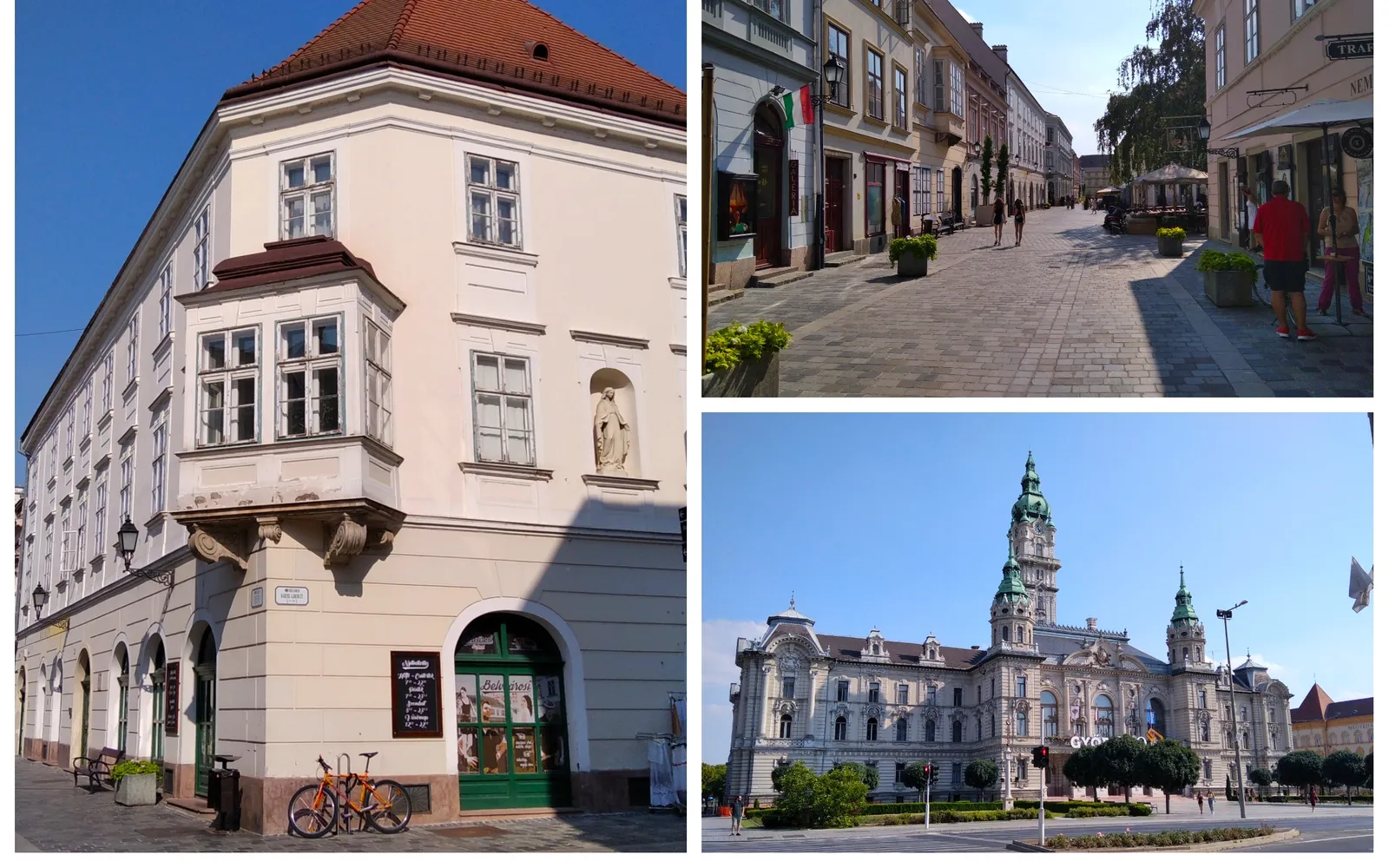
The main square that has anchored city life in Győr for several hundred years. Ringed by well-restored pastel Baroque buildings — a Catholic church, the handsome town hall — the centrepiece is a carved stone fountain over 300 years old that still runs. Ground-floor cafés and restaurants in the buildings around the square are good for watching the city at its own pace. In summer, outdoor markets and open-air performances fill the space regularly.
- Gyula Cukrászda, a café on the square, has been open for decades — try the local cakes with coffee.
- The square looks best after dark when the Baroque facades are lit up — a short walk after dinner is worth it.
- Free city walking maps are available at the tourist office, right on this square.
 #5
#5 Győr Old Town and Carmelite Church
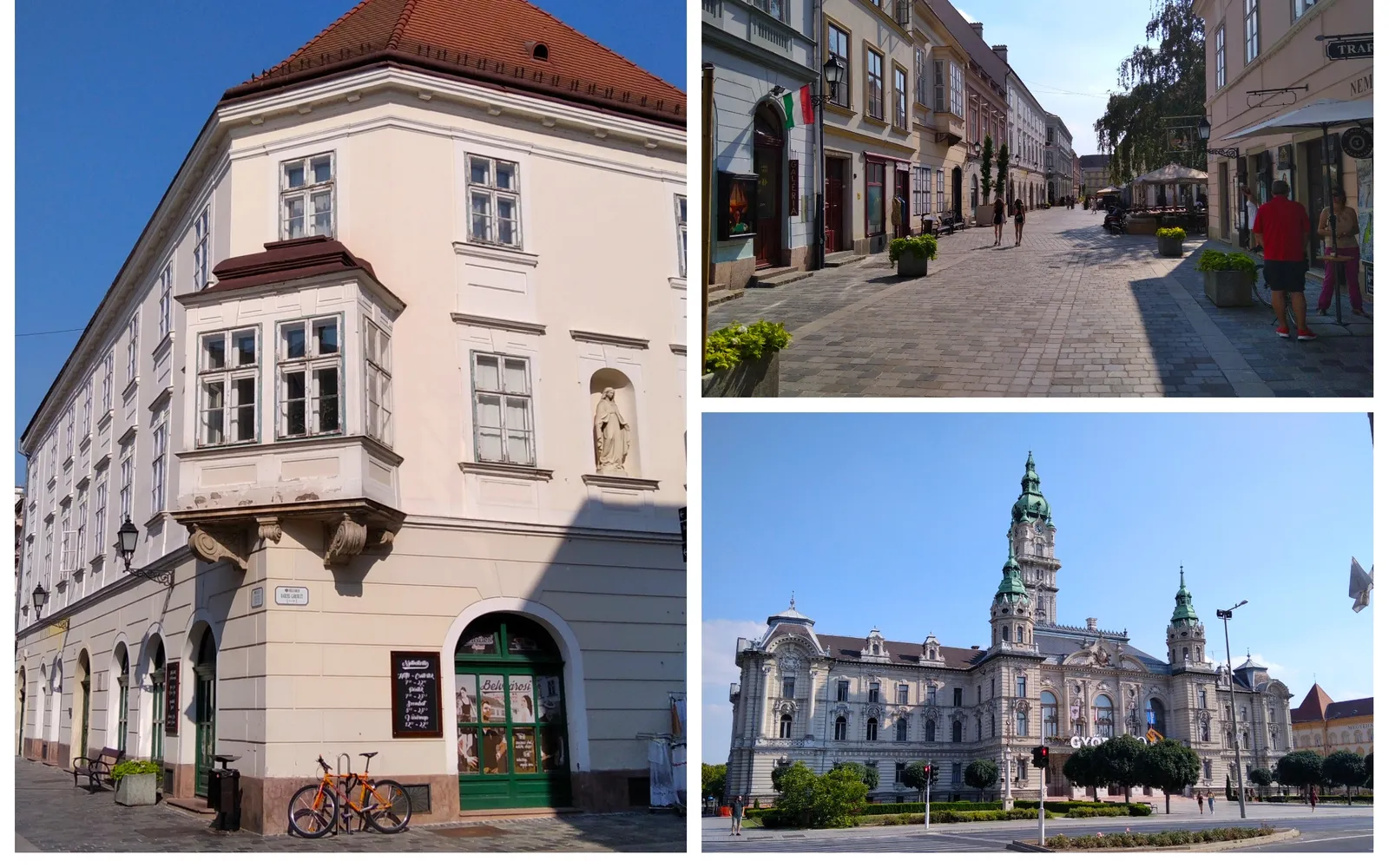
Győr's old town is one of the most complete examples of Baroque architecture surviving in Central Europe. Walking the narrow cobblestone lanes past 17th- and 18th-century pastel facades, carefully preserved, feels genuinely unhurried. The Carmelite Church, prominent on the main street, has a beautiful Baroque frontage and remarkable ceiling frescoes inside. Almost no car traffic passes through — just architecture to explore at whatever pace you like.
- Allow at least 1.5 to 2 hours to explore this area properly — there are details worth finding around every corner.
- The Carmelite Church is free to enter; the Baroque ceiling paintings alone justify a visit.
- Local restaurants in this neighbourhood are noticeably cheaper than those around the main square.
 #6
#6 Győr River Confluence
Győr sits at the point where three rivers meet, which is precisely why the Romans established a settlement here in the first place. The Rába riverbank is a favourite walking path for locals, with benches and trees along the water. The old stone bridges crossing the river in the historic centre are a popular photography backdrop, especially on early mornings when a light mist sits on the surface — a spot local photographers return to for reflections.
- Walk the Káptalandomb path from Bishop's Castle along the riverbank to Bisinger Bridge — about 20 minutes.
- Sunrise in summer (around 5:30–6:30 AM) gives the best golden light and river mist for photography.
- Riverfront cafés open from early morning — a good spot to watch the city wake up from the opposite bank.
Where to stay in Győr for this trip
A well-located hotel means less commuting and more sightseeing. Here are real, top-rated stays in Győr — compare Agoda · Booking · Trip.com in one click.
Barokk Hotel Promenád
Affiliate links — we may earn a commission at no extra cost to you. Details
Hotel Domus Collis
Affiliate links — we may earn a commission at no extra cost to you. Details
ETO Park Hotel Business & Stadium
Affiliate links — we may earn a commission at no extra cost to you. Details
Hotel Kálvária
Affiliate links — we may earn a commission at no extra cost to you. Details
Tours, tickets & activities in Győr
Day tours, attraction tickets and travel essentials for Győr — book ahead on Klook with mobile e-tickets.
Affiliate links — we may earn a commission at no extra cost to you.
Before You Pack
Győr is at its best in spring (April–May), when the Baroque squares fill with flowers and visitor numbers are still manageable, and in early summer (June–July), when outdoor markets and music festivals are running. Plan at least 2 days, including a half-day trip out to Pannonhalma.