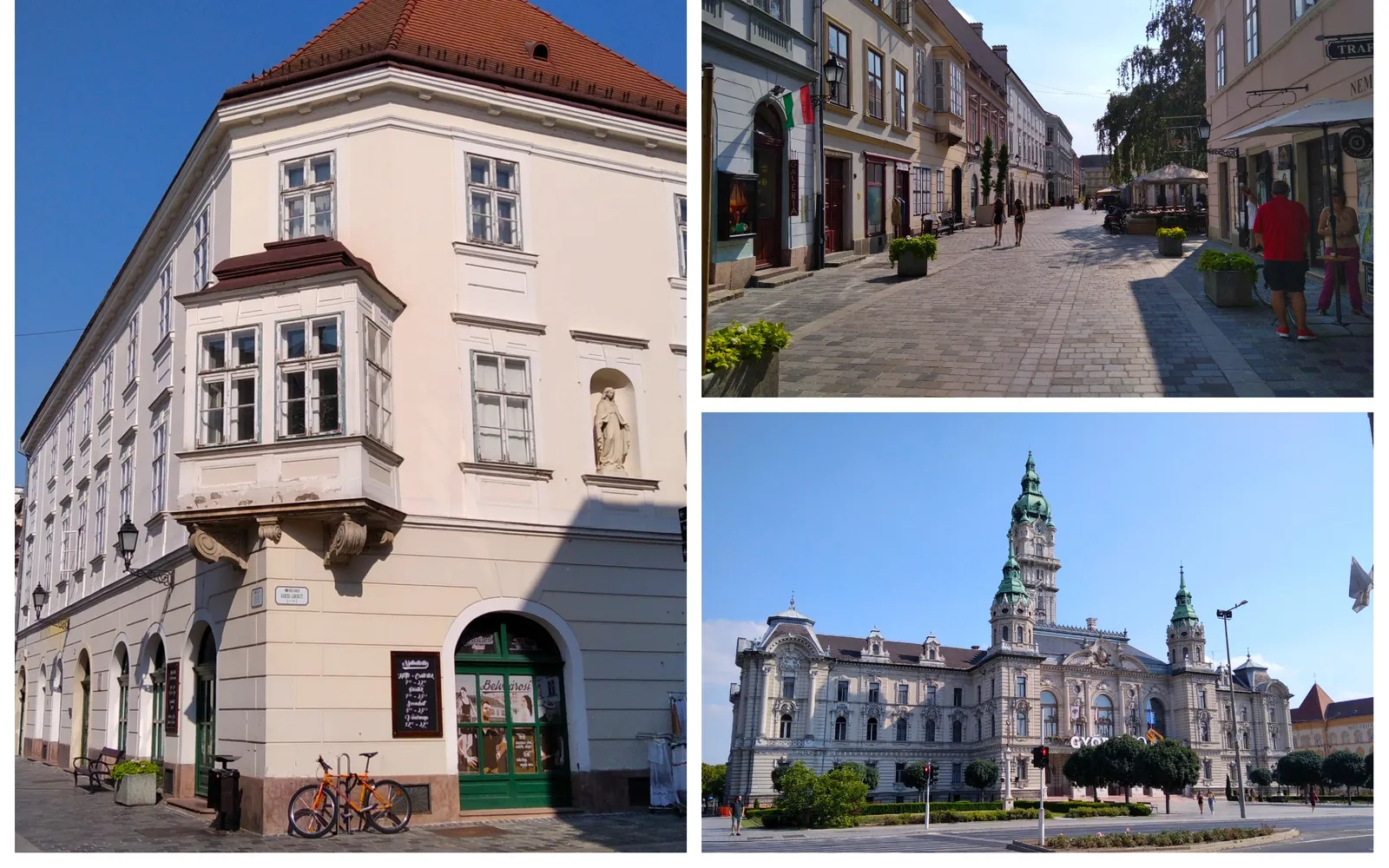
Hungarian food never got the global fame of French or Italian cooking — but it carries a depth of flavour that's genuinely hard to find elsewhere. Deep-red paprika is the soul of the Hungarian kitchen, and in Győr you eat these dishes in century-old restaurants inside a Baroque district that hasn't been overrun by tour groups yet. Prices here are noticeably lower than Budapest.
 #1
#1 Goulash
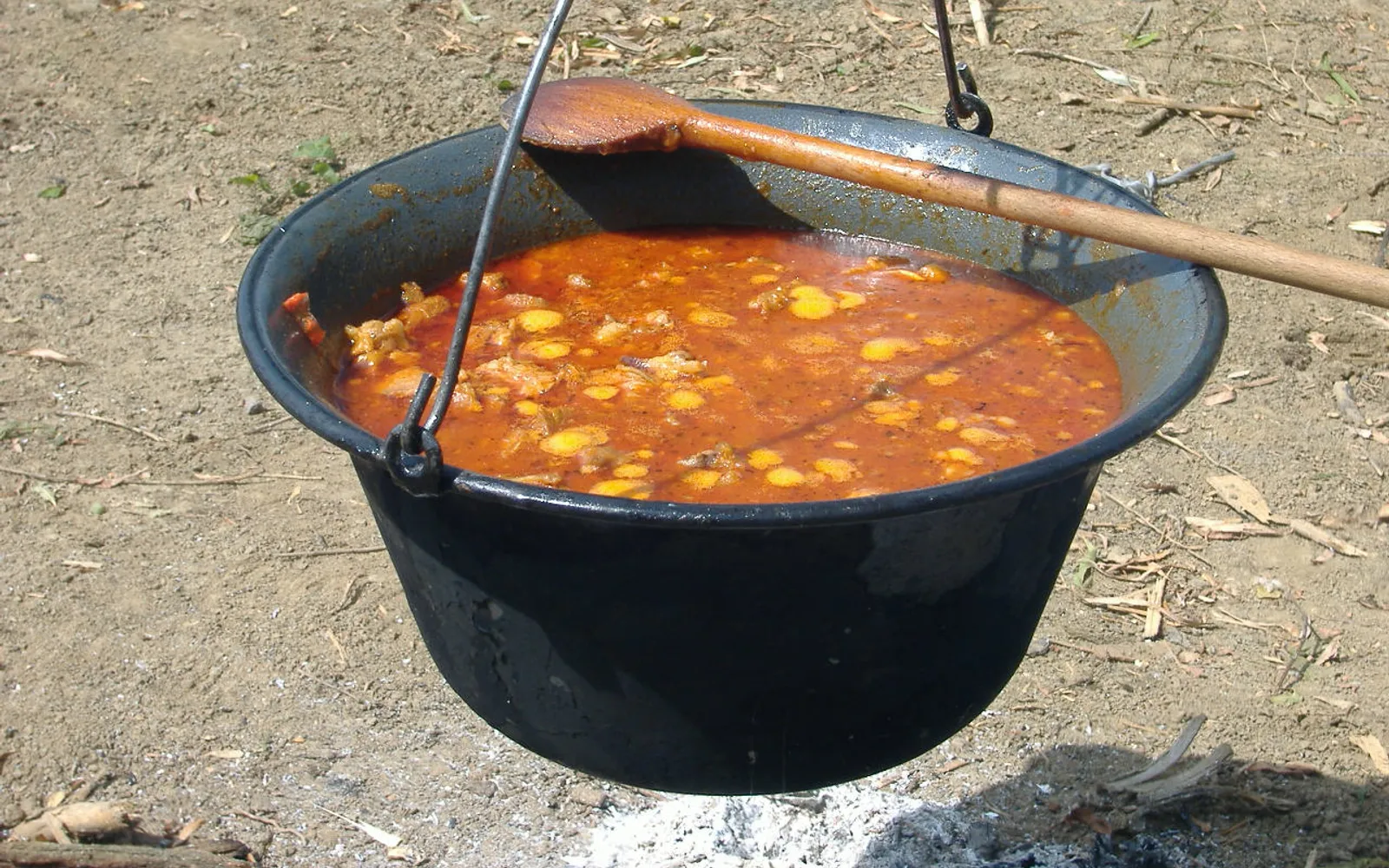
The dish that defines Hungary more than any other. Authentic Hungarian goulash is a thick soup or stew of slow-braised beef with red paprika, onion, garlic, potato, and caraway — no sour cream, unlike the versions you'll find abroad. The flavour is intense, slightly smoky, and deeply warming. Several old restaurants in Győr still use copper pots and recipes passed down through multiple generations.
- Order it as bogrács gulyás — goulash served in a still-hot clay pot. The flavour is markedly better than the standard bowl.
- Prices in Győr run around 2,500–4,000 forints per pot — roughly half what you'd pay in Budapest.
- Eat it with Hungarian bread or nokedli (tiny egg dumplings). Skip the rice.
 #2
#2 Pörkölt
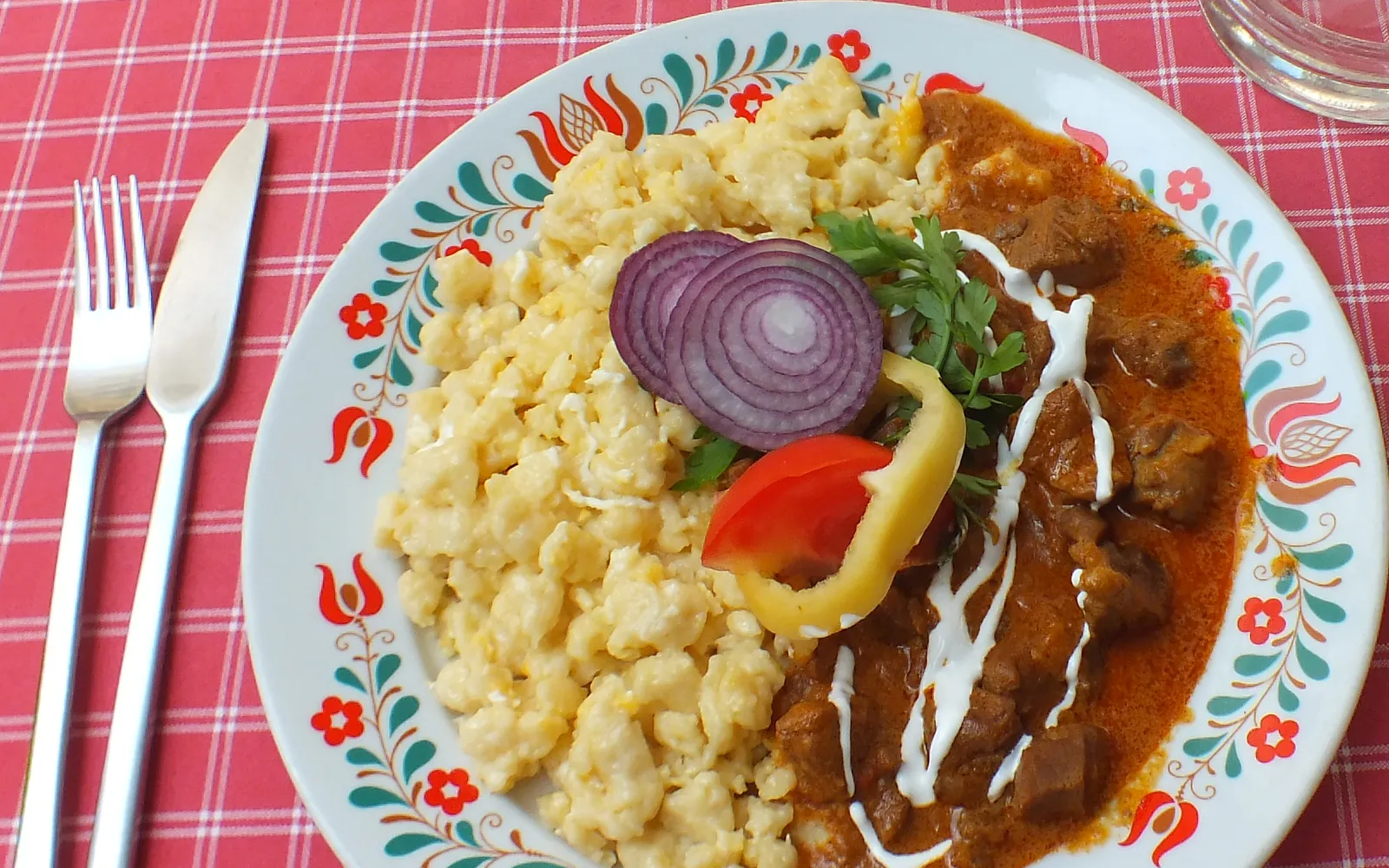
If goulash is the elder sibling, pörkölt is the richer, more concentrated one. It uses a higher ratio of paprika and far less liquid — a proper braise rather than a soup. It can be made with chicken (paprikás csirke), pork, or beef, sautéed with onion and lard before a generous quantity of both fresh and dried paprika goes in. The result is deeper and heavier than goulash. It's typically served alongside nokedli or boiled potatoes, with a spoonful of sour cream (tejföl) on top. Hungarians cook this for family gatherings and special occasions.
- Chicken pörkölt (paprikás csirke) is the milder version — a good starting point if you're new to the intensity of Hungarian stews.
- Ask for extra tejföl (sour cream) if it doesn't come with the dish — most places let you add it yourself.
- Handmade nokedli (similar to German Spätzle) in older restaurants beats the packaged version by a wide margin.
 #3
#3 Lángos
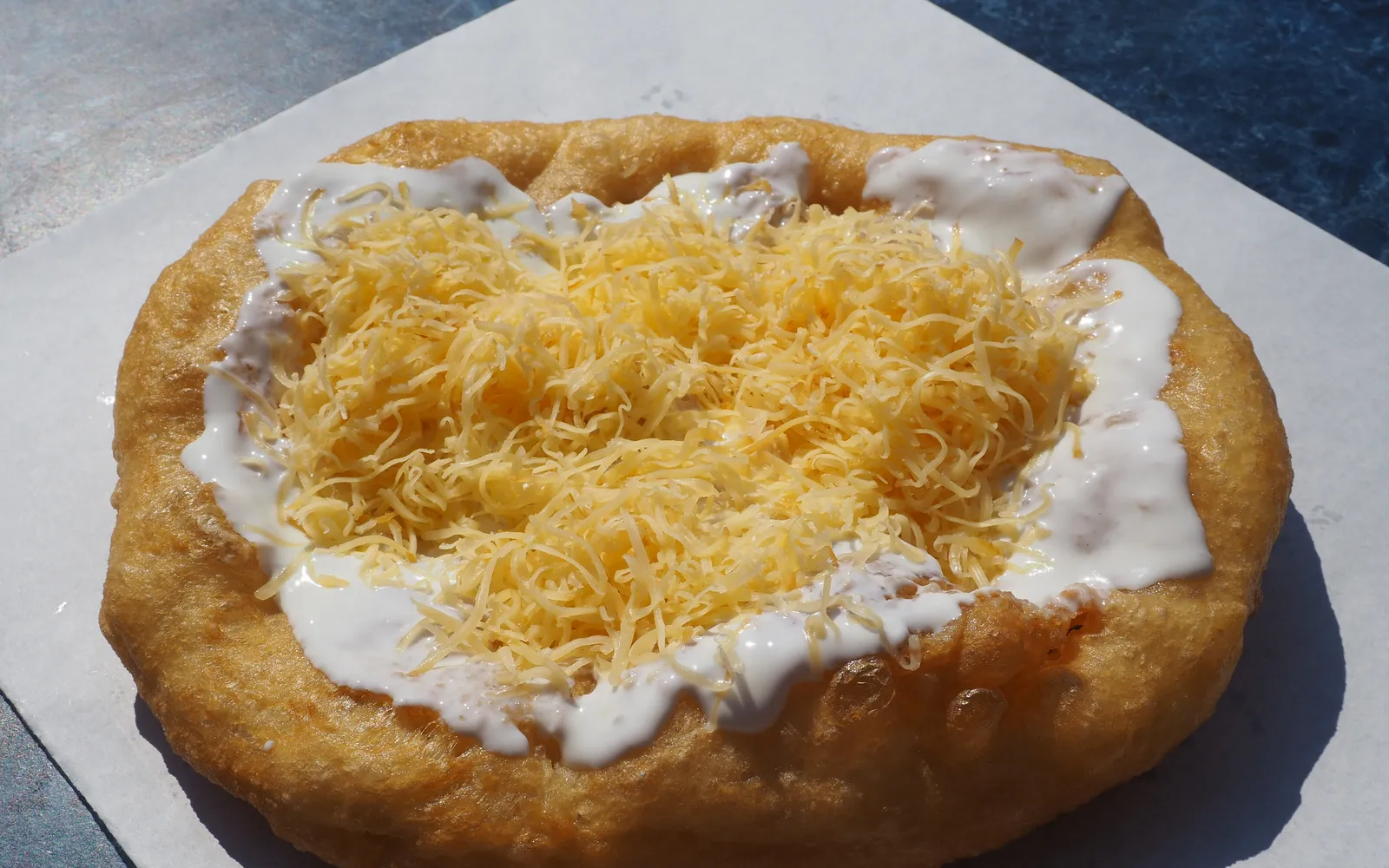
Hungary's most popular street food. Soft bread dough is pressed flat and fried in hot oil until the outside is crisp and the inside stays pillowy. The classic topping is tejföl (sour cream) and grated trappista cheese; you can add garlic, ham, or pickled vegetables. Eat it straight from the oil — that first bite of hot, crispy, slightly oily dough against cold tangy cream is exactly why every generation of Hungarians keeps coming back to it.
- Order fokhagymás (with garlic) if you like a stronger flavour — it's the traditional favourite.
- Around 600–1,200 forints per piece, which is cheap for the size you get.
- Eat it immediately. The texture changes noticeably within minutes once it cools.
 #4
#4 Chimney cake
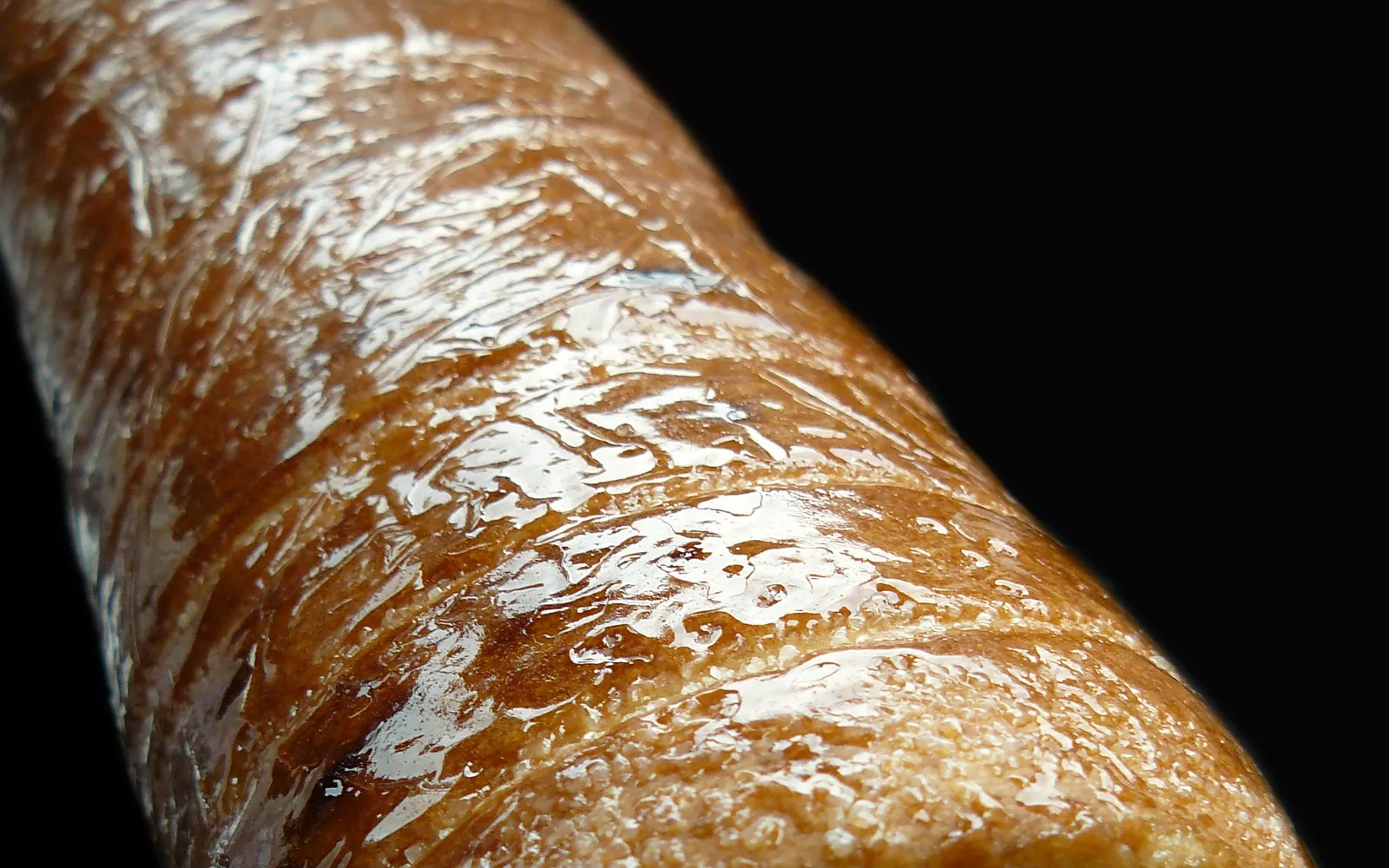
An old Transylvanian pastry that has become an icon of Hungarian street baking across Europe. Sweet dough is wound around a wooden cylinder and rotated over charcoal until evenly cooked, coated in sugar until a caramelized golden crust forms, then dusted with ground cinnamon, walnuts, or almonds. The name comes from the shape and the aromatic smoke that drifts off as it roasts. The interior stays soft and airy while the outside is crisp and sweet — equally popular with children and adults.
- The classic version is plain cinnamon sugar. Try that before going for the ice-cream or Nutella-filled variants, which are the tourist editions.
- Around 800–1,500 forints depending on size and toppings.
- Eat it hot, right off the spit — the crust is at peak crunch while the centre is still warm.
 #5
#5 Dobos torte
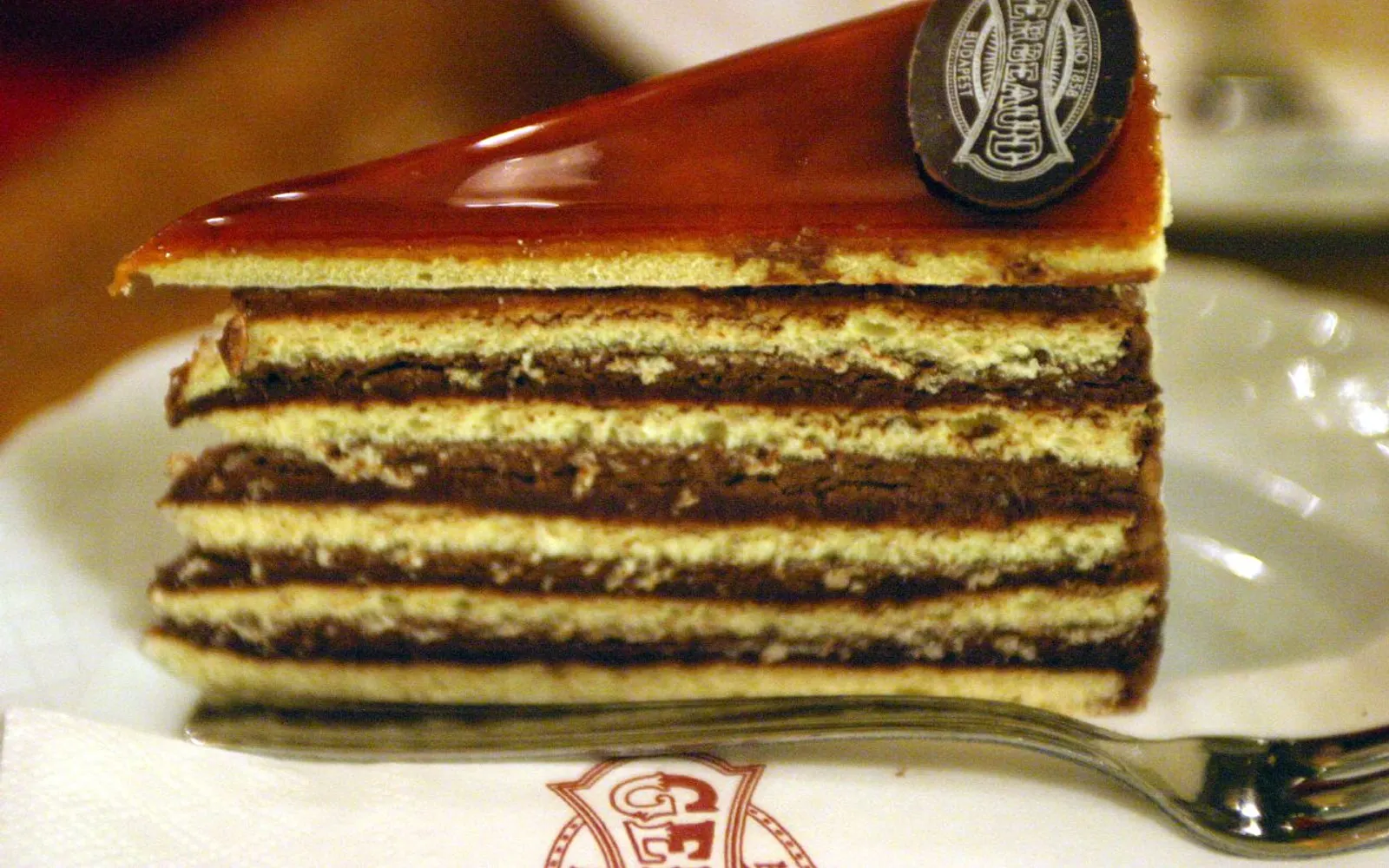
The cake that put Hungary on the global dessert map. Created by confectioner József C. Dobos in 1884 and served to Emperor Franz Joseph and Empress Elisabeth, it consists of 5 to 7 thin sponge layers alternating with chocolate buttercream, finished on top with a sheet of hard caramel that is the cake's signature. The taste is rich but not cloying — the caramel top gives a crunch unlike any other cake.
- Ask for a slice made fresh that day, not from a freezer. The caramel top should be brittle, not sunken.
- It pairs perfectly with black Hungarian coffee — the bitterness cuts the caramel sweetness.
- Around 700–1,200 forints per slice in old-town cafés.
 #6
#6 Pannonhalma Abbey Wine
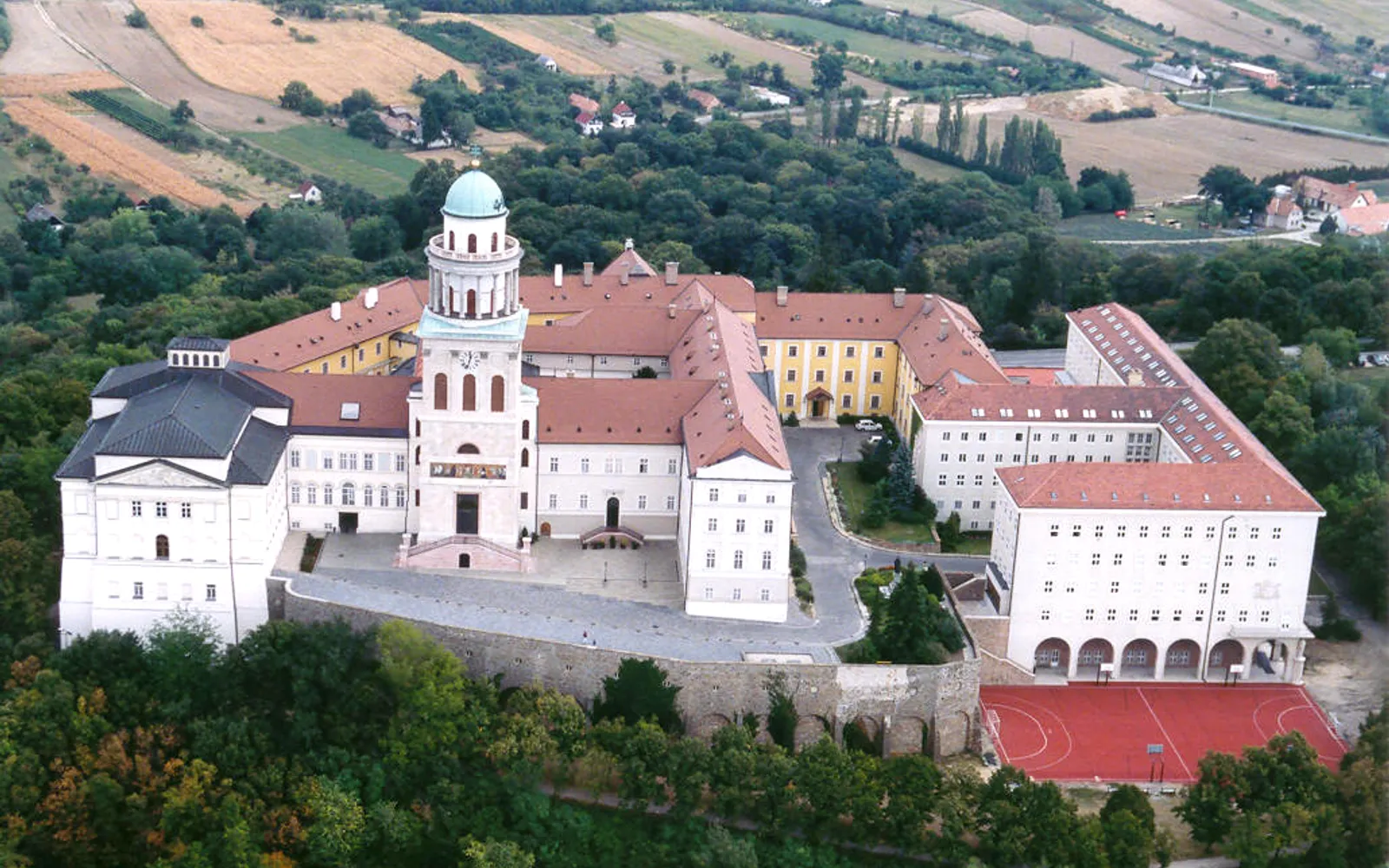
Wine made by Benedictine monks at Pannonhalma Abbey since the 11th century. Today a 57-hectare vineyard on the slopes below the abbey produces high-quality white wines from Rizling Rajnai, Tramini, and Pinot Gris — fresh, floral, with a clean citrus acidity. The wines have won international awards on multiple occasions and make a straightforward bottle to bring home.
- Buy directly from the abbey's own shop — cheaper than in-town retailers, and the stock is fresher. Rizling Rajnai or Tramini are the standout picks.
- Bottles run 4,000–8,000 forints — serious quality for the price.
- Pannonhalma Abbey runs wine-tasting tours in summer; book in advance through the abbey's official website.
Where to stay in Győr for this trip
A well-located hotel means less commuting and more sightseeing. Here are real, top-rated stays in Győr — compare Agoda · Booking · Trip.com in one click.
Barokk Hotel Promenád
Affiliate links — we may earn a commission at no extra cost to you. Details
Hotel Domus Collis
Affiliate links — we may earn a commission at no extra cost to you. Details
ETO Park Hotel Business & Stadium
Affiliate links — we may earn a commission at no extra cost to you. Details
Hotel Kálvária
Affiliate links — we may earn a commission at no extra cost to you. Details
Tours, tickets & activities in Győr
Day tours, attraction tickets and travel essentials for Győr — book ahead on Klook with mobile e-tickets.
Affiliate links — we may earn a commission at no extra cost to you.
Before You Pack
The best Hungarian food in Győr is in the small local restaurants tucked into old Baroque buildings. If you walk past a place and catch the smell of paprika drifting from the kitchen — and the tables inside are full of people speaking Hungarian — go in. Ask the staff what's special today; there's often a seasonal dish that never makes it onto the printed menu.