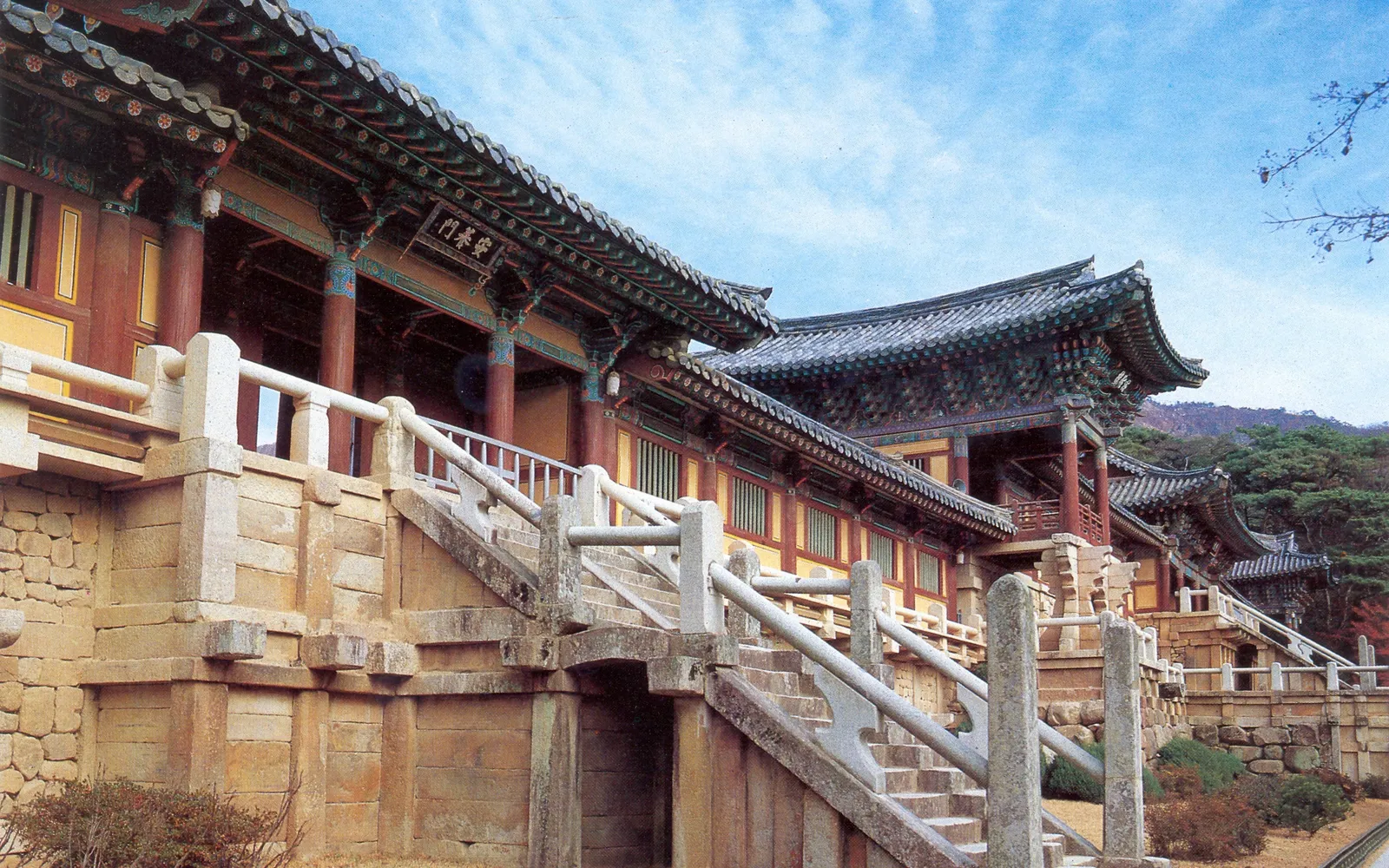
Gyeongju served as the capital of the Silla Kingdom for over 1,000 years — from the 1st century BC until 935 AD — leaving behind a density of heritage that earned it the nickname the museum without walls. The city holds 2 UNESCO World Heritage Sites: Bulguksa Temple and Seokguram Grotto. Add the royal burial mound fields and the oldest surviving observatory in East Asia, and you have a compact city — reachable from Busan in under an hour — where serious history is simply part of the street-level scenery.
 #1
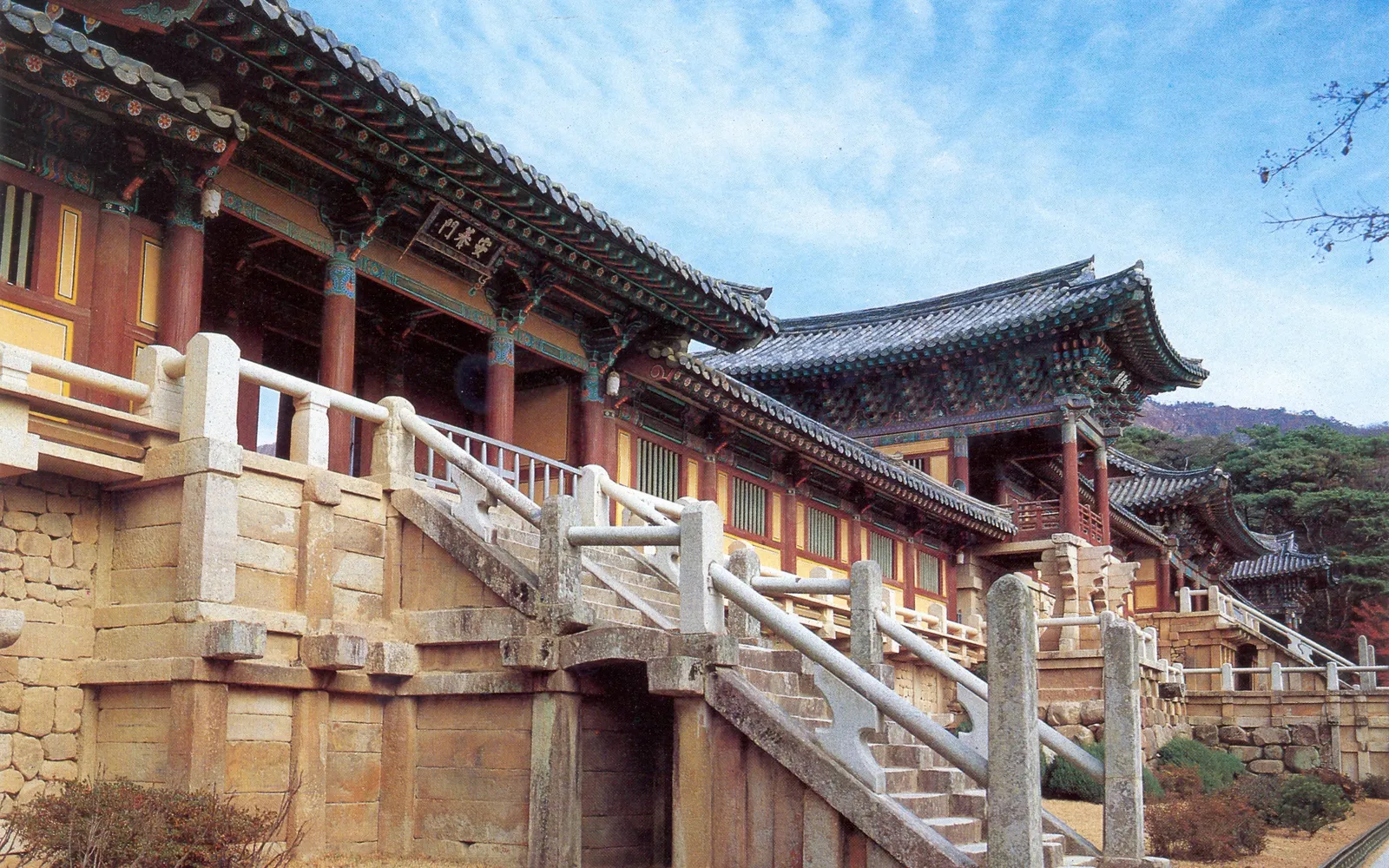
#1 Bulguksa Temple
Korea's most beautiful Buddhist temple and a UNESCO World Heritage Site, founded in 528 AD and extensively rebuilt during the 8th-century Silla period. Inside stand the celebrated Seokga-tap and Dabo-tap stone pagodas, along with carved stone gateways and staircases regarded as the pinnacle of Silla architectural craft. Surrounding pine forest and flower gardens shift colour with every season.
- Buy a combined ticket with Seokguram Grotto to save on admission, then take Bus 12 onward up the mountain.
- Arrive before 9 AM to avoid tour groups and catch the morning light striking the pagodas at its best.
- Autumn (October–November) is the most spectacular season here.
 #2
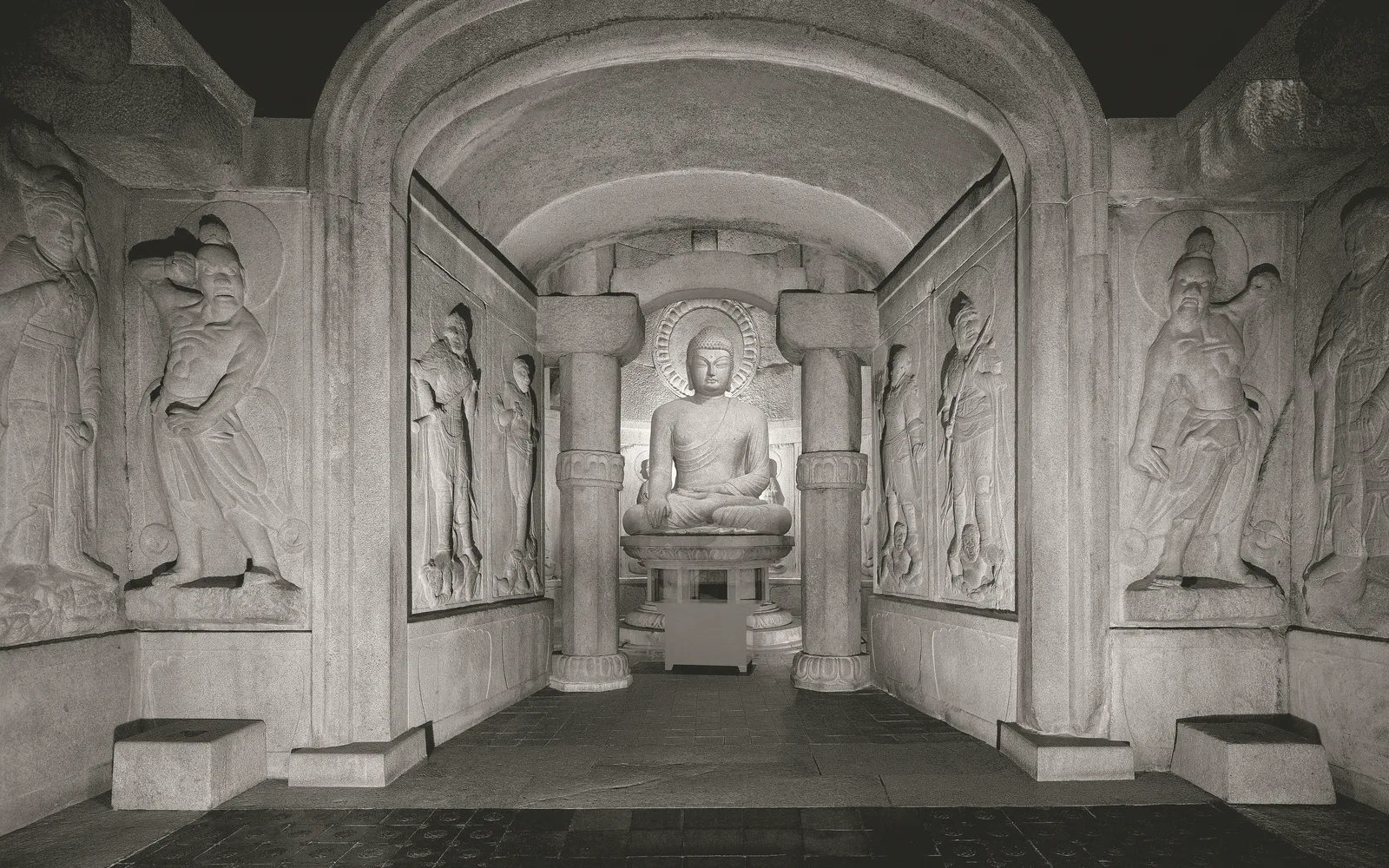
#2 Seokguram Grotto
An artificial Buddhist cave built in the 8th century by Minister Kim Dae-seong, housing a <strong>3.5-metre granite Buddha</strong> ringed by bodhisattvas and celestial beings carved in bas-relief on the chamber walls. Considered one of the most complete examples of Buddhist art in East Asia, it shares UNESCO World Heritage status with Bulguksa Temple.
- Visitors view the statue through glass — manage your camera exposure carefully to avoid reflections.
- The forest trail from Bulguksa up through the pine trees takes 30 to 40 minutes and is excellent on its own.
- At dawn, the sun rises from the Sea of Japan directly in front of the grotto — the most striking view of the year.
 #3
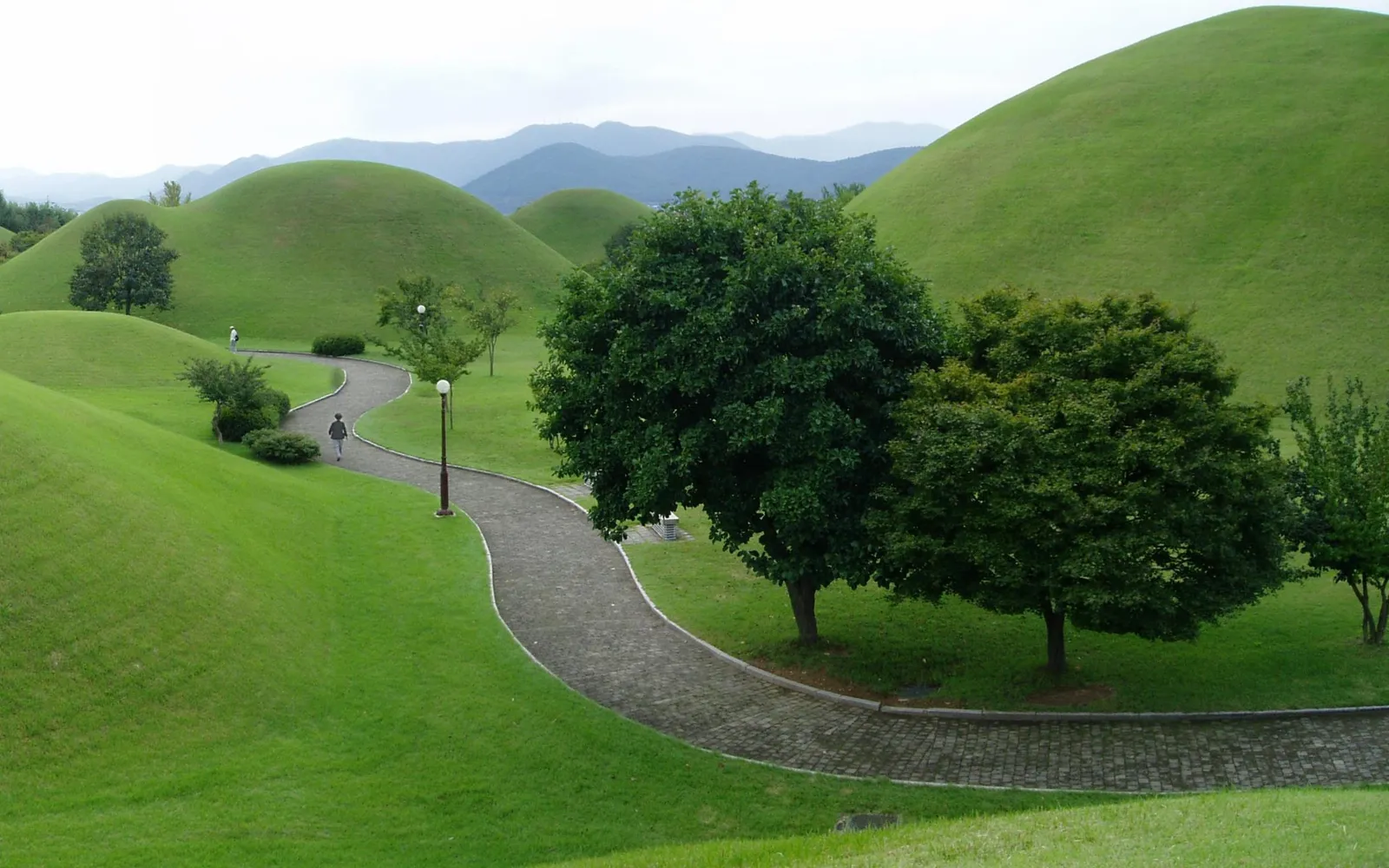
#3 Daereungwon Tomb Complex (Tumuli Park)
A <strong>12.2-hectare</strong> park containing more than <strong>23 burial mounds</strong> of Silla kings and nobles, some rising to <strong>23 metres</strong>. Visitors can enter the Cheonmachong tomb to view artefacts and the famous Cheonma (Heavenly Horse) painting — the white horse mural excavated in <strong>1973</strong>. The atmosphere is strangely timeless, and you can wander freely across the grass between the mounds.
- Entry to Cheonmachong tomb is included with the park ticket; inside you'll find Silla gold crowns and jewellery on display.
- Sambap Street along the outer edge of the park has the best rice-set restaurants in the city.
- After dark, the outer public grounds stay open and the mounds are lit — worth a slow evening walk.
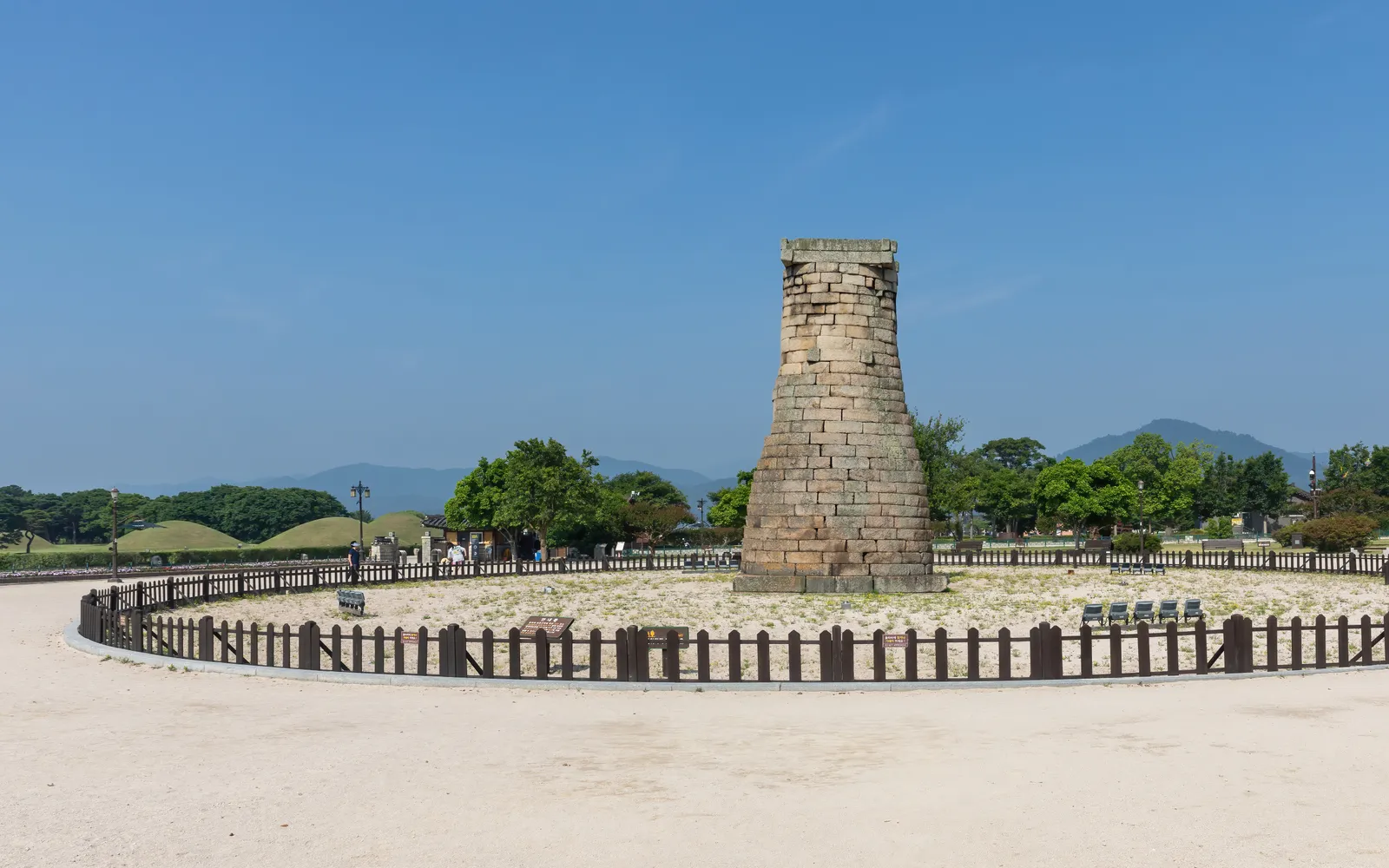 #4
#4 Cheomseongdae Observatory
The oldest surviving intact observatory in East Asia, built during the reign of Queen Seondeok around <strong>633–647 AD</strong> using <strong>362 granite stones</strong> stacked to a height of <strong>9.4 metres</strong> — figures with deliberate astronomical significance. The slightly wider-at-the-top cylinder is a distinctive icon of both Gyeongju and Korea as a whole.
- In late October, pink muhly grass blooms in full around the observatory — one of the most photogenic scenes in the city.
- Entry is free; the surrounding grounds are open all day.
- Wolseong Palace and Gyerim Forest are a short walk away, making this part of a natural historic loop.
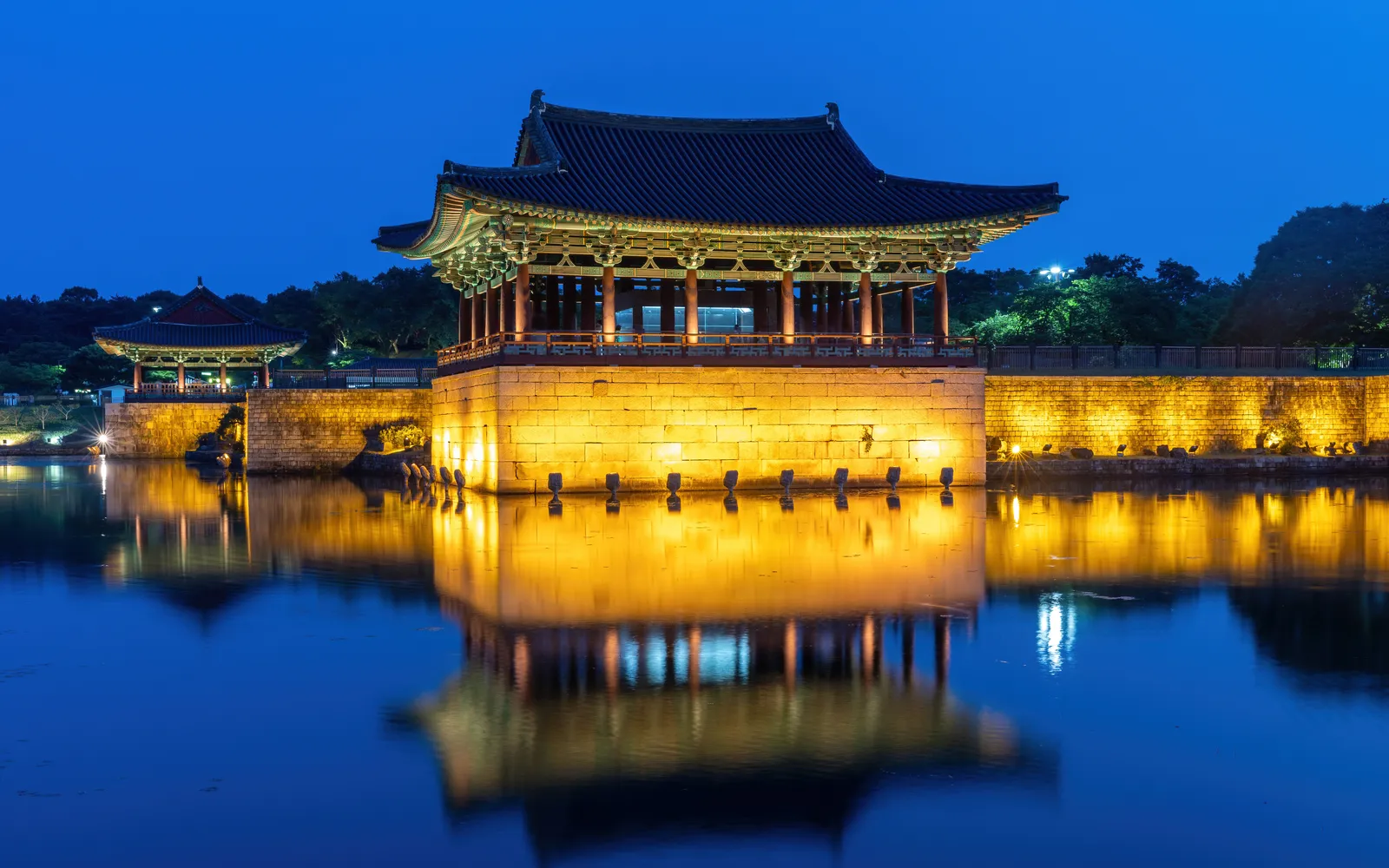 #5
#5 Donggung Palace and Wolji Pond (Anapji)
A former Silla crown prince's palace built in <strong>674 AD</strong>, surrounded by Wolji Pond (originally named Anapji) — a shaped artificial lake with three small islands. Three palace halls have been restored to their original grandeur. On calm evenings, the reflected light across the pond surface ranks among Gyeongju's most beautiful views.
- Come after 7 PM for the illuminated reflection — far more photogenic than daytime.
- Admission is charged separately from other sites, but the price is very reasonable.
- Restaurants and cafés along the pond stay open late — a good spot to decompress after a full day of sightseeing.
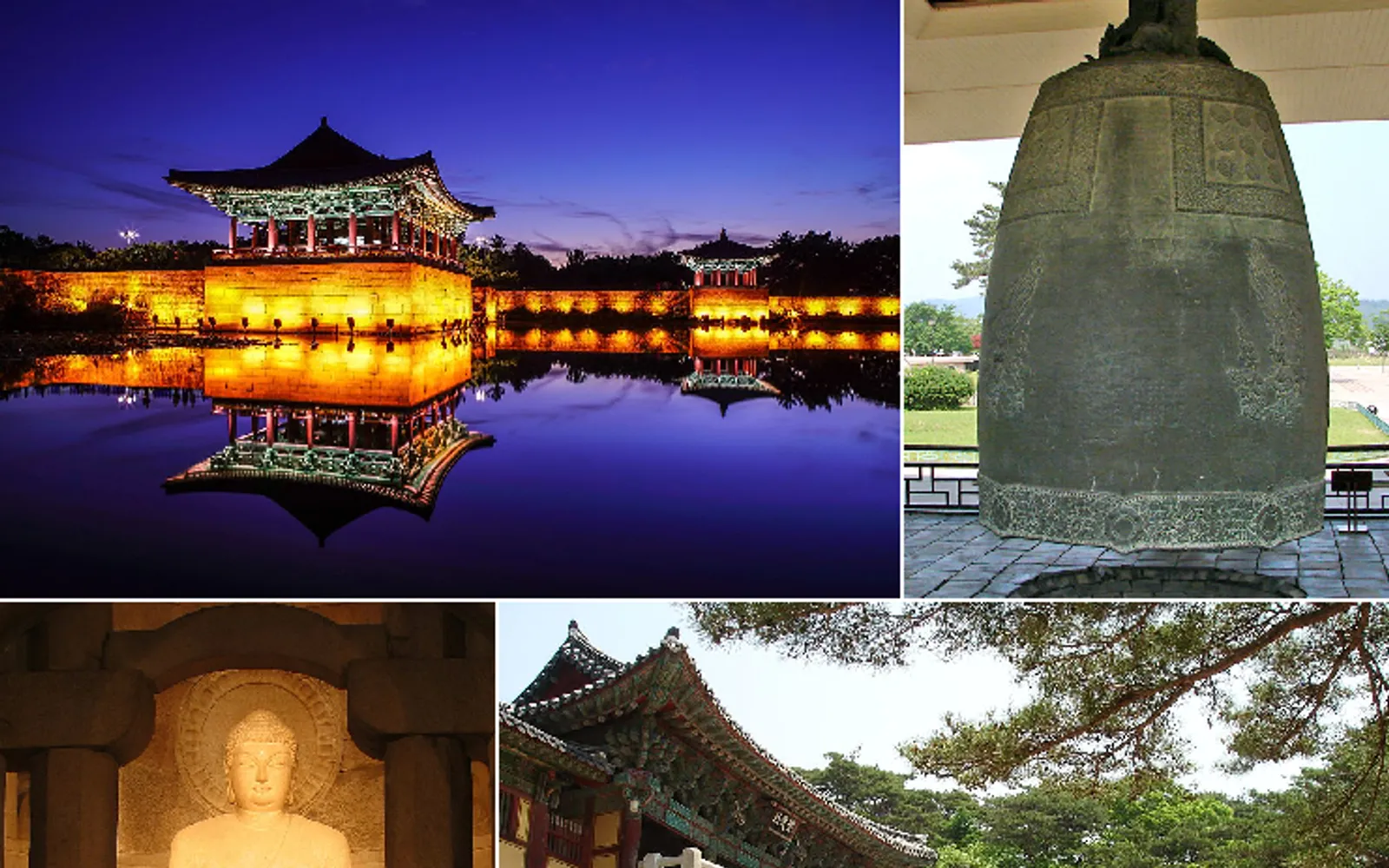 #6
#6 Hwangnidan-gil Street
An arts and lifestyle street running up the hillside next to the royal burial park — Gyeongju's answer to Itaewon. Traditional hanok houses have been converted into atmospheric cafés, small gift shops, local designer boutiques, and specialty snack stores unique to Gyeongju. From the top, you look down over the enormous green burial mounds below — a view you won't find anywhere else.
- Hwangnam-ppang — a sweet red-bean pastry that originated in this neighbourhood — is worth seeking out.
- Daytime is better for browsing; most shops close before 8 PM.
- Some shops offer hanbok rental so you can wear traditional dress with the burial mounds as a backdrop.
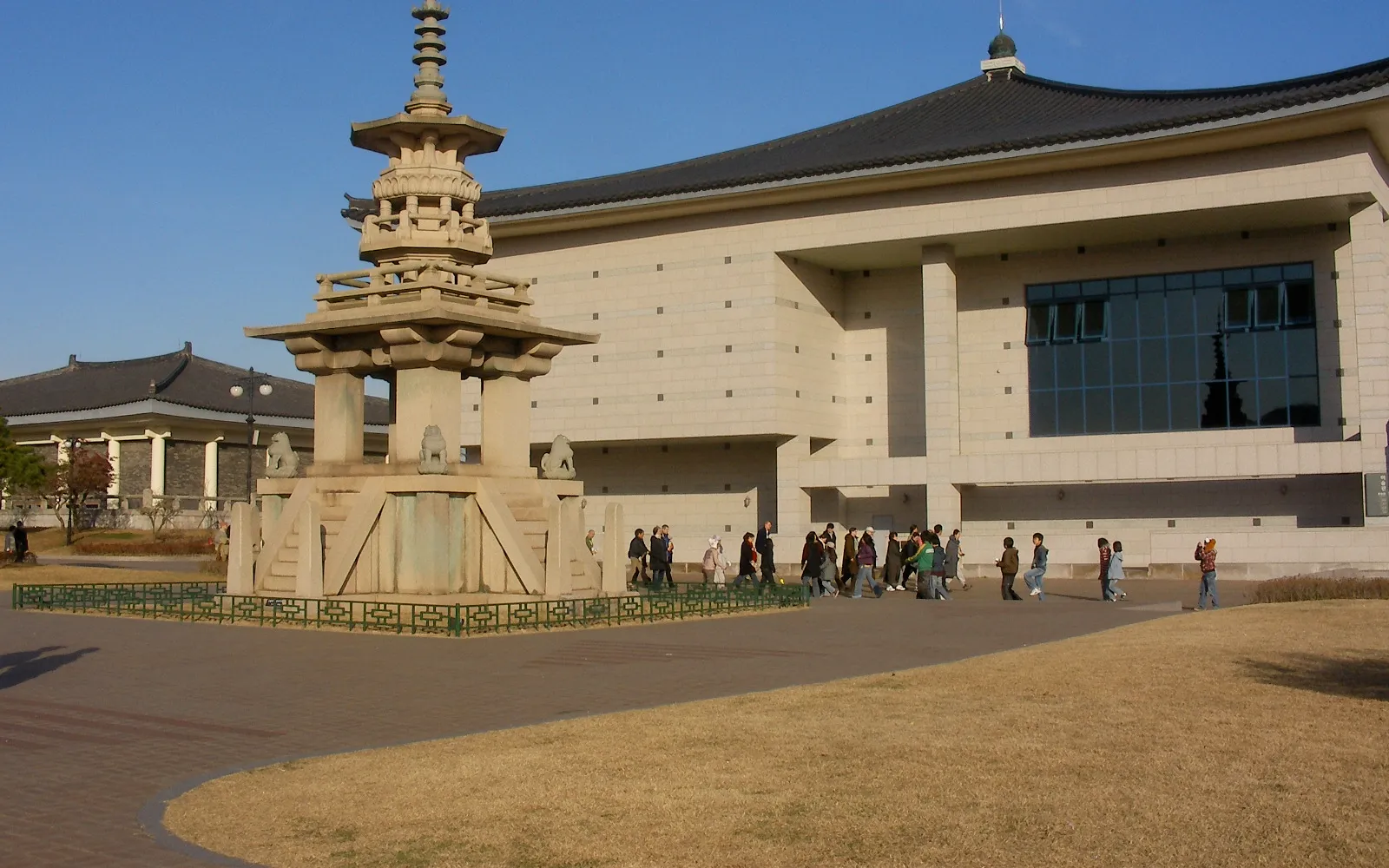 #7
#7 Gyeongju National Museum
The treasury of Silla artefacts — more than <strong>30,000 objects</strong> recovered from excavations across Gyeongju. Highlights include the rare Silla gold crown gallery, the <strong>25-tonne Emille Bell</strong>, and an extensive collection of ceramics and gold jewellery demonstrating the extraordinary skill of Silla craftspeople. The outdoor museum grounds also feature stone pagodas and the ruins of the great Hwangnyongsa temple site.
- Admission is free year-round; allow at least 2 to 3 hours.
- Ask at the information desk for a free English audio guide.
- The museum gift shop sells quality gold crown replicas at fair prices.
 #8
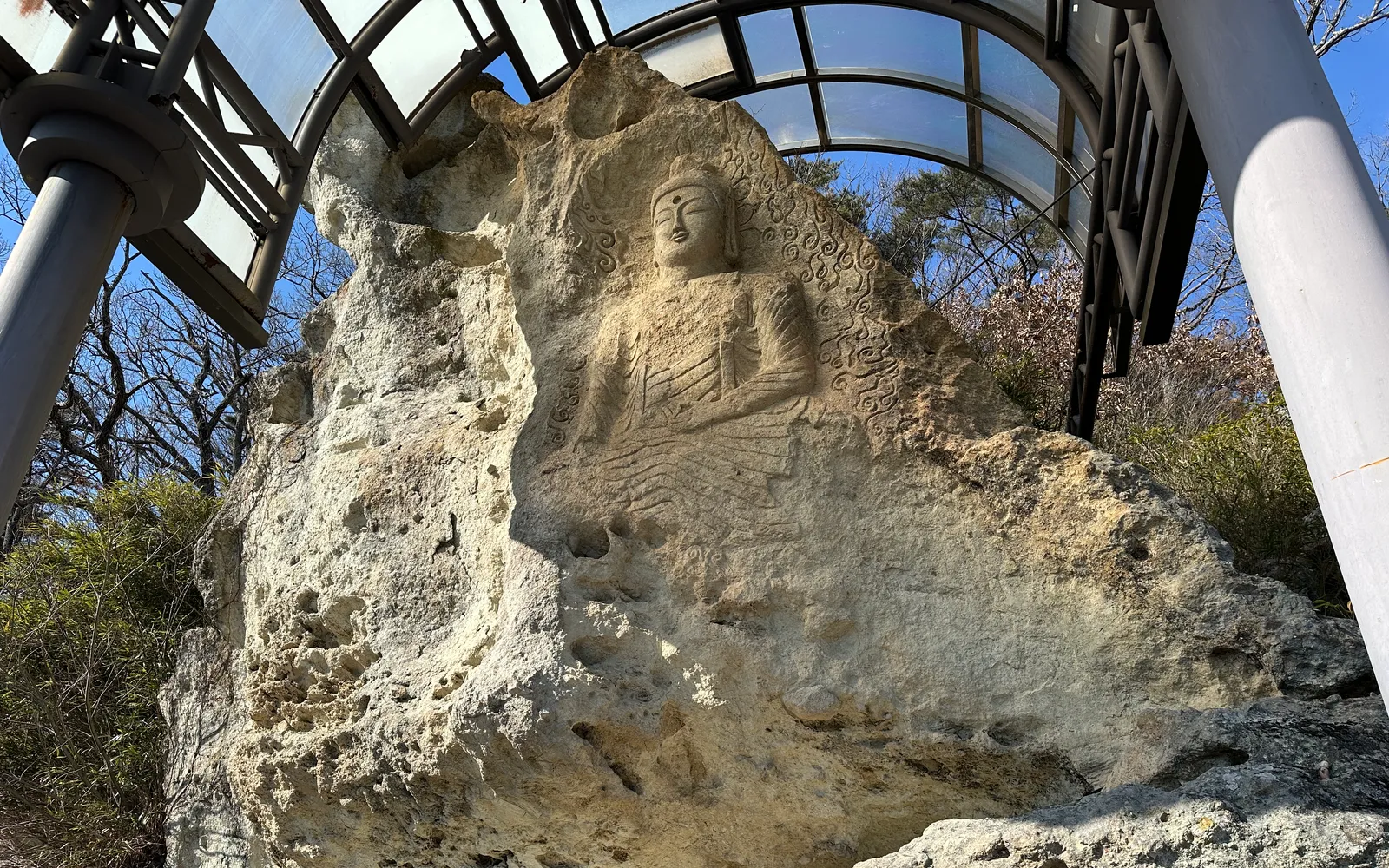
#8 Golgulsa Temple
Korea's only rock-cave Buddhist temple, carved into the cliff face of Mount Hamwol during the <strong>7th-century Silla period</strong>. The centrepiece is a large high-relief Buddha at the summit, and every morning monks practise <em>taekkyeon</em> — an ancient Korean martial art — in the grounds. Overnight Temple Stay programmes are available for visitors who want to meditate alongside the resident monks.
- The taekkyeon demonstrations run daily at 10 AM and 3 PM, free for visitors to watch.
- Book a Temple Stay programme online in advance for an overnight experience with the monks.
- The path up to the cliff Buddha is steep — wear appropriate footwear.
Where to stay in Gyeongju for this trip
A well-located hotel means less commuting and more sightseeing. Here are real, top-rated stays in Gyeongju — compare Agoda · Booking · Trip.com in one click.
Soi Hanok Stay
Affiliate links — we may earn a commission at no extra cost to you. Details
Hanok Prince
Affiliate links — we may earn a commission at no extra cost to you. Details
Blueboat Hostel Gyeongju
Affiliate links — we may earn a commission at no extra cost to you. Details
Hilton Gyeongju
Affiliate links — we may earn a commission at no extra cost to you. Details
Tours, tickets & activities in Gyeongju
Day tours, attraction tickets and travel essentials for Gyeongju — book ahead on Klook with mobile e-tickets.
Affiliate links — we may earn a commission at no extra cost to you.
Before You Pack
Gyeongju offers something genuinely different from any other city in Korea. History here isn't contained behind museum glass — it's spread across street corners, grass mounds, and every stone you walk past.