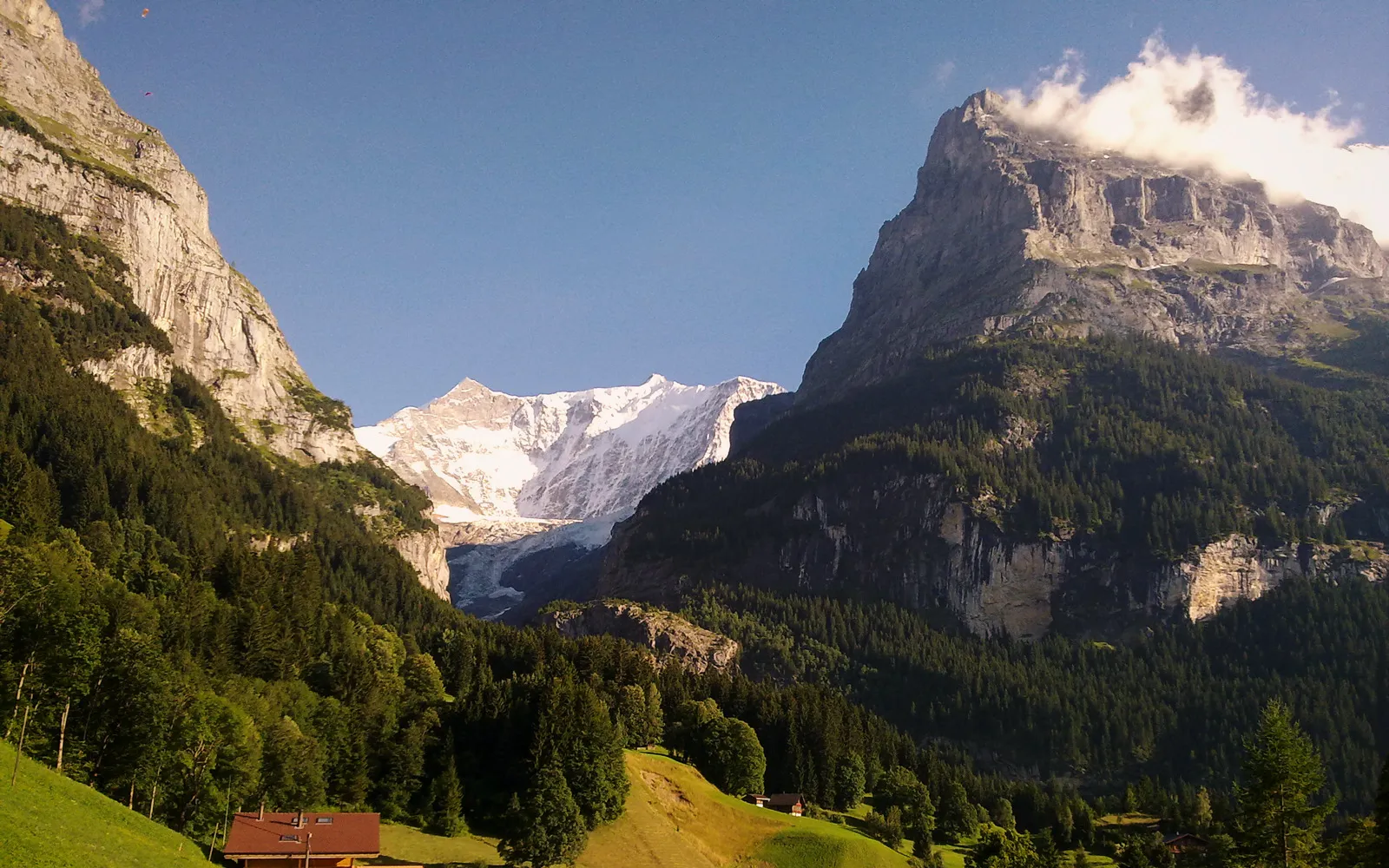
Food in Grindelwald is straightforward and genuinely good — because the ingredients come from cows grazing on alpine pastures practically within sight of your table. Swiss cheese from the Bernese Oberland, especially Gruyère and Emmental, anchors almost every dish on the menu, and the depth of flavour is in a different league from the same varieties sold in supermarkets back home. At minimum, sit down for one fondue dinner. Skip it and you haven't really been to Switzerland.
 #1
#1 Cheese Fondue
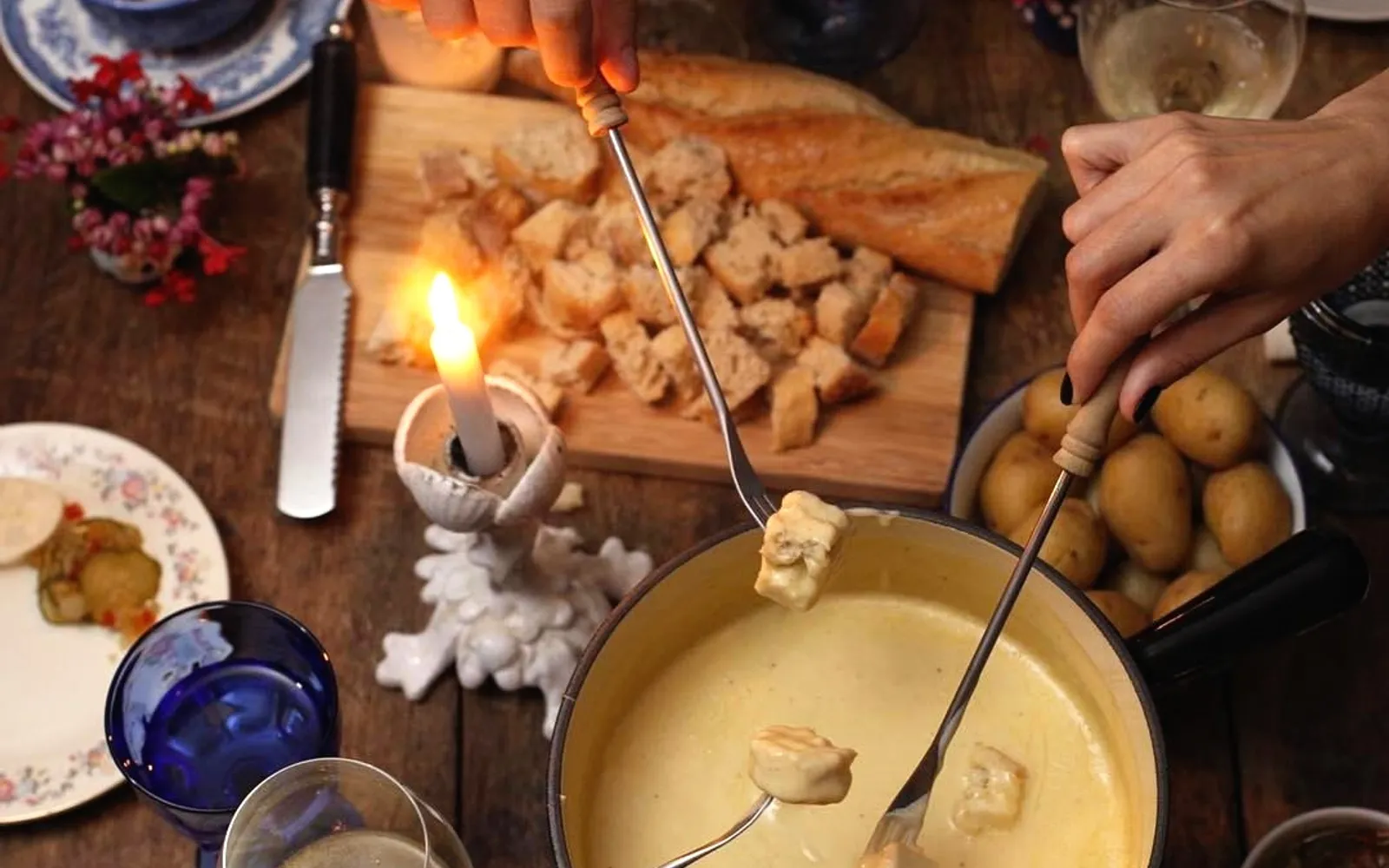
Switzerland's signature dish — and Grindelwald pulls it off exceptionally well because the cheese is sourced from nearby farms. The classic recipe blends Gruyère and Vacherin with dry white wine and garlic, melted to a perfectly smooth consistency. You eat by skewering dry bread on a long fork and swirling it through the pot, keeping the fork moving to stop the cheese scorching the bottom. There's even a social rule: drop your bread in the pot and you owe drinks for the table. The warmth of the whole ritual goes well beyond the food itself.
- Order Fondue Moitié-Moitié (half-half) for the most balanced flavour on your first try — skip the versions with extra add-ins until you've had the classic.
- Traditional Swiss practice is to drink hot tea or dry white wine with fondue, not cold water — locals believe cold liquid makes the cheese congeal in the stomach.
- A proper fondue dinner at a good restaurant runs 30–45 CHF per person. For a lighter spend, check the Italian pizza places in the village — many carry fondue on their menus too.
 #2
#2 Raclette
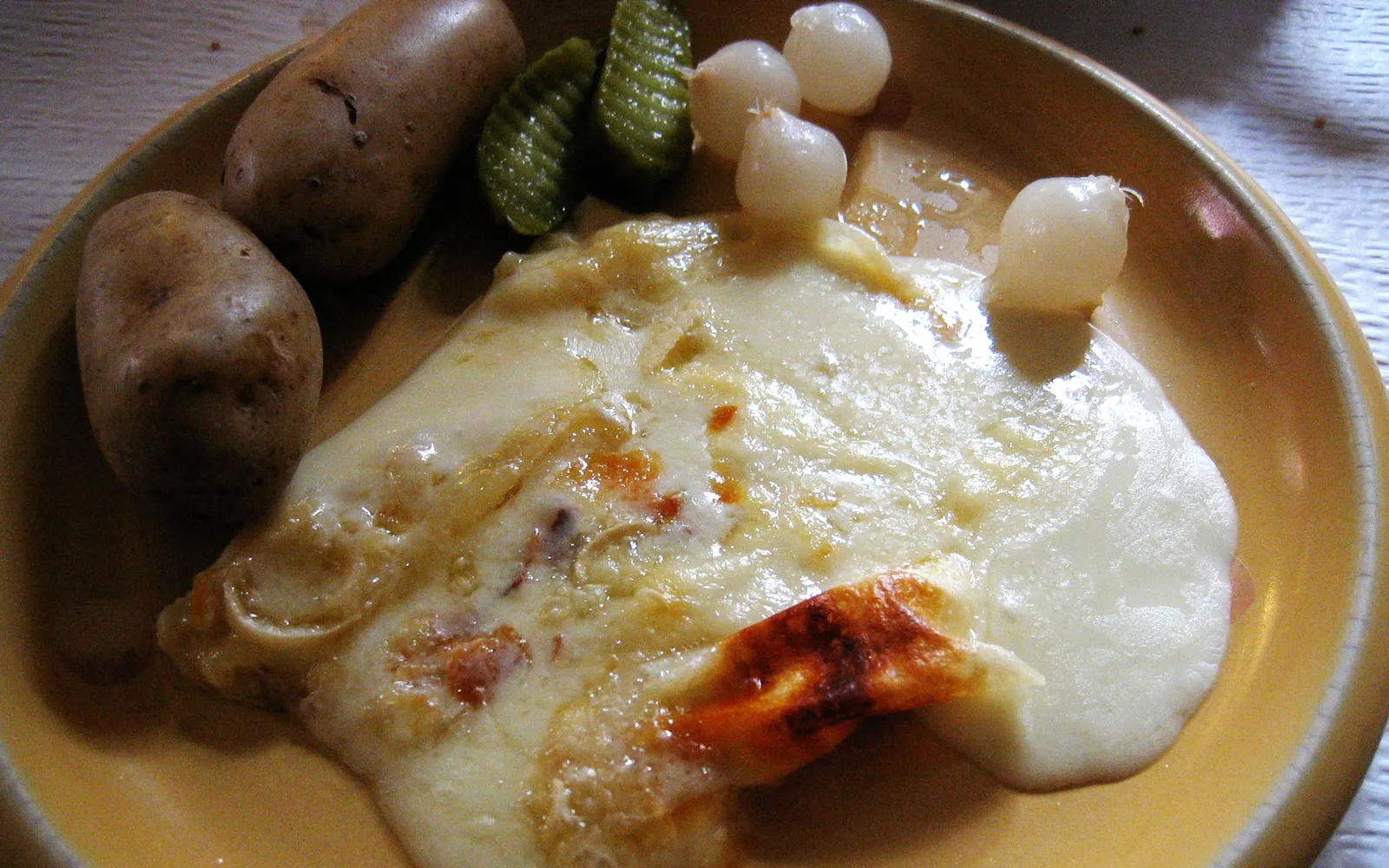
Simple, addictive, and easy to underestimate. A half-wheel of raclette cheese is brought close to heat until the outer edge melts, then scraped directly onto hot boiled potatoes and served with cornichons and pickled onions. The name comes from the French <em>racler</em> — to scrape — which is exactly the technique. The intense, buttery richness of the melted cheese against the mild tartness of the pickles is a pairing that should not work but absolutely does. It tends to be slightly cheaper than fondue.
- You can ask for extra boiled potatoes (Pellkartoffeln) at no additional charge in most places — one portion of cheese pairs well with 2–3 potatoes.
- The tabletop version with a small electric grill is more common today than the traditional open-fire method. Both deliver the same result.
- Bernese Oberland raclette cheese is noticeably milder than its French counterpart. Ask the staff where the cheese comes from — it's worth knowing.
 #3
#3 Rösti
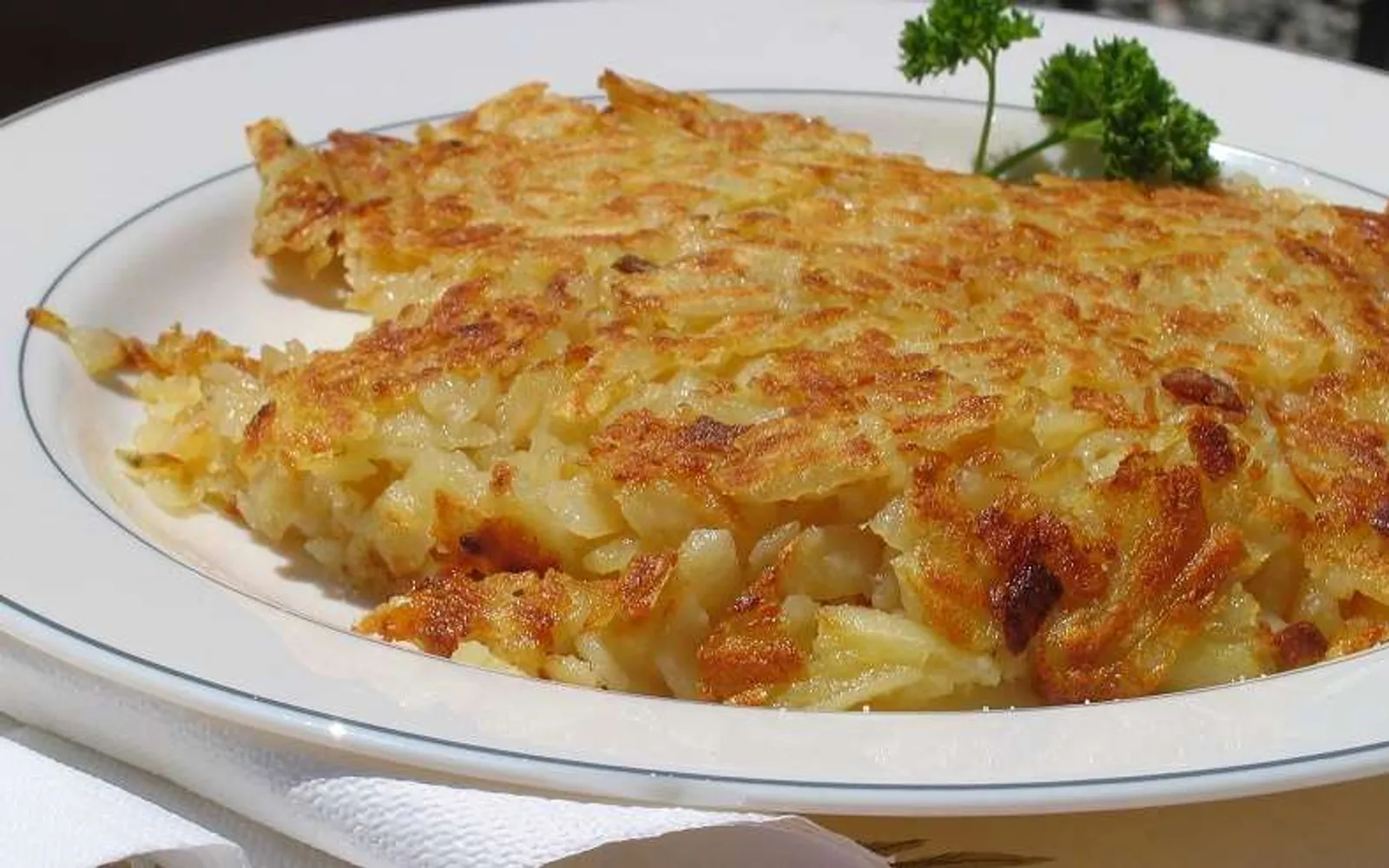
Switzerland's most modest national dish — and one of the hardest to execute well. Good rösti starts with coarsely grated potatoes that are half-boiled first, then fried in butter until both sides reach a deep golden crisp with a soft, butter-rich interior. It's served as a main with fried eggs, melted cheese, smoked bacon, or spinach. Swiss Germans even coined the term <em>Röstigraben</em> — the rösti divide — for the cultural fault line between German- and French-speaking Switzerland, because the German side eats far more of it. Grindelwald sits firmly in German-speaking Switzerland, which means the rösti here is particularly good.
- Good rösti is always made fresh, never reheated from frozen. Ask the staff if it's fresh-made before you order.
- Rösti is best at breakfast or lunch — a breakfast set runs 15–22 CHF including coffee. Dinner prices tend to be higher.
- Try Bernese Rösti, which folds Gruyère, onions, and bacon directly into the cake. It's the version the Bernese Oberland locals prefer.
 #4
#4 Älplermagronen
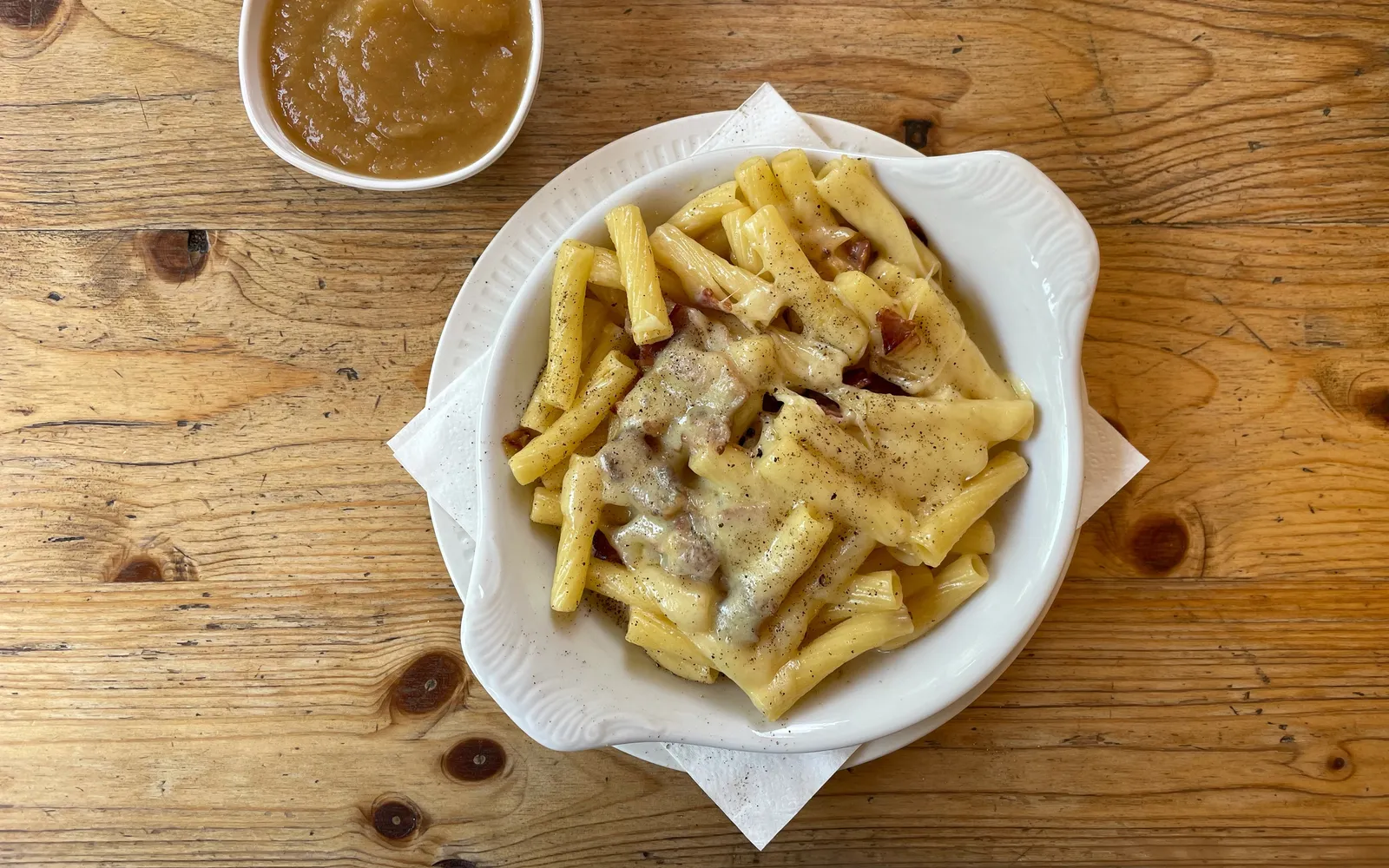
The original fuel of Swiss alpine herders: a one-pot dish built from whatever was available on the high pastures. Macaroni and boiled potatoes are combined with hard cheese, butter-fried onions, and cream, then served alongside apple sauce (Apfelmus) — a pairing that sounds odd until you try it. The faint sweetness and acidity of the apple cuts the richness of the cheese in exactly the right way. This is serious comfort food and a genuinely high-calorie meal, ideal for the end of a long hiking day when you're properly hungry.
- Order it at a mountain restaurant — at the First station or Kleine Scheidegg, for example — and the setting makes the dish taste even better than it would in the village.
- The apple sauce is not optional. Eat a forkful of cheesy macaroni alongside a spoonful of Apfelmus — together, not separately.
- Älplermagronen is the best-value lunch on the mountain: 18–25 CHF and filling enough that you likely won't need dinner.
 #5
#5 Swiss Chocolate
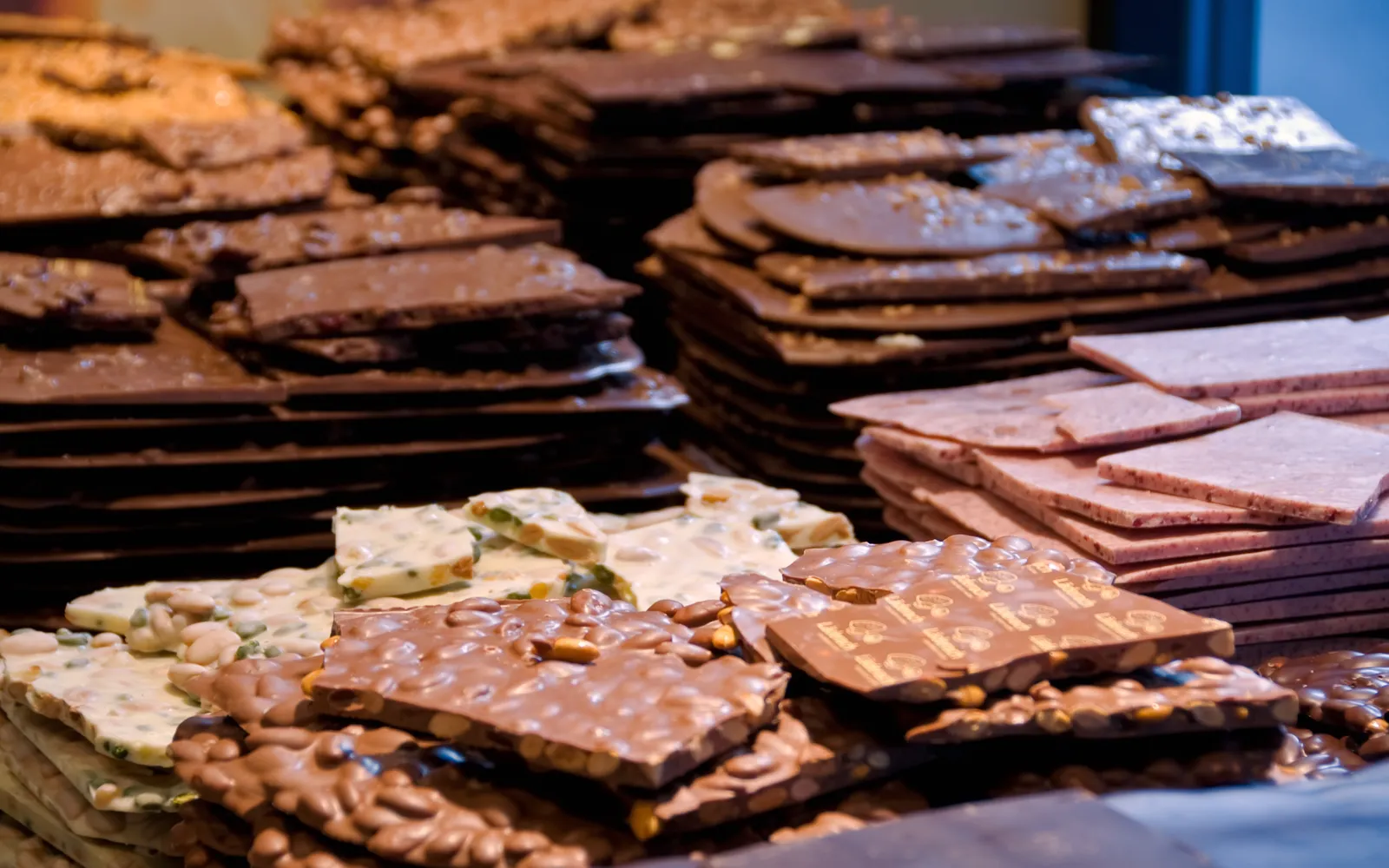
Switzerland produces some of the finest chocolate in the world and also consumes more of it per capita than any other country. Legendary brands — Lindt, Toblerone, Cailler, Frey — are all Swiss. But small shops in alpine villages often use fresh local milk from nearby farms, and the difference shows: creamier, more intense, and noticeably more fragrant than the same brands sold in supermarkets. Real Swiss milk chocolate melts more slowly in the mouth and carries a distinctly milky aroma that sets it apart.
- Buy chocolate in Grindelwald's village shops rather than at the airport — prices run 20–30% lower and you'll find local editions that never make it to duty-free.
- Chocolate fondue is offered as a dessert in several restaurants: Swiss chocolate melted for dipping fresh fruit, and a good choice for a special dinner.
- Toblerone is everywhere, but Läderach and Camille Bloch are the brands locals actually buy for themselves. Both are available at Migros and Coop supermarkets in the village.
 #6
#6 Meringue with Double Cream
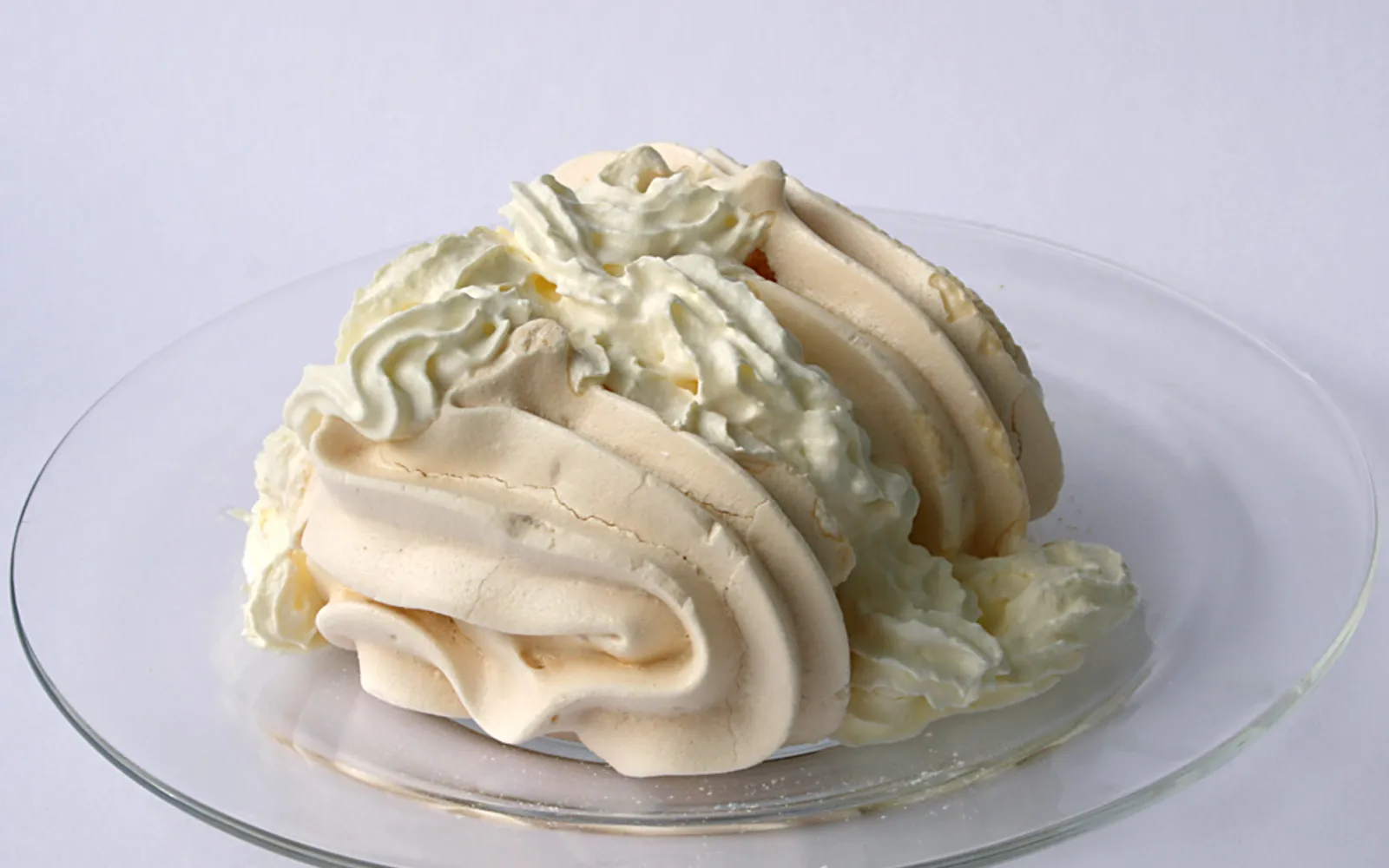
A dessert the Bernese Oberland is specifically known for. The combination of dry-crisp meringue and fresh double cream — unwhipped, poured thick, the kind you cannot find outside Switzerland — turns out to be one of those pairings that feels inevitable once you've had it. Swiss meringue is crisp outside and subtly soft within, baked at a low temperature for several hours. The gentle sweetness of the meringue against the heavy richness of the cream makes it dangerously easy to finish without noticing.
- Swiss double cream sits at 45–50% fat — far richer than standard whipping cream. The texture and flavour are in a different category. This is not the version to skip.
- Meiringen, a town just outside Grindelwald, claims to be the birthplace of meringue. If your schedule allows a stop, try the version from the original local shops there.
- Pastry shops in Grindelwald typically bake meringue fresh daily. You can take some back to your hotel, but eat them the same day — they absorb moisture and turn sticky overnight.
Where to stay in Grindelwald for this trip
A well-located hotel means less commuting and more sightseeing. Here are real, top-rated stays in Grindelwald — compare Agoda · Booking · Trip.com in one click.
Belvedere Swiss Quality Hotel
Affiliate links — we may earn a commission at no extra cost to you. Details
Hotel Bergwelt
Affiliate links — we may earn a commission at no extra cost to you. Details
Eiger Selfness Hotel
Affiliate links — we may earn a commission at no extra cost to you. Details
Aspen Alpin Lifestyle Hotel
Affiliate links — we may earn a commission at no extra cost to you. Details
Tours, tickets & activities in Grindelwald
Day tours, attraction tickets and travel essentials for Grindelwald — book ahead on Klook with mobile e-tickets.
Affiliate links — we may earn a commission at no extra cost to you.
Before You Pack
Most restaurants in Grindelwald operate seasonally. During peak winter (December–March) and summer (June–September) periods, nearly everything is open. Shoulder season can mean fewer options, so check ahead. Book dinner reservations in advance at any restaurant with a good reputation — especially for fondue.