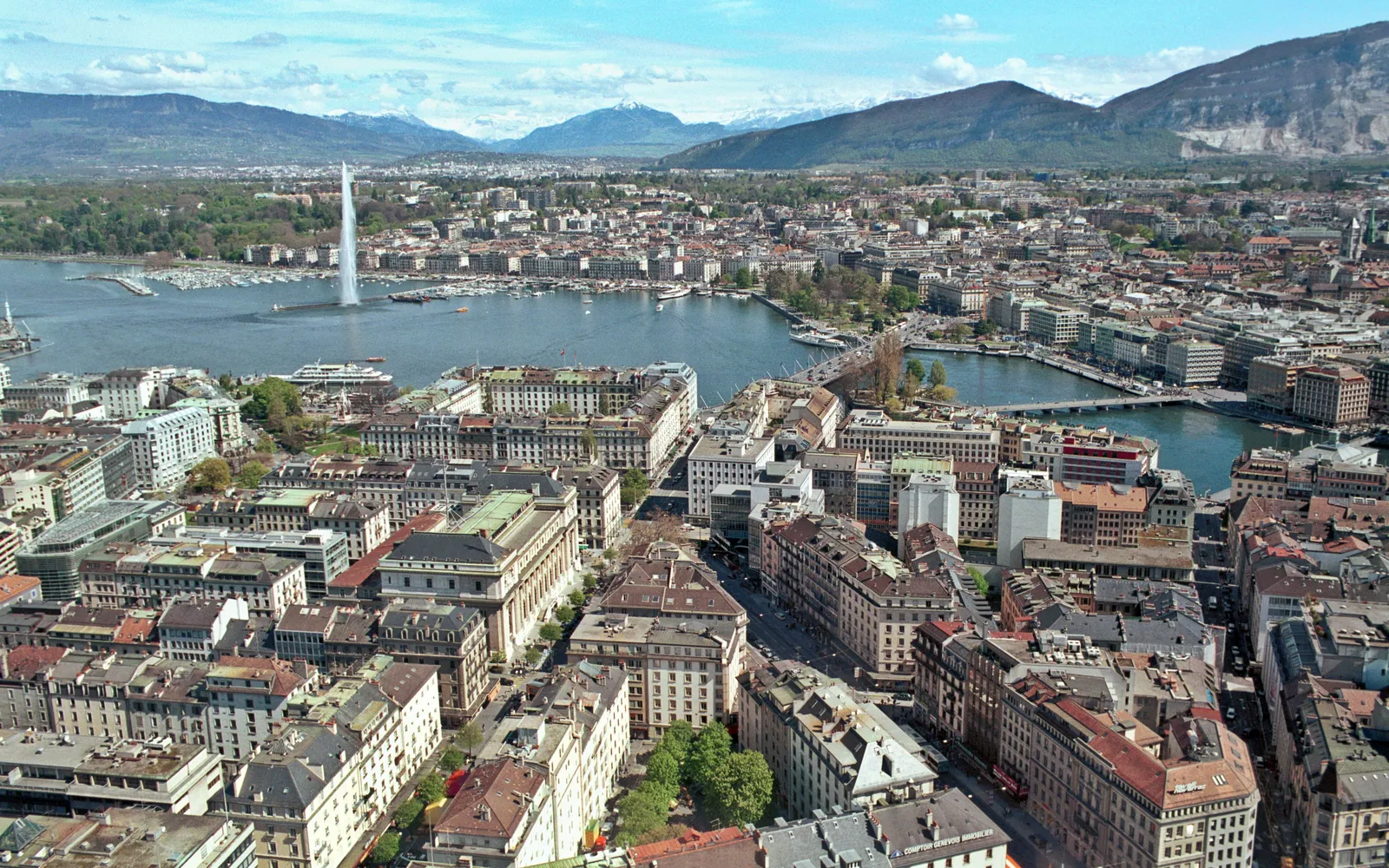
Geneva is more than watches and chocolate. It is a quietly beautiful city — green-blue lake water framed by the Alps, and a fountain that fires 140 metres into the air as its most recognisable landmark on earth. The lanes of Vieille-Ville hide a medieval cathedral and decades-old cafés around every corner. One thing to know upfront: Geneva is one of the most expensive cities in Europe — budget carefully so the price tags don't come as a shock.
 #1
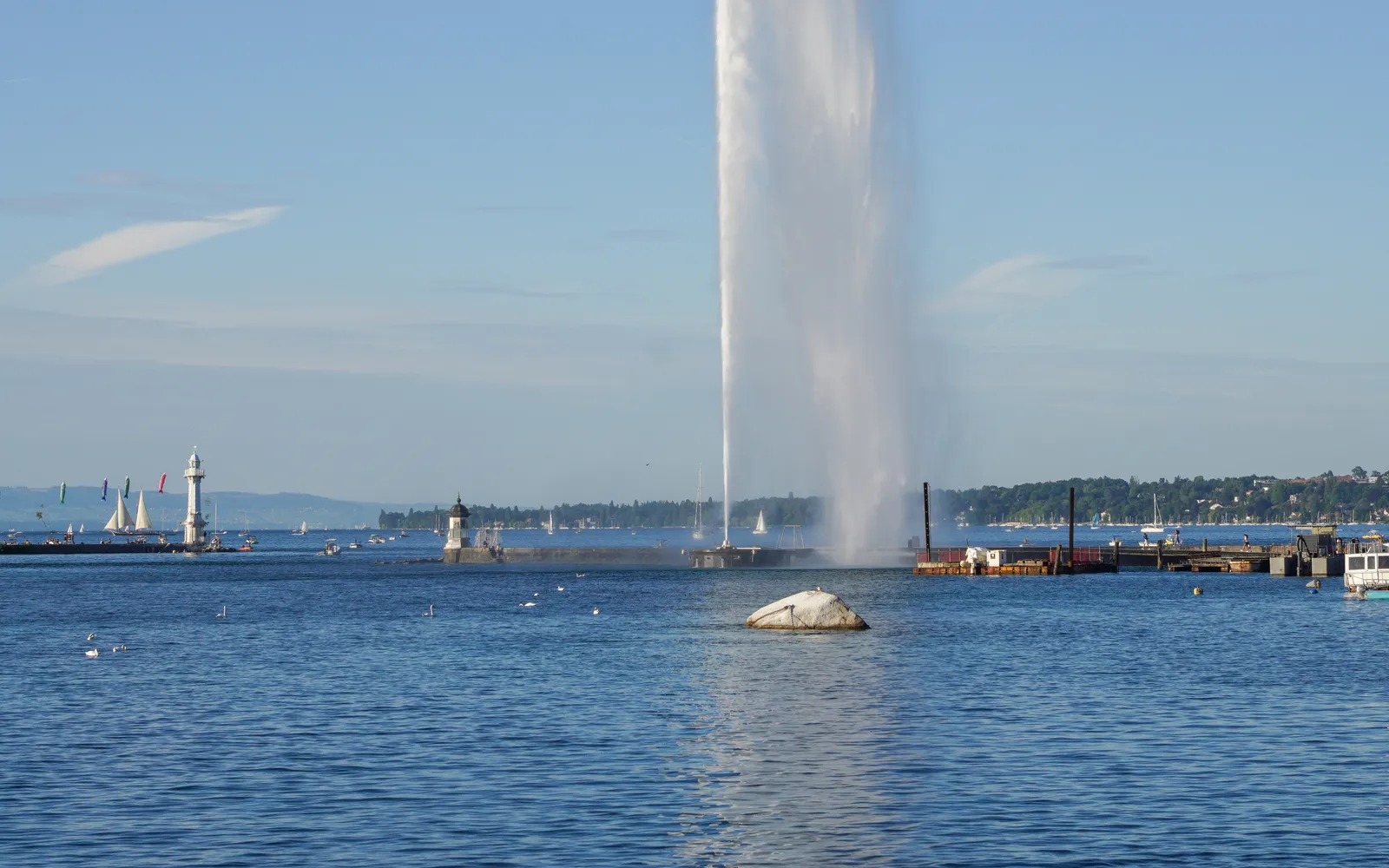
#1 Jet d'Eau
Geneva's defining landmark fires more than 140 metres into the air — <strong>500 litres of water per second</strong> at <strong>200 km/h</strong>. Built in <strong>1891</strong> to bleed off excess pressure from the city's hydraulic network, it has since become one of the most recognised water features on the planet. A wooden pier leads out to the fountain's base, where you can stand close enough to feel the cold mist — just know that on windy days the spray drenches everyone underneath.
- Walking to the end of the pier to stand at the fountain's base is free during operating hours — afternoon light often produces a rainbow right there.
- On windy days the plume tilts sharply and everyone nearby gets soaked. Bring a waterproof layer or clothes you don't mind getting wet.
- The best photography angle is from Quai du Mont-Blanc on the opposite shore at golden hour in the morning, or in the evening when the fountain is lit up.
 #2
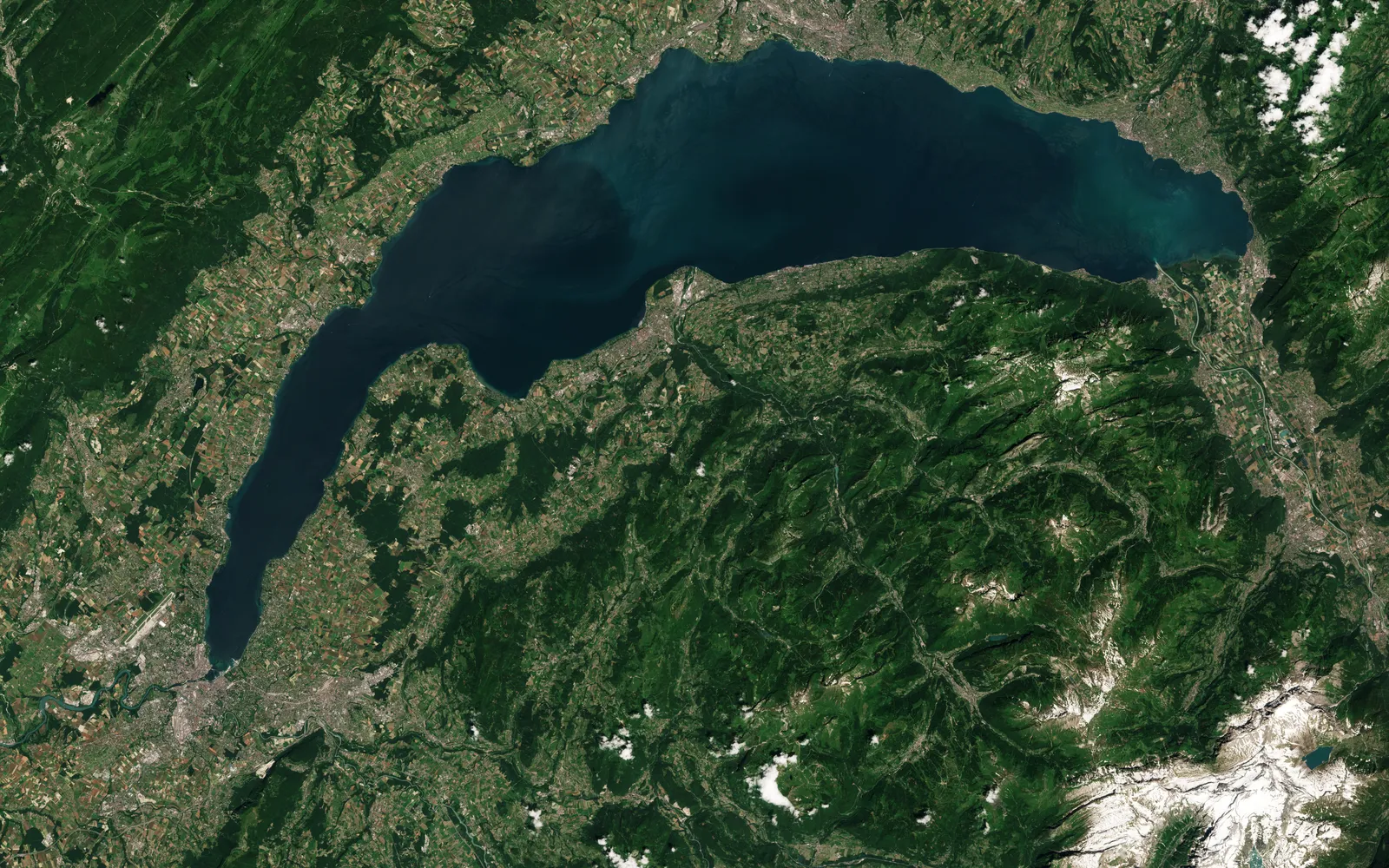
#2 Lake Geneva
<strong>Western Europe's largest freshwater lake</strong>, shared between Switzerland and France, with an average depth of <strong>150 metres</strong>. Geneva's lakeside promenade stretches several kilometres through flower gardens with Mont Blanc — at more than <strong>4,800 metres</strong> — visible as a backdrop on clear days. You can take a ferry across, cruise toward Lausanne or Montreux, or simply walk the quays and watch the Alps change colour through the afternoon.
- Rent a bike and ride along Quai du Mont-Blanc and Quai Gustave-Ador. Rental costs around <strong>10–15 CHF per hour</strong>.
- CGN (Compagnie Générale de Navigation) runs lake cruises to Lausanne and Montreux — roughly 2 to 4 hours and far more scenic than the train. Tickets run <strong>35–60 CHF</strong>.
- Bains des Pâquis is a public bathing facility built directly on the lake. Entry is just <strong>2 CHF</strong>.
 #3
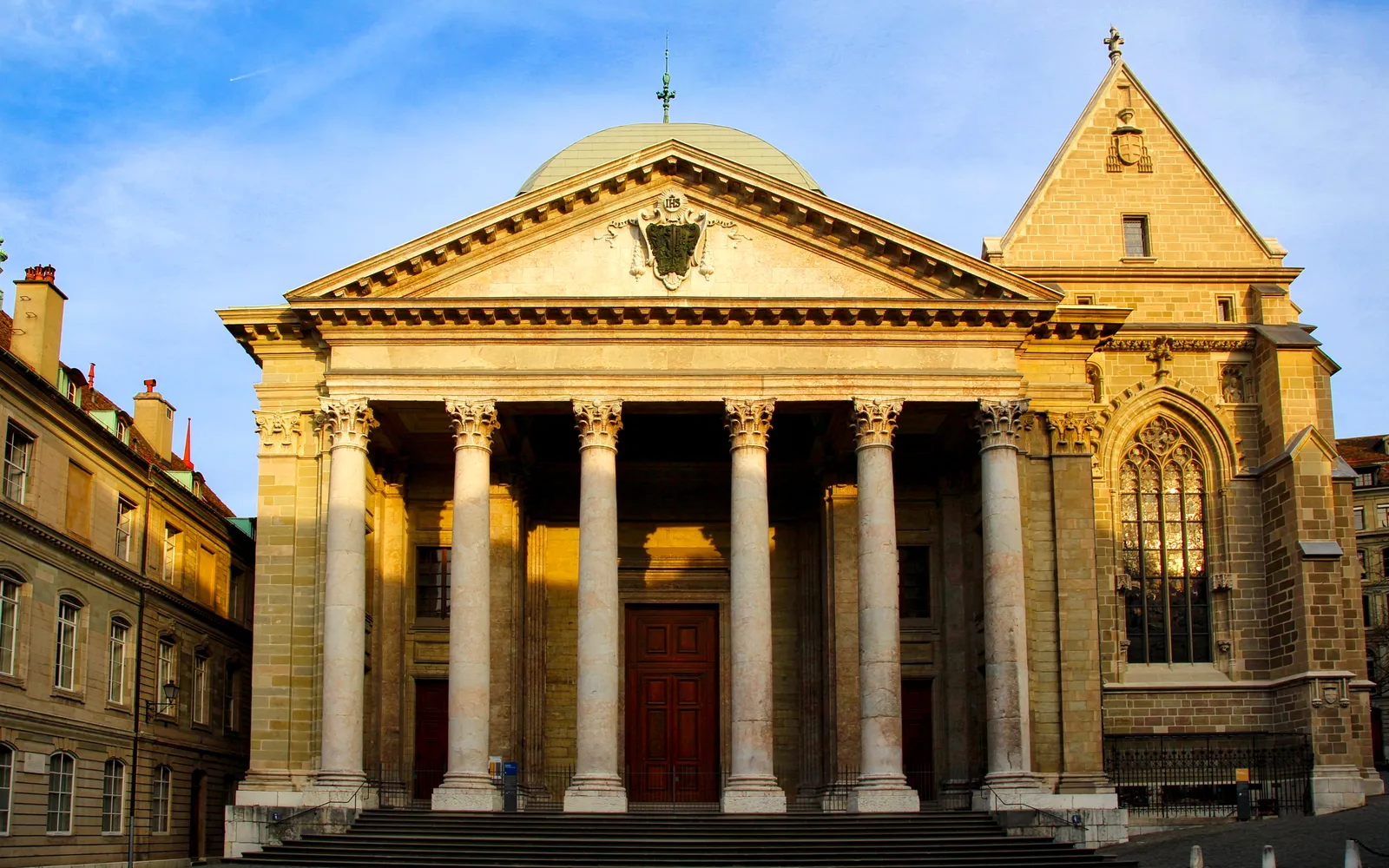
#3 St. Pierre Cathedral
A Roman Catholic cathedral begun in the <strong>12th century</strong>, long before Geneva became the nerve centre of the Protestant Reformation. <strong>John Calvin</strong> preached here from <strong>1536</strong> onward. Beneath the nave, Roman-era ruins discovered during excavations are open to visit separately. Climb the <strong>157 steps</strong> of the north tower for a panoramic view over the city and Lake Geneva.
- The main cathedral is free to enter. Tower access costs <strong>5 CHF</strong>; the underground archaeological site costs <strong>8 CHF</strong>.
- Go up the tower on a clear day to see Geneva's rooftops and Mont Blanc in the far distance.
- The Vieille-Ville streets surrounding the cathedral are worth exploring — narrow lanes lined with cafés and art galleries.
 #4
#4 Palais des Nations
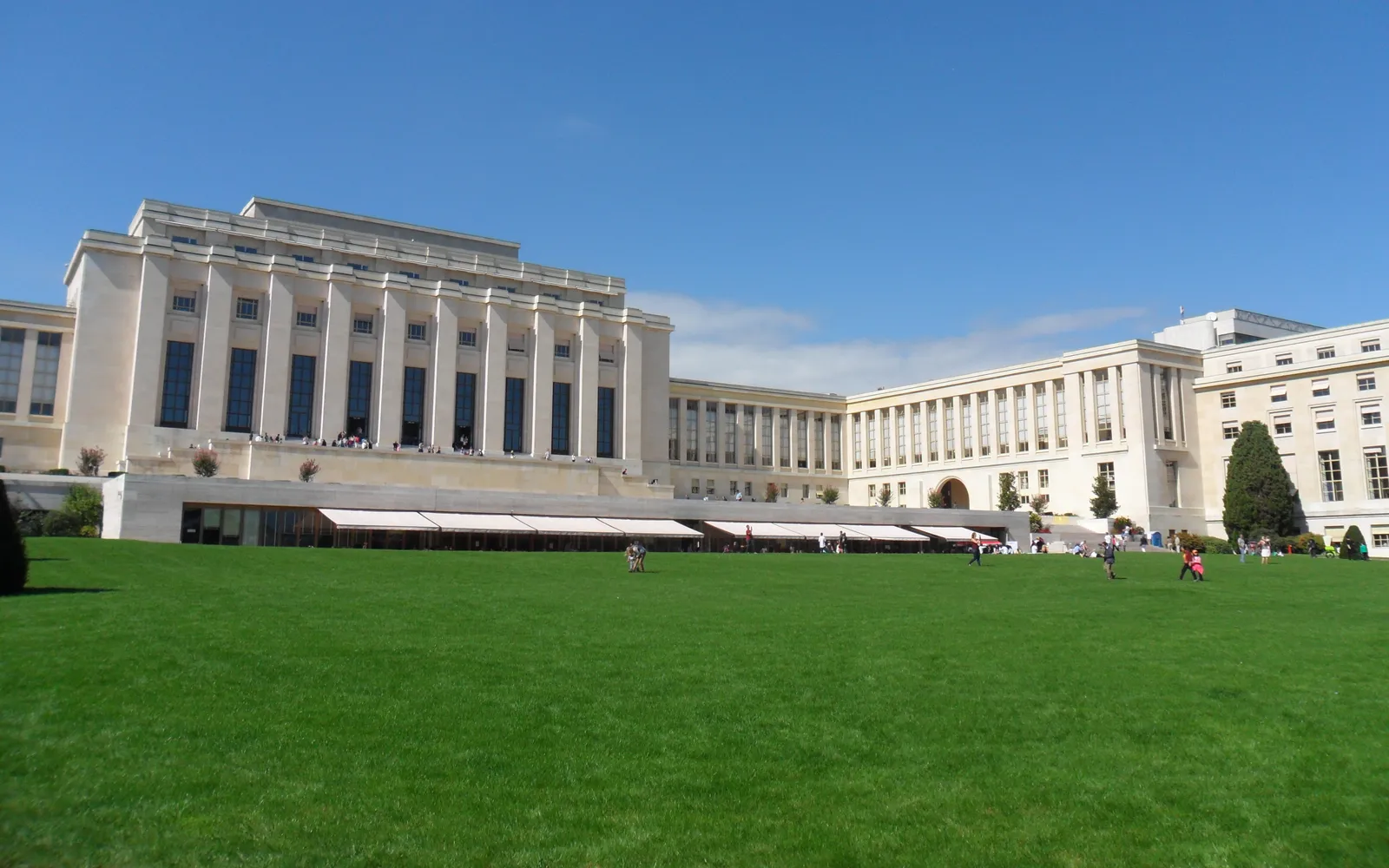
The <strong>European headquarters of the United Nations</strong> — originally home to the League of Nations established after World War I. The main building was constructed between <strong>1929 and 1938</strong> in a neoclassical style, set within extensive grounds holding century-old trees and sculpture donated by member states. A guided tour of about one hour takes you inside the General Assembly Hall and the actual Security Council chamber. Bring your passport.
- Book guided tours in advance through the UNOG website. Entry is <strong>15 CHF</strong> for adults and <strong>10 CHF</strong> for children. A passport is required for registration.
- The large gold <strong>Armillary Sphere</strong> sculpture in front of the building can be photographed without going inside.
- Several museums are within walking distance in the surrounding international quarter, including the International Red Cross and Red Crescent Museum.
 #5
#5 Flower Clock
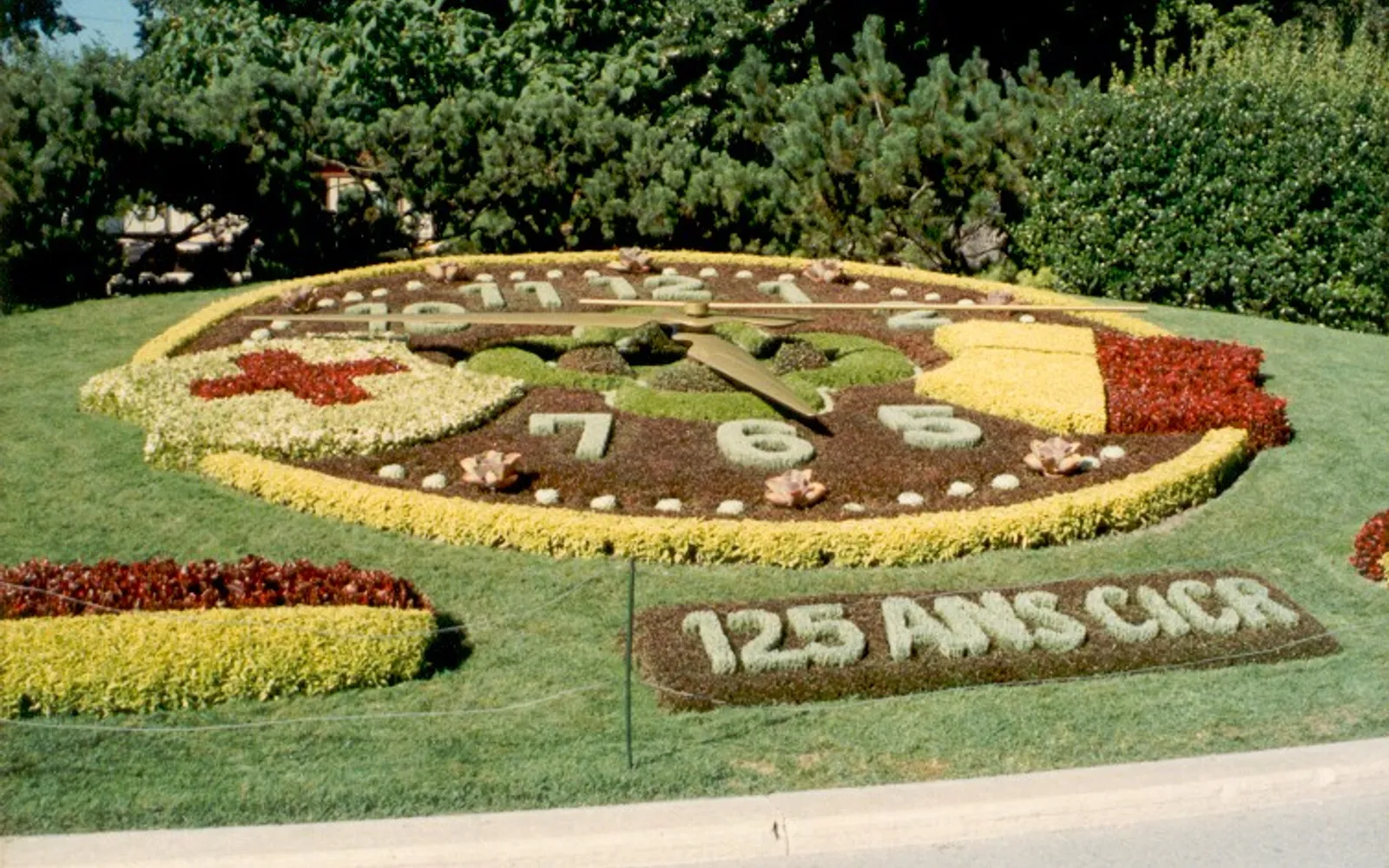
A working clock <strong>5 metres in diameter</strong>, planted in the lakeside public garden since <strong>1955</strong> as a tribute to Geneva's watch-making heritage. The face is replanted with more than <strong>6,500 flowers</strong> that change with the seasons. The second hand is the longest of any flower clock in the world. It sits in <strong>Jardin Anglais</strong>, an easy stroll from the waterfront.
- Free to visit at any time. It's a few minutes' walk from the lakefront and works well as a stop during a broader waterside walk.
- Flowers are swapped seasonally — <strong>May and June</strong> offer the most vivid colours. In winter some sections can look sparse.
- The surrounding garden has fountains and old trees, and the lake cruise boarding point is nearby.
 #6
#6 Vieille-Ville (Old Town)
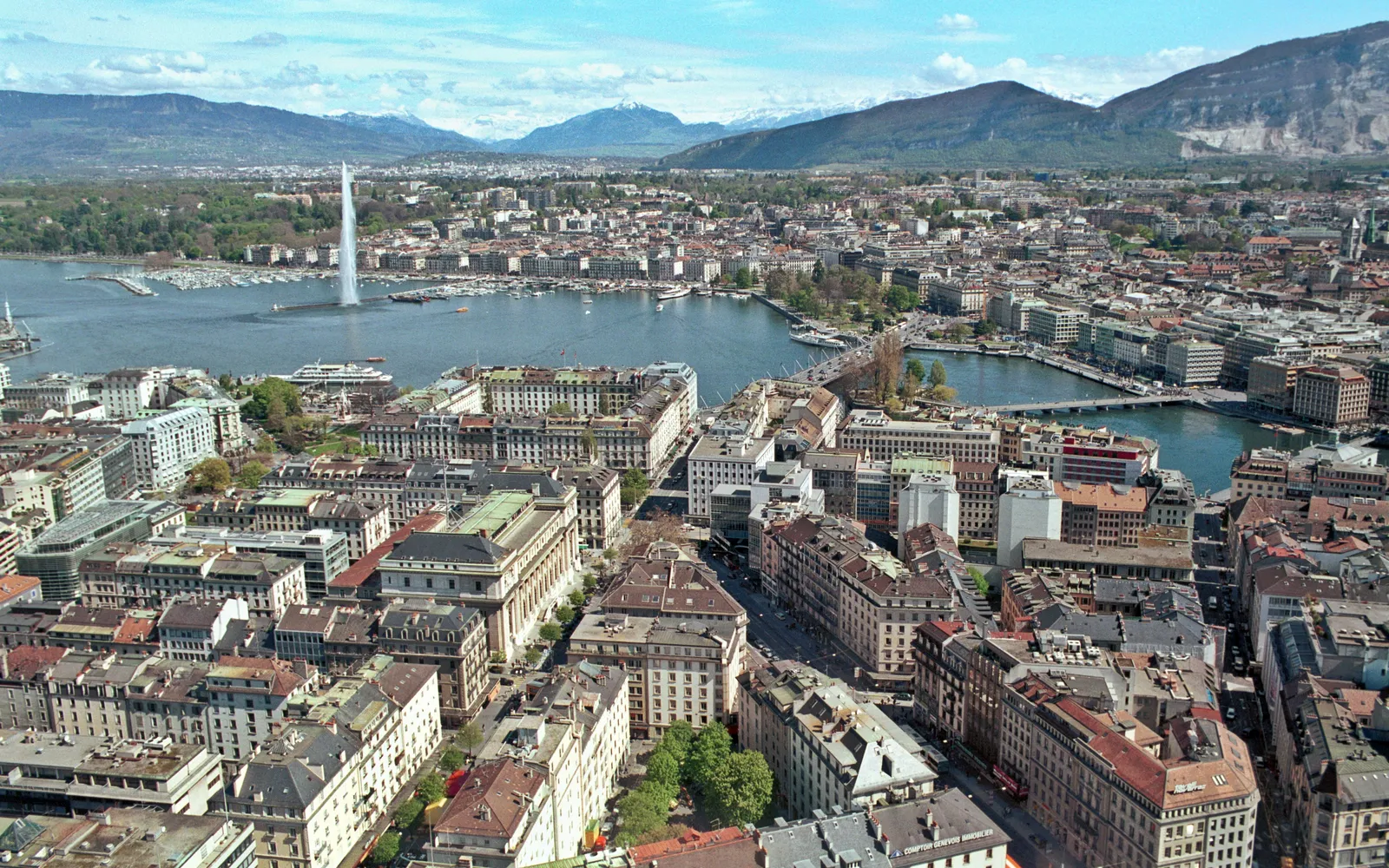
Geneva's medieval quarter, still largely intact on its hilltop between the lake and the Rhône. Cobblestones, narrow alleys, and architecture from the <strong>14th to 18th centuries</strong> sit alongside cafés, galleries, and second-hand bookshops. <strong>Grand Rue</strong> is the main street climbing toward St. Pierre Cathedral. <strong>Place du Bourg-de-Four</strong> — Geneva's oldest square — has open-air restaurants and bars that fill up from mid-afternoon onward.
- Explore before 10 AM, when the lanes are at their quietest before tour groups arrive.
- Chocolate shops and watch boutiques in the Old Town charge noticeably more than supermarkets, but the quality and atmosphere are in a different category.
- Place du Bourg-de-Four has cafés open from early morning and is at its most lively on weekday afternoons.
Where to stay in Geneva for this trip
A well-located hotel means less commuting and more sightseeing. Here are real, top-rated stays in Geneva — compare Agoda · Booking · Trip.com in one click.
Ibis Styles Genève Mont Blanc
Affiliate links — we may earn a commission at no extra cost to you. Details
Auteuil Manotel Geneva
Affiliate links — we may earn a commission at no extra cost to you. Details
Warwick Geneva
Affiliate links — we may earn a commission at no extra cost to you. Details
Hôtel des Alpes
Affiliate links — we may earn a commission at no extra cost to you. Details
Tours, tickets & activities in Geneva
Day tours, attraction tickets and travel essentials for Geneva — book ahead on Klook with mobile e-tickets.
Affiliate links — we may earn a commission at no extra cost to you.
Before You Pack
Geneva is at its best from May to September, when the lake is bright and the waterside gardens are in full flower. Winter has its own appeal — snow on the Alpine peaks makes a dramatic backdrop. Allow 2 to 3 days to cover the main highlights properly, especially if you want to take the train to Montreux or Lausanne, both less than an hour away.