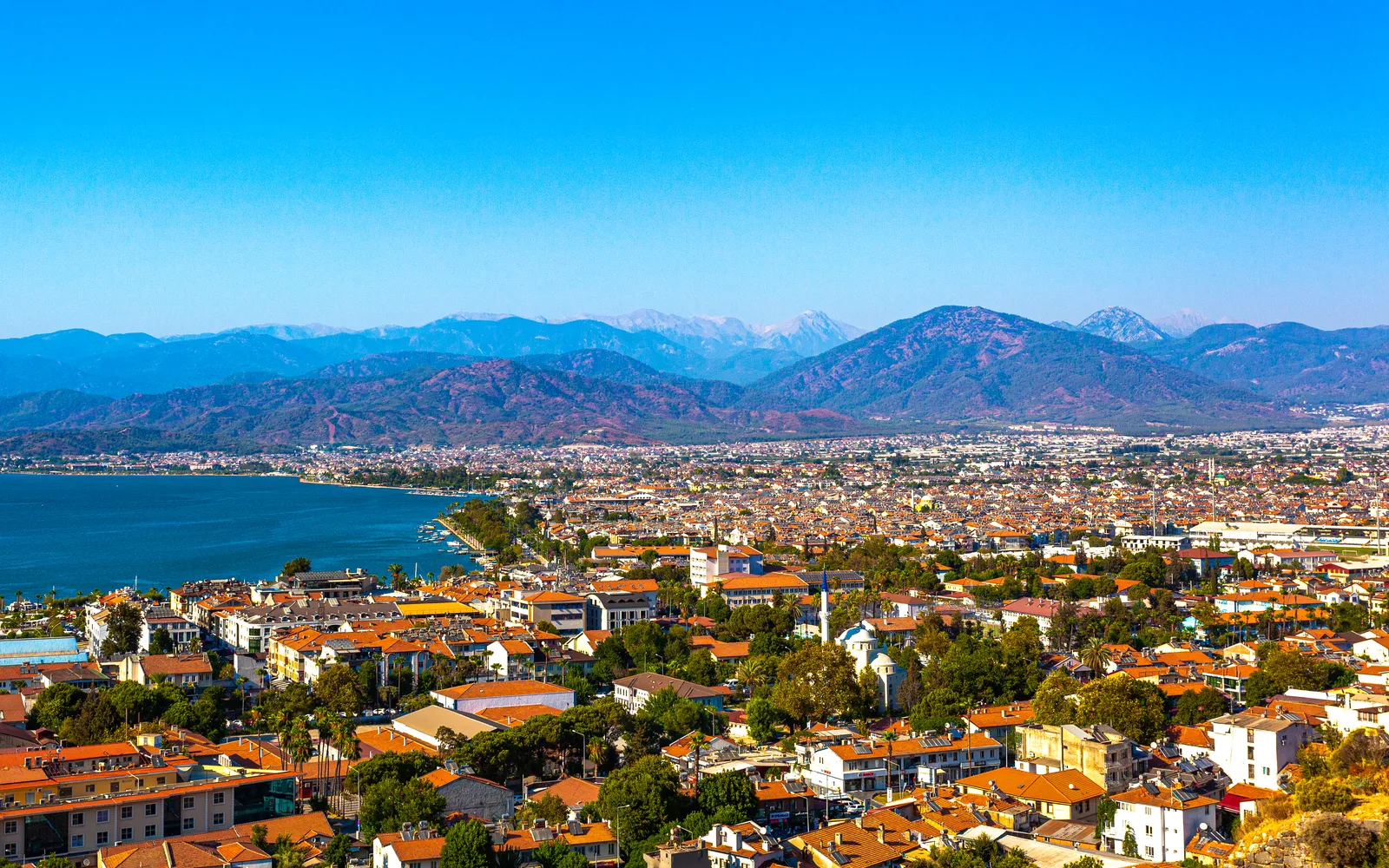
Fethiye eats well for two reasons: the Aegean drops fresh fish and seafood at its door every morning, and centuries of Anatolian cooking add the spices and technique that turn simple ingredients into something memorable. A table of a dozen meze dishes right on the waterfront is one of the most satisfying meals you can have anywhere in Turkey — and a gözleme made fresh by a village woman at the Tuesday market is the snack you will genuinely regret skipping.
 #1
#1 Meze
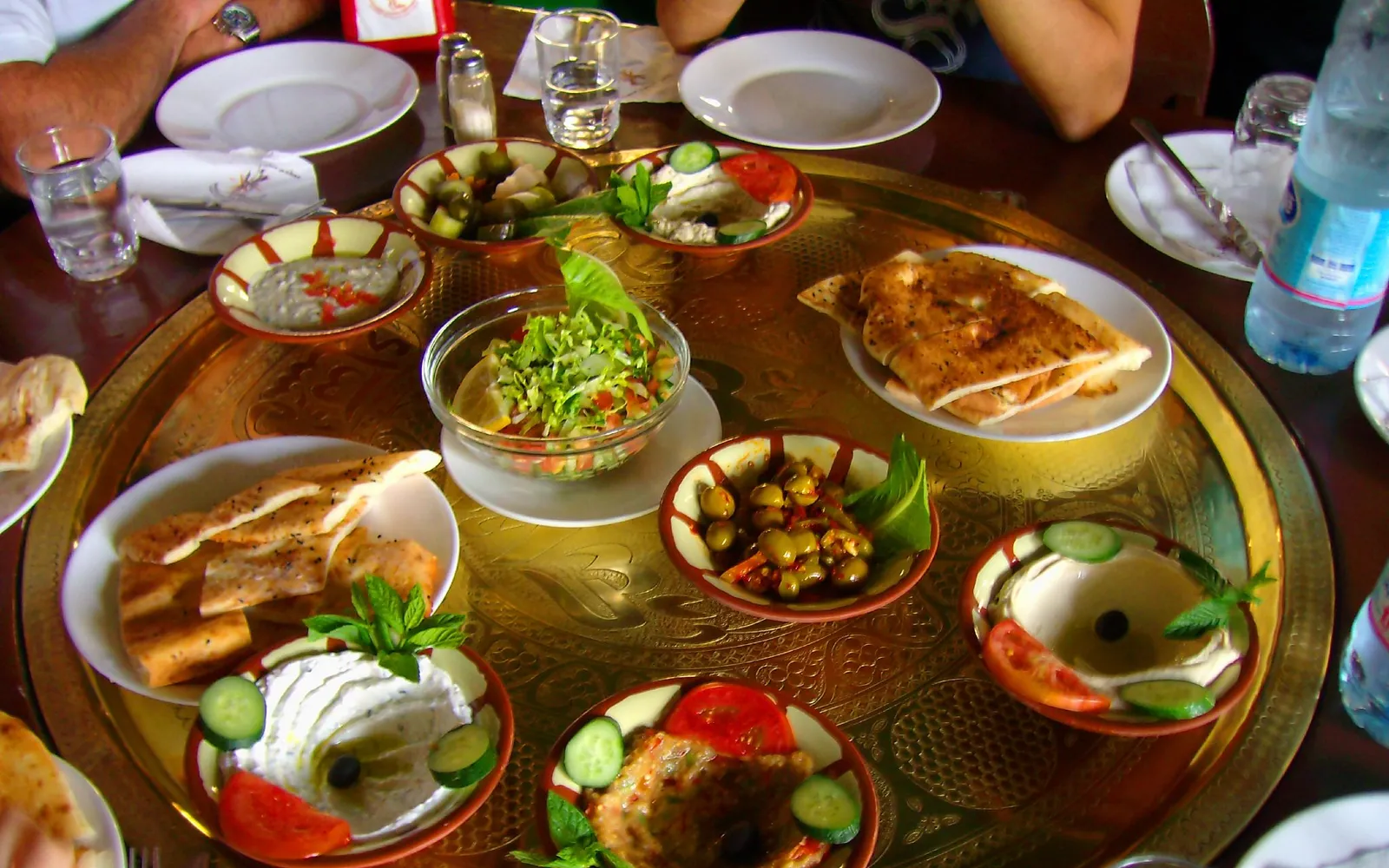
The most convivial way to eat in Turkey: meze is a collection of small plates that arrive together and are shared around the table. Cold meze (soğuk meze) usually includes hummus, roasted aubergine salad (patlıcan salatası), white brined cheese (beyaz peynir), herb-marinated olives, and a fresh tomato salad. Hot meze (sıcak meze) might bring fried calamari, mussels sautéed in butter, or crisp fried cheese. In Fethiye these plates are almost always paired with rakı or local wine, eaten slowly in the open air as the sun drops into the bay.
- Order 4–5 meze to start, then add more if the table is still hungry. A good restaurant will point you toward the kitchen's best plates without being asked.
- Genuinely fresh meze is made daily. Ask — a kitchen that's proud of its food will tell you exactly when each dish was prepared.
- The pide or lavash bread that arrives with meze is not a filler — it is the tool for scooping up the sauces. Pace yourself with it.
 #2
#2 Fresh Aegean Fish
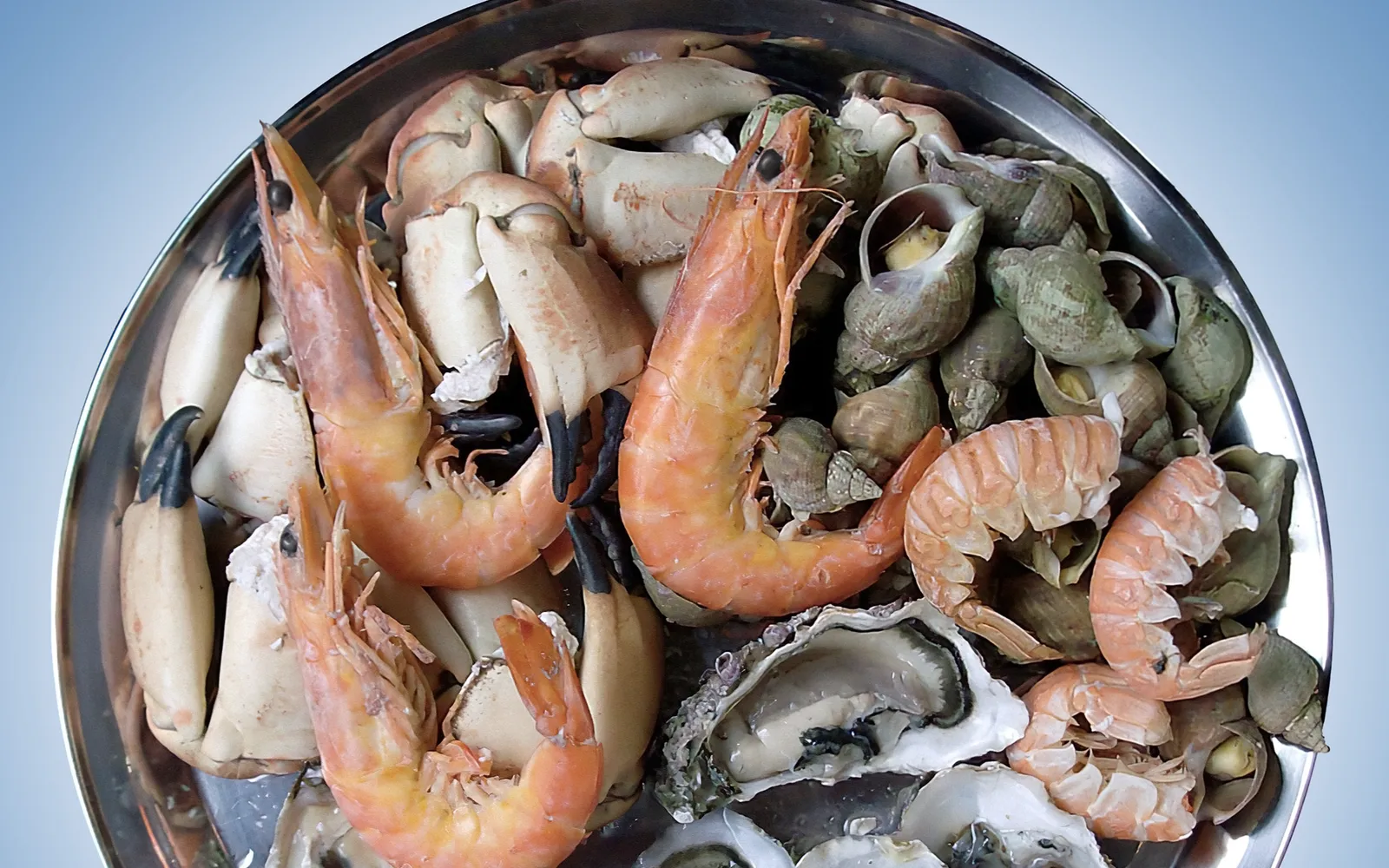
Fethiye sits on a bay where fishing boats go out every morning and return with whatever the season offers. The prized catches vary: bluefish (lüfer) in autumn, sea bass (levrek) and sea bream (çipura) year-round, plus calamari and mussels from the bay itself. The traditional preparation is simple — grilled whole over charcoal with rosemary and olive oil, served with a fresh salad and roasted potatoes. The flavour is clean and direct, which is exactly the point of Aegean fish cooking: the fish should taste like the sea, not like the sauce.
- The central fish market sells fresh catches every morning. You can bring a fish to one of the market-side restaurants and pay a small cooking fee — fresher and cheaper than ordering in a marina restaurant.
- Ask whether the fish was caught today. A good fish restaurant knows each fish by boat and day.
- November through March is when fish is freshest and cheapest. Fewer tourists, better service, and a wider selection on the slab.
 #3
#3 Gözleme
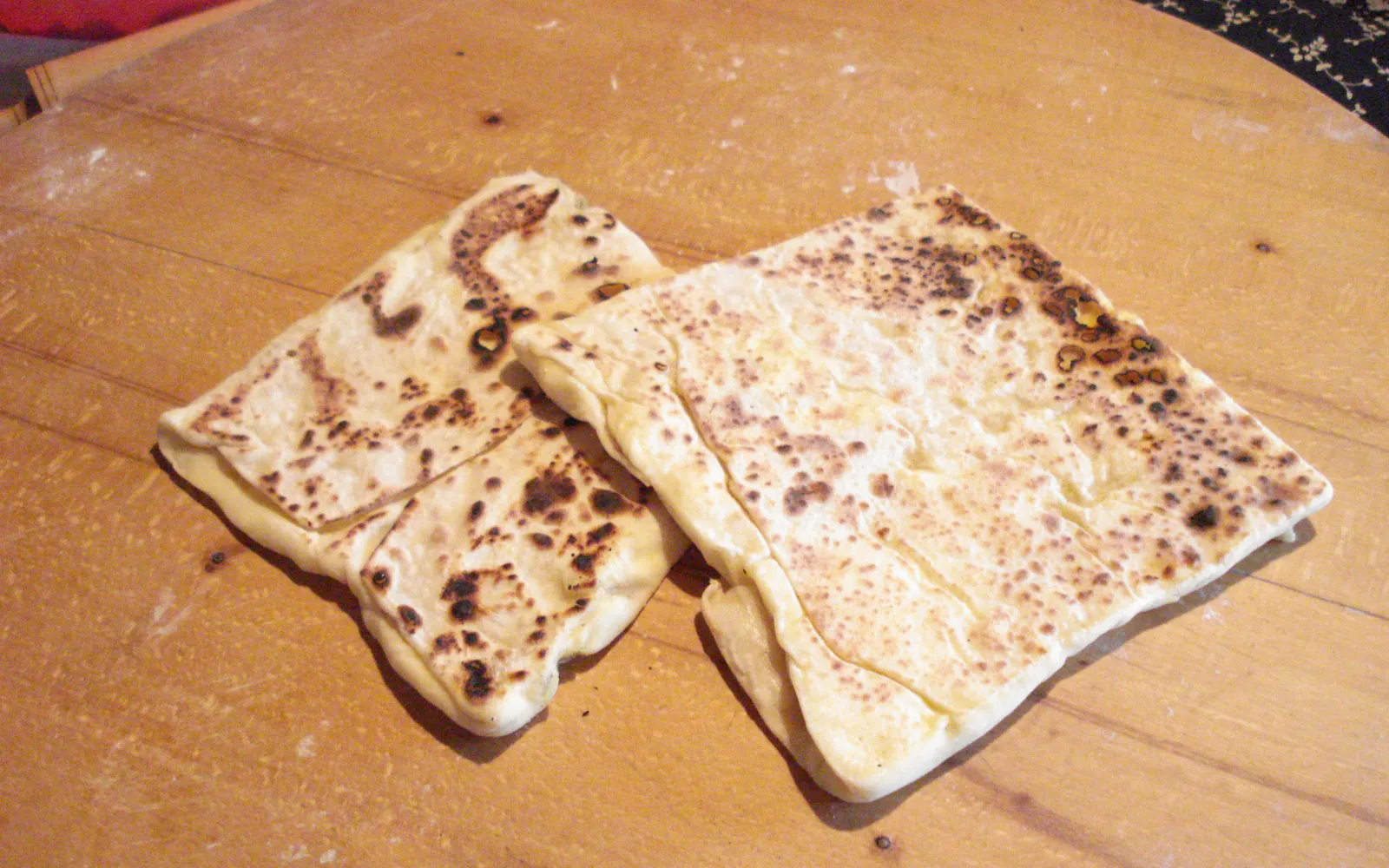
A thin dough flatbread baked on a traditional domed stone griddle — a technique Turkish village women have used for hundreds of years. The dough is hand-rolled until paper-thin, then filled to order: the most popular choices are white cheese and spinach, minced meat (kıymalı), or mashed potato. The filled dough is folded and pressed on the hot stone until the outside is crisp and the filling is molten. It is served with a side of cold yoghurt. At Fethiye's Tuesday market, women who travel in from surrounding villages make gözleme fresh in front of you — that version is worth the trip.
- The main Fethiye market runs every Tuesday. Several village women set up to make gözleme on the spot — it is reliably better than the pre-made versions sold in permanent shops.
- Price is roughly 80–120 Turkish lira per piece. One piece is a full portion for one person, or can be split between two as part of a larger spread.
- Always check that it is being made fresh in front of you. Gözleme that has been sitting loses its crispness and the texture becomes unpleasant.
 #4
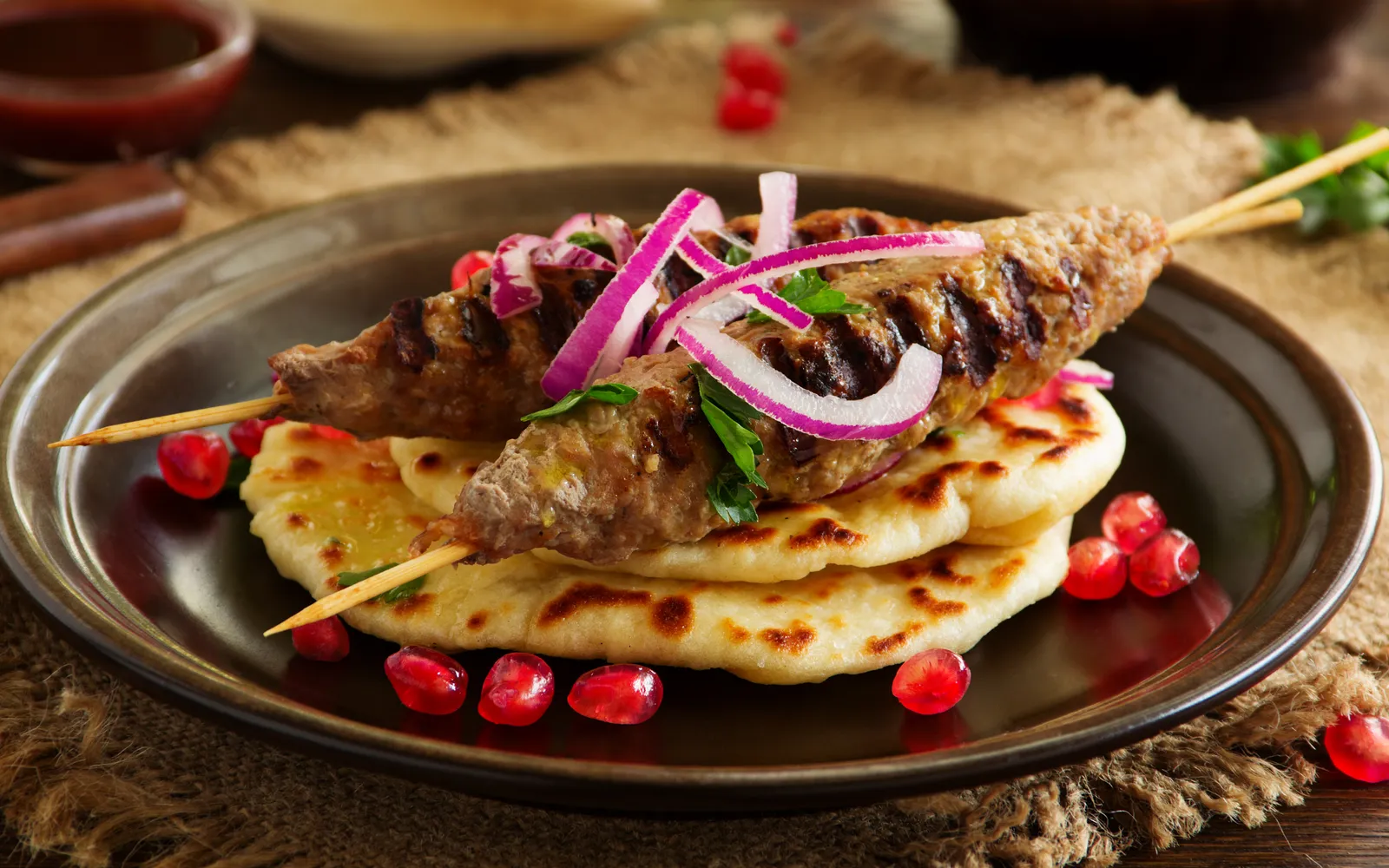
#4 Adana and Shish Kebab
Turkish kebab takes many forms; the two you will eat most in Fethiye are Adana kebab — minced meat kneaded with red chilli, pressed onto flat skewers, and grilled until the outside chars — and shish kebab, herb-marinated chunks of meat cooked over the same charcoal. Both are served with pide bread, a raw tomato-and-onion salad, and a smoked yoghurt sauce. The best kebab restaurants in Fethiye tend to be small, unmarked rooms in side streets that the locals fill first.
- Choose a restaurant with a real charcoal fire, not a gas burner. The smoke is what gives kebab its depth.
- Two skewers with pide makes a complete meal. Three if you are hungry. Budget around 150–250 Turkish lira per skewer.
- Adana is spicier than shish. If you are unsure, order shish first — or ask for a mixed plate with one of each.
 #5
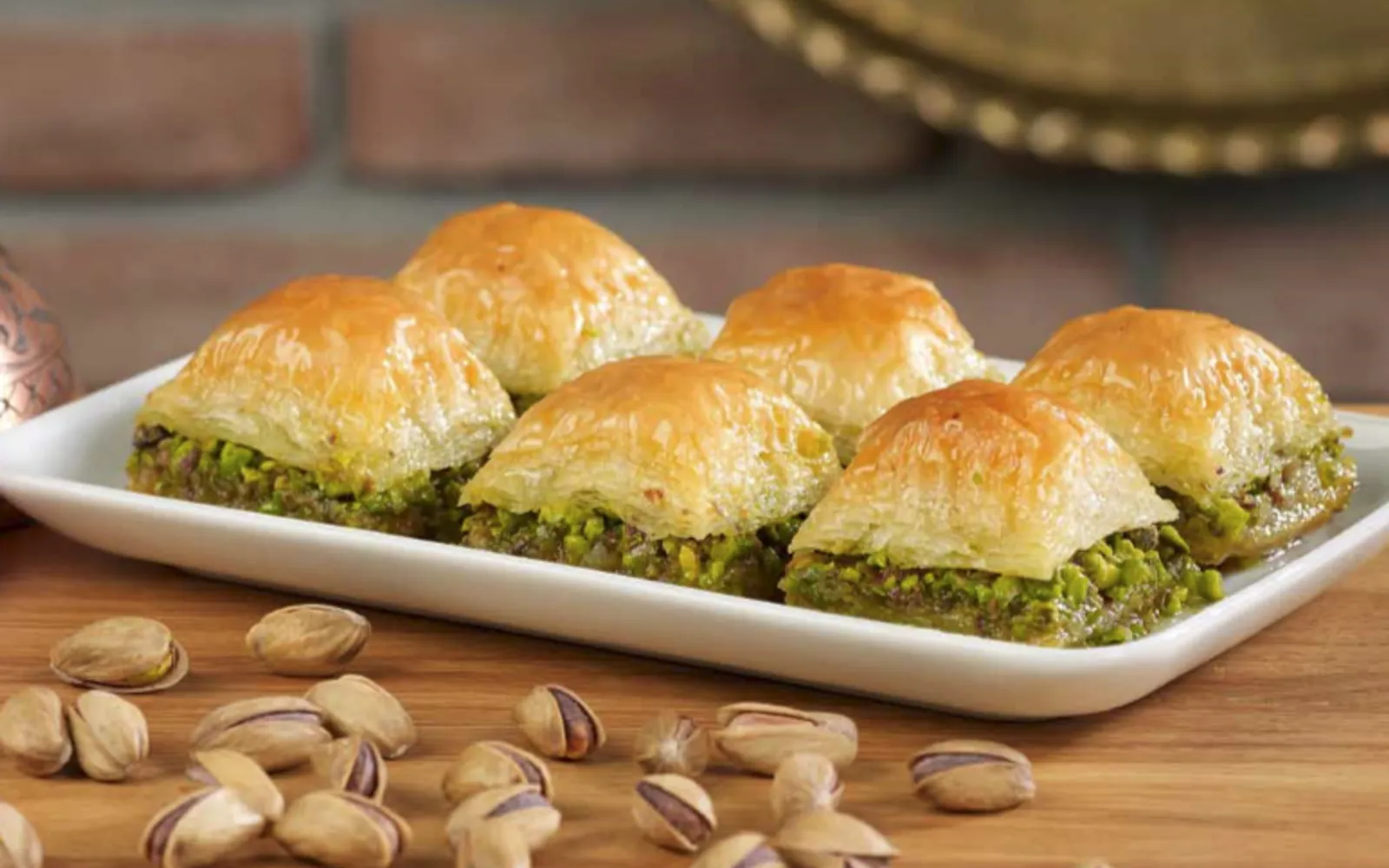
#5 Baklava
Baklava is the most iconic sweet in Turkish cooking. A good piece is built from dozens of paper-thin filo layers, a filling of ground pistachio or walnut, and honey syrup poured on the moment it comes out of the oven. The filo shatters at the first bite, and the slight bitterness of the nuts cuts through the sweetness. Quality is visible before you taste it: look for very thin layers, fresh-smelling nuts, and syrup that glistens without pooling. Fethiye has pastry shops that bake fresh every day and ship their product across Turkey.
- The best baklava shops are usually away from the tourist strip. Ask your hotel or a local — they know which bakery the town itself goes to.
- Baklava travels well in a vacuum-sealed box. It keeps for 1–2 weeks at room temperature, which makes it one of the more practical things to carry home.
- Eat it with a small glass of hot Turkish tea. The tea's bitterness is the classic counterweight to the syrup, and Turks have been pairing the two for centuries.
 #6
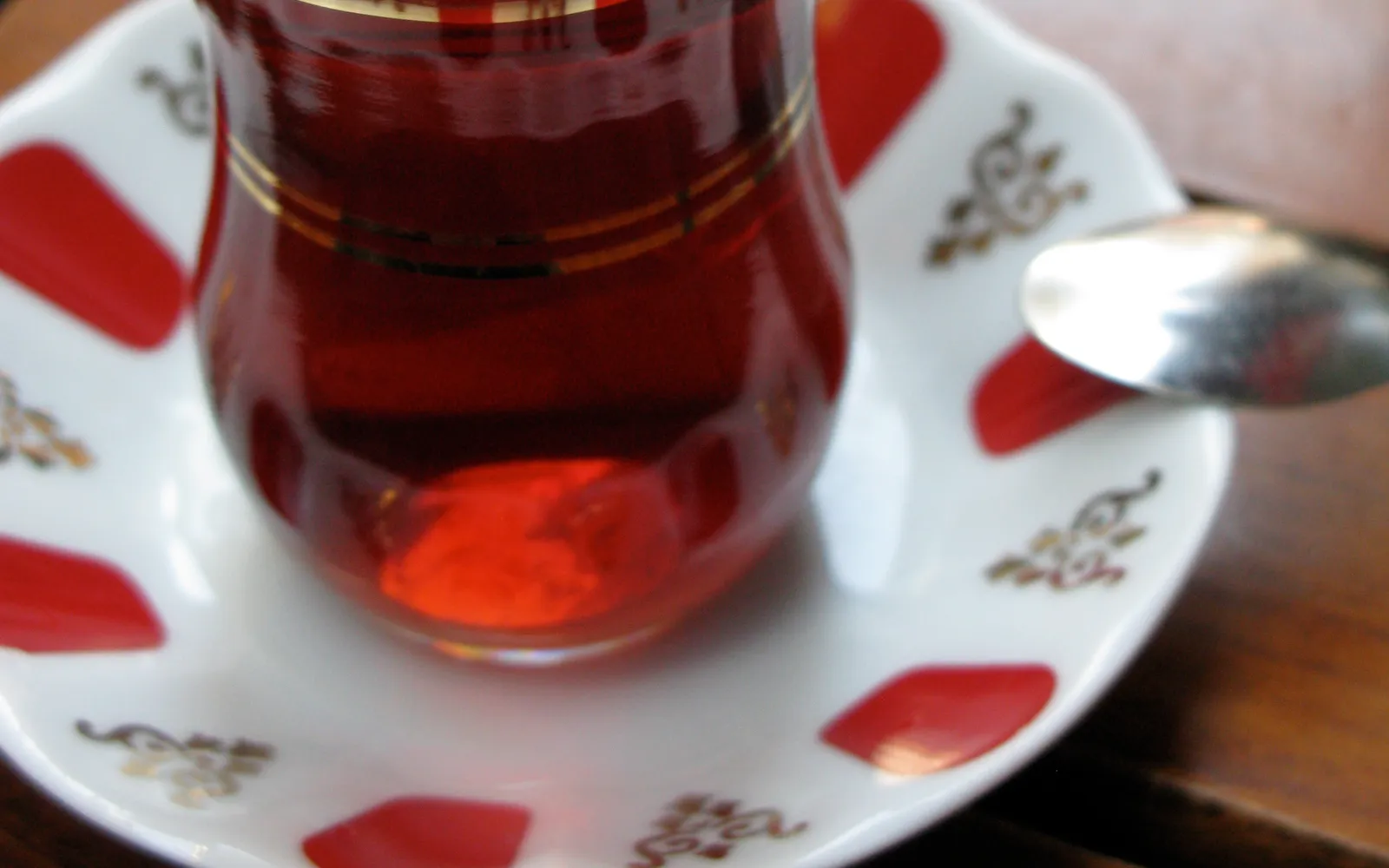
#6 Turkish Tea (Çay)
Turkish tea (çay) is not simply a drink — it is the ritual through which hospitality is offered and relationships are built. It is brewed in a stacked double-kettle (çaydanlık) that produces a strong concentrate, then diluted to taste with hot water and poured into a small tulip-shaped glass that glows a deep amber-red in the light. The flavour is firm and faintly bitter; most people add one or two sugar cubes rather than stirring in milk. In Fethiye, shopkeepers and restaurant owners will offer you tea without obligation. In Turkish culture, refusing is considered impolite — accepting a glass does not mean you have agreed to buy anything.
- Turkish tea is very strong by default. Say 'açık' (ah-CHUK) if you want it diluted, or 'koyu' (KOH-yoo) if you want it stronger.
- Traditional tea-houses (çay bahçesi) where men play backgammon often serve the best tea in town. Travelers of all backgrounds are generally welcome.
- Turkish tea contains roughly as much caffeine as strong coffee. An afternoon glass or two can make it difficult to sleep for people who are caffeine-sensitive.
Where to stay in Fethiye for this trip
A well-located hotel means less commuting and more sightseeing. Here are real, top-rated stays in Fethiye — compare Agoda · Booking · Trip.com in one click.
Yacht Boheme Hotel
Affiliate links — we may earn a commission at no extra cost to you. Details
Hotel Unique - Boutique Class
Affiliate links — we may earn a commission at no extra cost to you. Details
Club & Hotel Letoonia
Affiliate links — we may earn a commission at no extra cost to you. Details
Alesta Yacht Hotel
Affiliate links — we may earn a commission at no extra cost to you. Details
Tours, tickets & activities in Fethiye
Day tours, attraction tickets and travel essentials for Fethiye — book ahead on Klook with mobile e-tickets.
Affiliate links — we may earn a commission at no extra cost to you.
Before You Pack
The best food in Fethiye is usually found inside the fish market or in the side streets off it, at tables already full of locals. If you walk past a place with fresh meze in a display case and whole fish on ice out front, go in — you do not need a review to tell you it is good.