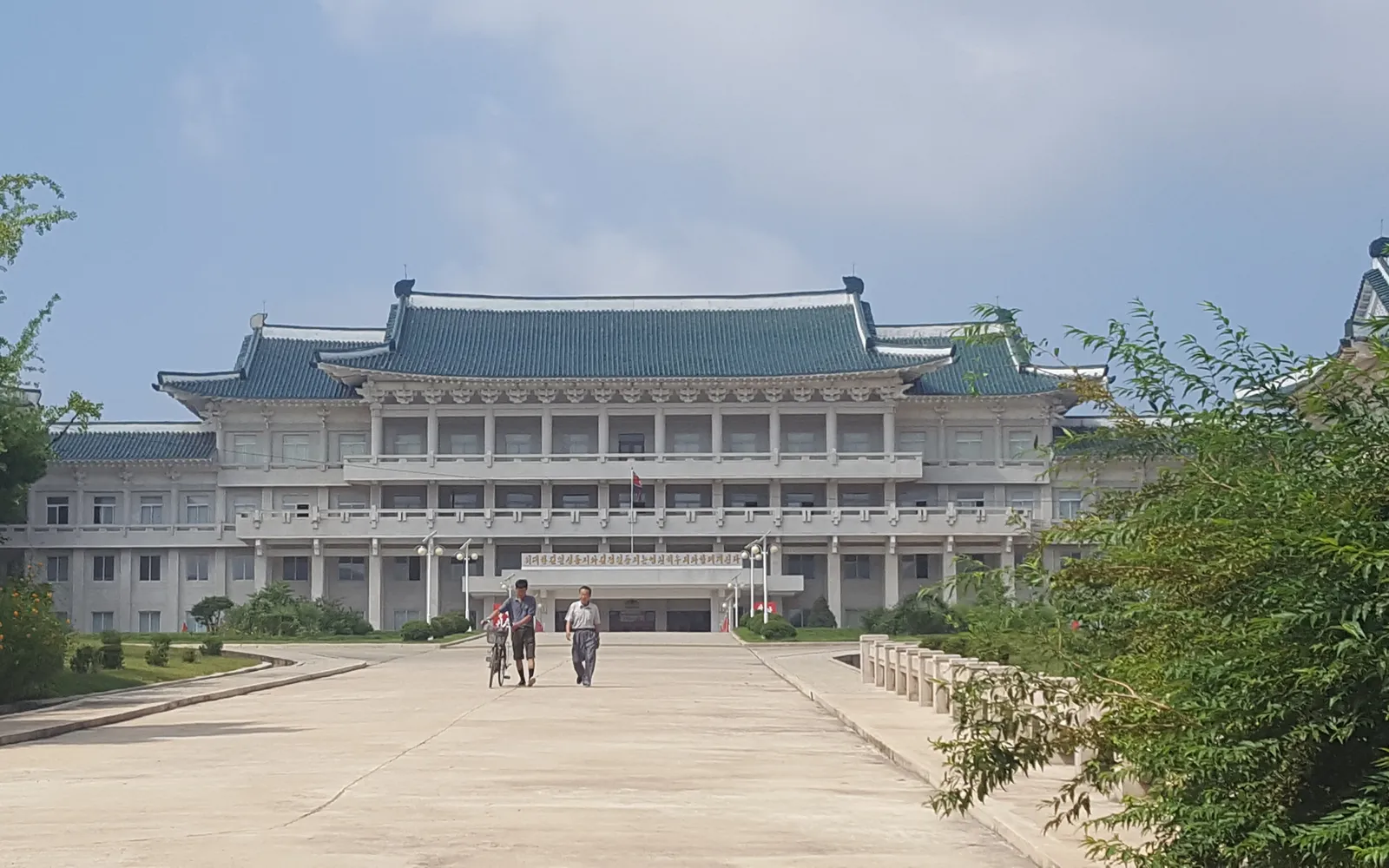
Kaesong — heritage & travel advisory
Kaesong is the former capital of the Koryo Dynasty (918–1392) and arguably the most atmospheric historic city in all of North Korea. Its great fortune: Kaesong is the only major Korean city that escaped the carpet-bombing of the Korean War, so its old quarter still keeps its wooden hanok houses, narrow stone lanes, city walls and palace ruins largely intact — enough that UNESCO inscribed 12 of its monuments as World Heritage in 2013. It's also the closest base to the border: just 8 km from the DMZ and the Panmunjom truce village, making it the natural overnight stop before standing at the line that divides the two Koreas. And don't forget — this is the home of world-famous Kaesong Koryo ginseng (insam).
🏛️ Heritage & significance
Kaesong, former capital of the Koryo dynasty in southern North Korea near the DMZ, is home to the "Historic Monuments and Sites in Kaesong" (royal tombs, the Songgyungwan academy, city walls), a UNESCO World Heritage Site, and is famed for Kaesong ginseng.
🛏️ Accommodation
Kaesong is in North Korea (DPRK), where travel is heavily restricted. Visitors may only travel via state-approved tours, entry is often suspended, and independent booking is not possible. This page is World Heritage information for reference only; please check the latest entry status before making any plans.
Check your foreign ministry's latest travel advisory before making any plans — safety first.
Why stay in Kaesong
A real ancient capital
Kaesong was the royal seat of Koryo for nearly five centuries. Formerly called Songdo, 'City of Pine', it's one of Korea's oldest cities.
The city that survived the war
The only Korean city whose old urban layout survived the bombing — its quarter still holds hanok homes, stone lanes and stretches of the original wall.
A full UNESCO ensemble
Twelve Koryo-era sites — from the Manwoldae palace ruins and Chomsongdae observatory to the walls and royal tombs — inscribed together in 2013.
Gateway to the DMZ
The closest city to Panmunjom and the inter-Korean border, the standard overnight base before visiting the JSA where the two Koreas meet.
Pick an area first — where to stay in Kaesong
Location is the single most important thing about a hotel — choose the right area first, then pick the hotel
Old Town (Songdo)The historic core around the Nammun gate — wooden hanok houses, narrow lanes and the Koryo Museum, all walkable within the old stone walls.
Coming soonJanam HillA central hill with sweeping views over the old city, topped by leaders' monuments and a museum — the city's best lookout point.
Coming soonAround the Folk HotelA cluster of 19 traditional courtyard hanok houses converted into guest rooms with heated ondol floors — steps from local restaurants and souvenir shops.
Coming soonSouthern edge (toward the DMZ)The outskirts heading toward Panmunjom and the border — handy as a base before a next-day DMZ tour.
Coming soonRanked reviews — find your ideal stay in Kaesong
Start with where to stay (the heart of the trip), then explore food and sights
See the heritage & travel advisory above.
Local dishes to try in Kaesong
- 1🍲
Pansangi
A spread of small brass bowls once served to Koryo royalty. In Kaesong it typically runs to 12 bowls — the more bowls, the higher-honored the guest — filled with marinated meats, tofu, egg, fish, fermented vegetables and acorn jelly.
📍 Royal banquet - 2🥬
Bossam kimchi
Kaesong-style kimchi: seasoned chopped vegetables bundled inside a cabbage leaf. Unwrap it to find the fillings packed inside — a refined, courtly take on kimchi.
📍 Wrapped kimchi - 3🥟
Pyeonsu
Square-shaped mandu that Kaesong is famous for, served chilled in summer and dipped in soy sauce and vinegar. Thin wrappers, generous filling — light and refreshing.
📍 Summer dumplings - 4🍡
Joraengi tteokguk
A Kaesong-style soup of small hand-shaped rice cakes in a clear, savory broth — a comforting local dish that's hard to find outside the city.
📍 Rice-cake soup - 5🍯
Umegi
Fried rice cakes coated in syrup — a local Kaesong sweet, crisp outside and soft within, often served to round off a meal.
📍 Sweet treat - 6🌿
Kaesong Koryo ginseng
Koryo insam has been world-renowned since the Koryo era. It appears as ginseng tea, extract, liquor and ginseng chicken soup — both a local food and the region's signature souvenir.
📍 Signature product
- 1🏛️
Koryo Museum (Songgyungwan)
Set on the grounds of Songgyungwan, the supreme Confucian academy of the Koryo and Choson eras. It houses relics of the Koryo period (918–1392), and the historic halls and ancient trees are a sight in themselves.
📍 Old town core - 2🏯
Manwoldae Palace ruins
The excavated remains of the Koryo royal palace — stone terraces and stairways that reflect the dynasty's Buddhist and geomantic beliefs. A core component of the World Heritage listing.
📍 Foot of Mt. Songak - 3👑
Tomb of King Kongmin
The twin tomb of King Kongmin (r. 1352–1374) and his Mongolian queen — granite facing and stone statues of sheep, tigers, officials and soldiers. The best-preserved and most elaborate royal tomb in the country.
📍 ~13 km outside the city - 4🪦
Tomb of King Wang Kon
The mausoleum of Wang Kon, founder of the Koryo Dynasty (d. 943) and the first king to unify the peninsula. Largely a reconstruction after historic damage, but of monumental significance.
📍 City outskirts - 5🌉
Sonjuk Bridge
A small Koryo-era stone bridge built in 1290, famous as the spot where Confucian scholar Jeong Mong-ju was assassinated — a lasting symbol of loyalty in Korean memory.
📍 In the old town - 6🚪
Nammun (South Gate)
The south gate of Kaesong's old wall, built 1391–1393. The city once had seven gates; only Nammun remains, rebuilt after war damage. A natural starting point for exploring the old quarter.
📍 City center - 7💧
Pakyon Falls
One of Korea's 'three great waterfalls', dropping about 37 meters over stone cliffs into pools in a forested valley. Counted among the 'three wonders of Songdo'.
📍 Outside the city - 8🗻
Janam Hill
A central hill with panoramic views over the old city, crowned by statues of Kim Il Sung and Kim Jong Il and a revolutionary museum — the city's classic viewpoint.
📍 City center
Things to do in Kaesong
Day tours, attraction tickets and travel essentials for Kaesong — book ahead on Klook with mobile e-tickets.
Affiliate links — we may earn a commission at no extra cost to you.
🚆 Getting around Kaesong
From Pyongyang
Drive south on the Reunification Highway, about 160 km / 2.5–3 hours via Sariwon, usually with a tea-house rest stop along the way.
To the DMZ / Panmunjom
Kaesong sits just ~8 km from the demilitarized zone and Panmunjom, making it the popular overnight base before a JSA tour at the inter-Korean truce site.
Guided tours only
Foreign visitors must travel on a state-approved tour with a guide at all times — independent travel within the country isn't permitted.
Within the old town
The old quarter around Nammun gate is compact and walkable. Royal tombs and Pakyon Falls lie outside the city and are reached by tour vehicle.
Money & payments
Tourists use foreign currency (commonly euros, Chinese yuan or US dollars) rather than the local won, and most costs are bundled into the tour package.
Where to go next near Kaesong
Frequently asked — where to stay in Kaesong
Can I visit Kaesong independently, or do I need a tour?+
You must travel on a state-approved guided tour. Foreign visitors to North Korea are accompanied by a guide at all times and cannot travel independently. Kaesong is usually visited as an extension from Pyongyang, either as a long day trip or with one overnight stay.
How close is Kaesong to the DMZ, and is it safe?+
Kaesong is only about 8 km from the demilitarized zone and Panmunjom, which is why it's the popular base before a DMZ visit. Touring stays strictly within the routes and rules set by your guide — follow their instructions and it's straightforward.
Where should I stay in Kaesong?+
The signature choice is the Kaesong Folk Hotel — a cluster of 19 traditional courtyard hanok houses converted into rooms, where you sleep on heated ondol floors and soak up the feel of an old Korean home right in the historic quarter.