Where to stay in Fes — pick the right hotel, book in 3 clicks
Fes (also spelled Fez) is Morocco's spiritual and cultural capital — the city you should see before Marrakech if you want to understand the real Morocco. Its heart is Fes el Bali, the largest car-free urban area on earth, where more than 9,000 lanes twist into a medieval labyrinth you will get lost in (and that's the point). This is home to Al-Qarawiyyin University, recognized by Guinness World Records as the oldest continually operating university in the world, founded back in 859 AD, and the Chouara Tannery, where leather is still dyed by hand exactly as it was nearly a thousand years ago. Fes hasn't reshaped itself for tourists — it's a living medieval city that simply kept going.
Why stay in Fes
The largest, best-preserved medina
Fes el Bali is the world's largest car-free urban area — over 9,000 lanes passable only on foot or by donkey. UNESCO calls it one of the best-conserved historic towns of the Arab-Muslim world.
A true craft capital
Tanneries, cobalt-and-white pottery, zellige mosaic tiles, and coppersmiths hammering away at Place Seffarine. Every alley is a workshop that's been running for centuries.
Cradle of Islamic learning
Al-Qarawiyyin University, founded by Fatima al-Fihri in 859 AD, is the oldest continually operating institution of higher learning on earth — predating Oxford by centuries.
Exquisite Marinid architecture
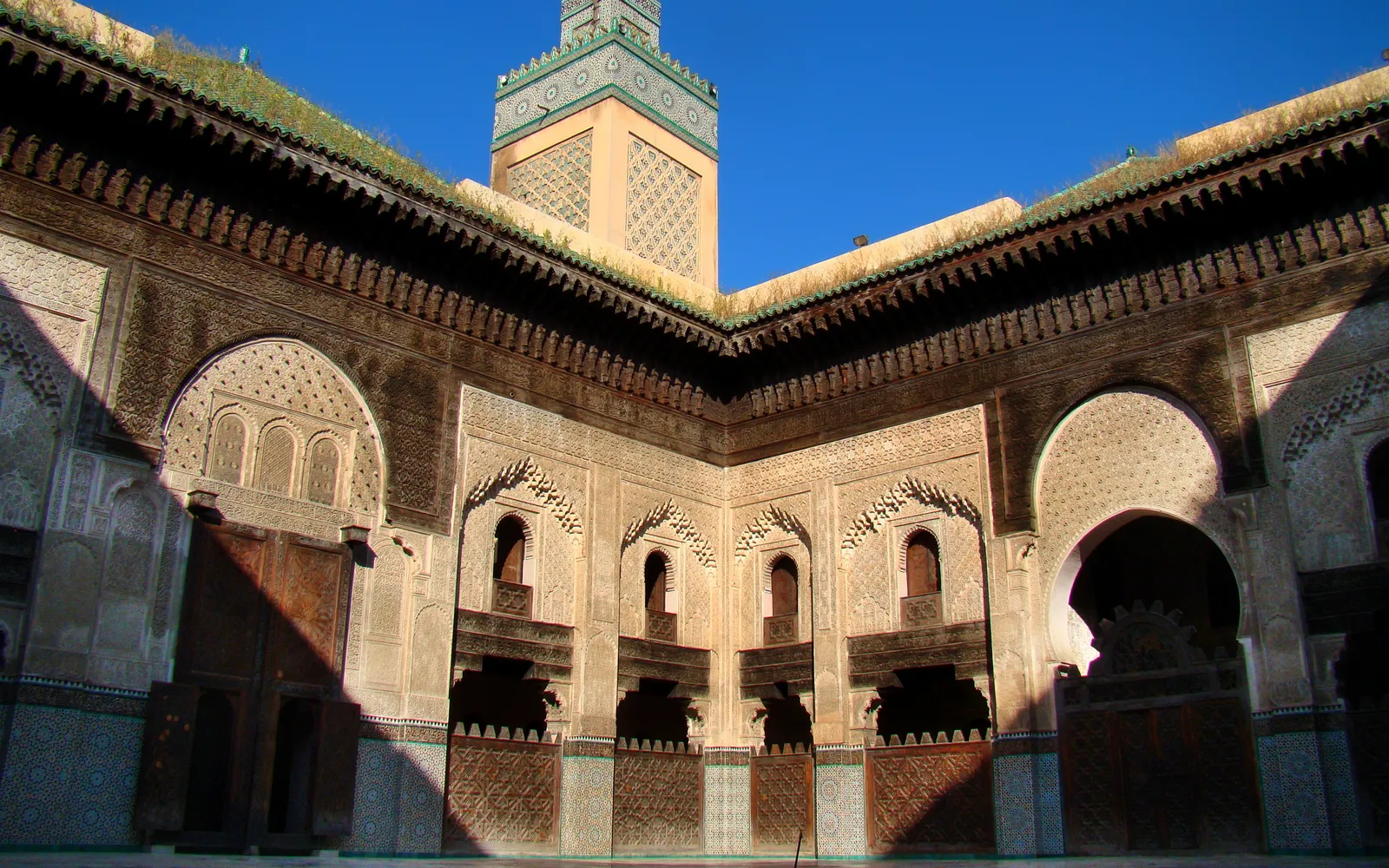
The Bou Inania Madrasa, the blue-tiled Bab Bou Jeloud gate, and the hilltop Merenid Tombs — all carved cedar and mosaic tilework detailed enough to stop you in your tracks.
Pick an area first — where to stay in Fes
Location is the single most important thing about a hotel — choose the right area first, then pick the hotel
Fes el Bali — Kairaouine QuarterThe beating center of the old medina, steps from the souks, tanneries, and madrasas. Stay in a riad here to be within walking distance of everything — you trade peace for nonstop atmosphere right outside the door.
Coming soonFes el Bali — Andalusian QuarterEast of the river, quieter and more residential — where locals actually live. Riads tend to be more affordable, ideal if you want a genuine neighborhood feel away from the tourist crush.
Coming soonVille Nouvelle (New Town)The French-era new city: wide boulevards, cafés, modern hotels, and the ONCF train station. Comfortable and easy to navigate, but it lacks the medina magic — best for business travelers or comfort-first stays.
Coming soonFes el-Jdid & the MellahThe 13th-century 'new Fes,' home to the Royal Palace gates and the old Jewish quarter (Mellah). Calmer with fewer riads — suited to repeat visitors wanting a quieter, historic base.
Coming soonRanked reviews — find your ideal stay in Fes
Start with where to stay (the heart of the trip), then explore food and sights
We're rolling out Fes stay reviews — meanwhile search Fes hotels across all 3 sites now
Local dishes to try in Fes
- 1🥧
Pastilla (Bastilla)
A flaky pastry pie filled with shredded chicken or pigeon, almonds, and spiced egg, dusted with powdered sugar and cinnamon. This sweet-savory showpiece is considered finest in Fes, where it originated.
📍 Fes signature dish - 2🍲
Harira
A hearty tomato-and-lentil soup with chickpeas, fine vermicelli, and lamb, finished with cilantro and lemon. Traditionally eaten to break the Ramadan fast, it's served year-round, often with sticky chebakia.
📍 National soup - 3🫘
Bissara
A thick fava-bean soup finished at the table with olive oil, cumin, and a dusting of paprika. Filling, very northern, and just a few dirhams — grab a bowl from a medina stall in the morning.
📍 Cheap breakfast soup - 4🍯
Tagine
The conical clay-pot stew Morocco is known for. In Fes, try lamb tagine with prunes and almonds for a rich sweet-savory balance, or chicken with preserved lemon and olives, slow-cooked until tender.
📍 Slow-cooked clay pot - 5🍗
Rfissa
A traditional festive plate of chicken slow-cooked with lentils and spices, served over shredded msemen flatbread and fragrant with fenugreek. Many riads need it ordered in advance.
📍 Celebration dish - 6🍵
Mint Tea (Atay)
Green tea brewed with fresh mint and plenty of sugar, poured from a height to build foam. Nicknamed 'Berber whiskey,' it's offered at any hour as a sign of welcome — never refuse a glass.
📍 Ritual of hospitality
- 1🧵
Chouara Tannery
The largest of the medina's tanneries, where leather is hand-dyed in vivid stone pits using natural dyes like saffron and indigo — a process unchanged since the 11th century. View it from the leather-shop terraces ringing the pits.
📍 The city's icon - 2🎓
Al-Qarawiyyin University
Founded in 859 AD by Fatima al-Fihri and recognized by Guinness World Records as the oldest continually operating university on earth. Still a working mosque; non-Muslims can admire it from the doorways and surrounding lanes.
📍 Oldest in the world - 3🕌
Bou Inania Madrasa
A 14th-century Quranic school and one of the few religious buildings in Fes non-Muslims may enter. Famous for its carved cedarwood, intricate zellige tilework, and a serene marble courtyard.
📍 Marinid masterpiece - 4🚪
Bab Bou Jeloud (Blue Gate)
The grand western entrance to Fes el Bali, faced with blue tiles outside and green (the color of Islam) within, added in 1913. It's the classic jumping-off point for exploring the medina.
📍 The blue gate - 5👑
Royal Palace Gates (Dar al-Makhzen)
The palace itself is closed to visitors, but its seven monumental brass-and-zellige gates in Fes el-Jdid are dazzling — and one of the most photographed spots in the whole city.
📍 Seven golden doors - 6🌅
Merenid Tombs
The ruined 14th-century Marinid royal tombs sit on a hill north of the city, about a 15-minute climb. The reward is the finest panorama of the entire medina, especially at golden hour.
📍 Best sunset view - 7🪵
Nejjarine Museum
Set in an 18th-century funduq (caravanserai), this museum showcases traditional Fassi woodworking tools and carved doors. Climb to the rooftop terrace for calm, crowd-free views over the medina.
📍 Fassi woodcraft - 8🌳
Jnan Sbil Gardens
An 18th-century public garden restored in 2011, spanning 7.5 hectares of palm-lined avenues, fountains, a central pond, and historic waterwheels — the best spot to escape the medina's intensity.
📍 Green escape
Things to do in Fes
Day tours, attraction tickets and travel essentials for Fes — book ahead on Klook with mobile e-tickets.
Affiliate links — we may earn a commission at no extra cost to you.
3 Fes hotels our team picked for you
Selected from real reviews — one per budget tier, each with a score and instant 3-site price comparison
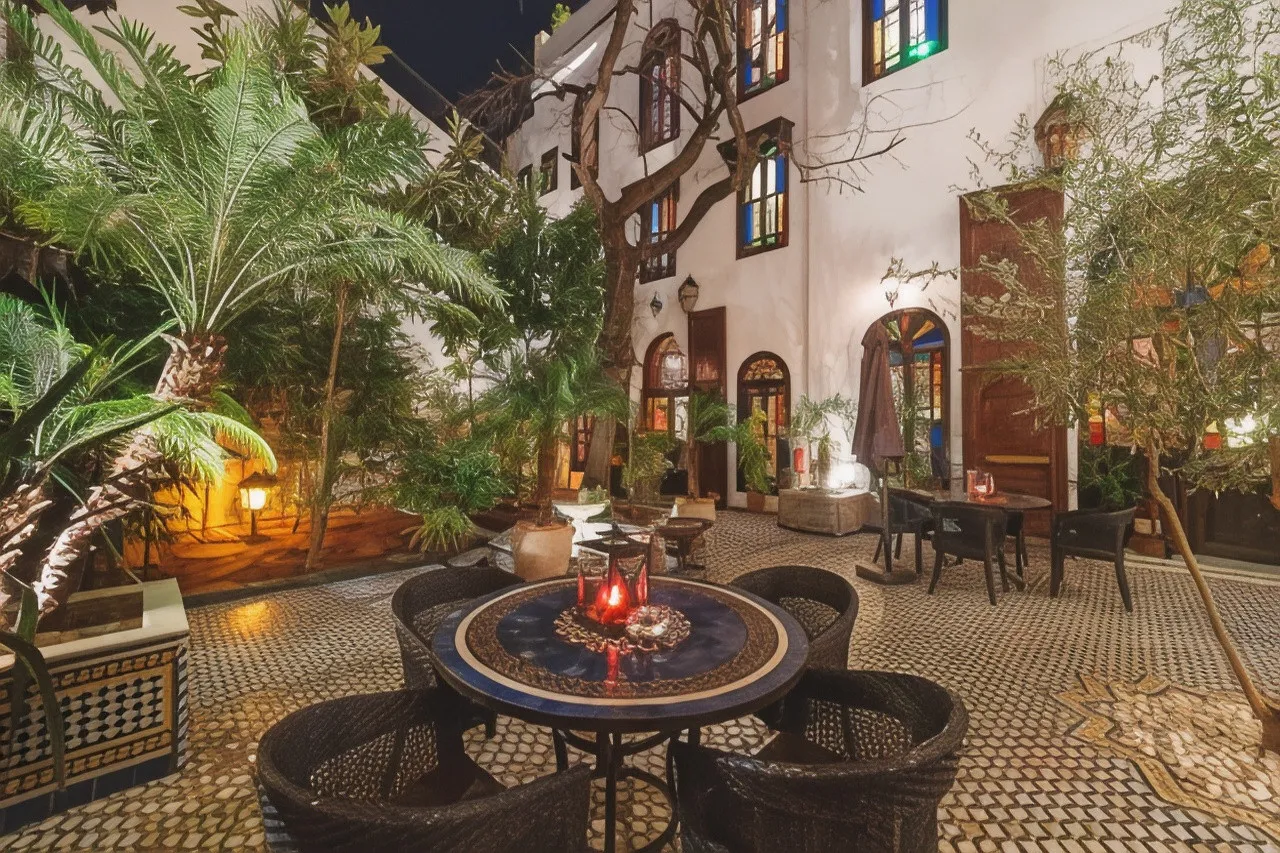 ★ 9.7Upper-mid
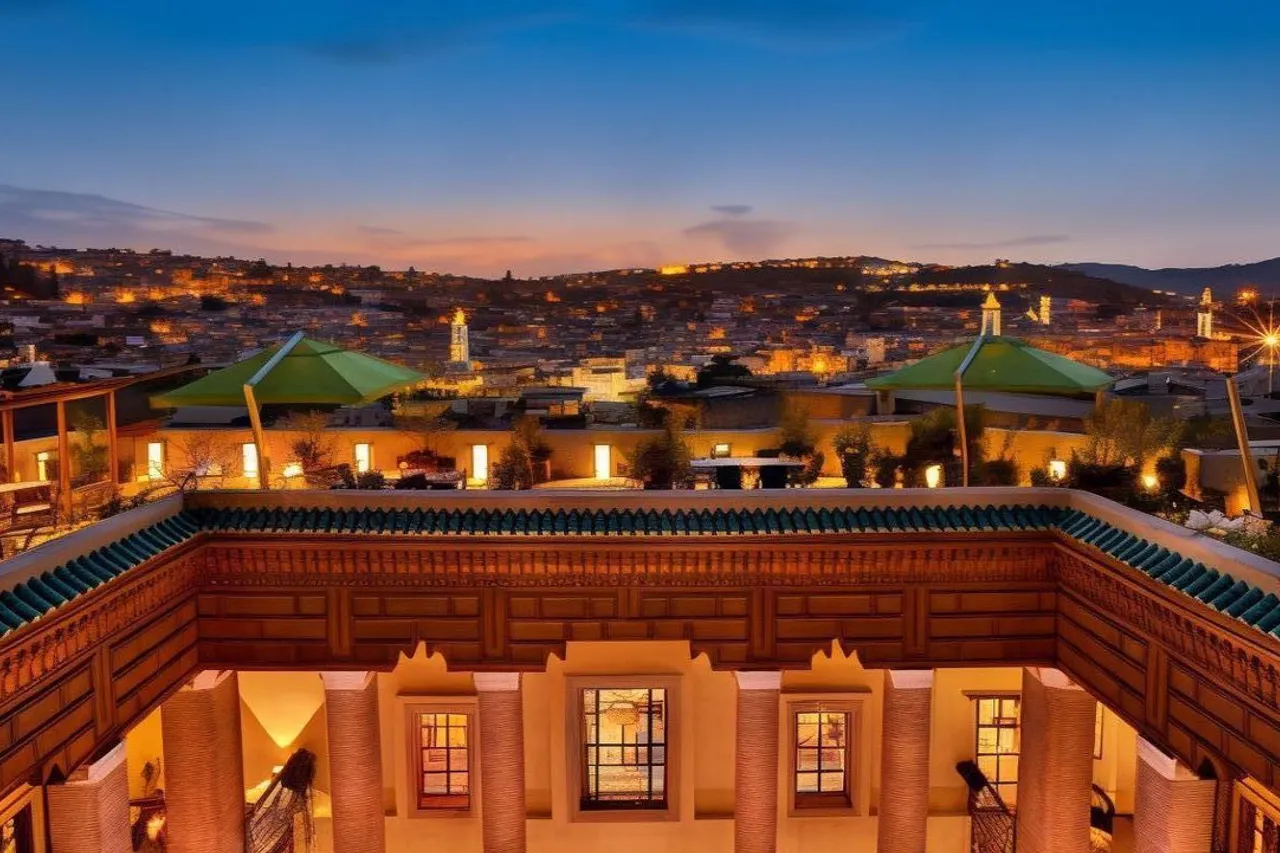 ★ 9.4Luxury
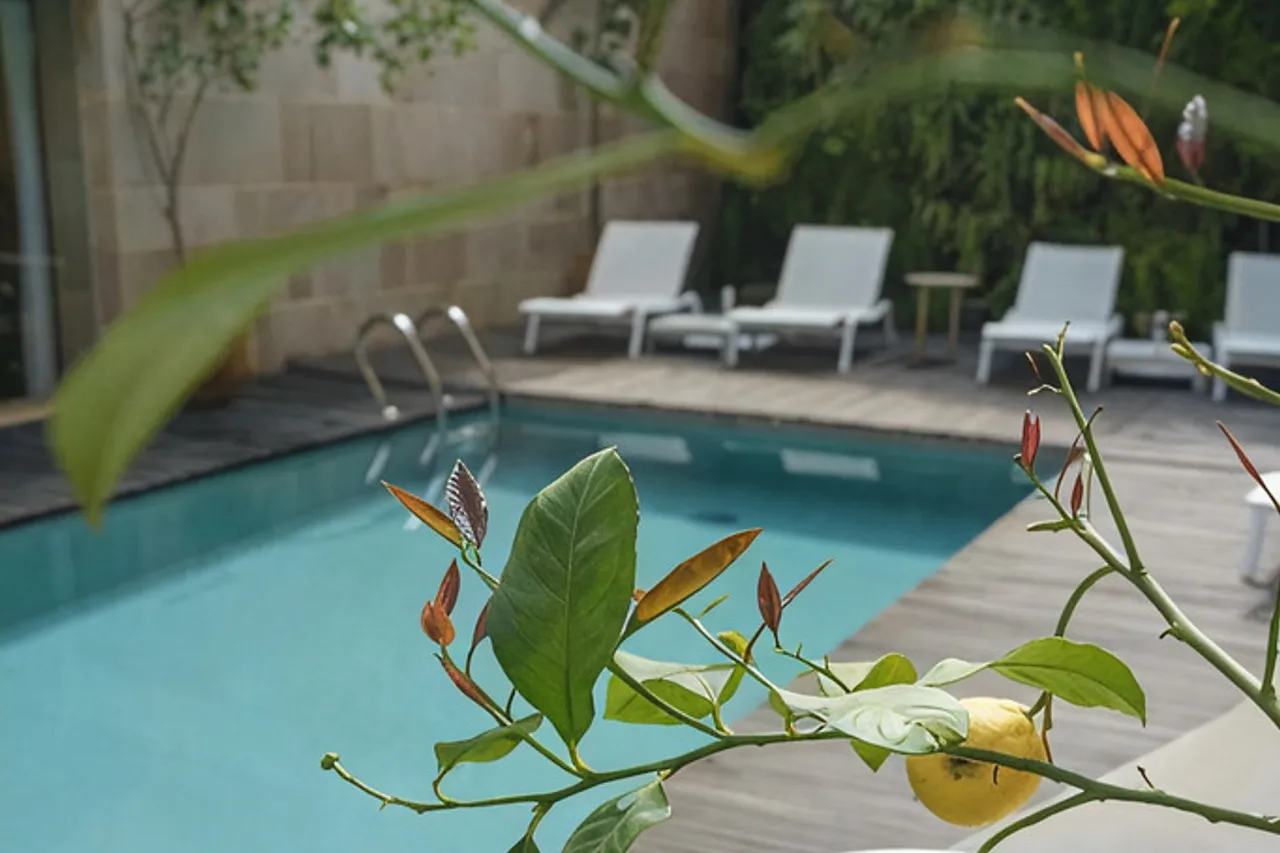 ★ 9.2Luxury
Riad Fes - Relais & Chateaux
Iconic luxury riad with Atlas views
โรงแรมแนะนำทั้งหมดในFes
ครบทุกระดับงบ — คัดจากคะแนนรีวิวจริง พร้อมเทียบราคา 3 เว็บ
Palais Faraj Suites & Spa
Restored palace with spa and panoramic medina views
Hotel & Spa Dar Bensouda
Great-value riad with spa in the medina
Fes Marriott Hotel Jnan Palace
International chain with outdoor pool and spa
Haven't found the one? Search all 3 sites yourself
Compare real-time room availability for your Fes dates
🚆 Getting around Fes
Fes-Saïss Airport (FEZ)
About 15 km south of the city. Options into town: Bus 16 (4 MAD, ~40 min), a grand taxi for ~120–150 MAD (agree the fare first), or a pre-booked riad transfer at ~250–500 MAD.
ONCF trains
Fes connects to Casablanca, Rabat, and Marrakech via the national ONCF rail network (timetables at oncf.ma). The station is in Ville Nouvelle; from there a petit taxi to your riad runs about 15–25 MAD, roughly 10 minutes.
On foot in the medina
Fes el Bali is entirely car-free — its 9,000-plus lanes are passable only by foot or donkey. Wear comfortable shoes, download offline maps, and don't fear getting lost; it's part of the experience.
Red petit taxis
Small metered taxis work the city outside the medina. Ask for the meter (compteur) or agree a price first; short city hops cost only a few dozen dirhams. They seat up to three passengers.
Cash in dirhams (MAD)
The currency is the Moroccan dirham (MAD), a closed currency you can only exchange inside the country. Carry cash — most medina shops and taxis don't take cards. ATMs cluster in Ville Nouvelle and near the Blue Gate.
Where to go next near Fes
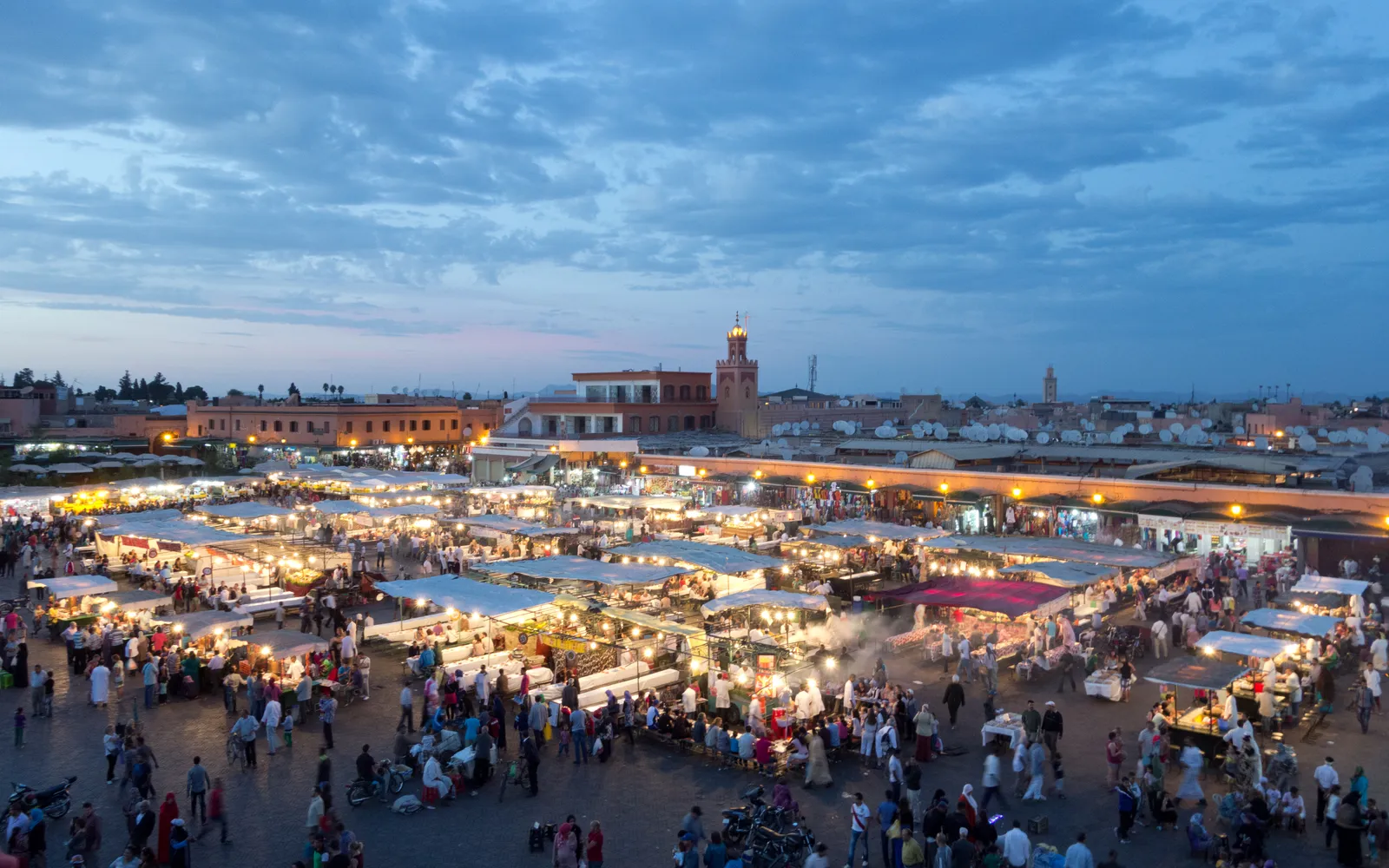 Marrakech
Morocco's Red City: the buzz of Jemaa el-Fnaa, a labyrinth of souks, and serene riads hidden behind ochre walls.
See this city's guide →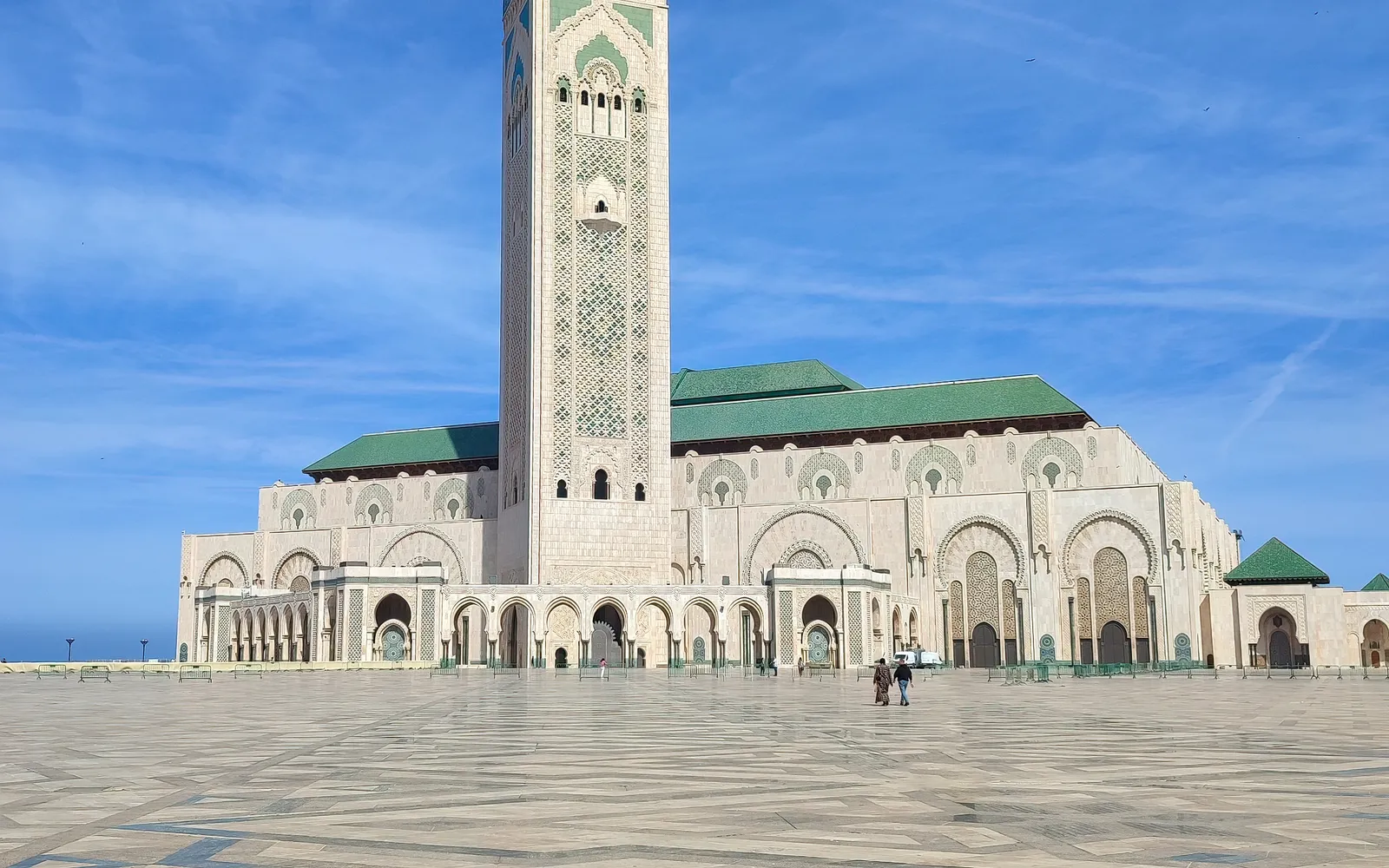 Casablanca
A practical guide to staying in Casablanca, Morocco — best neighborhoods, real attractions, seafront dining, and how to get in from Mohammed V Airport.
See this city's guide →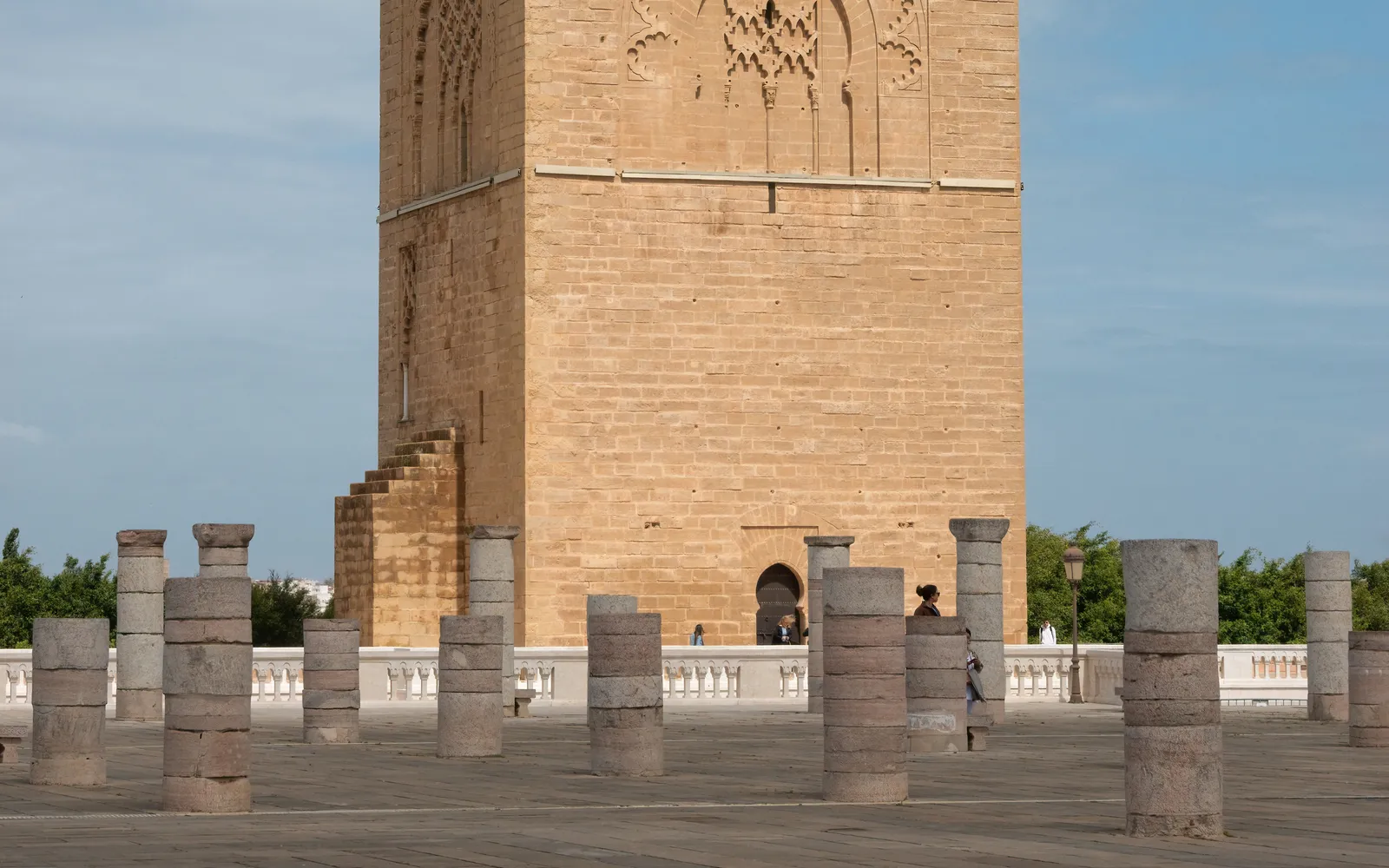 Rabat
RabatMorocco's calm Atlantic capital, with the Hassan Tower, a blue kasbah and a UNESCO old town.
See this city's guide →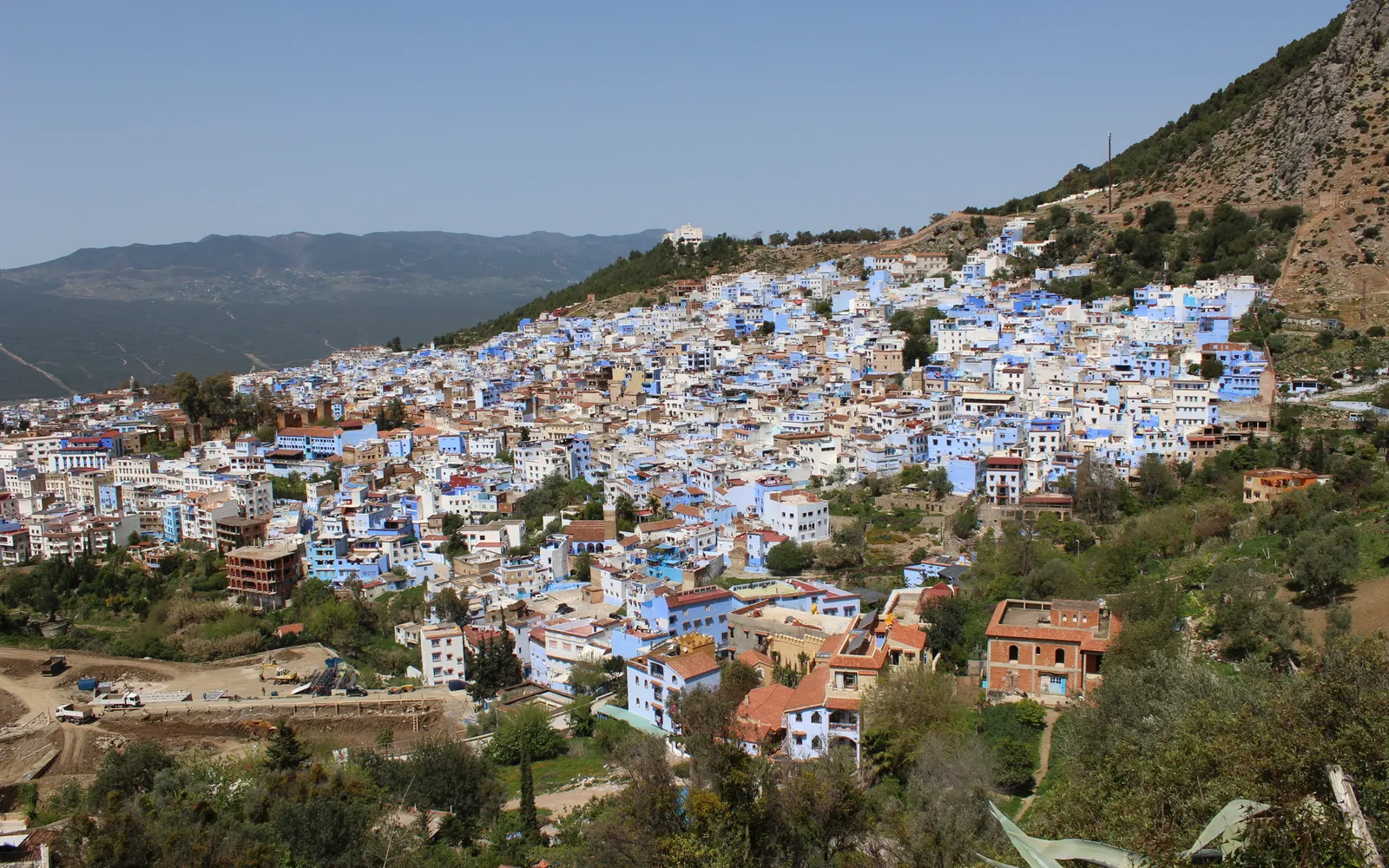 Chefchaouen
A whole town painted shades of blue — photogenic lanes, a craft souk, and Rif mountain views.
See this city's guide →Frequently asked — where to stay in Fes
How many days do you need in Fes?+
Two full days cover the medina highlights — the tanneries, Bou Inania Madrasa, Al-Qarawiyyin, and the Merenid Tombs. Add a third day if you want to wander deeper, soak up the atmosphere, and explore Fes el-Jdid. Many travelers also use Fes as a base for day trips to Meknes and the Roman ruins of Volubilis.
Should I stay in the medina or Ville Nouvelle?+
For a first visit, stay in a riad inside Fes el Bali to get the full medieval-city atmosphere within walking distance of every sight. Ville Nouvelle suits business travelers or those wanting modern-hotel comfort near the train station — but you'll miss what makes Fes special.
When is the best time to visit Fes?+
Spring (March–May) and autumn (September–November) are ideal, with mild 20–25°C weather perfect for medina walks. Summer (June–August) gets very hot, up to 35°C in the airless medina, while winters are cool at night (10–15°C) and many accommodations have no heating.
Ready to book your Fes stay?
Start with the 3 hotels our team picked, or search all 3 sites — always compare before booking