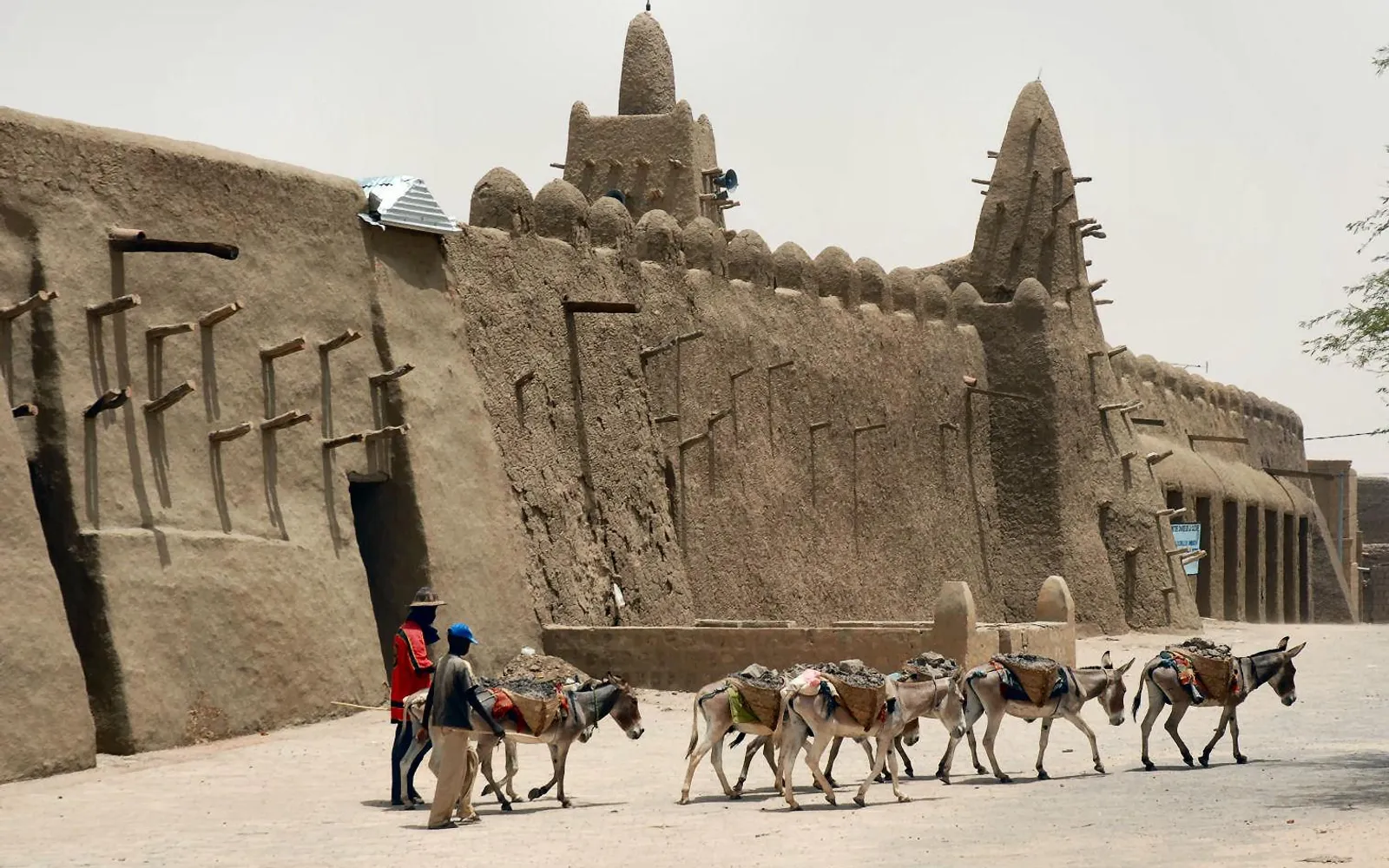
Timbuktu — heritage & travel advisory
Timbuktu (Tombouctou) is the legendary desert city on the edge of the Sahara in northern Mali — the place whose name became Western shorthand for 'the ends of the earth.' Yet for centuries this was no empty outpost: under the Mali and Songhai empires of the 14th to 16th centuries, Timbuktu was one of Africa's greatest centres of gold, salt and Islamic learning. Its three earthen mosques — Djingareyber, Sankoré and Sidi Yahya, the oldest nearly 700 years old — were inscribed as a UNESCO World Heritage Site in 1988, alongside hundreds of thousands of ancient manuscripts recording astronomy, law and medicine. To walk its sandy streets today is to step into the era when scholars from across the Muslim world came here to study.
🏛️ Heritage & significance
Timbuktu, the legendary city on the edge of the Sahara, was a great centre of the gold–salt trade and Islamic learning in the 15th–16th centuries. It holds the ancient earthen mosques of Djinguereber, Sankoré and Sidi Yahia, plus hundreds of thousands of ancient manuscripts. It is a UNESCO World Heritage Site and has been listed among World Heritage in Danger.
🛏️ Accommodation
Timbuktu is in northern Mali, a zone many governments rate "do-not-travel" due to instability and kidnapping risk. Tourism is currently almost impossible and we cannot verify any accommodation. This page is World Heritage information for reference only; we do not advise planning travel.
Check your foreign ministry's latest travel advisory before making any plans — safety first.
Why stay in Timbuktu
700-year-old earthen mosques
Djingareyber (built 1327 under Mansa Musa), Sankoré and Sidi Yahya are masterpieces of Sudano-Sahelian mud-and-timber architecture — and still active places of prayer today.
Hundreds of thousands of manuscripts
The Ahmed Baba Institute and family libraries safeguard up to 700,000 handwritten manuscripts on astronomy, law and medicine from the city's golden age of scholarship.
The heart of the Sahara
Sitting where the desert meets the Niger River, Timbuktu was the meeting point of camel caravans and trading boats. Ride out to a Tuareg camp and watch the sun set over the dunes.
A name out of legend
For over 200 years 'Timbuktu' has stood in the Western imagination for the most remote place on earth. Reaching it remains a bucket-list dream for adventurous travellers.
Pick an area first — where to stay in Timbuktu
Location is the single most important thing about a hotel — choose the right area first, then pick the hotel
Djingareyber QuarterOld-town core around the largest mud mosque; walking distance to the market and shops
Coming soonSankoré QuarterHistoric scholarly district around Sankoré University; quiet, with traditional mud-brick houses
Coming soonSareikéna QuarterResidential old-town district near the European explorers' houses and museum
Coming soonTown edge / near the dunesNorthern zone near the Flame of Peace monument; quiet and within reach of the sand dunes
Coming soonRanked reviews — find your ideal stay in Timbuktu
Start with where to stay (the heart of the trip), then explore food and sights
See the heritage & travel advisory above.
Local dishes to try in Timbuktu
- 1🍲
Timbuktu couscous
Steamed couscous topped with a spiced lamb, beef or chicken stew — a classic of the city, shaped by North African and trans-Saharan caravan influences.
📍 Main dish - 2🍝
Katta pasta
A rare hand-rolled pasta unique to Timbuktu and Gao, made from local wheat, dried in the shade and toasted golden. It is a recognised Slow Food specialty.
📍 City specialty - 3🫓
Takula bread
Flat loaves baked in earthen ovens outside the home, one of several breads Timbuktu's women make by hand alongside wadjila and steamed tukasu.
📍 Local bread - 4🍚
Riz au gras / Malian rice
Rice cooked in a rich tomato-and-meat sauce (Mali's take on jollof) — a filling, easy-to-find one-pot meal popular across the country.
📍 Rice dish - 5🥜
Tigadèguèna (peanut stew)
A thick groundnut stew served over rice with meat or chicken — one of Mali's signature national dishes, found all over town.
📍 National sauce - 6🍵
Attaya (desert tea)
Sweet green tea brewed in three rounds in the Tuareg and Malian tradition and poured from a height to raise foam — less a drink than a ritual of welcome and conversation.
📍 Drink
- 1🕌
Djingareyber Mosque
The city's oldest and largest mud mosque, built in 1327 under Emperor Mansa Musa. Its pyramidal earthen minaret bristling with wooden beams is the iconic image of Timbuktu — and it is still in active use.
📍 UNESCO site - 2🎓
Sankoré Mosque & University
The heart of the legendary 'University of Timbuktu,' once home to thousands of students and a world centre of Islamic scholarship in the 15th and 16th centuries. Its courtyard and tower still stand.
📍 Ancient university - 3🚪
Sidi Yahya Mosque
A small mosque completed in 1440, famed for a carved wooden door held in deep local reverence. Atmospheric and intimate — a fine place to observe everyday local piety.
📍 Sacred shrine - 4📜
Ahmed Baba Institute
The institute and library that preserve hundreds of thousands of ancient manuscripts — many smuggled out of the city in 2012 to save them from destruction.
📍 Ancient manuscripts - 5⚰️
Saints' Mausoleums
Sixteen Sufi saints' tombs, including Sidi Mahmoud and Alpha Moya, destroyed in 2012 and painstakingly rebuilt by local masons under UNESCO.
📍 UNESCO site - 6🏠
European explorers' houses
Plaque-marked mud houses where 19th-century explorers — Gordon Laing (Scot), René Caillié (French) and Heinrich Barth (German) — lodged on their famous journeys here.
📍 History - 7🛒
Grand Marché (Central Market)
A working caravan market selling slabs of salt hauled from the Taoudenni mines, Tuareg silver, indigo cloth and local food — a window into the real life of the desert city.
📍 Local market - 8🐪
Sand dunes & Tuareg camp
Ride a camel out to the white Saharan dunes, overnight in a Tuareg camp, drink desert tea, listen to folk music and watch a sky full of stars.
📍 Desert
Things to do in Timbuktu
Day tours, attraction tickets and travel essentials for Timbuktu — book ahead on Klook with mobile e-tickets.
Affiliate links — we may earn a commission at no extra cost to you.
🚆 Getting around Timbuktu
Fly from Bamako
The fastest and safest way is a roughly 2-hour domestic flight from Bamako (the capital) to Timbuktu Airport. Carriers such as Sky Mali fly the route, though schedules are irregular and cancellations happen.
Pinasse on the Niger
The classic route is a covered longboat (pinasse) up the Niger from Mopti, about 3 days and 2 nights, or a COMANAV ferry that docks at Korioumé / Kabara, the river ports for the city.
4x4 across the desert
Overland by 4x4 from Mopti takes around two days, and you must always cross the Niger River by boat at Kabara or Korioumé before reaching the town itself.
On foot in the old town
Timbuktu's old town is small and compact with sandy lanes; you can walk to all the mosques and the market. A local guide adds context and helps with access to the sites.
Cash (CFA franc) only
Mali uses the West African CFA franc (XOF). Timbuktu has no ATMs and shops rarely take cards, so withdraw or change enough cash in Bamako or Mopti before you travel.
Where to go next near Timbuktu
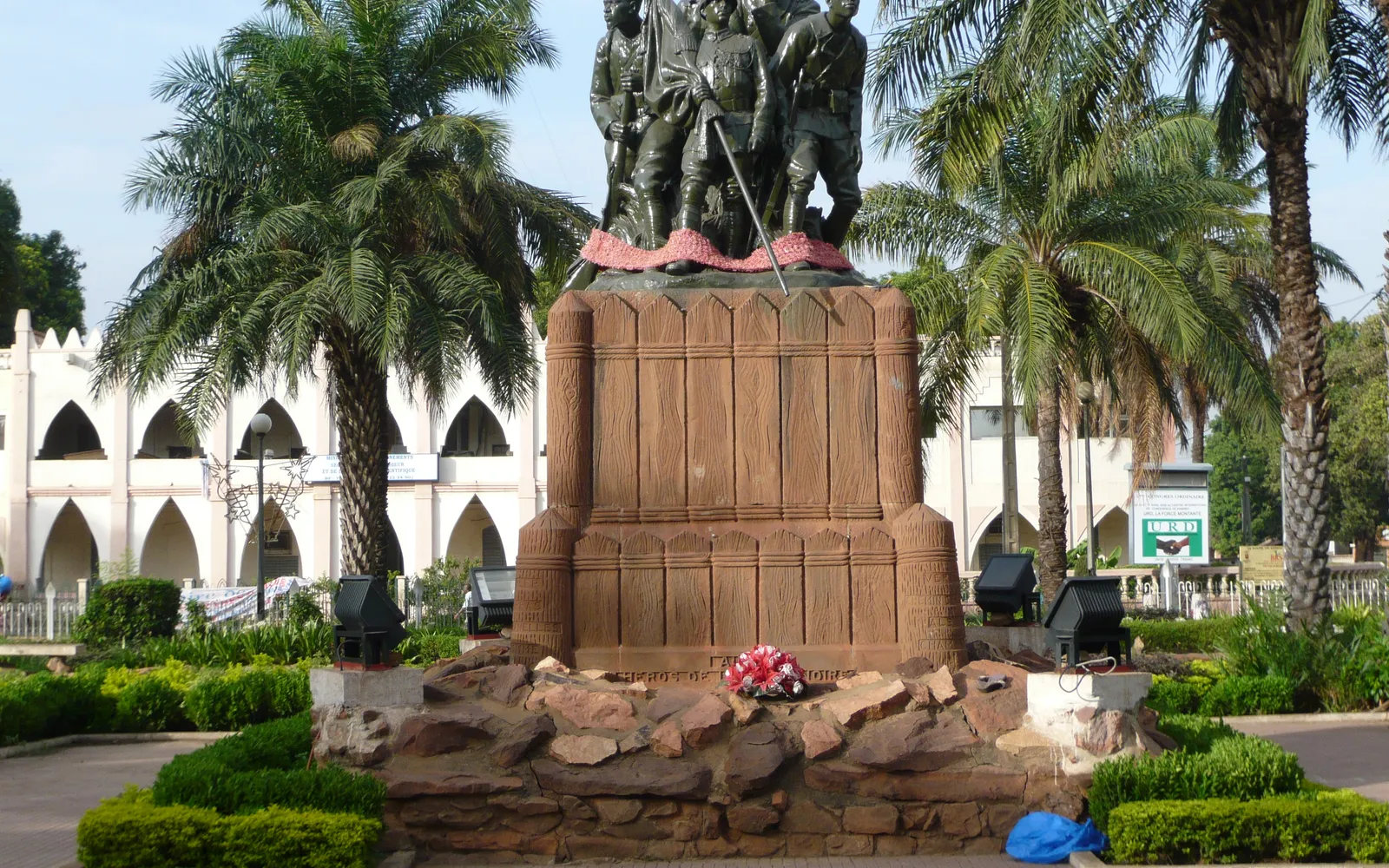 Bamako
A practical guide to where to stay in Bamako, Mali — real neighborhoods, must-see sights, local food, and how to get around for travelers chasing the real West Africa.
See this city's guide →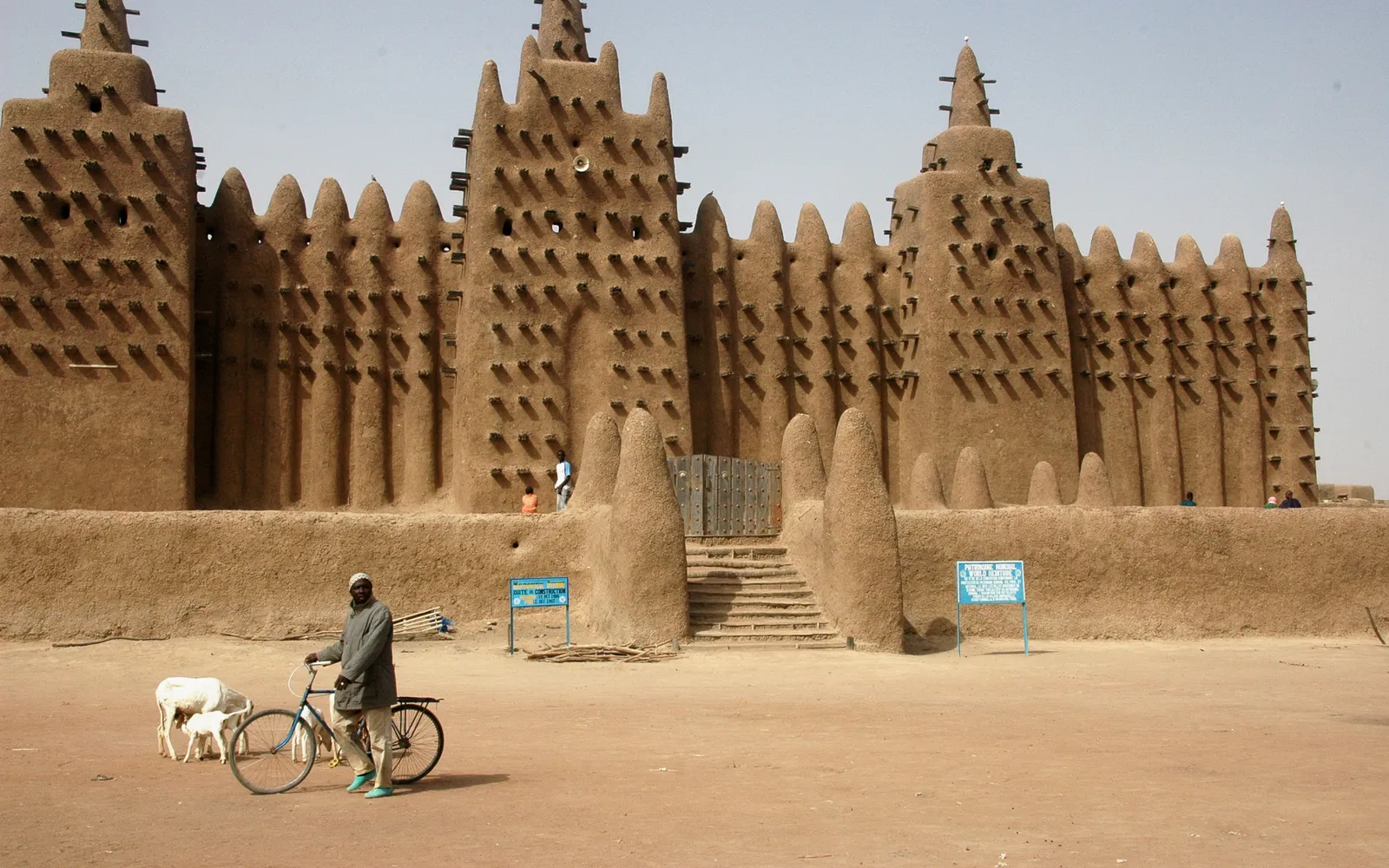 Djenne
An honest travel guide to Djenné, Mali — the UNESCO mud-mosque city. Where to stay, what to see, what to eat, and how to actually get there.
See this city's guide →Frequently asked — where to stay in Timbuktu
Can you travel to Timbuktu right now, and is it safe?+
Honestly: Timbuktu and northern Mali have faced a very serious security situation in recent years, and many governments have issued their highest-level 'do not travel' advisories for the region. Before any real trip, always check your own government's current advisory and the situation on the ground. This page is mainly here to help you understand the city's history and culture.
Why is Timbuktu so famous, and how did it become a figure of speech?+
Because in the 14th to 16th centuries it was Africa's richest hub of gold, salt and Islamic learning, with a celebrated university and hundreds of thousands of manuscripts. Since Europeans couldn't reach it for centuries, 'Timbuktu' came to mean the most far-flung place imaginable.
What language and currency are used in Timbuktu?+
The official language is French, with local languages including Songhai, Tamasheq (Tuareg) and Arabic. The currency is the West African CFA franc (XOF), pegged to the euro. Bring enough cash, as there are no ATMs and cards are not accepted.