Djenne — heritage & travel advisory
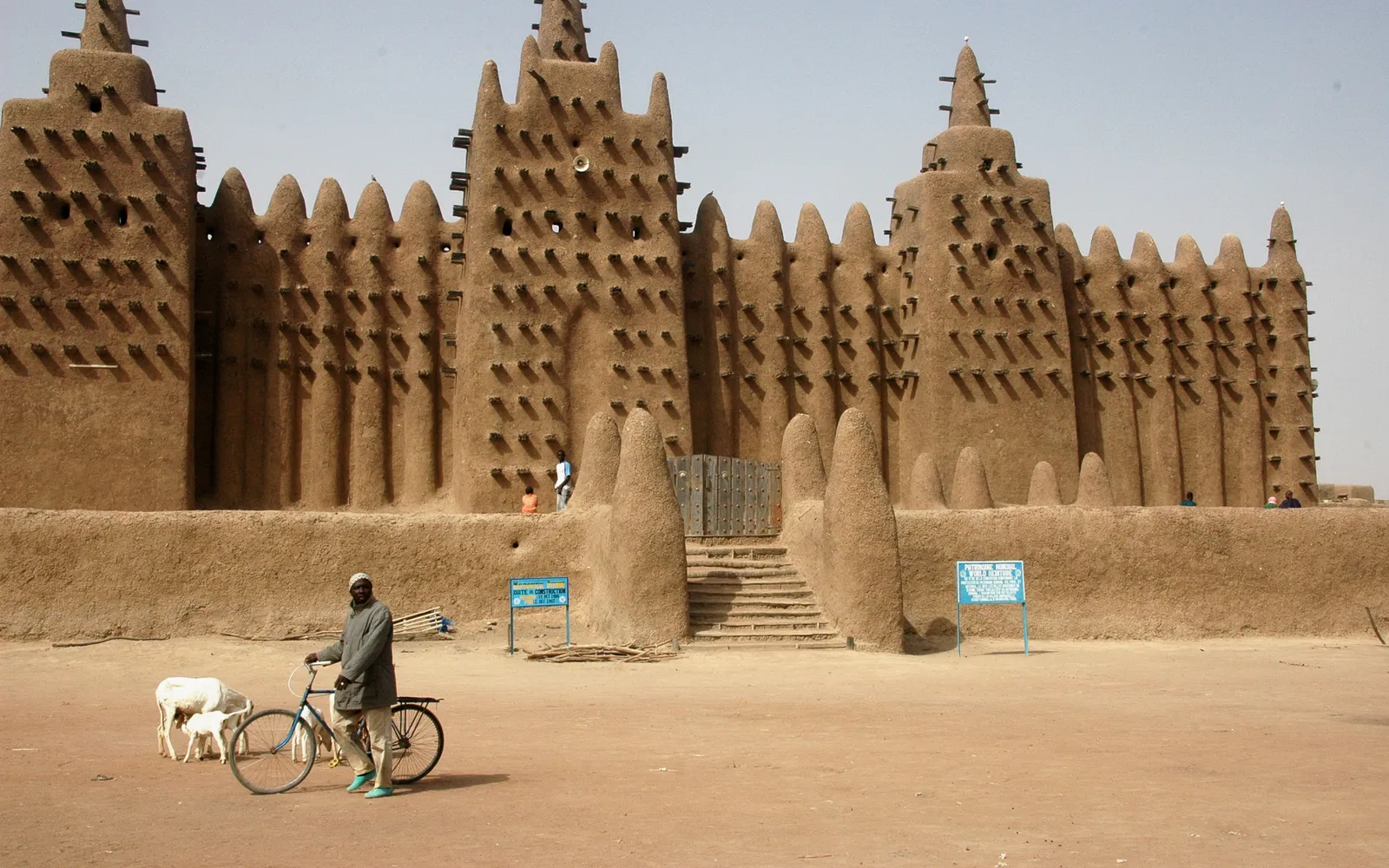
Djenné is a living city of mud, set on an island in the Inland Niger Delta of central Mali. Its beating heart is the Great Mosque of Djenné — the largest adobe (mud-brick) building on Earth and the finest example of Sudano-Sahelian architecture anywhere. The whole old town has been a UNESCO World Heritage Site since 1988. Wander its winding earthen lanes past two-storey mud houses bristling with palm-wood beams (called toron), then watch the famous Monday market spill across the square in front of the mosque, and you step straight back to the era when Djenné was a trans-Saharan trade hub as rich and renowned as Timbuktu.
🏛️ Heritage & significance
Djenné, an old town on the Inner Niger Delta, is home to the Great Mosque of Djenné — the largest adobe (mud-brick) building in the world, rebuilt in 1907 on the site of the original mosque, traditionally dated to the 13th century. Both the old town and the mosque are UNESCO World Heritage Sites. It was once a thriving hub of trans-Saharan trade and Islamic scholarship.
🛏️ Accommodation
Djenné is in Mali, which many governments designate a "do-not-travel" zone due to instability and terrorism. Tourism is currently almost non-existent and we cannot verify any accommodation. This page is heritage information for reference only; we do not advise planning travel until the situation is safe.
Check your foreign ministry's latest travel advisory before making any plans — safety first.
Why stay in Djenne
A mud mosque like nowhere else
The Great Mosque of Djenné is the largest adobe structure on the planet. The current building dates to 1906–1907, with three minarets and rows of jutting palm beams that make it instantly unmistakable.
An entire town built of earth
It is not just the mosque — the whole old town is a maze of Sudano-Sahelian mud houses that people still live in. Walking its lanes feels like exploring a living museum.
The buzzing Monday market
Every Monday the square in front of the mosque becomes a vast market where people from across the region trade cloth, spices, dried fish and livestock — the most vivid scene in town.
One of West Africa's oldest roots
Just outside town lies Djenné-Djenno, an archaeological site over 2,000 years old — one of the earliest urban settlements in West Africa and the source of the famous terracotta figurines.
Pick an area first — where to stay in Djenne
Location is the single most important thing about a hotel — choose the right area first, then pick the hotel
Around the Great Mosque (central square)Heart of the old town, next to the mosque and Monday market — everything within walking distance
Coming soonOld town mud quarter (Sudano-Sahelian lanes)Winding earthen alleys, mud houses with toron beams, boutique stays inside traditional homes
Coming soonBani riverbank / ferry landingWhere the ferry crosses into town, with river views and sunsets
Coming soonDjenné-Djenno (3 km out)Archaeological site outside town, ideal as a half-day trip by car or on foot
Coming soonRanked reviews — find your ideal stay in Djenne
Start with where to stay (the heart of the trip), then explore food and sights
See the heritage & travel advisory above.
Local dishes to try in Djenne
- 1🍚
Tô
A soft, sticky dough of millet or maize that is the everyday staple in Mali, usually eaten with a peanut or green-leaf sauce. Pure, rustic local flavour.
📍 Staple - 2🥜
Maafe (peanut stew)
A thick peanut-butter stew with tomatoes, vegetables and meat or chicken — widely considered Mali's national dish, rich, nutty and deeply comforting.
📍 National dish - 3🍅
Riz au gras (Zaamè)
Rice cooked in a tomato, onion, garlic and spice sauce, often with dried fish or meat — Mali's take on jollof and a go-to one-pot meal.
📍 Malian rice - 4🐟
Grilled capitaine
Nile perch from the Niger and Bani rivers, grilled or fried — firm, sweet and a highlight in riverside towns like Djenné and Mopti.
📍 River fish - 5🌾
Fonio
A tiny, gluten-free ancient grain grown in Mali for millennia, light on the stomach and served like couscous or rice alongside sauces and vegetables.
📍 Ancient grain - 6🍵
Malian tea & jinjinbere
Strong sweet green tea poured ceremonially in three rounds to close a meal, plus refreshing ginger-lemon jinjinbere to sip through the day.
📍 Drinks
- 1🕌
Great Mosque of Djenné
The largest mud-brick building in the world and the symbol of Mali itself. Its three minarets and projecting palm-wood toron are instantly recognisable. Non-Muslims cannot enter the prayer hall, but the exterior is spectacular for photos.
📍 UNESCO icon - 2🛒
Monday Market
Every Monday the square in front of the mosque transforms into a huge regional market — cloth, spices, dried fish, herbs and livestock. The most colourful, chaotic and alive the town ever gets.
📍 Local market - 3🧱
Old town & Sudano-Sahelian houses
Wander the winding earthen lanes past two-storey mud houses with carved doors and toron beams. The entire quarter is part of the World Heritage listing.
📍 Walk it - 4📜
Djenné-Djenno archaeological site
About 3 km from town, this site dates back to 250 BC and is among the earliest urban settlements in West Africa — famous for its ancient terracotta figurines.
📍 Archaeology - 5⚰️
Tomb of Tapama Djenepo
The tomb of a young woman who, in local legend, sacrificed her life to protect the city when Djenné was founded — a sacred spot and the town's defining tale.
📍 Town legend - 6🎨
The Crépissage replastering festival
Each year around April, the whole town gathers to replaster the mosque's mud walls before the rains, with music, dance and fierce community spirit — Djenné at its liveliest.
📍 Annual event - 7🛶
Bani River boat trip
Take a pirogue to see Bozo fishing life and views of the mud town from the water, especially during the flood season (July–December) when the banks fill up.
📍 On the water - 8🌅
Rooftop panorama
Climb to a hotel or mud-house rooftop to look over the sea of earthen roofs and the mosque's minarets in soft light — the classic Djenné photo.
📍 Best view
Things to do in Djenne
Day tours, attraction tickets and travel essentials for Djenne — book ahead on Klook with mobile e-tickets.
Affiliate links — we may earn a commission at no extra cost to you.
🚆 Getting around Djenne
Nearest airport: Mopti–Sévaré
Ambodédjo (Mopti–Sévaré) airport is the closest, roughly 100+ km away. Most travellers fly into the capital Bamako first, then continue overland.
Bus from Bamako
A daily bus runs from Bamako (Sogoniko) to the Djenné carrefour junction in about 8 hours, with tickets around USD 13–20.
Bani River ferry
Djenné sits on an island, so you cross the Bani River by ferry to reach it. The ferry takes small cars; it is about 3 km from the junction into town.
On foot in town
The old town is small and made of earthen lanes, so walking is by far the easiest way around. Hiring an accredited local guide is highly recommended.
Cash in CFA francs only
The currency is the West African CFA franc (XOF). Bring enough cash — there is little to no ATM or card support. Tip 100–500 CFA when photographing people in the market.
Where to go next near Djenne
 Bamako
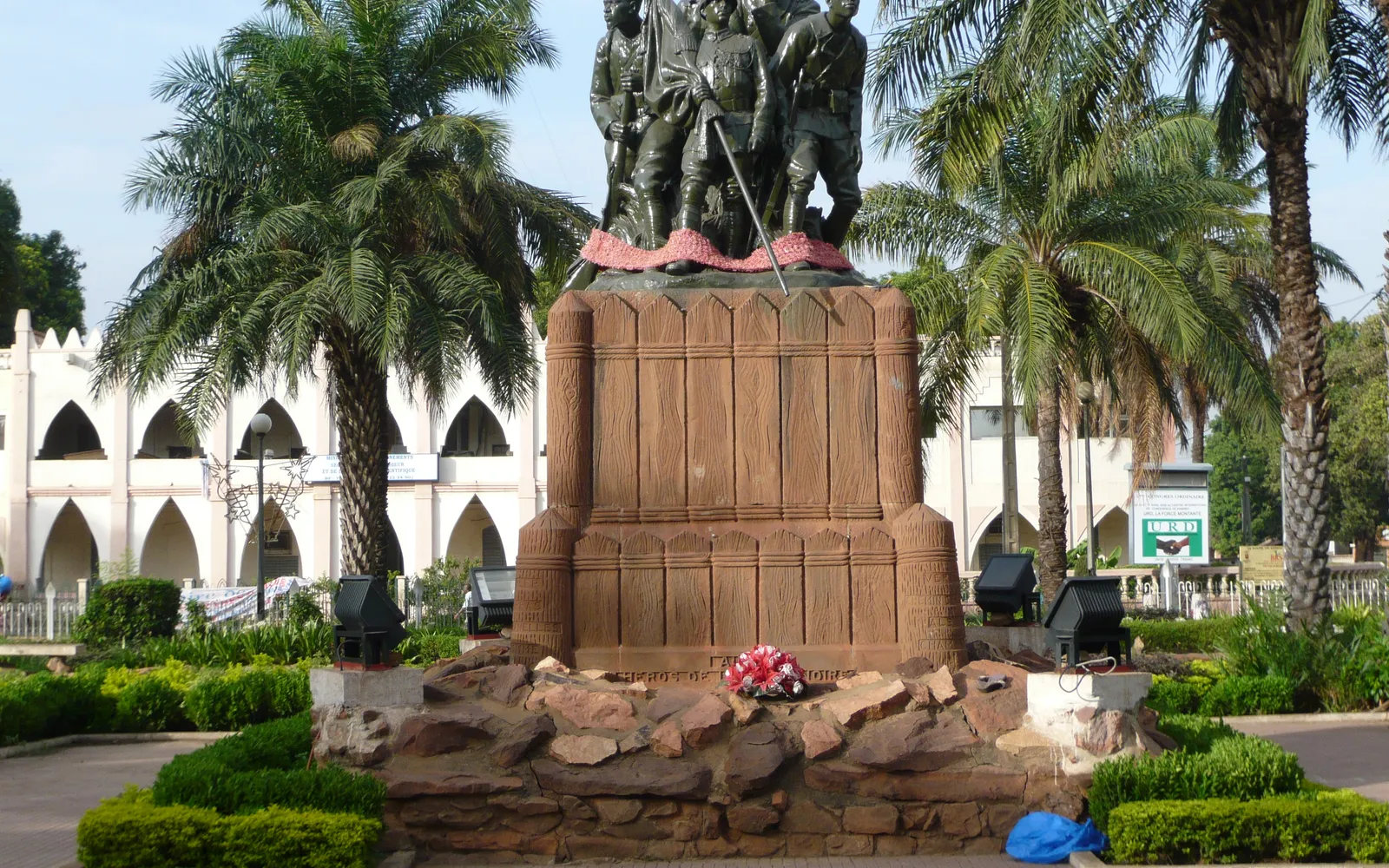
A practical guide to where to stay in Bamako, Mali — real neighborhoods, must-see sights, local food, and how to get around for travelers chasing the real West Africa.
See this city's guide →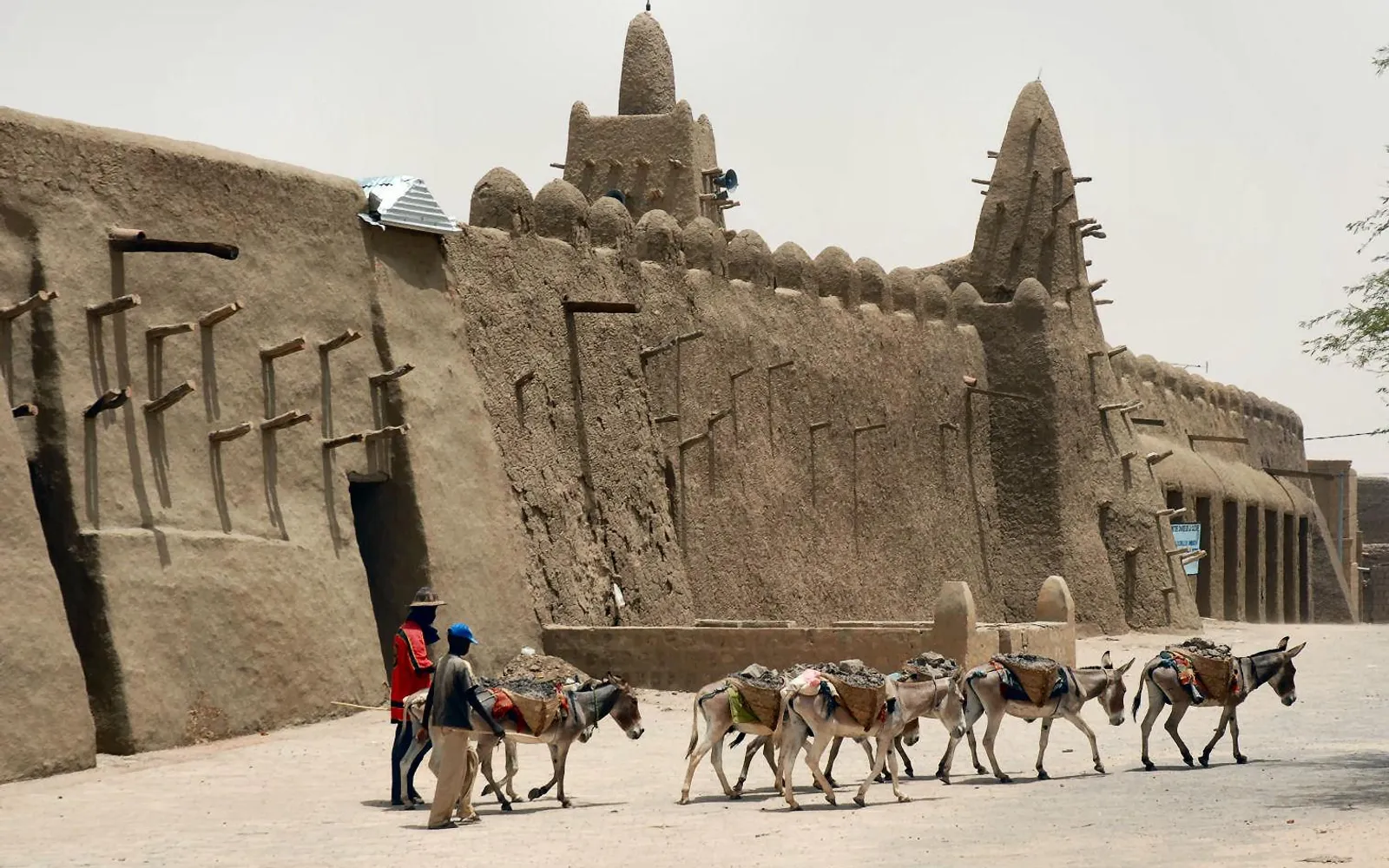 Timbuktu
Mali's legendary Saharan trading city — UNESCO mud mosques and ancient manuscripts.
See this city's guide →Frequently asked — where to stay in Djenne
Is Djenné safe to visit right now?+
As of 2026, central Mali faces serious security and insurgency issues, and many governments advise against all travel to the country. Djenné town itself has remained relatively calm, but the roads in and out carry real risk. Check the latest advisories, get comprehensive insurance, and travel only with a trusted local operator.
Can non-Muslims go inside the Great Mosque?+
No — the prayer hall has been closed to non-Muslims since an inappropriate fashion shoot years ago. You can still admire and photograph the exterior fully. Dress modestly, covering shoulders and knees, and respect prayer times.
When is the best time to visit Djenné?+
The dry season, November to February, offers the most comfortable weather and the sturdiest mud buildings. For the highlight, time your trip to the Crépissage festival around April, when the whole town replasters the mosque — and arrive on a Monday for the great market.