Abeche — heritage & travel advisory
Abéché is Chad's fourth-largest city and the capital of the eastern Ouaddaï region. It was once the capital of the Sultanate of Ouaddaï and a key staging post on the trans-Saharan caravan routes linking Chad with Sudan and Libya. Travelers come today for the mud-brick Sultan's Palace, the 19th-century Grand Mosque, a bustling camel market, and to use the city as a gateway to the Ennedi Plateau, a UNESCO World Heritage landscape in the Sahara. Hotels here are limited and rarely bookable online, so we pull together how to find a real room and compare rates in one place.
🏛️ Heritage & significance
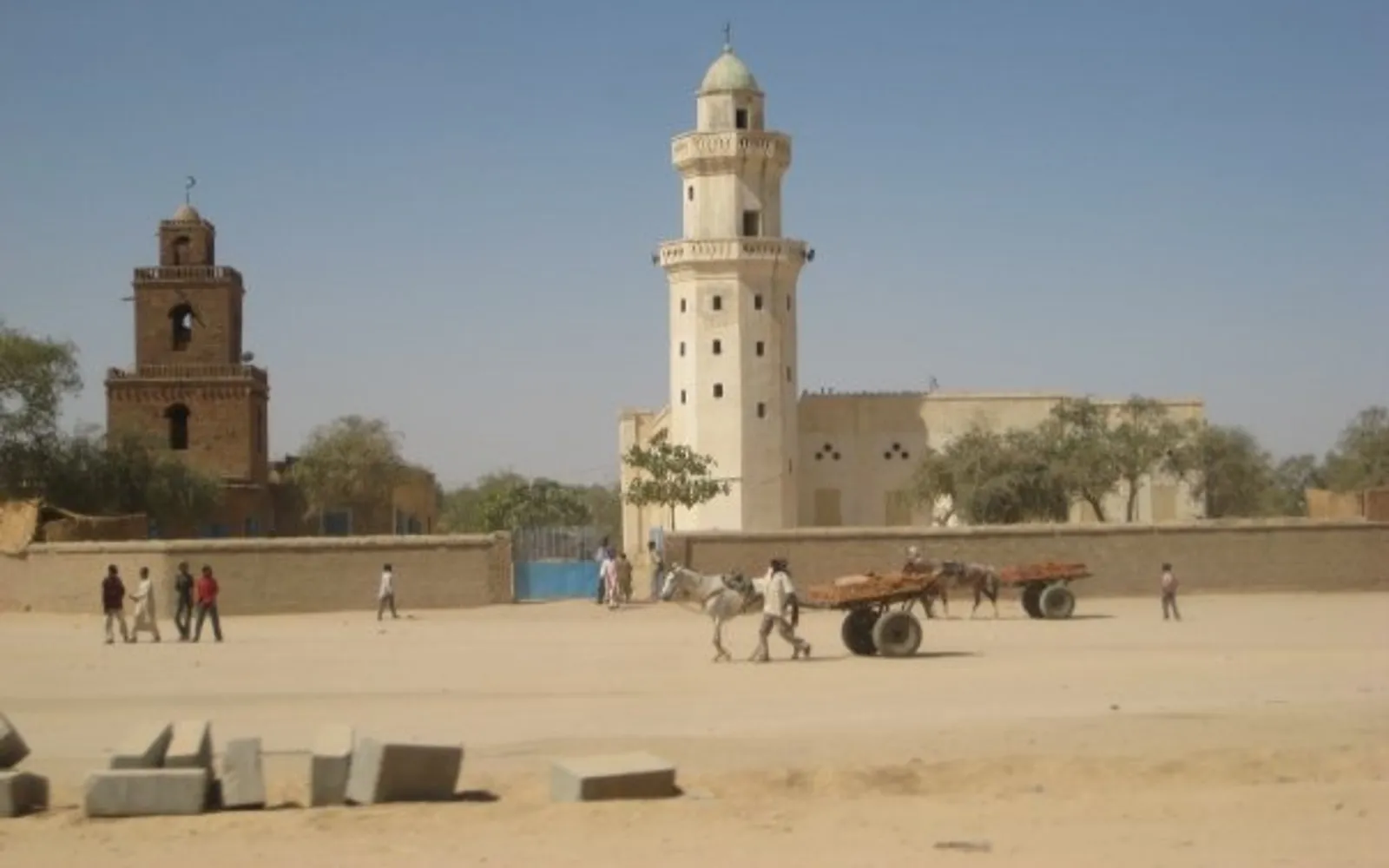
Abéché, the former capital of the Ouaddaï Sultanate in eastern Chad, was an important stop for trans-Saharan caravans and a centre of Islam. It preserves old mosques, sultans’ tombs and an old quarter that reflects traditional Sahelian architecture.
🛏️ Accommodation
Abéché lies in eastern Chad's Ouaddaï region, within the Sudan-conflict spillover and refugee-reception zone, where "do-not-travel" advisories apply due to instability and a refugee crisis. Accommodation is limited and unverifiable. This page is for reference only; we do not advise planning travel at this time.
Check your foreign ministry's latest travel advisory before making any plans — safety first.
Why stay in Abeche
A former sultanate capital
Abéché became capital of the Ouaddaï Sultanate in the 1890s, after the wells at the old capital of Ouara dried up. Palace remains, sultans' tombs, and the old surrounding walls still stand to explore.
Trans-Saharan caravan hub
The town was a major stop on the desert trade routes that connected Chad with Sudan and Libya, and a corridor for pilgrim caravans heading to Mecca. The markets and old quarter still carry that era's atmosphere.
Gateway to the Ennedi
Abéché is a key staging and resupply point for overland expeditions heading north into the Ennedi Plateau, home to sandstone arches and the UNESCO-listed Guelta d'Archei.
Sahelian Islamic heritage
The Grand Mosque, built in the 19th century, has earthen architecture and a minaret; the old town's narrow lanes and mud-brick houses reflect a distinctive blend of Arab and African Muslim culture.
Pick an area first — where to stay in Abeche
Location is the single most important thing about a hotel — choose the right area first, then pick the hotel
City Centre (around Place de l'Indépendance)Home to the Grand Mosque, the Sultan's Palace, and the central market — walkable to the main sights, best for short stays.
Coming soonOld TownNarrow lanes, mud-brick homes, and small courtyards with a traditional caravan-era feel — great for photographers and history lovers.
Coming soonMarket District (Grand Marché)The heart of the action — camel and livestock market, fresh produce, spices, and crafts, with plenty of local eateries and easy onward transport.
Coming soonAirport Area (Aéroport)Convenient for flights to and from N'Djamena, or for staging an Ennedi trip; quieter than the centre.
Coming soonRanked reviews — find your ideal stay in Abeche
Start with where to stay (the heart of the trip), then explore food and sights
See the heritage & travel advisory above.
Local dishes to try in Abeche
- 1🍲
Boule
A ball of sorghum or millet, Chad's everyday staple. It's served with 'moulah', a sauce of okra, tomato, and meat or fish — eaten right across the city.
📍 Staple - 2🥘
Daraba
A rich peanut-and-vegetable stew made with ground peanuts, okra, tomato, sweet potato, eggplant, and leafy greens — a beloved Chadian dish.
📍 Stew - 3🫓
Kisra
A thin, pancake-like fermented flatbread made from sorghum flour — one of the most common foods you'll meet in Chad, perfect for scooping up sauces.
📍 Fermented bread - 4🍖
Jarret de Boeuf
A beef-shank stew slow-cooked with vegetables for at least two hours until the meat and veg turn meltingly tender — a hearty, filling plate.
📍 Beef stew - 5🍢
Brochettes
Grilled skewers of beef, goat, or chicken — smoky and tender, sold by street vendors all over town and an easy, affordable snack.
📍 Grilled skewers - 6🌺
Karkanji
A red tea of dried hibiscus flowers steeped with ginger, clove, and cinnamon. Tart and sweet, locals drink it cold to beat the heat.
📍 Drink
- 1🏛️
Sultan's Palace
The historic heart of Abéché — a rammed-earth compound of courtyards where the sultans of Ouaddaï once ruled, with distinctive architecture and deep historical significance.
📍 History - 2🕌
Grand Mosque of Abéché
A 19th-century mosque on Place de l'Indépendance with photogenic earthen architecture and a minaret. Visiting around Friday prayers gives a real feel for local religious life.
📍 Religious site - 3🏘️
Old Town
Narrow lanes, mud-brick homes, and small courtyards that show how Abéché grew before modern development — an atmospheric walk back into the caravan era.
📍 Historic quarter - 4🐪
Central & Camel Market
Abéché is the country's principal camel export market. The central market buzzes with produce, onions, spices, textiles, crafts, pottery, and jewelry — and is a great place to sample Chadian food.
📍 Market - 5⚰️
Sultans' Tombs & Old Walls
Remnants of the old capital, including the tombs of former sultans and the thick walls that once enclosed them — traces of the Ouaddaï kingdom's heyday.
📍 History - 6🗿
Ouara Ruins
The ruins of the sultanate's former capital before Abéché, with the remains of a palace, mosque, and royal tombs ringed by a thick wall. It lies outside town and is reached by 4x4.
📍 Day trip - 7🏜️
Gateway to the Ennedi Plateau
Abéché is a base before heading north to the Ennedi — a land of sandstone arches, ancient rock-art caves, and the World Heritage Guelta d'Archei where camels and crocodiles come to drink.
📍 Desert trip - 8🛤️
Old Trans-Saharan Caravan Route
The town was a junction on the desert trade routes toward Sudan and Libya. Trace that past through its architecture, markets, and the stories of its elders.
📍 History
Things to do in Abeche
Day tours, attraction tickets and travel essentials for Abeche — book ahead on Klook with mobile e-tickets.
Affiliate links — we may earn a commission at no extra cost to you.
🚆 Getting around Abeche
Abéché Airport (AEH)
Chad's second-busiest airport after N'Djamena. The main domestic route is Abéché–N'Djamena, a roughly 657 km flight taking about 1 hour 15 minutes.
Road to N'Djamena
Abéché lies about 749 km northeast of the capital. Bus and shared-vehicle trips are long, and road conditions vary by season — leave plenty of buffer.
4x4 for desert trips
Reaching the Ouara ruins or heading north to the Ennedi needs a 4x4 with an experienced local driver-guide, best arranged through a licensed tour operator.
Getting around town
The centre around Place de l'Indépendance — the Grand Mosque, palace, and market — is walkable. Midday sun is fierce, so carry water and avoid noon walks.
Pay in CFA cash
The Central African CFA franc (XAF) is used almost everywhere. Cards are rarely accepted and ATMs are scarce, so bring enough cash from N'Djamena beforehand.
Where to go next near Abeche
Frequently asked — where to stay in Abeche
How do I get to Abéché from N'Djamena?+
Two main options: a domestic flight on the N'Djamena–Abéché (AEH) route, about 1 hour 15 minutes and the fastest way; or by road, roughly 749 km to the northeast, which is long and depends on the season — especially during the rains (June–September).
What is there to see in Abéché?+
The highlights are the Sultan's Palace, the 19th-century Grand Mosque, the mud-brick old town, the central and camel markets, the sultans' tombs and old walls, and the Ouara ruins of the former capital outside town. Abéché is also a base for trips to the UNESCO-listed Ennedi Plateau.
What should I be aware of when visiting Abéché?+
Chad carries travel warnings from many governments, so check your foreign ministry's latest advice before planning. Travel with a licensed operator, carry CFA cash (cards and ATMs are scarce), bring malaria medication, and get insurance that covers medical evacuation. Heat is extreme — records reach 49°C — so always carry water.