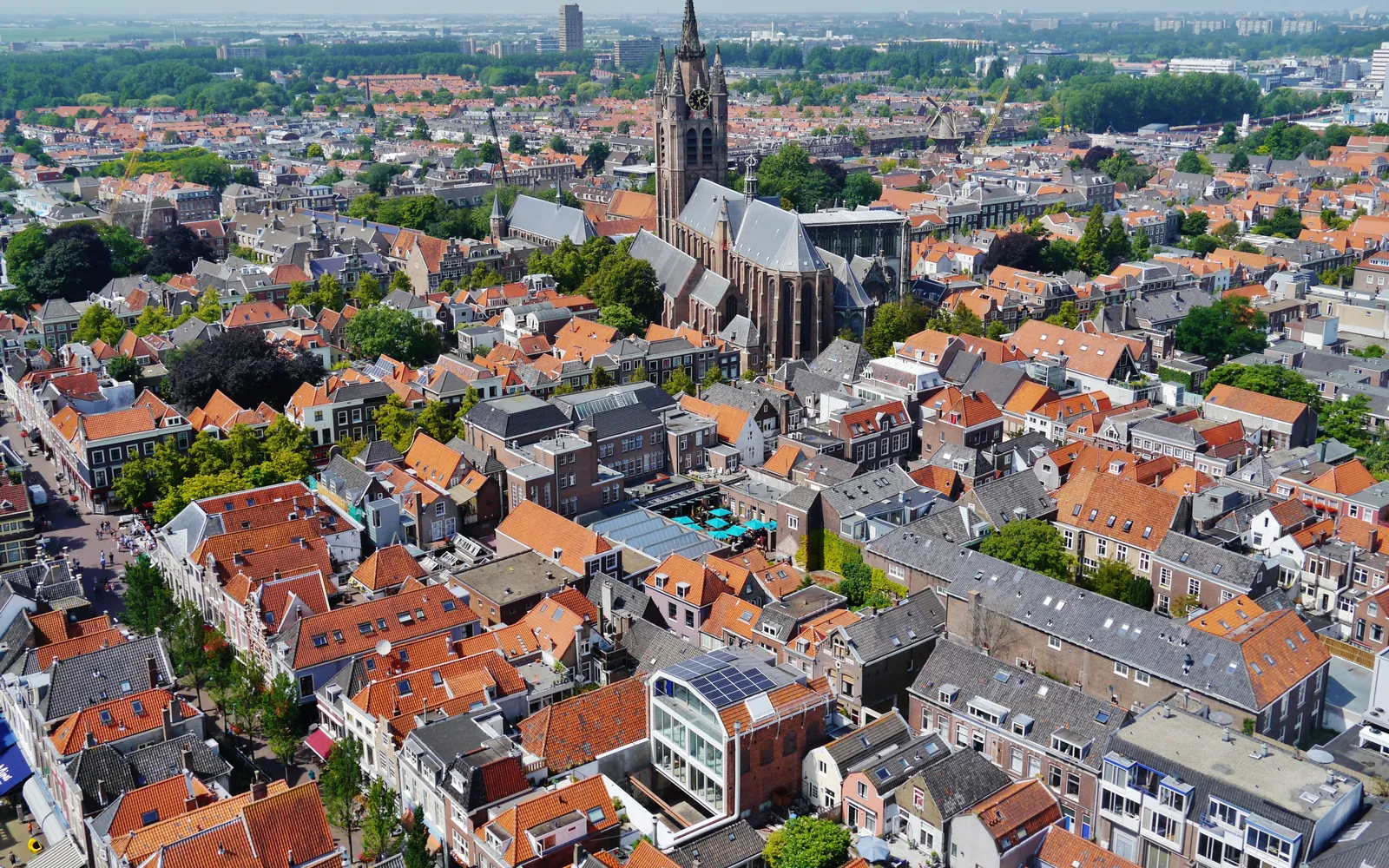
Dutch food gets overlooked on most travel itineraries — but try it once and you'll see it's been hiding something good. A warm stroopwafel resting on a cup of tea is one of those small pleasures you can't replicate anywhere else, and bitterballen — creamy braised meat in a shatteringly crisp shell — are simply the best bar snack in Northern Europe. In Delft, everything is within easy reach: the Markt market, a handful of cheese shops, and a raw herring stall beside the canal.
 #1
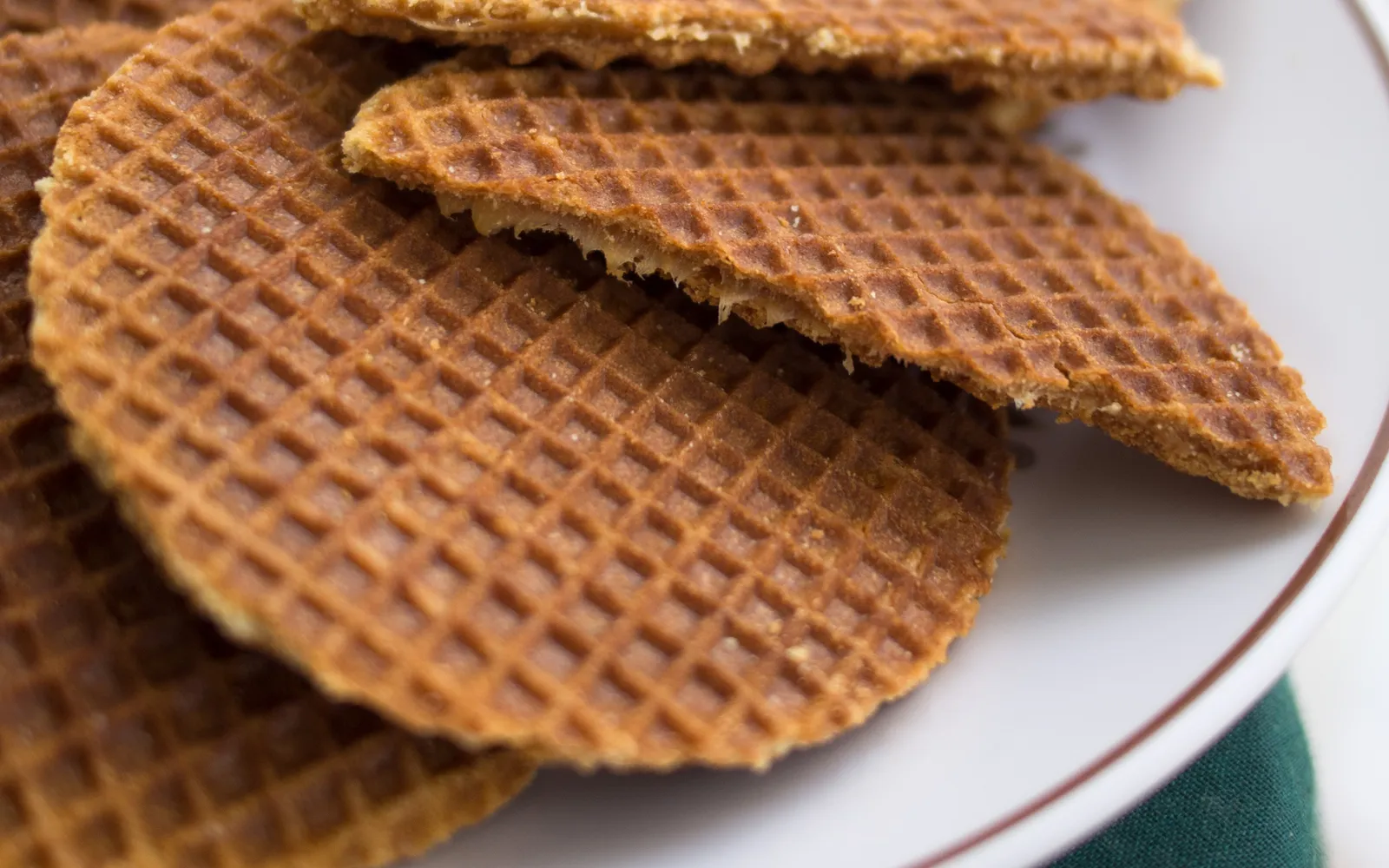
#1 Stroopwafel
The Dutch treat that conquered the world — two thin crisp wafers pressed together around a filling of sticky caramel syrup. The traditional way to eat one is to balance it on the rim of a hot cup of tea or coffee and wait 1 to 2 minutes for the heat to soften the caramel inside before eating it while the filling is still warm and molten. A fresh stroopwafel from a bakery or market stall is dramatically better than the packaged versions you find in supermarkets.
- Buy from a Saturday market stall at the Markt for one that's freshly made and still warm — it's noticeably better.
- Look for the word ambachtelijk (handcrafted) on the sign — the larger artisan size outperforms the factory-made small version.
- They travel well if you buy the vacuum-sealed boxed version; the shelf life is much longer than the paper bag kind.
 #2
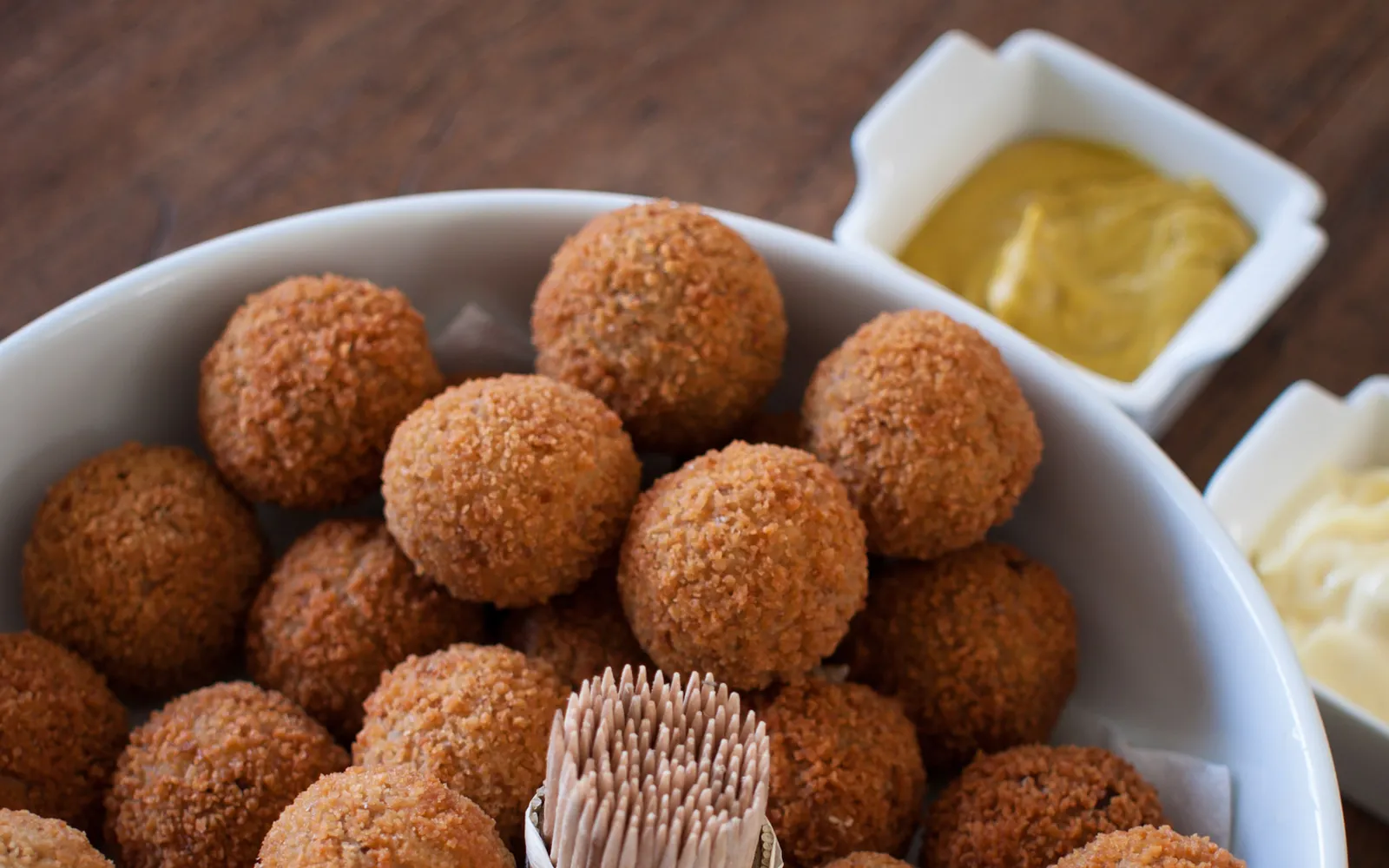
#2 Bitterballen
The most distinctively Dutch drinking snack there is — a crunchy fried shell that hides a filling of slow-braised beef or chicken stirred through hot béchamel sauce. Eat them with mild-sweet Dutch mustard and a cold Heineken or Hertog Jan. The name bitter comes from the jenever spirit they were originally paired with. The real thing is made from fresh meat, not processed — you can tell by how smooth and rich the filling is.
- The filling is scalding hot — biting one in half on the first go is a classic mistake that burns your mouth. Wait about 30 seconds after they arrive.
- Order with a genuine Dutch beer like Hertog Jan or La Trappe rather than Heineken for a better flavour match.
- Brown cafés (bruincafé) in old canal-side buildings tend to make their own bitterballen and are consistently better than the generic ones.
 #3
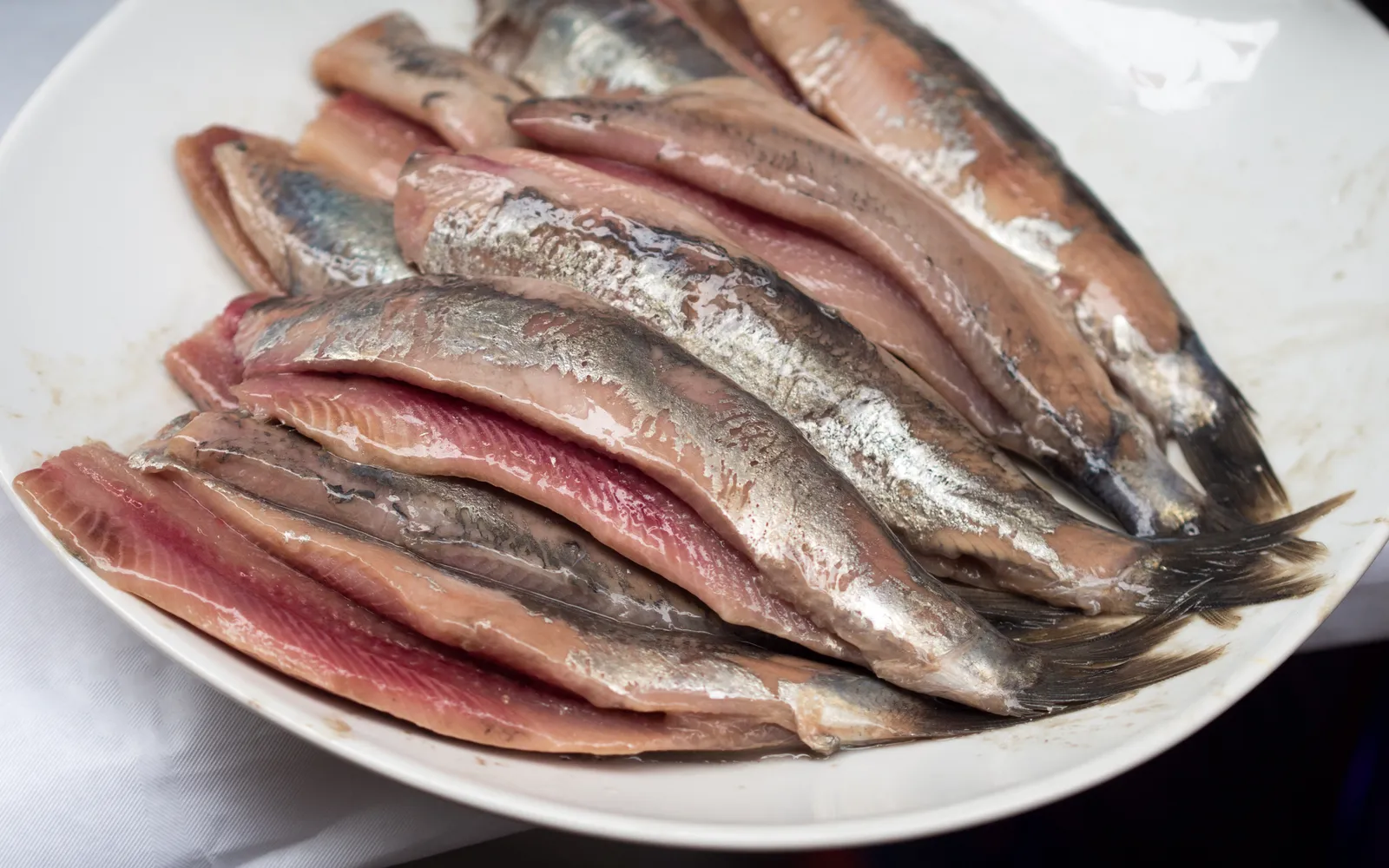
#3 Soused Herring
About as Dutch an experience as you can have. Hollandse Nieuwe is raw herring salt-cured in the traditional method, caught only in May and June when the fish are at their fattest. The classic way to eat it is to hold the fish by the tail, dip it in chopped raw onion and pickled cucumber, and take it bite by bite — or ask for it sliced and served on bread. The flesh is smooth, not at all fishy, with a mild saltiness and a rich flavour. It's cheap street food that Dutch people of every age eat all year.
- The classic technique is to hold the tail high and eat bite by bite, but ask for it sliced if you're not used to it — both ways are perfectly correct.
- Hollandse Nieuwe in season (May–June) is at its sweetest and best; it's still available out of season but not quite as good.
- Price is around €3–5 per piece — very good value for the quality.
 #4
#4 Gouda Cheese
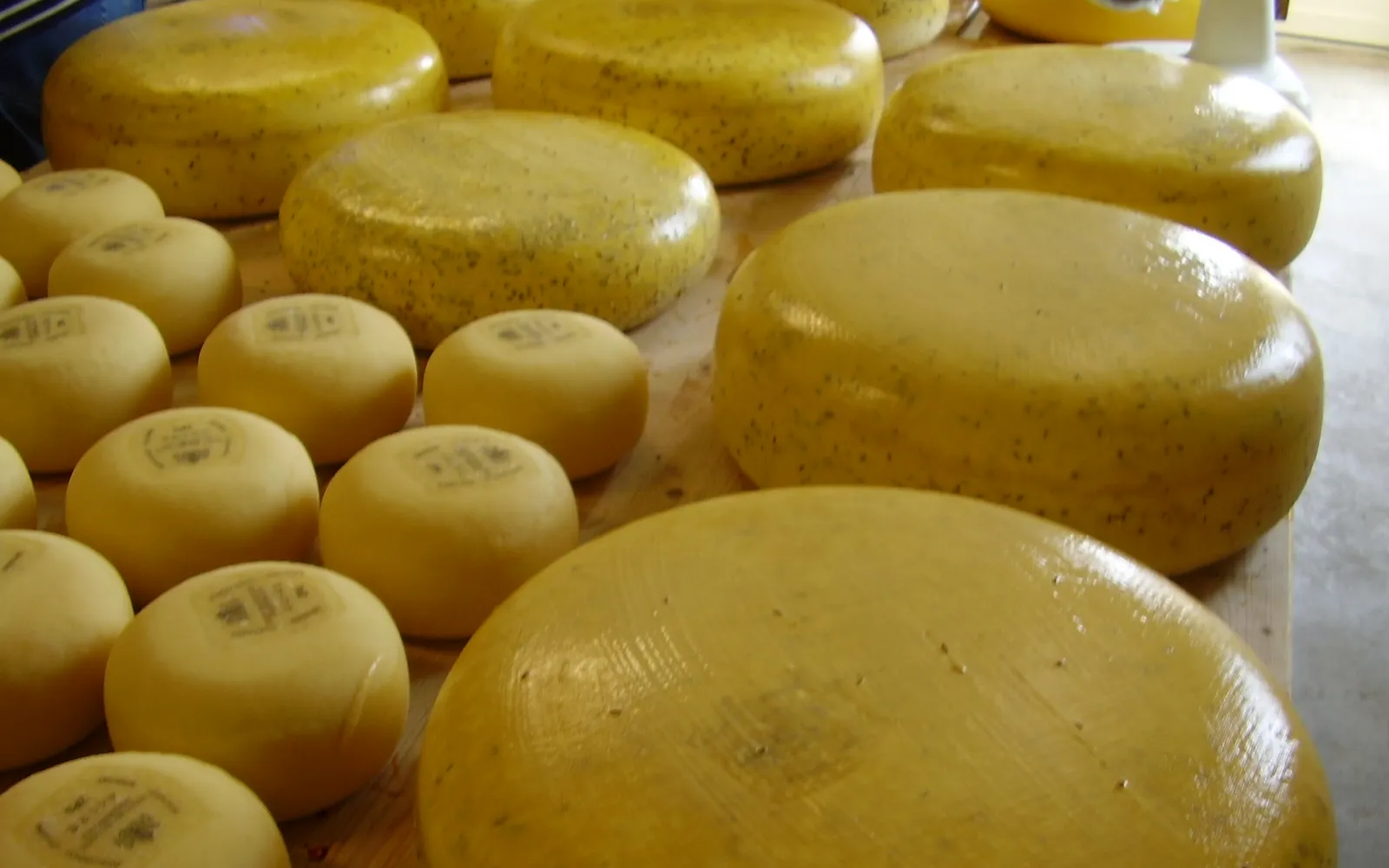
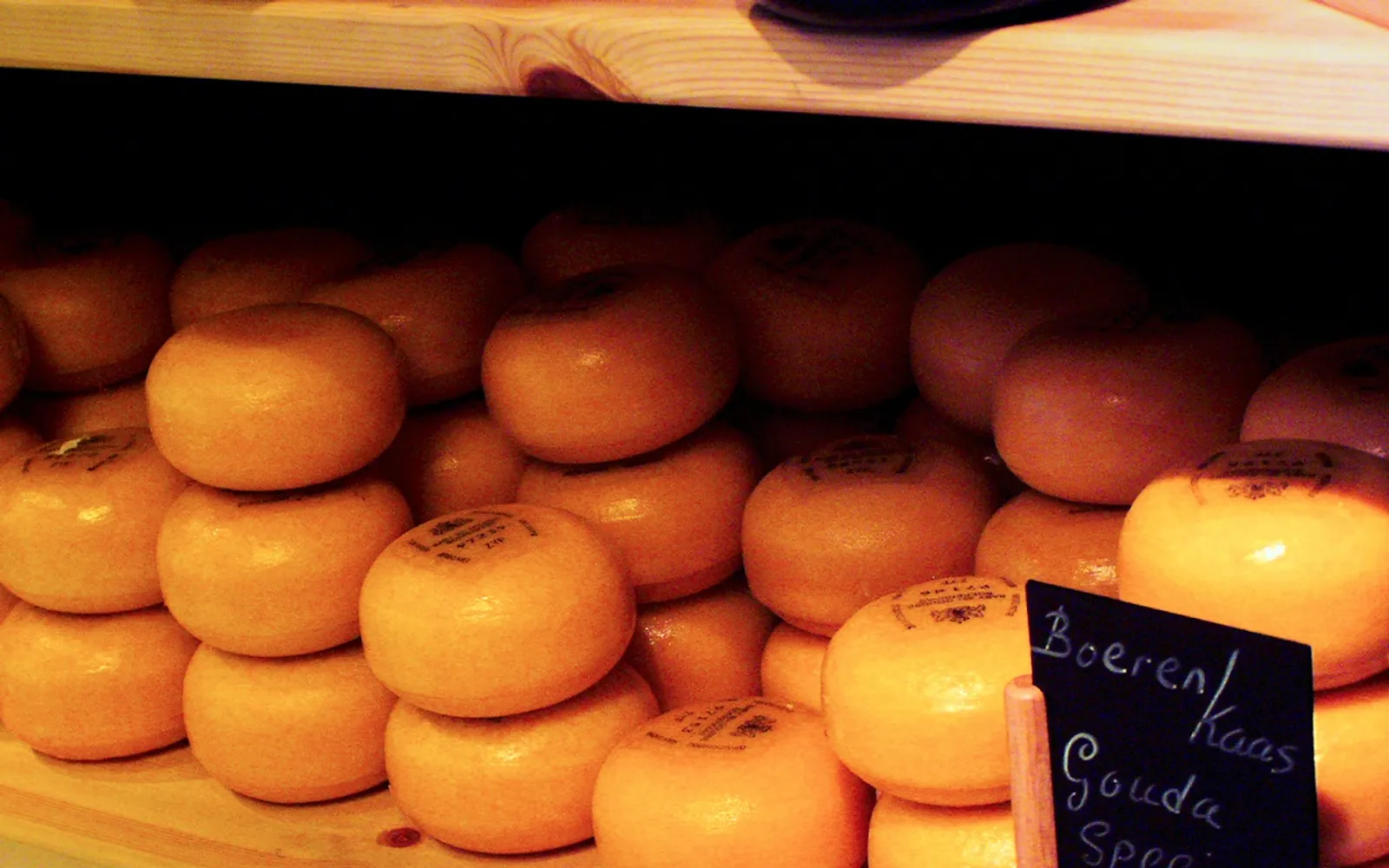
The Netherlands' most famous cheese, known worldwide. Jong (young) Gouda is mild and milky, but the versions worth seeking out are oud (aged 1 year or more) and extra oud (aged 2 years or more) — they develop a deep, caramel-sweet intensity and small crystals throughout the paste. Good cheese shops in Delft will let you taste before you buy, so take your time and choose what suits you. Both red wine and dark beer pair well with the aged styles.
- Always ask to taste first — any good shop will happily let you try every type before you decide.
- Extra oud is the most intense and also keeps the longest if you're bringing some home.
- Buy vacuum-sealed — it lasts weeks in the fridge, and local cheese shop prices are well below what you'd pay at the airport.
 #5
#5 Poffertjes
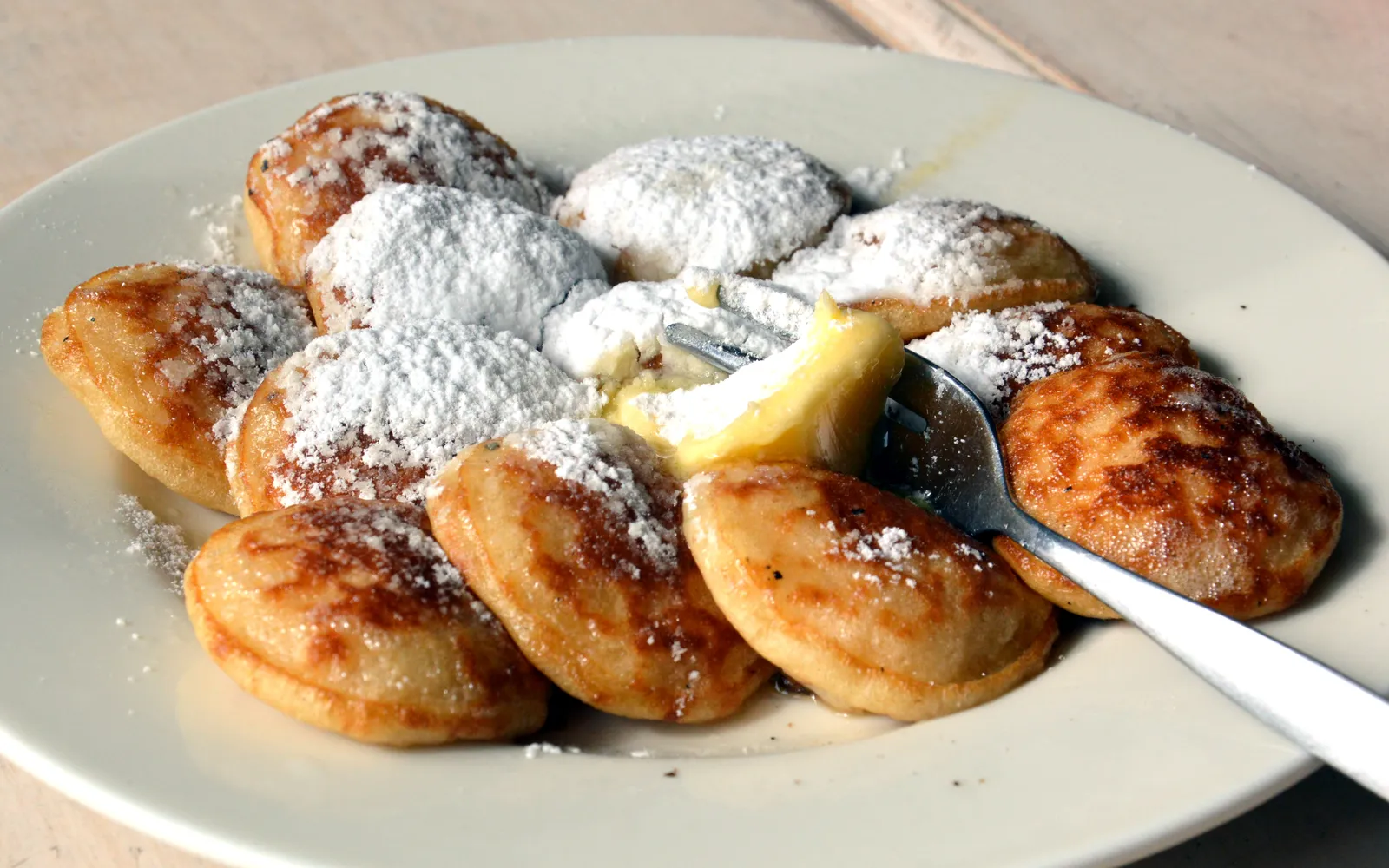
A traditional Dutch treat that works as both a snack and a dessert. Tiny puffy pancakes the size of a coin, cooked in a special cast-iron pan with rounded wells until they puff up golden and fluffy. Served hot with a generous knob of real butter melting across the surface and a drift of powdered sugar. The flavour is warm and comforting — like a pancake dream, best eaten while still hot. The Dutch way is to use a small fork and spear two or three at a time.
- If you see steam rising from a cast-iron pan on the street, that's your sign — follow it.
- Ask for extra butter; most stalls give it free. The lightly salted Dutch butter cuts the sweetness perfectly.
- A standard serving is 12–18 pieces per plate, which is the right amount for two people sharing.
 #6
#6 Dutch Fries (Patat)
Dutch fries — patat — are cut thicker than most and fried twice in vegetable oil until crisp outside and soft inside. What sets them apart is the sauce. The most Dutch way to order is oorlog (literally 'war') — three sauces at once: smooth mayonnaise, fragrant peanut sauce, and chopped raw onion. The combination is unexpected and genuinely good. Cheap, filling, and eaten by Dutch people of all ages year-round.
- Order oorlog sauce to try the most Dutch combination — if you're worried it'll be too rich, plain mayo is also fine.
- Dutch mayonnaise (Zaanse Mayonaise) is thicker and richer than standard mayo — taste it first before committing.
- Dutch fries are best eaten fresh and hot from the shop — they don't survive a trip back to the hotel.
Where to stay in Delft for this trip
A well-located hotel means less commuting and more sightseeing. Here are real, top-rated stays in Delft — compare Agoda · Booking · Trip.com in one click.
Westcord Hotel Delft
Affiliate links — we may earn a commission at no extra cost to you. Details
Hotel de Plataan Delft Centrum
Affiliate links — we may earn a commission at no extra cost to you. Details
Hotel Bridges House
Affiliate links — we may earn a commission at no extra cost to you. Details
Hampshire Hotel - Delft Centre
Affiliate links — we may earn a commission at no extra cost to you. Details
Tours, tickets & activities in Delft
Day tours, attraction tickets and travel essentials for Delft — book ahead on Klook with mobile e-tickets.
Affiliate links — we may earn a commission at no extra cost to you.
Before You Pack
Dutch food is at its best when it's fresh and simple. No need to seek out a fine-dining room — a raw herring from a street stall or an aged cheese from a market shop often delivers a better experience. Delft is small enough to walk from one food stop to the next at a relaxed pace, tasting your way through the day without any sense of rush.