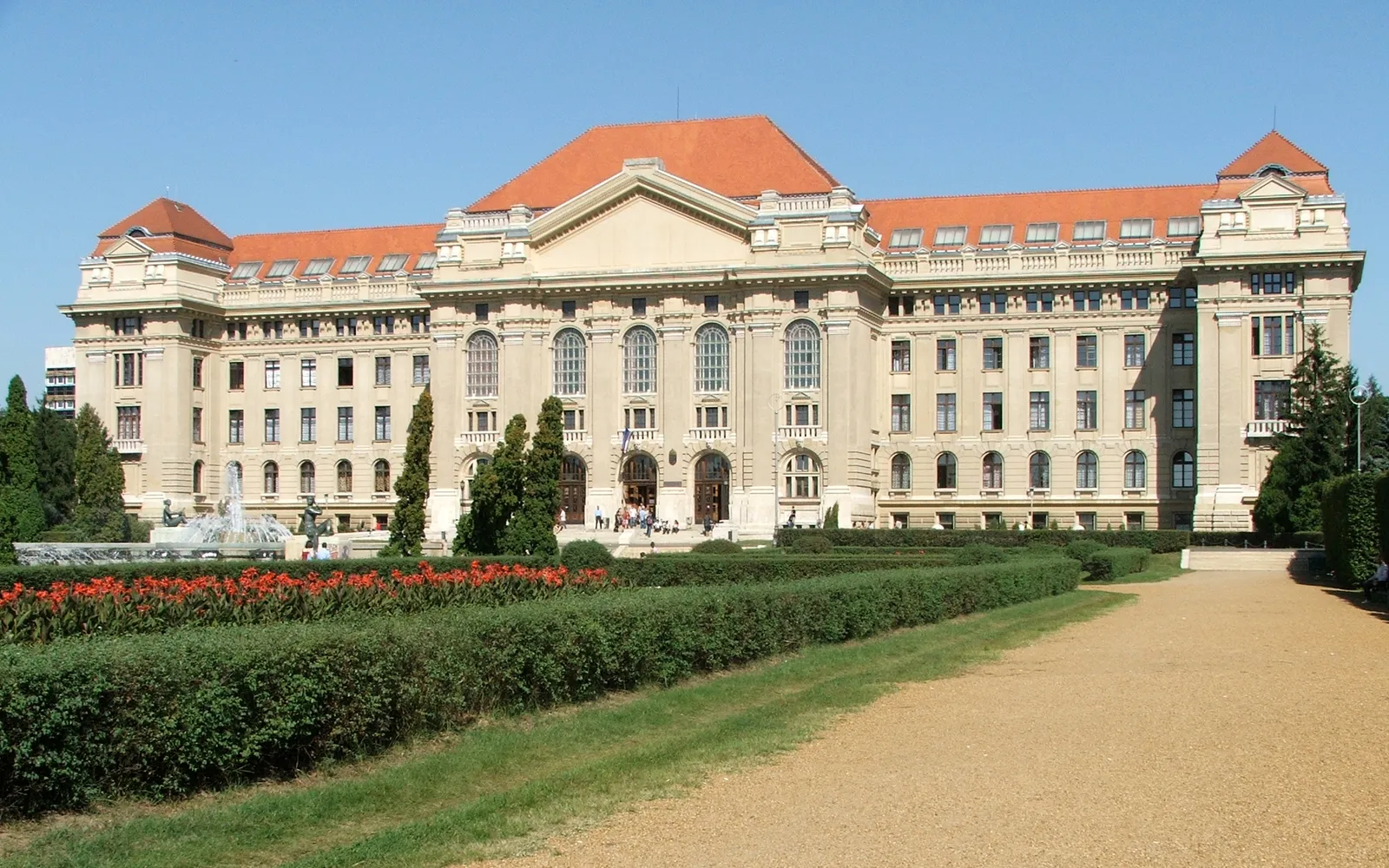
Debrecen is not Budapest — and that's exactly the point. Hungarians call it the Calvinist Rome: a city shaped by centuries of Protestant independence, anchored by a golden-yellow neoclassical church that has stood for over 200 years, and sitting right on the edge of the vast Puszta grasslands. Hortobágy National Park, just 40 kilometres west, is Hungary's only UNESCO World Heritage site recognised as a natural steppe — 800 square kilometres of open sky, ancient cattle breeds, and migratory cranes. Add Aquaticum, the largest indoor-outdoor water park in Central Europe, and Debrecen makes a serious case for more than a single afternoon.
 #1
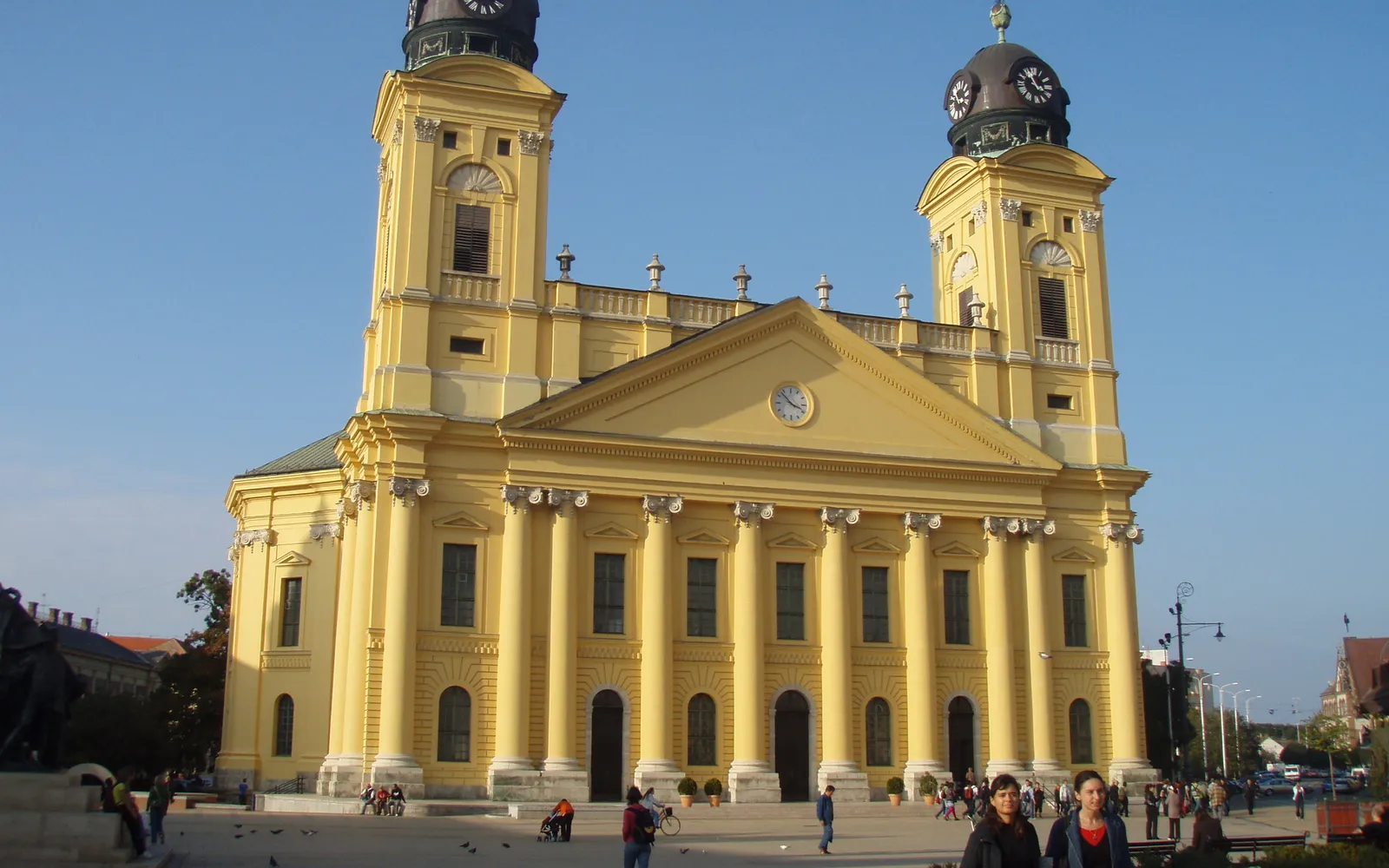
#1 Reformed Great Church of Debrecen
The most recognisable landmark in Debrecen and the largest Protestant church in Hungary. Completed in <strong>1823</strong> in neoclassical style, it stands at the centre of Kossuth Square with a golden-yellow facade that photographs well at almost any hour. Inside, the nave seats more than <strong>5,000 people</strong>, and the large pipe organ and frescoes are worth a slow look. This is also where <strong>Lajos Kossuth</strong> declared Hungarian independence in <strong>1849</strong>. Climb the tower for a wide view over the city.
- Open daily; entrance is 800 forints and includes tower access — be ready for a narrow multi-flight staircase.
- Religious services run regularly, especially Sunday mornings. Visitors are welcome but dress modestly and keep quiet.
- Kossuth Square around the church is where locals gather. Sitting on a bench and watching the square in the morning is a perfectly good use of time.
 #2
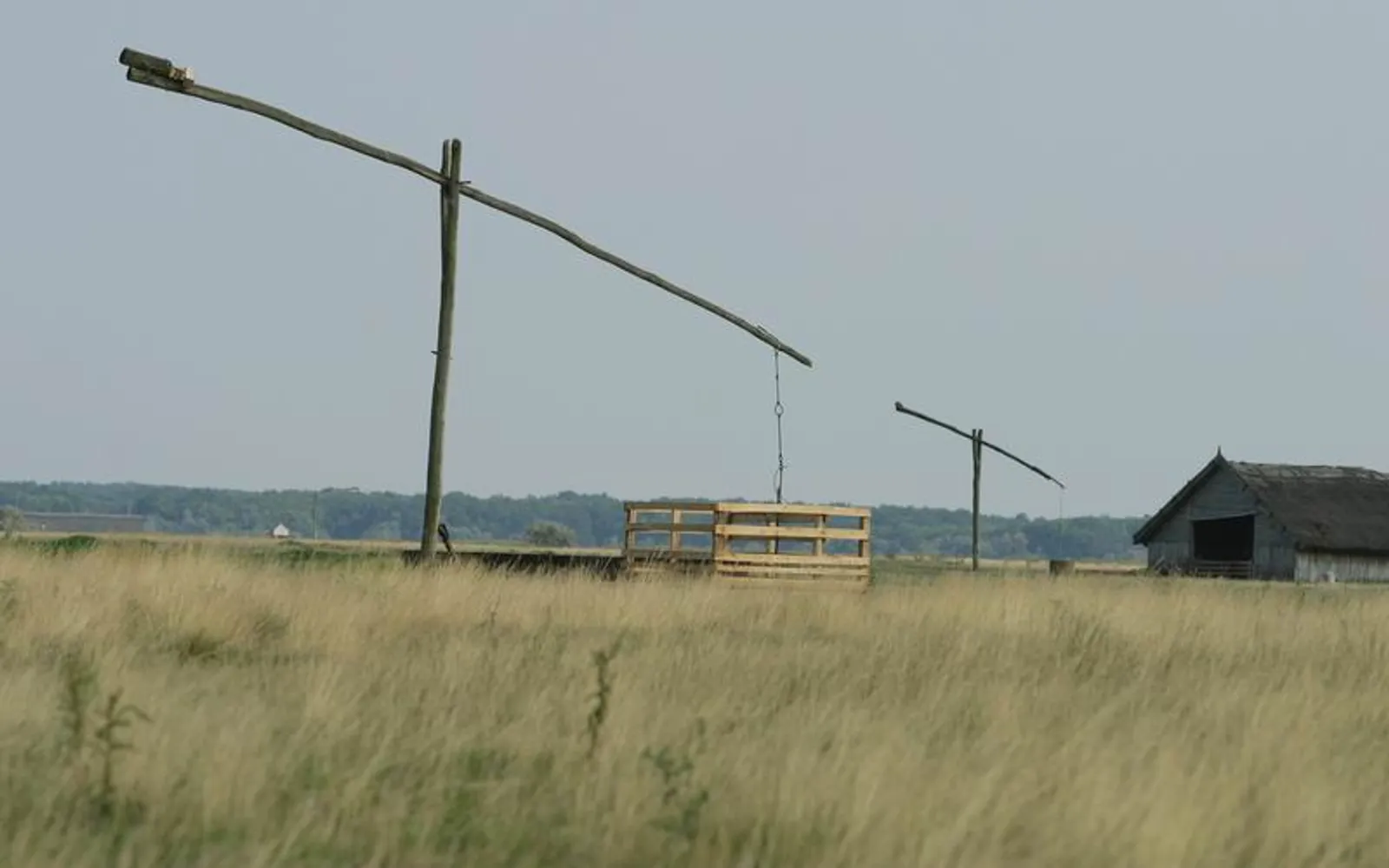
#2 Hortobágy National Park
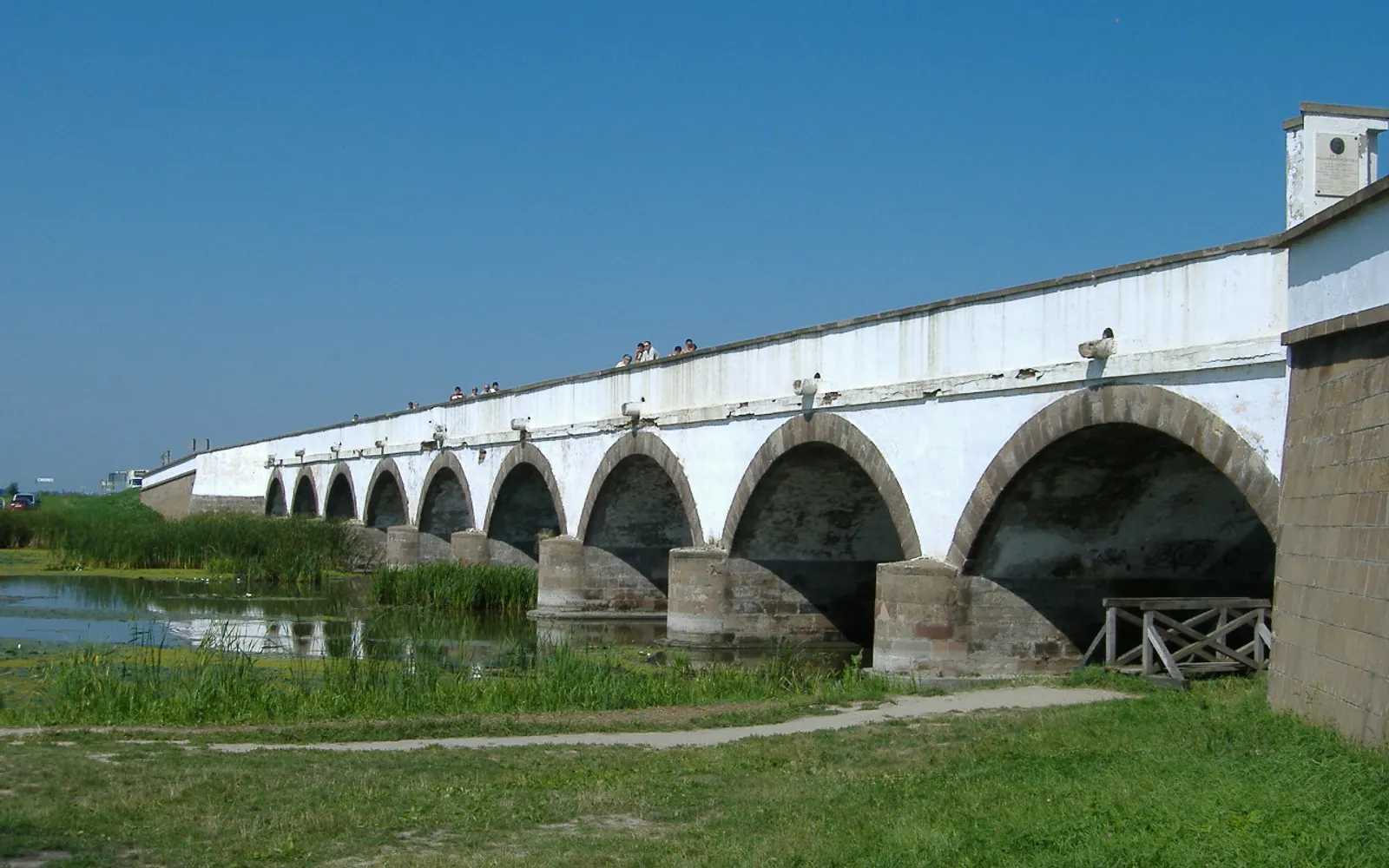
Hungary's oldest protected area and a UNESCO World Heritage site — the best-preserved natural Puszta steppe in Europe, covering <strong>800 square kilometres</strong>. It's home to <strong>Hungarian Grey cattle</strong>, Racka sheep, heritage horse breeds, and more than <strong>340 bird species</strong>. The standout event is autumn migration: hundreds of thousands of <strong>Common Cranes</strong> gather here between September and October. The <strong>Nine-Arch Bridge</strong>, a 200-year-old stone span over the Hortobágy River, is the park's most photographed landmark.
- Book birdwatching tours and traditional <em>csikós</em> horsemanship shows in advance during summer and autumn — they fill up.
- Bring binoculars. The terrain is flat and open, so animals are often at a distance — but very visible through a lens.
- The restaurant in Hortobágy village serves goulash and slow-cooked Grey cattle stew. Eat here rather than packing your own — it's genuinely good.
 #3
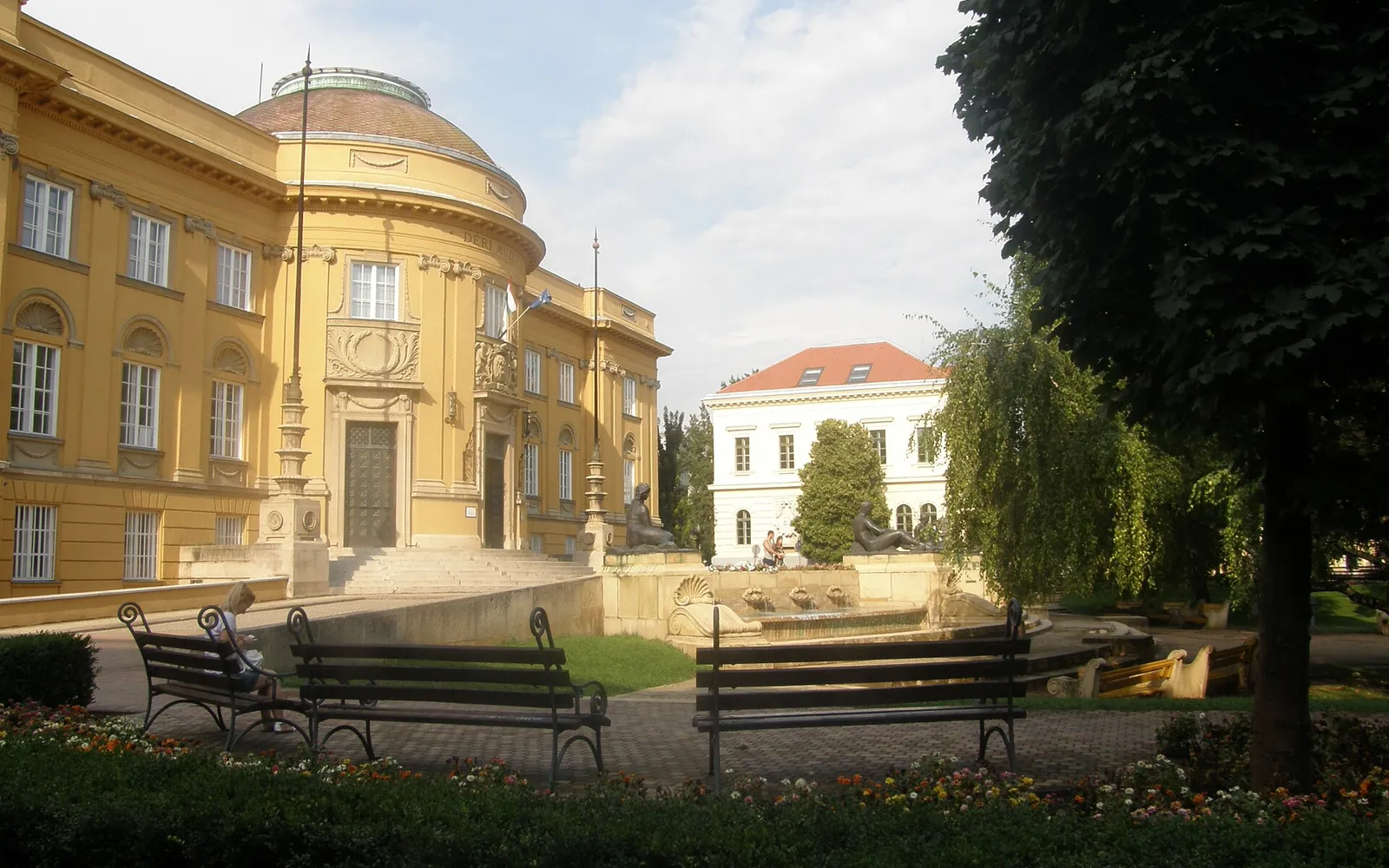
#3 Déri Museum
Debrecen's most important museum, founded on the collection of <strong>Frigyes Déri</strong>, a Viennese industrialist. The collection's centrepiece is a series of large-format paintings — <em>Ecce Homo</em> — by <strong>Mihály Munkácsy</strong>, one of Hungary's most celebrated painters. Beyond that: archaeological finds, Hungarian folk costumes, ancient Egyptian glassware, and a thorough local history exhibition. A sculpture garden out front rounds off the visit.
- The Munkácsy room is the highlight. The <em>Ecce Homo</em> canvases are enormous — don't rush through.
- Admission is 1,500 forints. Open Tuesday–Sunday, 10 a.m.–6 p.m.; closed Monday.
- The museum is about 10 minutes' walk from the Great Church — plan a half-day to cover both.
 #4
#4 Debrecen Great Forest and Aquaticum
The city's green lung — an urban forest of <strong>900 hectares</strong> that residents have used for centuries. It has walking paths, cycling trails, a zoo, ponds, and playgrounds. Inside the forest sits <strong>Aquaticum</strong>, the largest indoor-outdoor water park in Central Europe, with natural mineral pools, water slides, and thermal spa facilities. The forest's autumn colours — gold and red across 900 hectares — are among the most striking sights Debrecen has to offer.
- Aquaticum is open daily; tickets cost <strong>3,500–5,000 forints</strong> depending on weekday or weekend. Book ahead during peak season.
- Debrecen Zoo, in the same grounds, is a strong choice for families with children and is open year-round.
- Rent a bicycle at the in-park rental point (500 forints/hour) — riding the forest is more enjoyable than walking the whole thing.
 #5
#5 Nine-Arch Bridge, Hortobágy
The longest stone bridge in Hungary and the defining image of the Puszta. Built in <strong>1833</strong> without a single gram of cement, it stretches <strong>167 metres</strong> across the Hortobágy River on <strong>9 stone arches</strong>. For generations this was the main crossing point for farmers driving cattle to market. Today it's the most photographed spot in the park — especially at sunset when the arches reflect in still water — and the surrounding village has a local market and several restaurants.
- Sunset between 7 and 8 p.m. in summer is the best light of the year for the bridge and its reflection.
- <em>Csikós</em> riding shows (traditional Hungarian horsemanship) run in the village in summer, with performances at <strong>11 a.m. and 3 p.m.</strong> daily.
- Hortobágy Csárda, the restaurant right next to the bridge, has been serving authentic Hungarian goulash since <strong>1699</strong>. Prices are reasonable.
 #6
#6 Piac utca Pedestrian Street, Debrecen
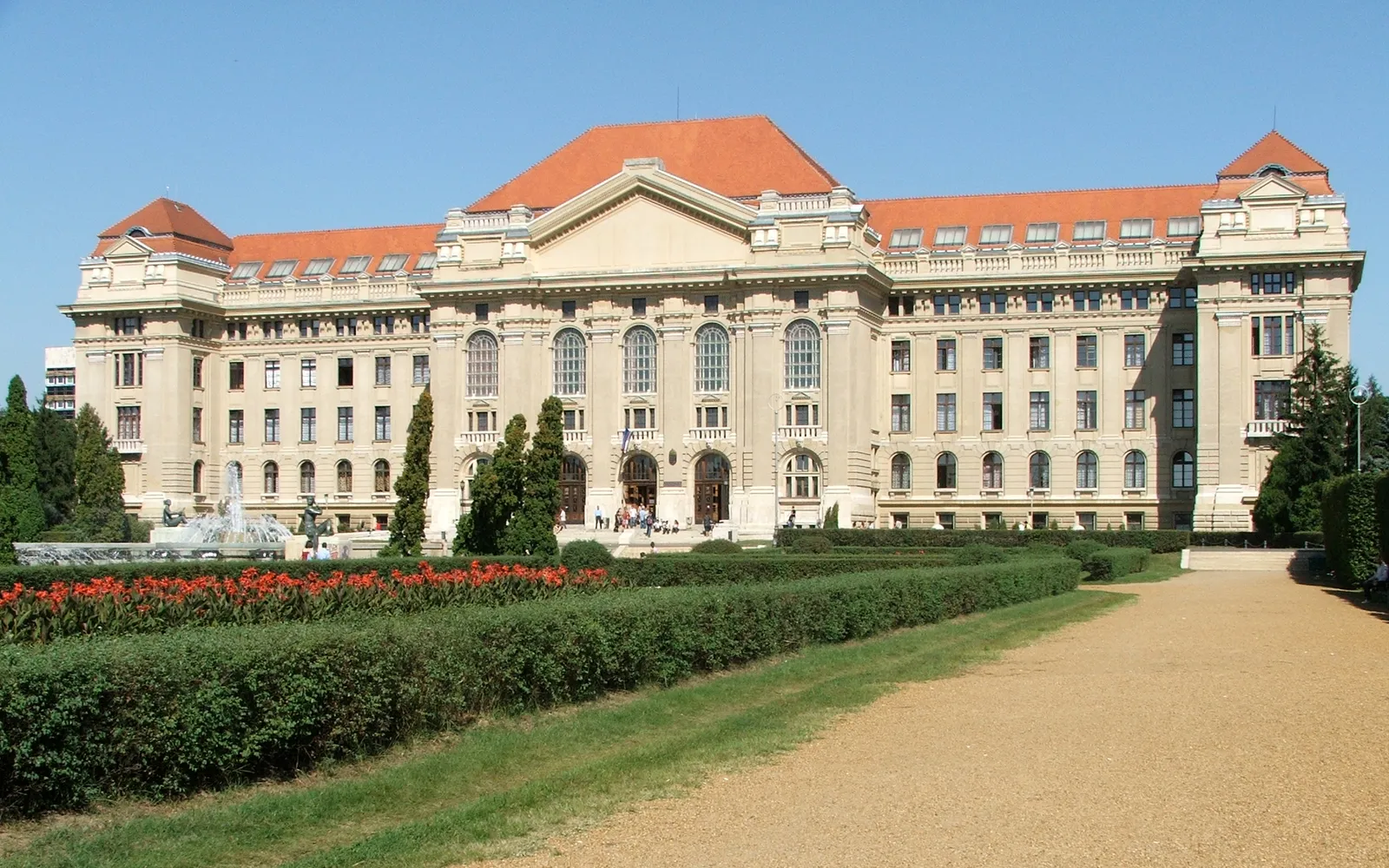
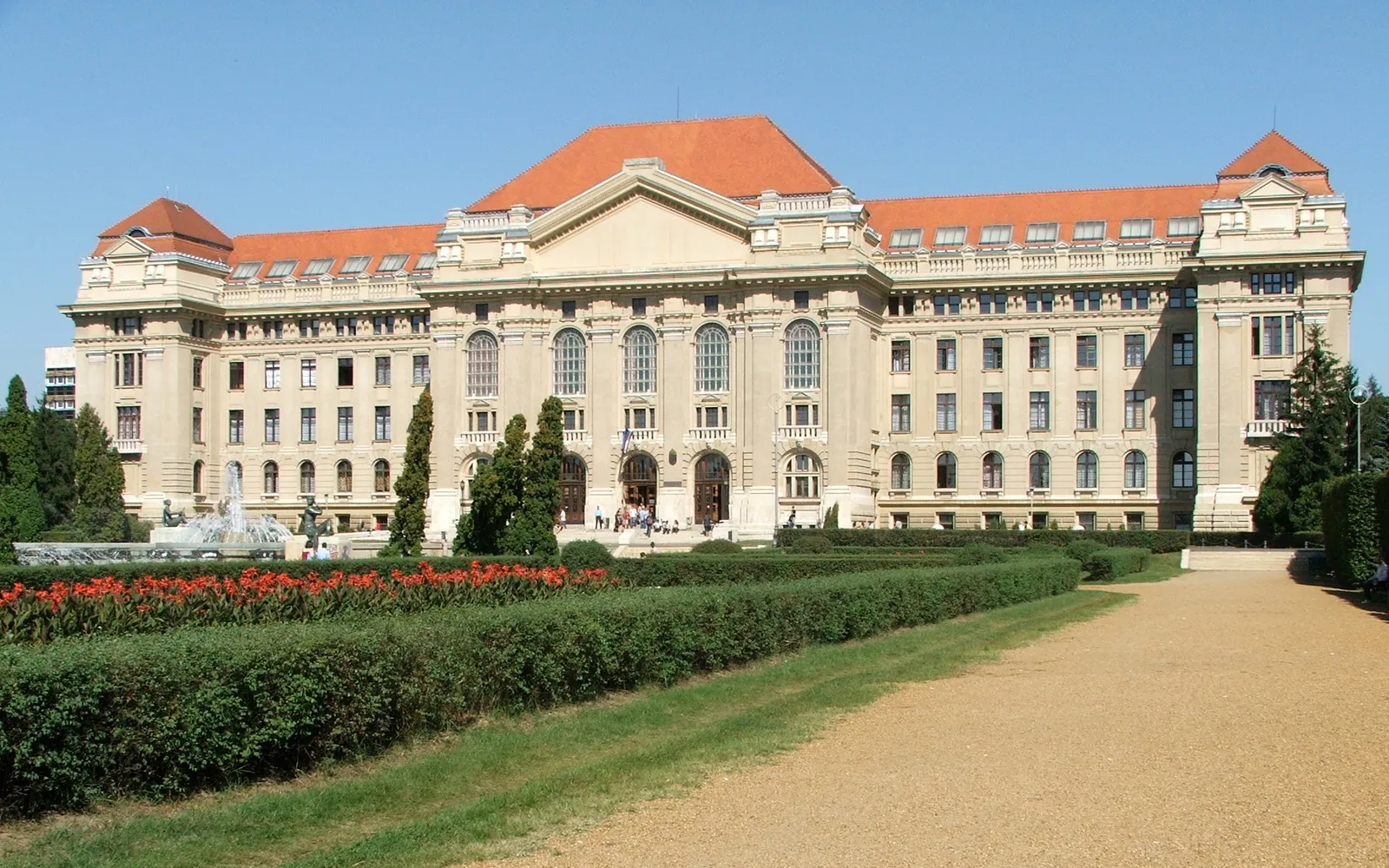
Debrecen's social spine — a pedestrian street running from Kossuth Square through the centre of the city, lined with cafés, restaurants, boutiques, and well-preserved <strong>19th- and 20th-century architecture</strong>. The street gathers students from the <strong>University of Debrecen</strong>, one of Hungary's oldest and largest universities, giving it an easy, lived-in energy throughout the day and into the evening. Good for a slow walk and a coffee.
- Several traditional Austro-Hungarian cafés tucked into the side lanes off Piac serve <em>kürtöskalács</em> (chimney cake) and <em>dobos torte</em> as afternoon snacks.
- Great Market Hall at the southern end of the street is open Tuesday–Saturday, 6 a.m.–1 p.m., selling fresh produce and local goods.
- Walk north from the square and you'll reach the main gate of Debrecen University — the architecture is worth a photo.
Where to stay in Debrecen for this trip
A well-located hotel means less commuting and more sightseeing. Here are real, top-rated stays in Debrecen — compare Agoda · Booking · Trip.com in one click.
Hotel Obester
Affiliate links — we may earn a commission at no extra cost to you. Details
Hotel Divinus
Affiliate links — we may earn a commission at no extra cost to you. Details
Hilton Garden Inn Debrecen City Center
Affiliate links — we may earn a commission at no extra cost to you. Details
Mercure Debrecen
Affiliate links — we may earn a commission at no extra cost to you. Details
Tours, tickets & activities in Debrecen
Day tours, attraction tickets and travel essentials for Debrecen — book ahead on Klook with mobile e-tickets.
Affiliate links — we may earn a commission at no extra cost to you.
Before You Pack
Debrecen is at its best in spring (April–May), when the Great Forest is in bloom and the weather is ideal for walking the city, or in autumn (September–October), when the Hortobágy grasslands are at their most dramatic. Plan for at least 2 full days to cover both the city centre and the national park.