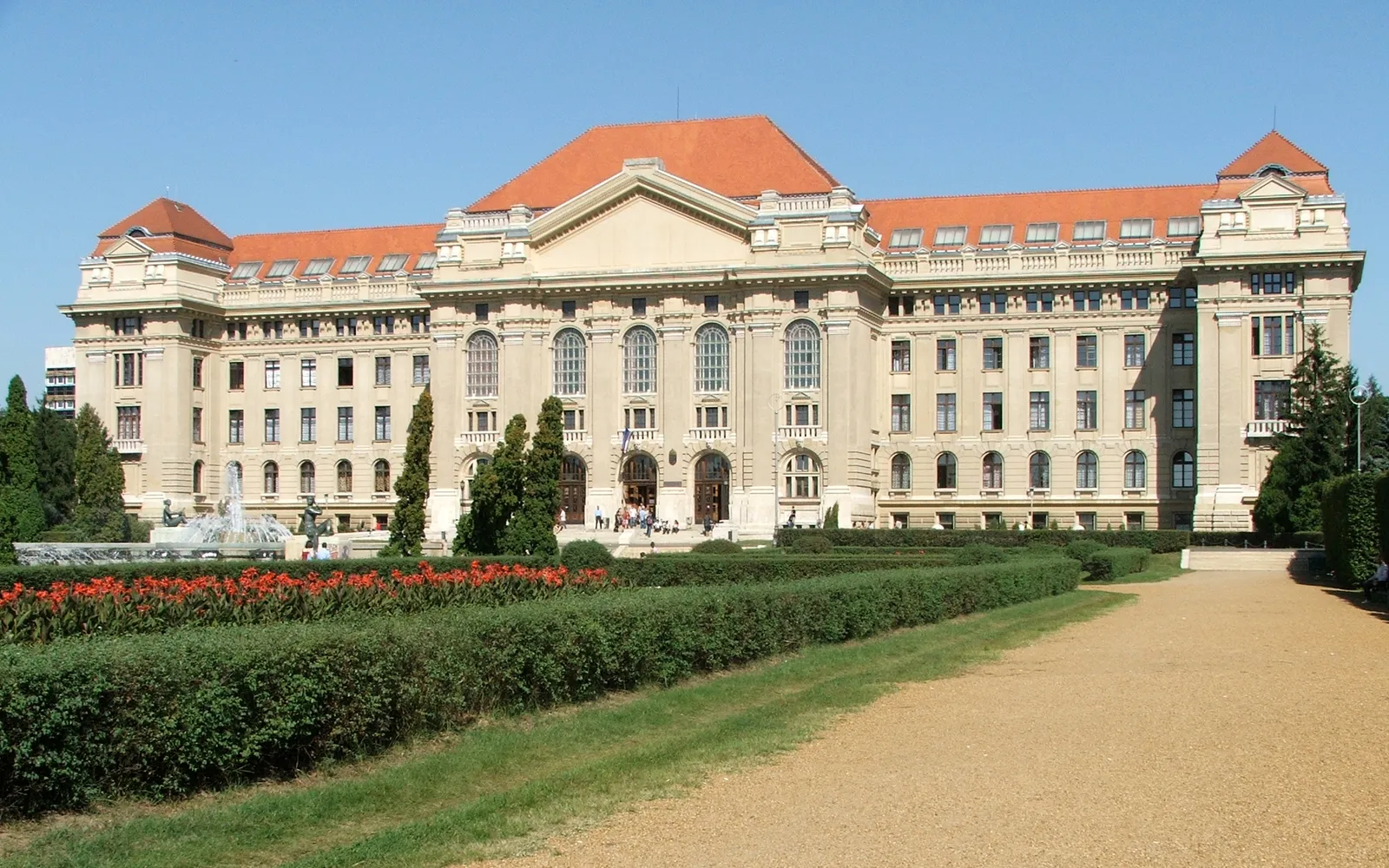
Food in Debrecen is more than lunch — it is the city's history and identity on a plate. The Debrecener sausage, sold across Europe, takes its name from this city, and the goulash here runs deeper and spicier than what you'll find in Budapest, because the people of the Puszta flatlands have held tight to the original recipe for generations. Traditional Hungarian roadside inns called csárda are scattered throughout the city and out into the Hortobágy grasslands, waiting for you to settle in with a glass of Tokaj wine and eat something that has not changed in a century.
 #1
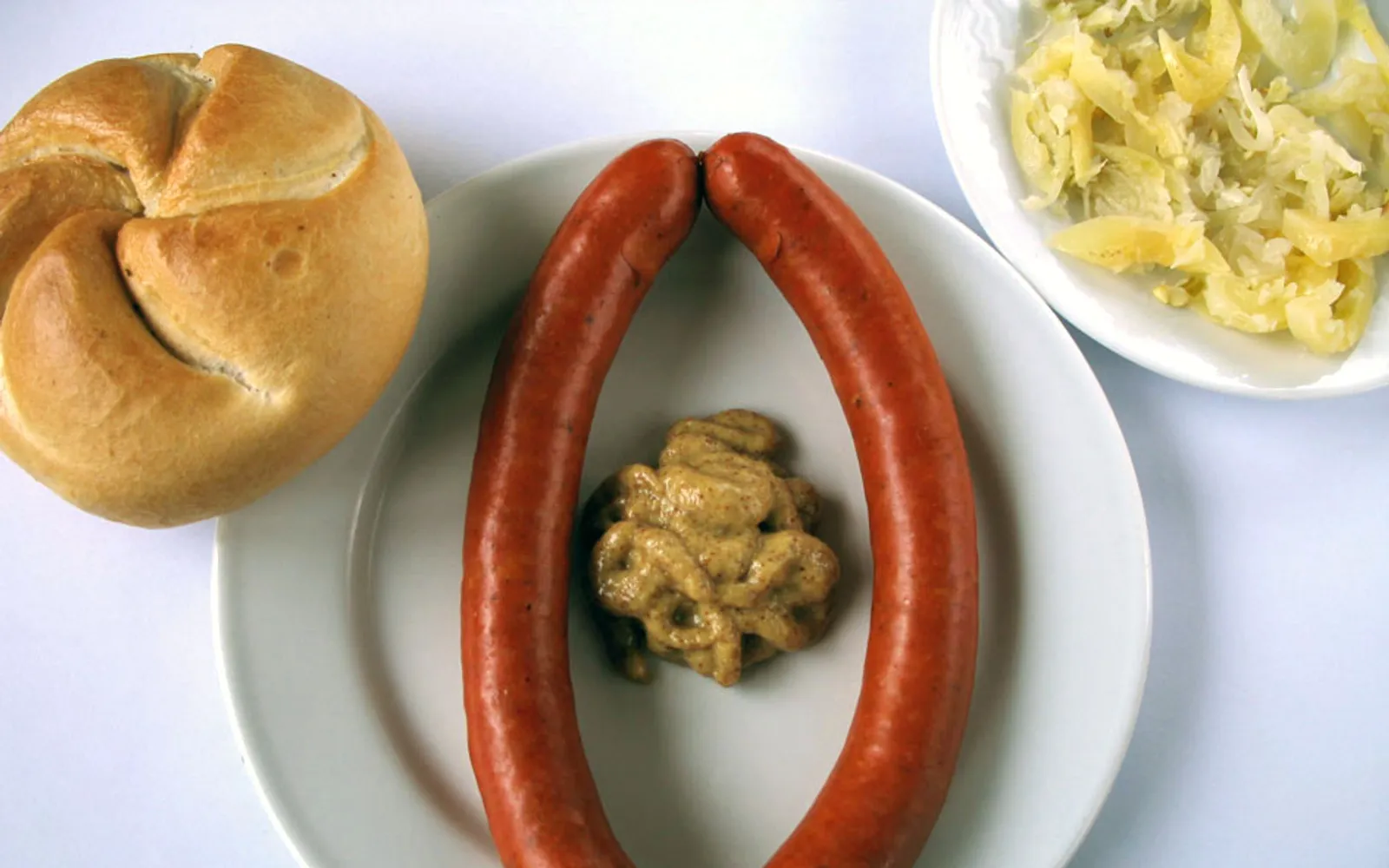
#1 Debrecener Sausage
A coarsely ground pork sausage named after the city of Debrecen and famous across Europe. Each butcher keeps their own ratio of coarse-ground pork, fat, salt, garlic, and deep-red Hungarian paprika — the mix is stuffed into natural pork casings, cold-smoked, then grilled or pan-fried before serving. The result is intensely savoury, smoky, and gently spiced with paprika. It is the breakfast and lunch staple of eastern Hungary.
- Buy from a traditional butcher (hentes) at the Great Market Hall morning market rather than a supermarket — the flavour difference is significant.
- Eat it the traditional way: with sharp Hungarian mustard (erős mustár) and Pogácsa bread instead of tomato sauce.
- If you are taking some home, choose the dry-smoked variety (száraz kolbász), which keeps for 2-3 weeks. The fresh kind (friss) lasts only 3-4 days.
 #2
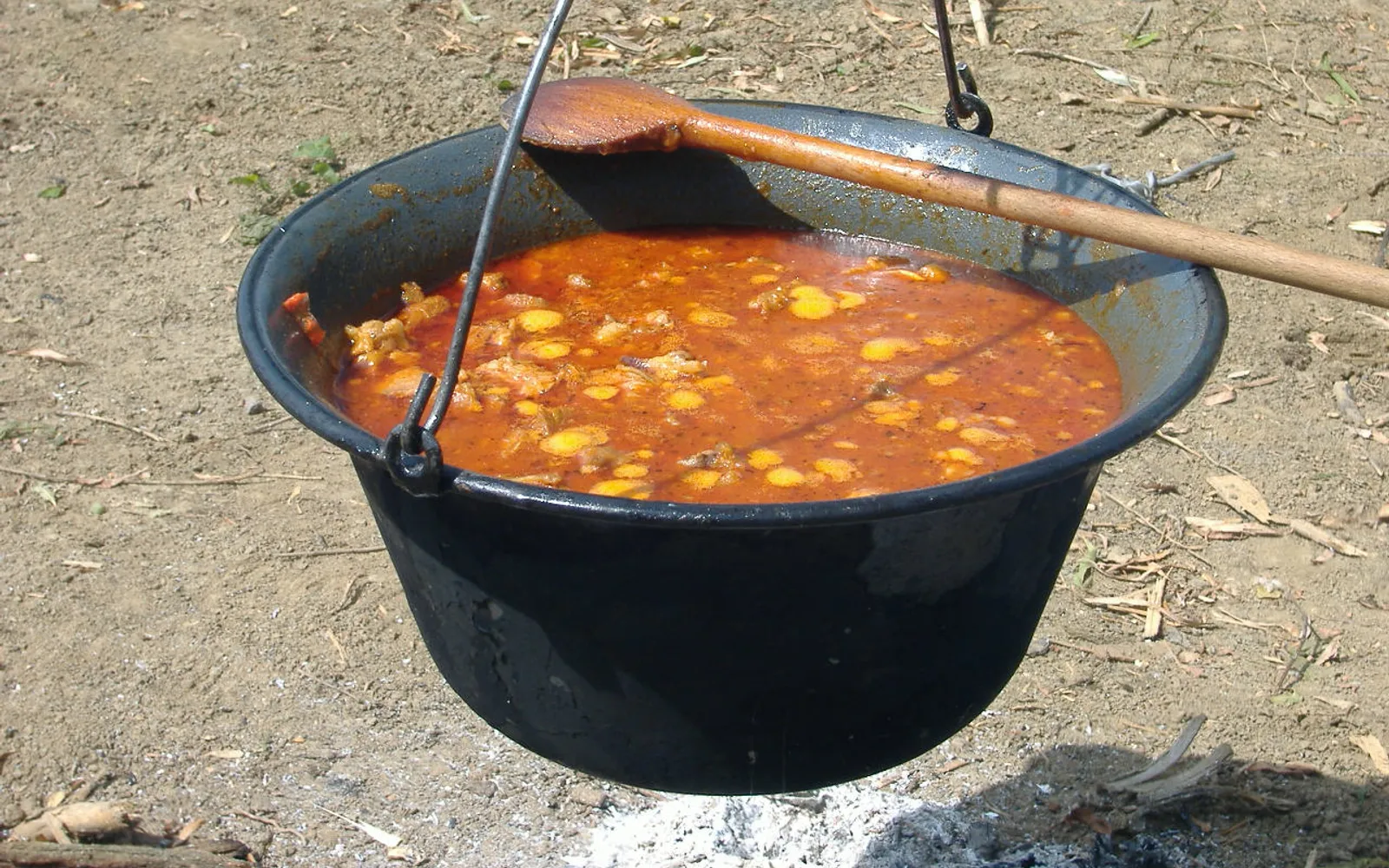
#2 Goulash (Gulyás)
Hungary's national dish traces its roots to the cattle herders of this very Puszta region. Hungarian Grey beef is slow-cooked with onions, fresh and dried paprika, tomatoes, potatoes, carrots, and parsley in a cast-iron pot over an open fire. The Puszta version is richer and spicier than goulash you will find in Budapest — the broth runs deep from hours of cooking, and you mop it up with rough-textured bread.
- Order gulyásleves if you want a broth-forward soup, or pörkölt if you prefer a thicker, meat-heavy version with less liquid — they differ mainly in the ratio of water to meat.
- Restaurants in Hortobágy village use actual Hungarian Grey cattle, which produces a noticeably different flavour from the standard beef used in city restaurants.
- Pair it with Egri Bikavér (Bull's Blood of Eger) red wine — the traditional pairing that Hungarians reach for everywhere.
 #3
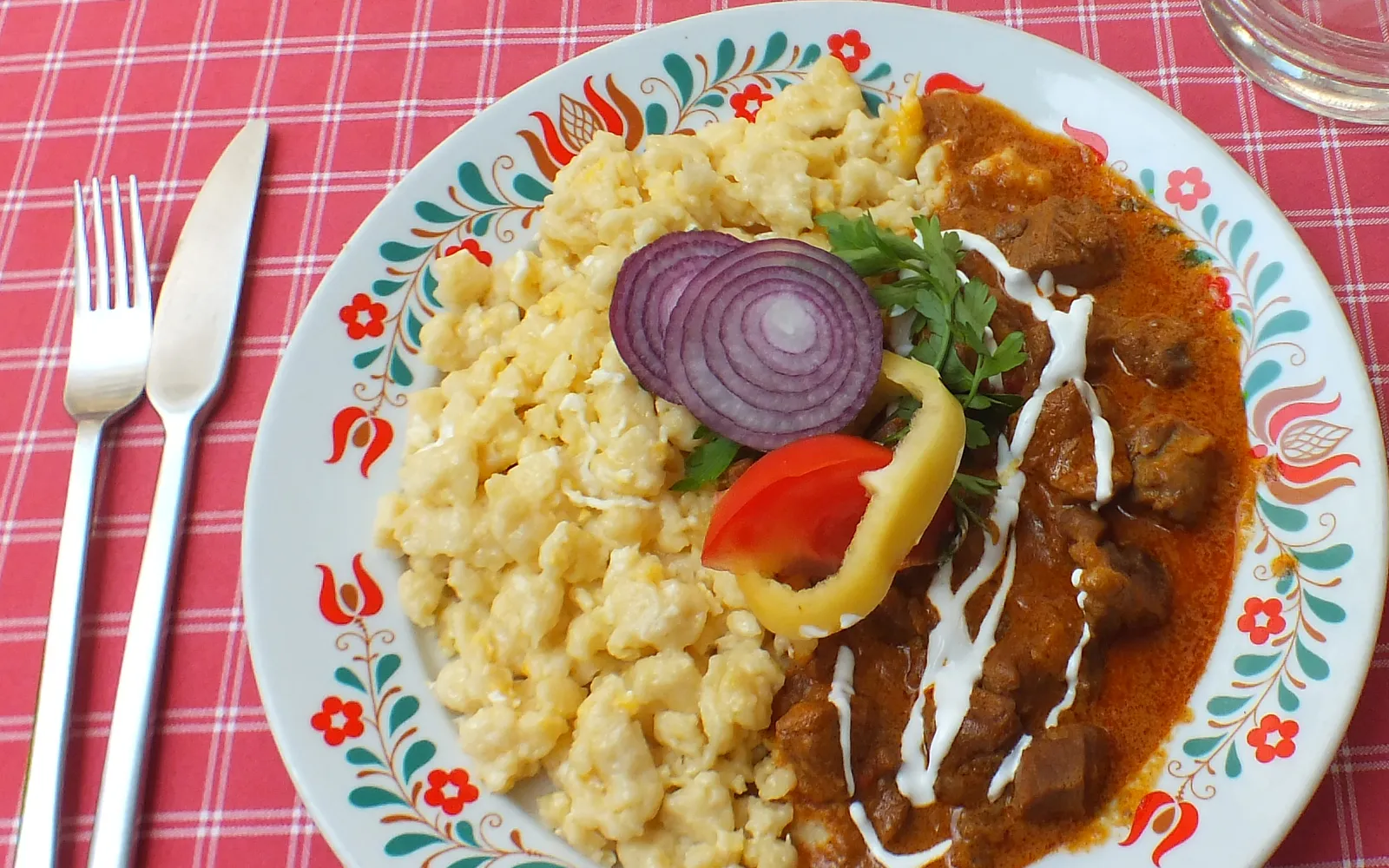
#3 Pörkölt
Many visitors confuse Pörkölt with goulash, but it is considerably thicker. Beef, pork, or chicken is fried with onions and paprika until the liquid cooks down, with far less water added than in goulash — the result is a dense, dark-red sauce that clings to every piece of meat. It is typically served with nokedli (Hungarian drop-shaped pasta) and finished with a spoonful of sour cream and fresh paprika.
- Order marhapörkölt (beef) for the most traditional version — the meat is braised long enough to pull apart.
- Nokedli made fresh in-house is far better than the packaged kind; a good restaurant makes a fresh batch every day.
- If you are not used to the sourness of cream (tejföl), ask for it on the side and add a little at a time.
 #4
#4 Lángos
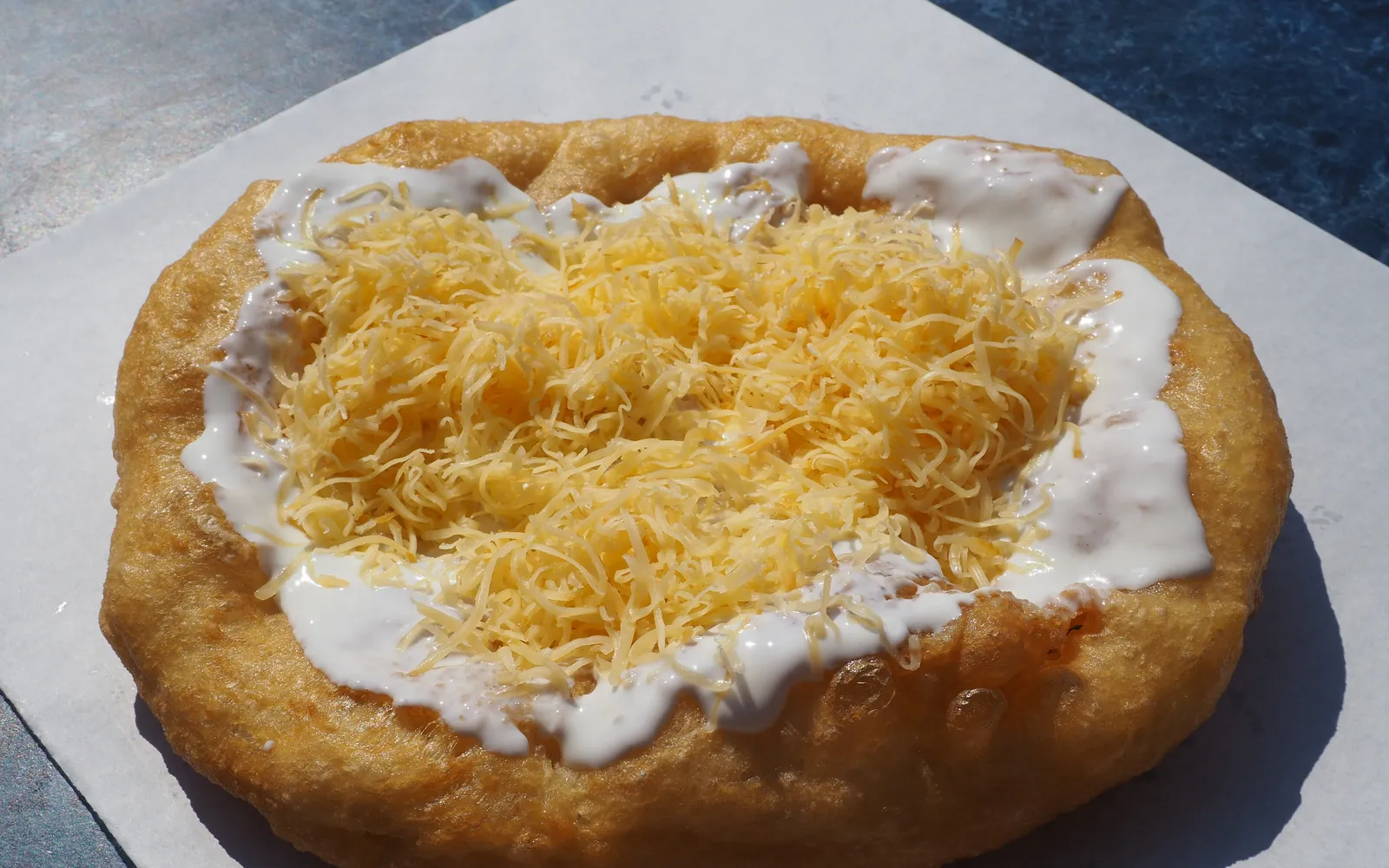
If any single street food represents Hungary to the outside world, it is this. Soft yeast dough is dropped into very hot oil until it puffs up and crisps on the outside while staying hot and soft inside. The standard toppings are sour cream (tejföl) and grated cheese; some stalls add minced garlic or fried onion. Eat it the moment you get it — this has been working-class Hungarian street food since the Middle Ages.
- Eat it immediately. Leave it 10 minutes and the dough deflates and turns chewy — it is a very different experience.
- The Great Market Hall stalls serve a larger Lángos than most city shops, priced around 600-900 forints.
- Ask for fokhagyma (garlic) if you like a bolder flavour — it is the most popular local add-on.
 #5
#5 Kürtőskalács (Chimney Cake)
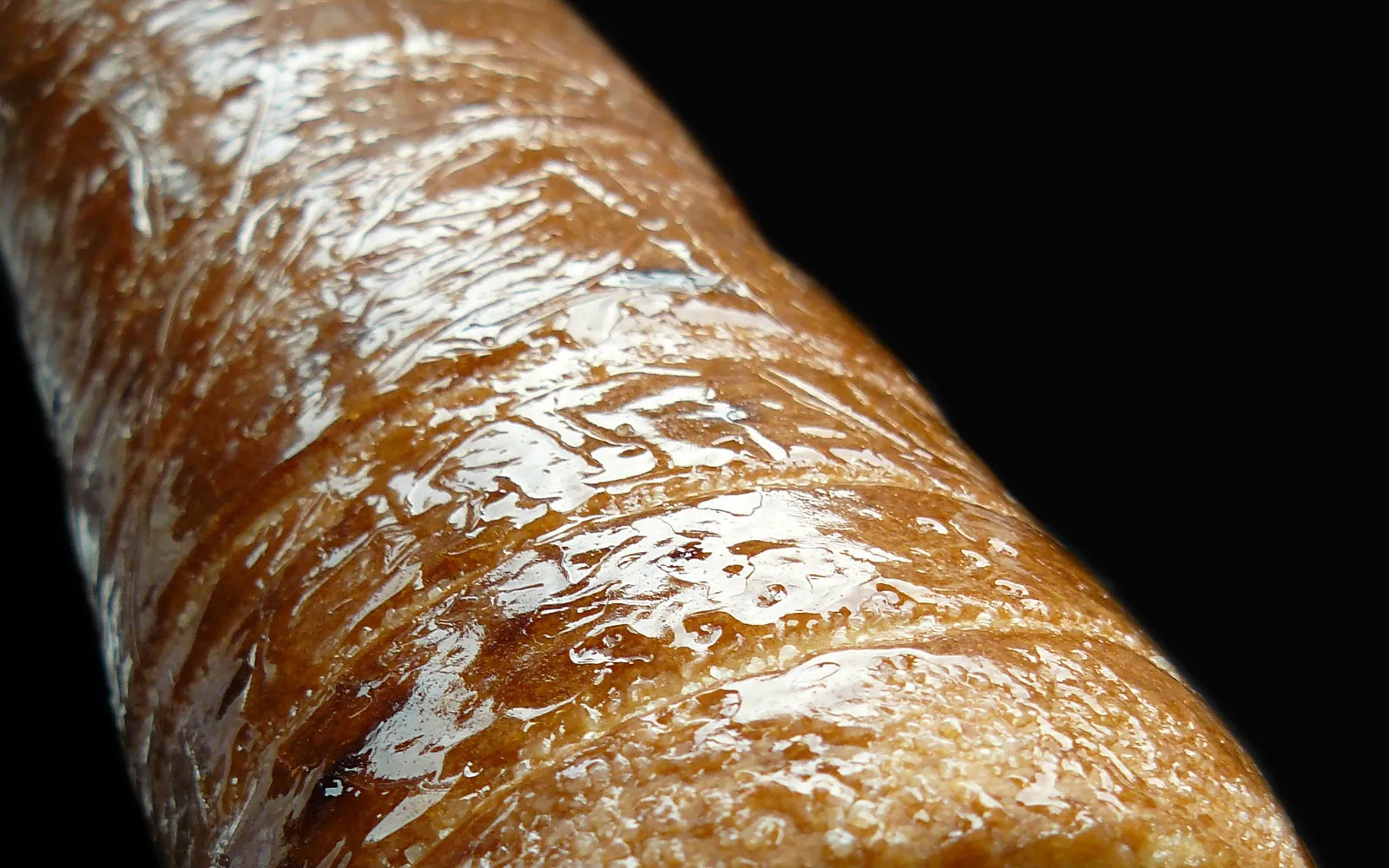
This hollow cylindrical pastry originated in Transylvania and spread across Central Europe. Yeast dough is wound around a wooden spit and rotated over charcoal, coated with sugar and butter as it turns until the outside sets into a crisp caramel shell. It is dusted with cinnamon sugar, walnuts, or cocoa depending on your order, then eaten hot by tearing rings from the outside in — the interior stays soft and buttery. Several shops in Debrecen make it fresh to order.
- Watch the dough being wound and grilled if you have a few minutes — the process is worth seeing and guarantees you get it straight off the heat.
- Cinnamon sugar (fahéjas) is the most traditional flavour; try it before experimenting with other options.
- Carry it in the paper bag while you walk — it is best eaten fresh within 30 minutes.
 #6
#6 Dobos Torte
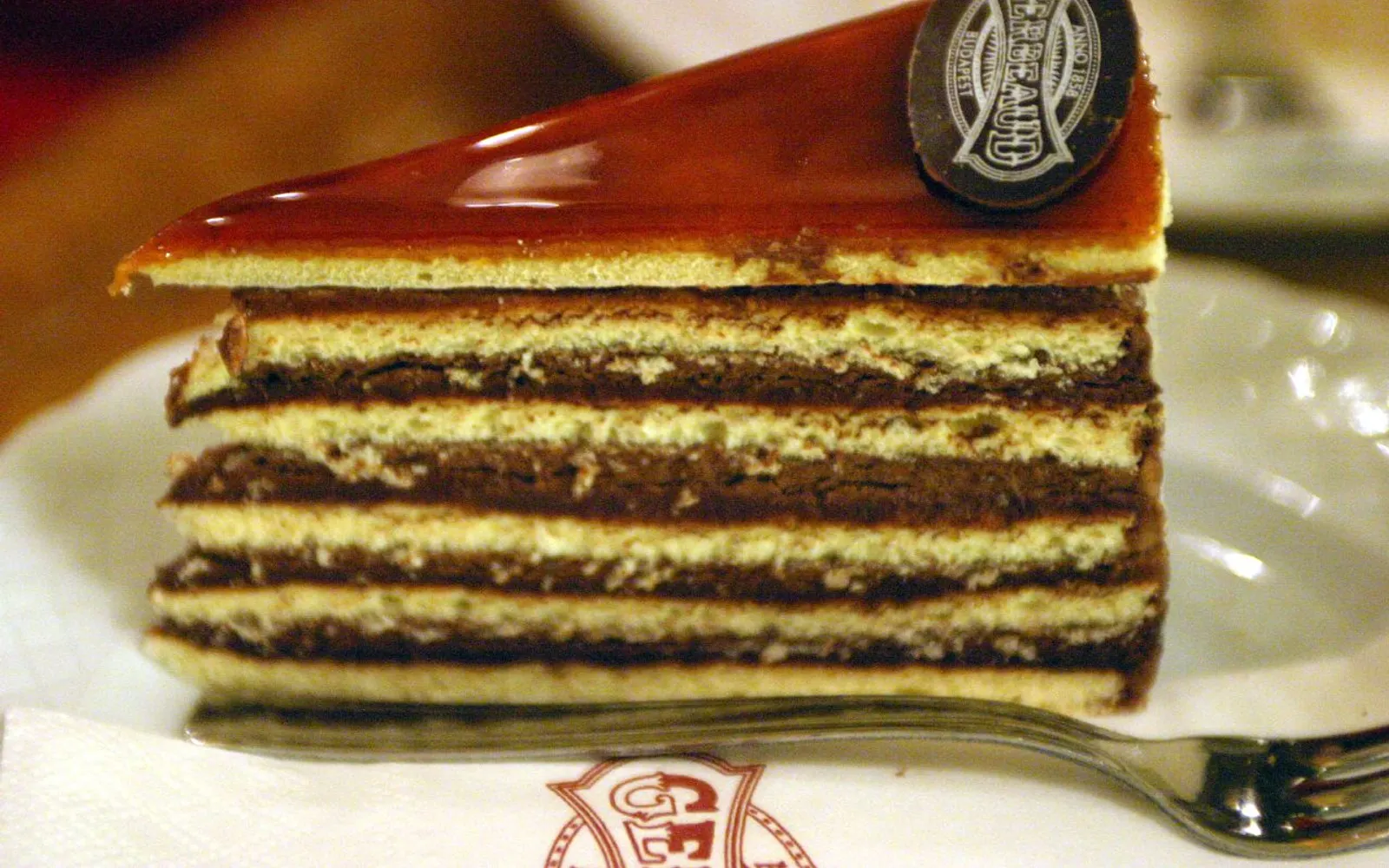
Hungary's most famous cake internationally, created by Budapest confectioner József Dobos in 1885. Five to seven very thin, crisp sponge layers alternate with chocolate ganache buttercream, stacked with precision. The top layer is sealed under a hard amber caramel that cracks with a satisfying sound when you press a fork through it. Rich but not heavy, sweet but balanced.
- A quality cukrászda makes Dobos Torte fresh daily — the difference from a frozen version is considerable. Ask whether it was made today.
- Eat it with an espresso in the Hungarian tradition — the bitterness cuts the sweetness of the cake perfectly.
- It travels well in a proper pastry box and keeps refrigerated for 3-4 days, though it is at its best the day it is made.
Where to stay in Debrecen for this trip
A well-located hotel means less commuting and more sightseeing. Here are real, top-rated stays in Debrecen — compare Agoda · Booking · Trip.com in one click.
Hotel Obester
Affiliate links — we may earn a commission at no extra cost to you. Details
Hotel Divinus
Affiliate links — we may earn a commission at no extra cost to you. Details
Hilton Garden Inn Debrecen City Center
Affiliate links — we may earn a commission at no extra cost to you. Details
Mercure Debrecen
Affiliate links — we may earn a commission at no extra cost to you. Details
Tours, tickets & activities in Debrecen
Day tours, attraction tickets and travel essentials for Debrecen — book ahead on Klook with mobile e-tickets.
Affiliate links — we may earn a commission at no extra cost to you.
Before You Pack
The best restaurants in Debrecen tend to hide in the side streets off Piac utca or near the university. If you see a room full of students and local families, that is a more reliable signal than any review site. Do not leave without ordering a shot of Pálinka — Hungarian fruit brandy, taken before the meal as is the local custom.