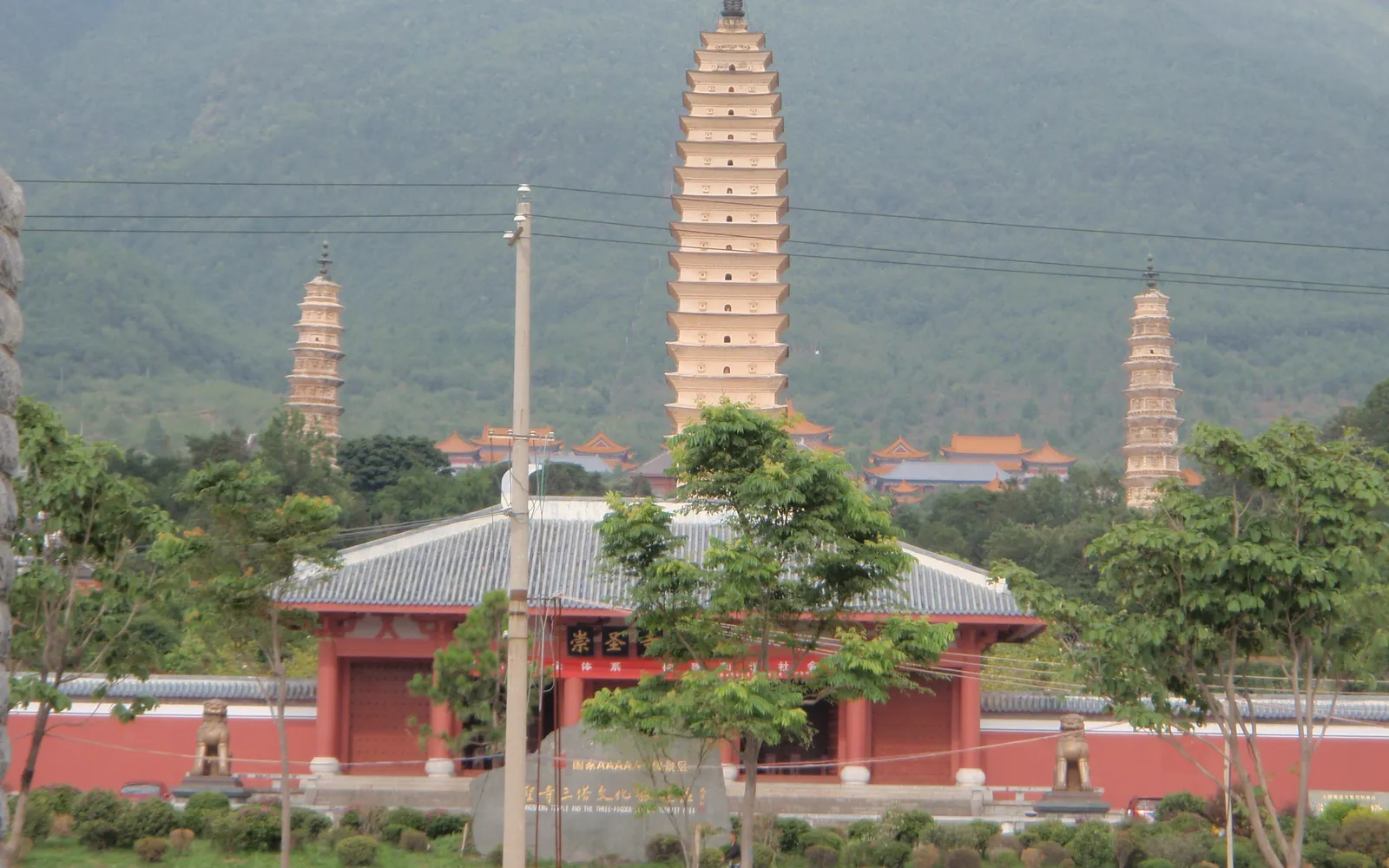
Dali's food reflects the Bai culture like nowhere else — built on cow's milk, fresh herbs, and fish from Erhai Lake. The standout is rushan, a thin slice of cow's-milk cheese fried or grilled and eaten hot, and the three-course tea (san dao cha), a guest-welcome ritual that runs bitter, sweet, then sour. Come to Dali without trying these and you haven't really been.
 #1
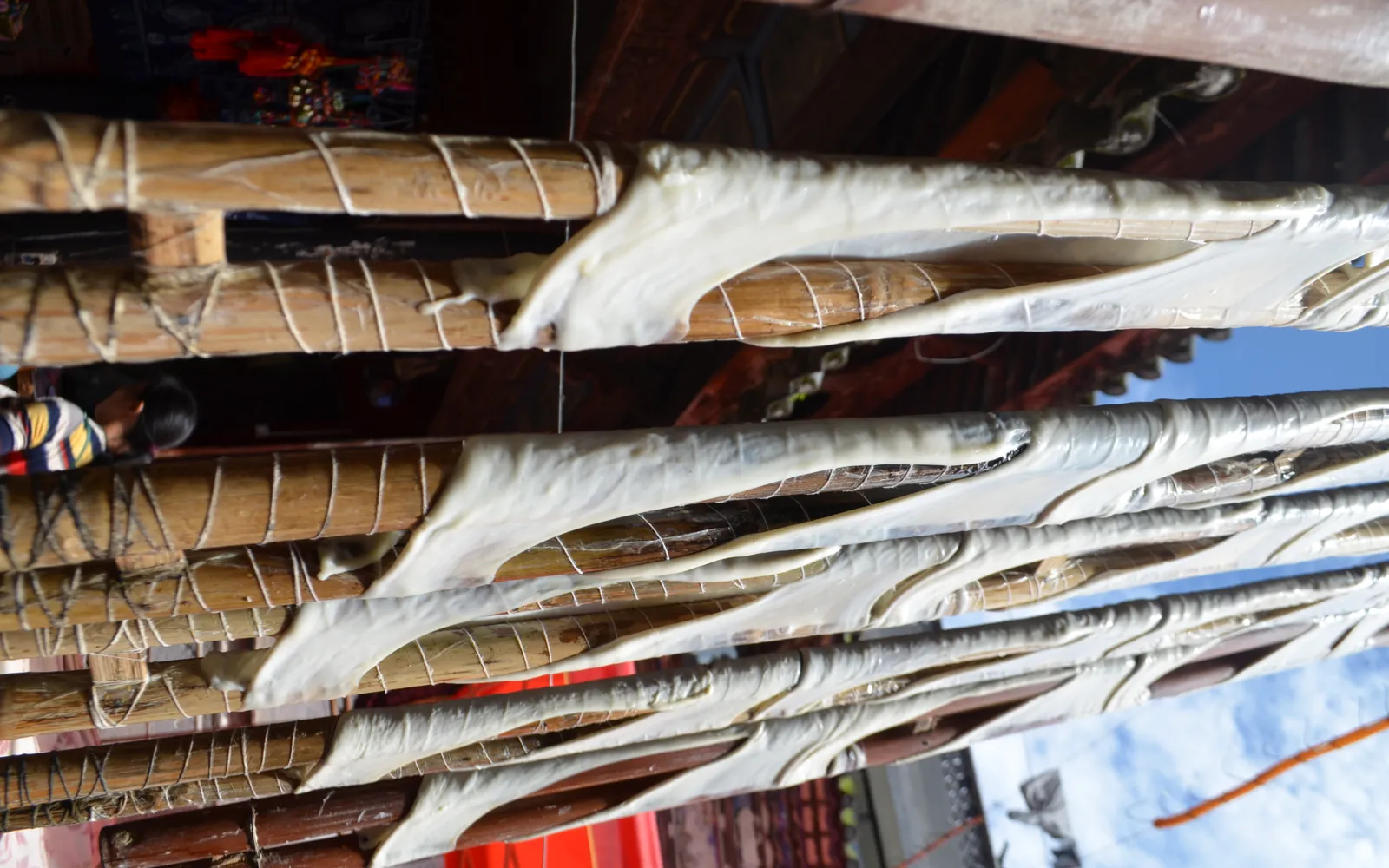
#1 Rushan (Milk Fan Cheese)
Rushan, or 'milk fan,' is the traditional Bai cheese made from fresh cow's milk, pulled and stretched into thin sheets and dried on bamboo sticks. You can have it many ways — fried, charcoal-grilled, stir-fried, or fresh. The flavor is soft and gently sweet, and it's often spread with rose jam or dusted with sugar. It's the most popular snack in town, sold on every corner of Dali.
- Try both the charcoal-grilled version with rose jam (sweet) and the fried version with salt (savory) — they taste completely different
- Fresh rushan in Xizhou village is made with local milk and tastes better than the versions in the tourist markets
- It's very cheap — about 5-15 yuan a stick, perfect to snack on while you walk
 #2
#2 Sour and Spicy Erhai Fish (Suan La Yu)
Erhai fish is one of Dali's signature ingredients, especially the carp and crucian carp from the lake. The favorite dish is 'suan la yu' (sour and spicy fish), fresh fish cooked with chili, papaya, or black plum and braised in a clay pot over a wood fire — sour and spicy with a soft, fragrant note. Another is the 'fish clay pot' (Dali guo yu), which adds chicken, ham, and mushrooms to the same pot.
- Lakeside restaurants on the Shuanglang side tend to use fresh fish caught by local fishermen
- Ask whether today's fish really came from Erhai Lake — some places use farmed fish
- Order it 'mild' (shao la) if you're worried about the heat, because the local style runs very spicy
 #3
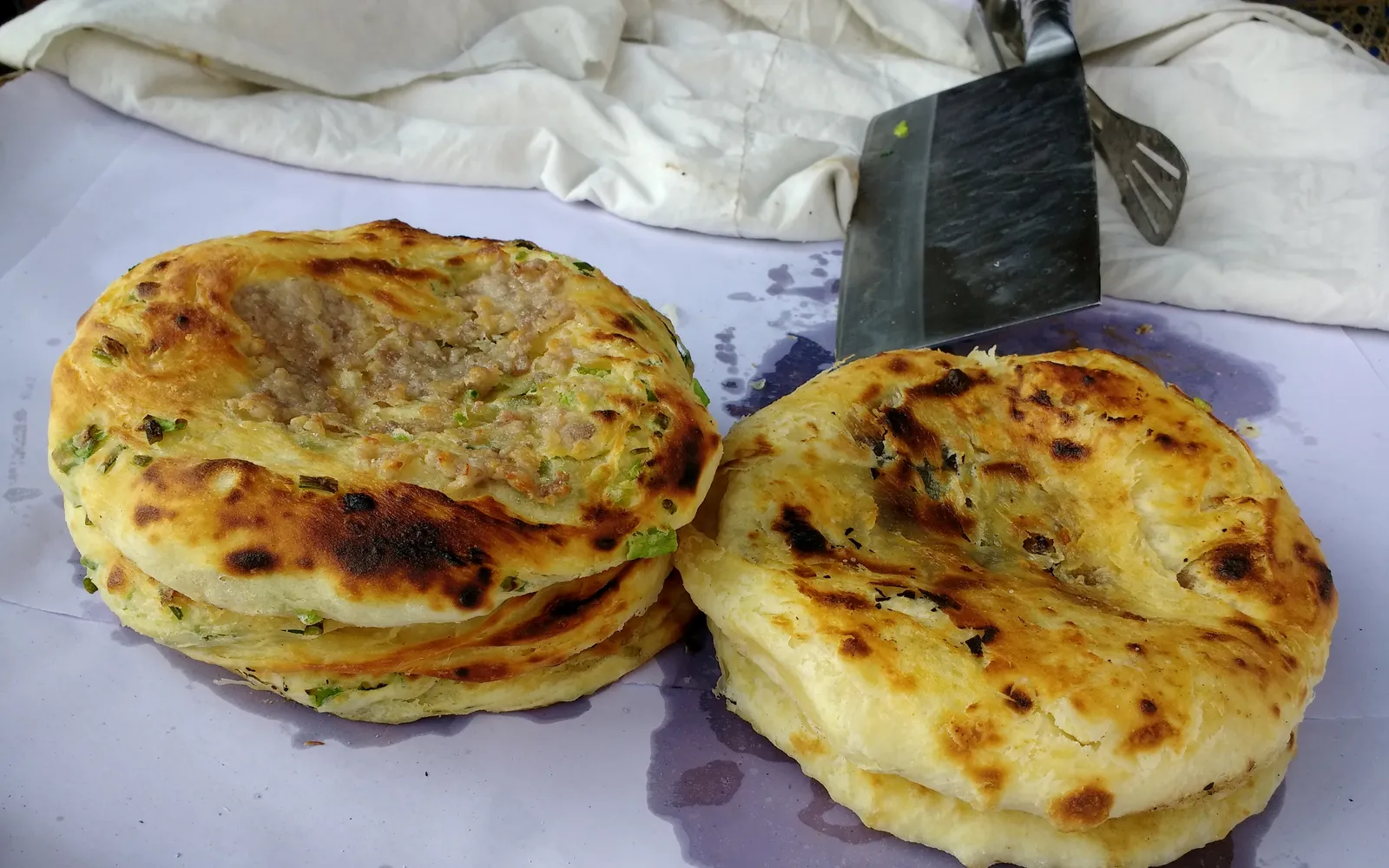
#3 Xizhou Baba (Flatbread)
Xizhou baba is a homemade bread from Xizhou village with a long history going back to the days of the Tea Horse Road. The dough is fermented for hours, layered, and rolled thin before being baked in a charcoal oven — crisp and thin on the outside, soft and fragrant inside. It comes with sweet fillings (sugar, sesame) and savory ones (pork, scallion), and was originally a portable food for the merchants and travelers of old.
- Try both the sweet and savory fillings — the sweet one pairs beautifully with three-course tea
- The fresh-baked ones in Xizhou village taste far better than what's sold in the tourist markets
- Eat it hot, straight from the oven — once it cools the texture firms up and the flavor fades
 #4
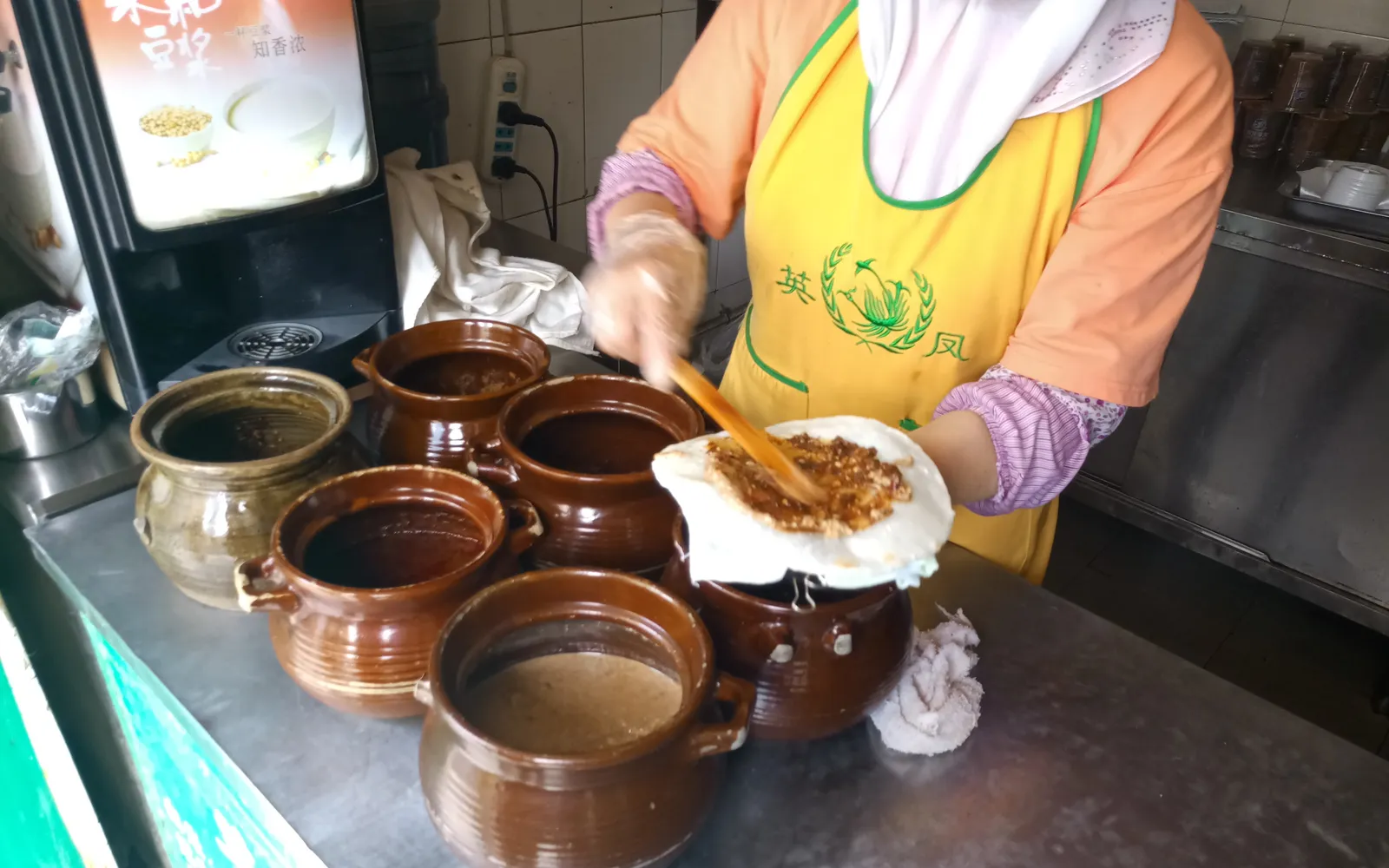
#4 Erkuai (Yunnan Rice Cake)
Erkuai is a special Yunnan rice cake, made from local rice that's steamed and then pounded until dense and chewy before being kneaded into sheets. It's cut into strips or slices to be stir-fried, fried, or grilled — mellow and soft, eaten both sweet and savory. It's a daily staple for the people of Dali, showing up at breakfast and dinner alike.
- Erkuai stir-fried with soy sauce and vegetables is the best cheap, filling dish, around 10-20 yuan
- Try the charcoal-grilled version brushed with chili sauce at the street stalls — crisp outside, soft inside
- Tell the shop 'no chili' (bu la) if you want it that way, since the spicy version is the default
 #5
#5 Bai Three-Course Tea (San Dao Cha)
Three-course tea, or 'san dao cha,' is the Bai people's signature guest-welcome ritual, listed as a national cultural heritage. The first course is bitter (strong boiled tea), standing for hard work and hardship; the second is sweet (tea with sugar and milk), standing for the sweet reward; the third is sour-sweet (pine-needle tea with honey), standing for life's lessons. That three-step life philosophy makes three-course tea far more than a drink.
- Try joining a three-course tea ceremony at a Bai homestay in Xizhou village — far more memorable than an ordinary tea house
- Drink them in order, bitter-sweet-sour-sweet, and don't skip a step
- It usually comes with a few nuts or local sweets — they taste even better together
 #6
#6 Erhai Raw Fish Slices (Yu Liu)
Erhai raw fish, or 'yu liu,' is a traditional local dish the Bai have eaten for generations. Fresh carp or crucian carp from Erhai Lake is sliced wafer-thin and served with a local herb dipping sauce of ginger, garlic, chili, scallion, and lime — clean and refreshing. It's the dish that best captures the Bai people's bond with the lake.
- Eat it only at places well known among locals — raw fish has to be extremely fresh
- Ask to see the fish before you order — fresh fish has clear eyes and a firm body
- Anyone with a sensitive stomach or a seafood allergy should skip it — raw food carries risk
Where to stay in Dali for this trip
A well-located hotel means less commuting and more sightseeing. Here are real, top-rated stays in Dali — compare Agoda · Booking · Trip.com in one click.
Courtyard Hotel Dali Ancient City
Affiliate links — we may earn a commission at no extra cost to you. Details
Ronglu Hotel
Affiliate links — we may earn a commission at no extra cost to you. Details
Deer Inn
Affiliate links — we may earn a commission at no extra cost to you. Details
Dali Qingxin Garden Courtyard Hotel
Affiliate links — we may earn a commission at no extra cost to you. Details
Tours, tickets & activities in Dali
Day tours, attraction tickets and travel essentials for Dali — book ahead on Klook with mobile e-tickets.
Affiliate links — we may earn a commission at no extra cost to you.
Before You Pack
Dali's food makes the town more than a place to see nature — it's a cultural experience through flavors you can't find anywhere else. Have a cup of three-course tea and you'll understand why the Bai have loved this heritage for hundreds of years.