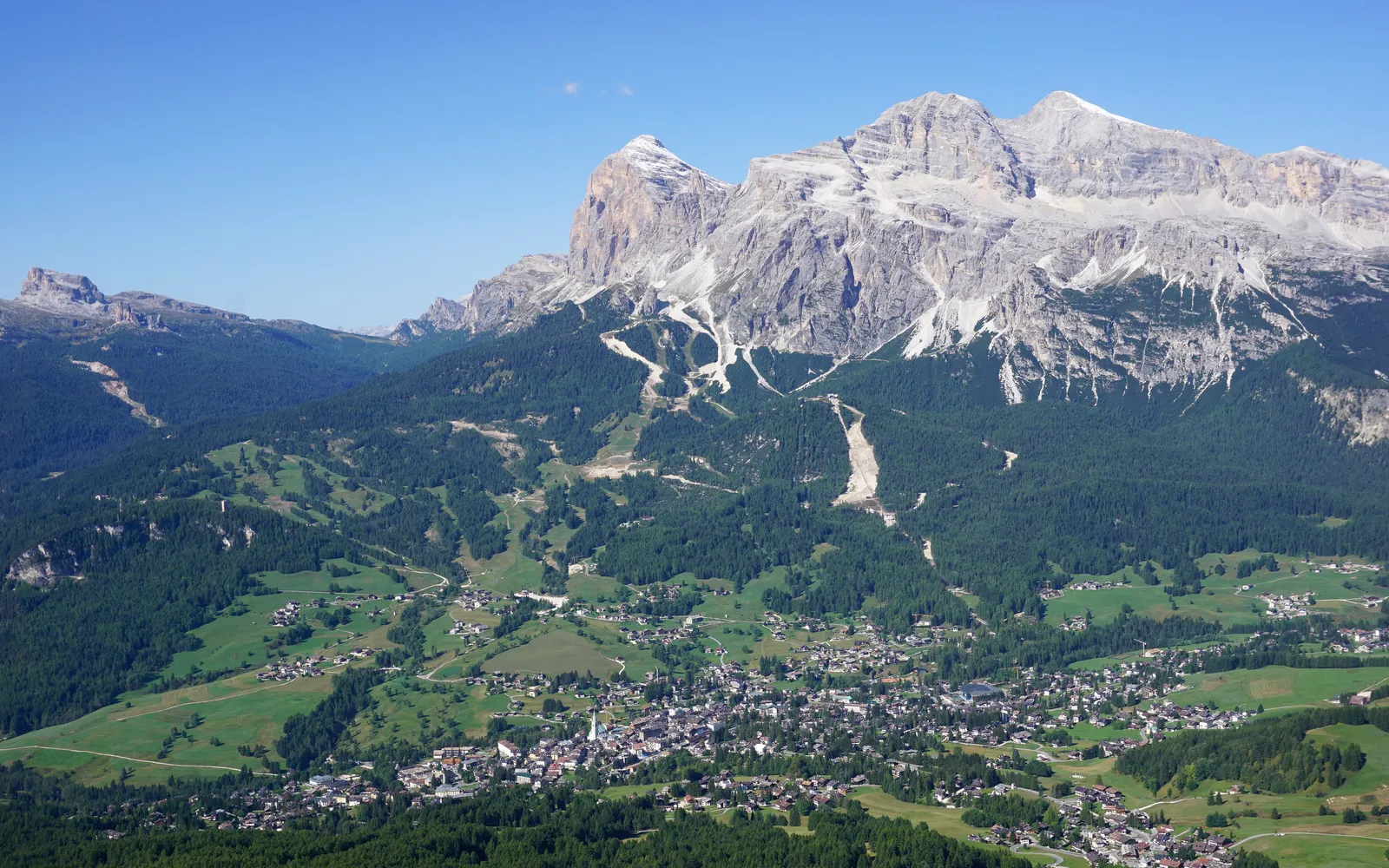
The food in Cortina is not the Italian cooking you know from Rome or Milan. It is a Dolomite kitchen that blends Italian and Austrian traditions in a way entirely its own. The rifugio atmosphere — sitting around a wood stove, eating hot soup after a mountain hike — is non-negotiable here. Flavors run rich and warming, with ingredients sourced from farms in the surrounding valleys. That said, prices run noticeably higher than most Italian towns, so come with a bit of extra budget.
 #1
#1 Canederli
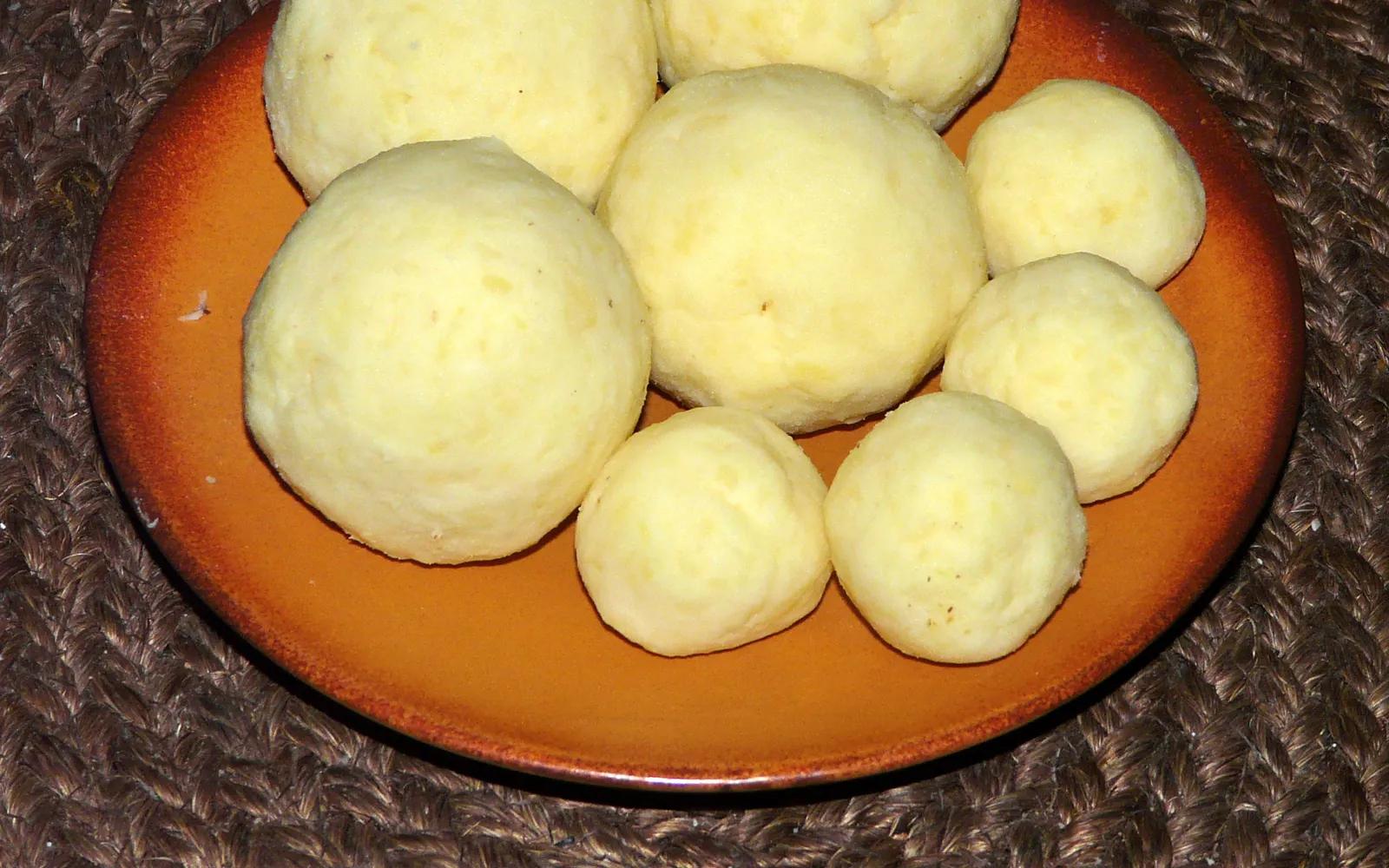
The Dolomites' defining dish — the soul food of mountain people. Made from finely crumbled stale bread mixed with eggs, flour, and either speck or cheese, the mixture is shaped into tennis-ball-sized rounds and simmered in beef or vegetable broth. The result is dense yet yielding, with a deep wheaty flavor. They come filled with speck, cheese, or green spinach, always served in steaming broth. Order them at any rifugio on the mountain — they are on every single menu and absolutely right for cold weather or the end of a long trail.
- Ask for them in brodo (in broth) rather than asciutti (dry) for a mountain lunch — hotter and far easier to eat.
- Town restaurants charge 10–14 euros; rifugi on the mountain can reach 16–18 euros because ingredients have to be hauled up.
- Green canederli (spinach canederli) are milder than the speck version and a solid choice if you do not eat meat.
 #2
#2 Casunziei
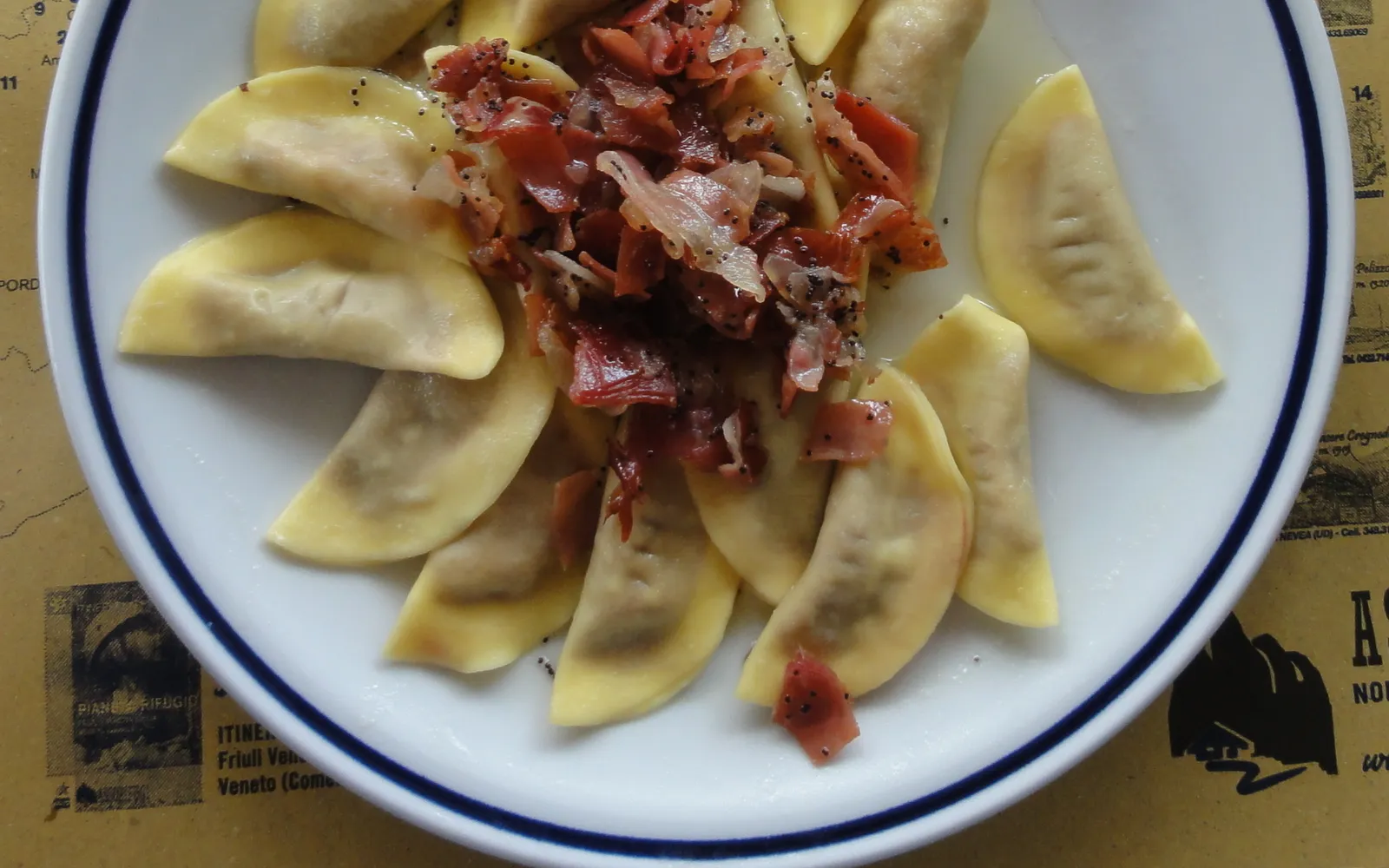
A fresh pasta specific to the Ampezzo valley — you will not find it outside the Dolomites. Thin sheets of fresh dough are wrapped around a filling of seasoned red beetroot and mashed potato, folded into a half-moon shape. The soft pink-purple color from the beetroot makes it as appealing to look at as it is to eat. It arrives dressed with clarified butter and either Posta cheese or Ricotta affumicata (smoked ricotta) — fragrant and rich without being heavy. In winter it is exactly the right amount of warming. Locals regard it as their most prized dish.
- Order it burro e semola (butter and cheese), not tomato sauce — that is the authentic preparation.
- Restaurants that make casunziei from scratch in-house typically charge 14–18 euros and taste dramatically better than places using pre-made pasta.
- If you want a photo of the striking color, shoot before the butter goes on — it fades almost immediately.
 #3
#3 Speck
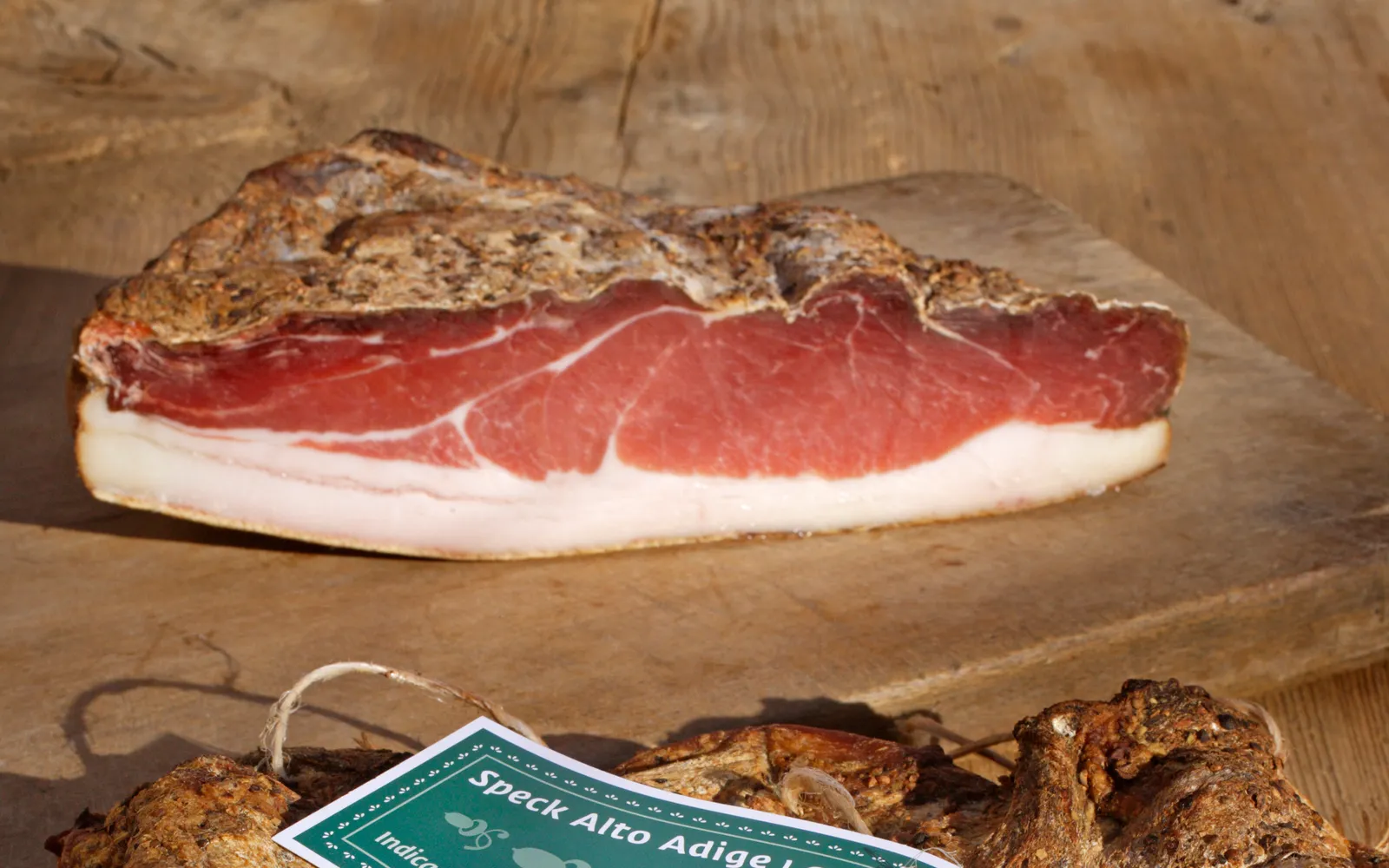
Pork leg marinated in spices, smoked over birch and juniper wood, then hung to cure in mountain air for a minimum of 22 weeks. It carries a European IGP (Protected Geographical Indication) certification. The flavor is more complex than regular prosciutto — a subtle smokiness threaded through the spice notes. Served in thin raw slices alongside rye bread, Montasio cheese, and pickled cucumber, it is the go-to snack at every Alpine café and bar in town.
- Buy speck freshly cut at an Alimentari in Cortina rather than vacuum-packed from a supermarket — the difference in flavor is significant.
- Pair it with local Grana Padano or Montasio cheese and a glass of Lagrein red from South Tyrol for the full combination.
- It travels well, but keep it in a cooler bag. Genuine speck keeps for 2–3 weeks in the fridge.
 #4
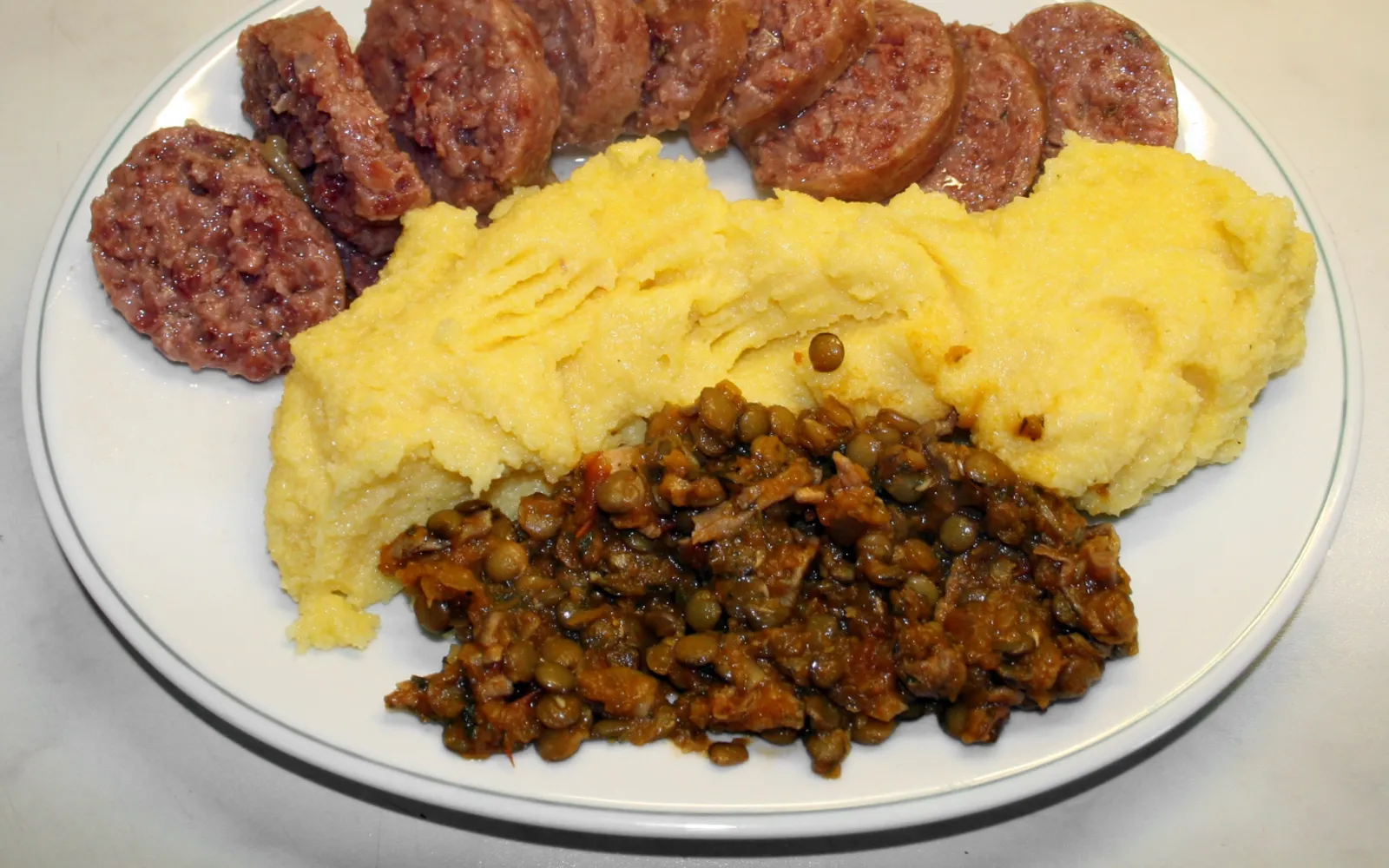
#4 Polenta
The Dolomite mountain people have relied on this dish for sustenance for centuries. Coarse ground corn is stirred in boiling water until thick and yielding, then served hot as a base for braised meat in a rich sauce, fresh Porcini mushrooms, or melted Montasio cheese. The flavor is simple but filling and deeply warming after a full day on the trails. Some restaurants serve it griddled on a cast-iron plate — crisp on the outside, soft inside — which gives an entirely different and equally good result.
- Polenta concia (mixed with cheese and butter) is the richest version — heavy going if you are not used to it. Try taragna first if you are unsure.
- A plate of polenta with toppings runs 12–16 euros, which is fair value given how filling it is.
- Pair it with a Teroldego or Marzemino red from Trentino for the best match.
 #5
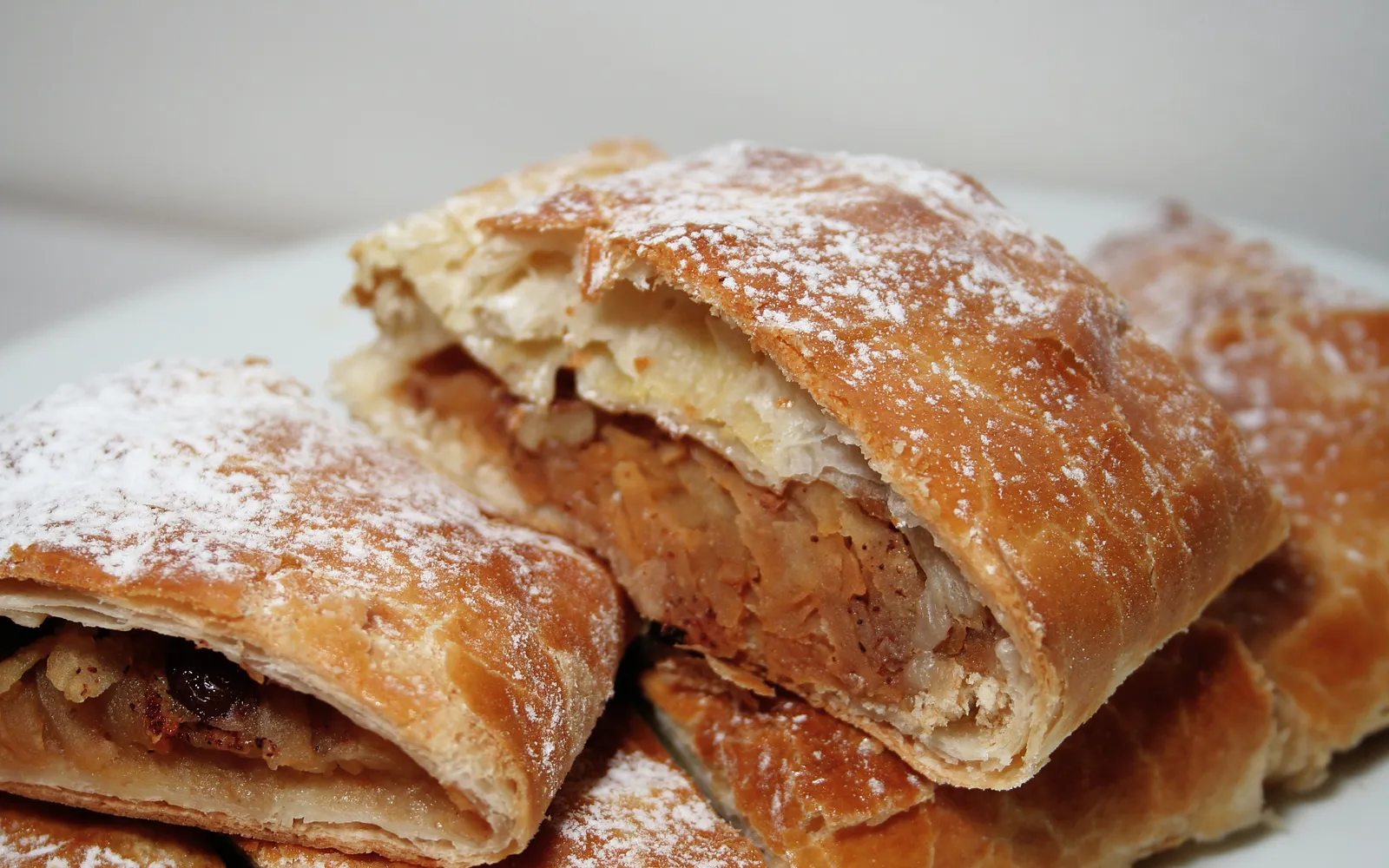
#5 Apple Strudel
The pastry that most clearly signals how much Austrian influence has shaped Dolomite food culture. Thin dough is rolled around a filling of chopped apple, raisins, cinnamon, and biscuit crumbs, then baked until the outside is golden and crisp and the inside stays soft. It arrives warm with fresh whipped cream or vanilla ice cream. The scent of cinnamon drifting from Cortina's cafés is one of those atmospheric details that sticks in memory. Prices are reasonable and it is easy to find across town.
- Order it strudel caldo (warm) with panna montata (whipped cream) — that is the traditional way to eat it, not cold.
- Local bakeries that bake their own strudel taste noticeably different from the pre-made versions sold at tourist-oriented cafés. Ask: fatto in casa?
- Some Cortina bakeries use seasonal fruit — pear or peach instead of apple — depending on the time of year. Worth trying.
 #6
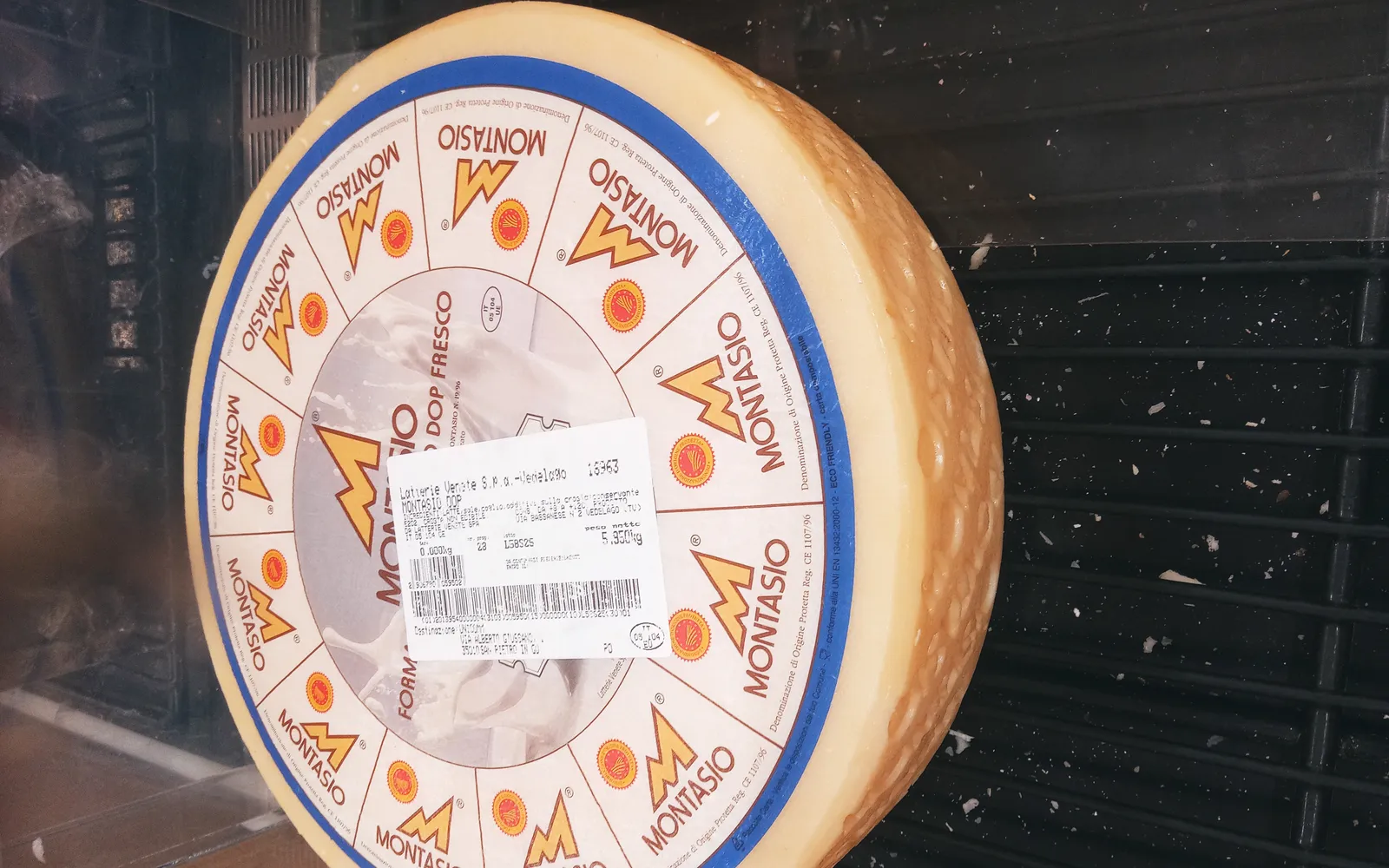
#6 Montasio Cheese and Alpine Fondue
Montasio DOP from Veneto and Friuli is the cheese Dolomite people are proudest of. Young Montasio tastes mild and slightly sweet; aged versions develop an intensity closer to Parmigiano. Melted into an Alpine fondue with white wine and garlic, it becomes a pot for dipping rye bread or blanched vegetables. As a shared dinner experience — rifugio atmosphere, a wood fire, hot cheese — it is hard to beat. It is the kind of meal that becomes a strong memory of Cortina.
- A fondue at a decent restaurant runs 18–25 euros per person, but it is a filling meal and some places refill the bread for free.
- You can buy Montasio cheese to take home from an Alimentari — far cheaper than at the airport. Ask for it freshly cut and vacuum-sealed.
- If fondue is not for you, try frico instead — a crispy fried cheese disk from Friuli that is easy to find around town.
Where to stay in Cortina d'Ampezzo for this trip
A well-located hotel means less commuting and more sightseeing. Here are real, top-rated stays in Cortina d'Ampezzo — compare Agoda · Booking · Trip.com in one click.
Cristallo, a Luxury Collection Resort & Spa
Affiliate links — we may earn a commission at no extra cost to you. Details
Rosapetra Spa Resort
Affiliate links — we may earn a commission at no extra cost to you. Details
Grand Hotel Savoia Cortina
Affiliate links — we may earn a commission at no extra cost to you. Details
Hotel Ambra Cortina
Affiliate links — we may earn a commission at no extra cost to you. Details
Tours, tickets & activities in Cortina d'Ampezzo
Day tours, attraction tickets and travel essentials for Cortina d'Ampezzo — book ahead on Klook with mobile e-tickets.
Affiliate links — we may earn a commission at no extra cost to you.
Before You Pack
The best food in Cortina often has no online reviews. It comes from an unmarked rifugio up on the mountain, eaten hot after three hours on the trail, with a view of the Dolomite rock faces and a glass of local wine. That combination is what turns every plate into the best meal you can remember.