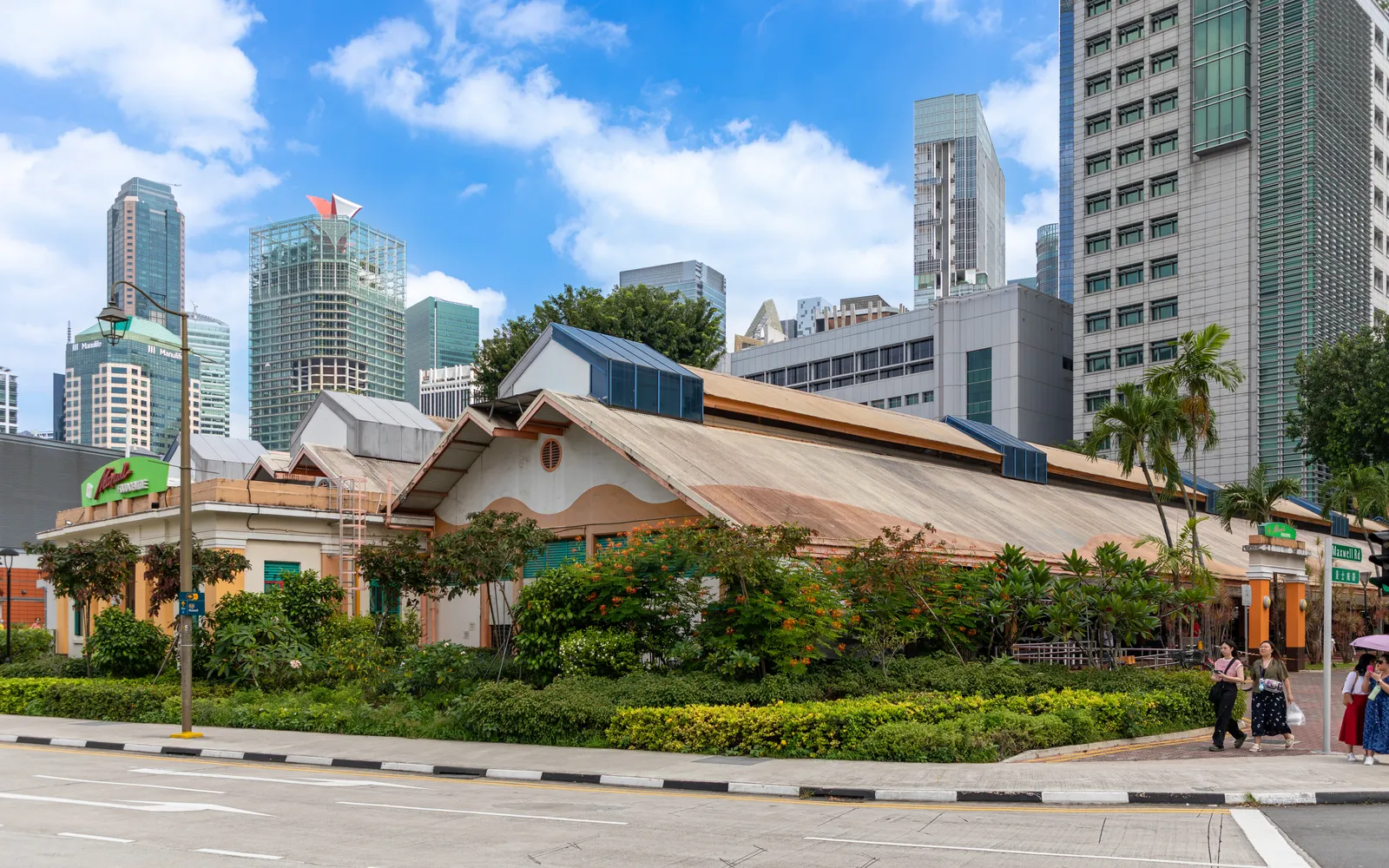
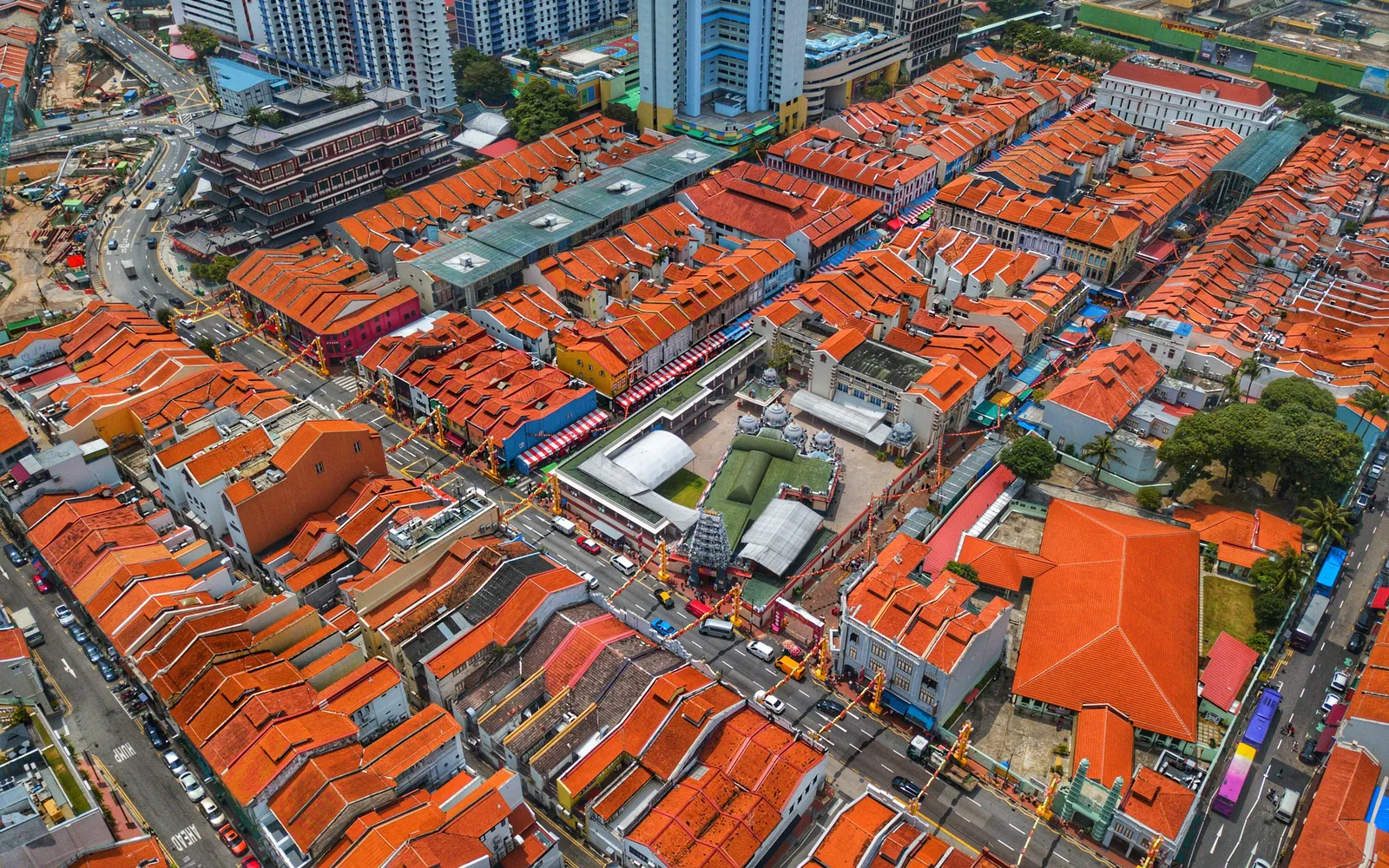
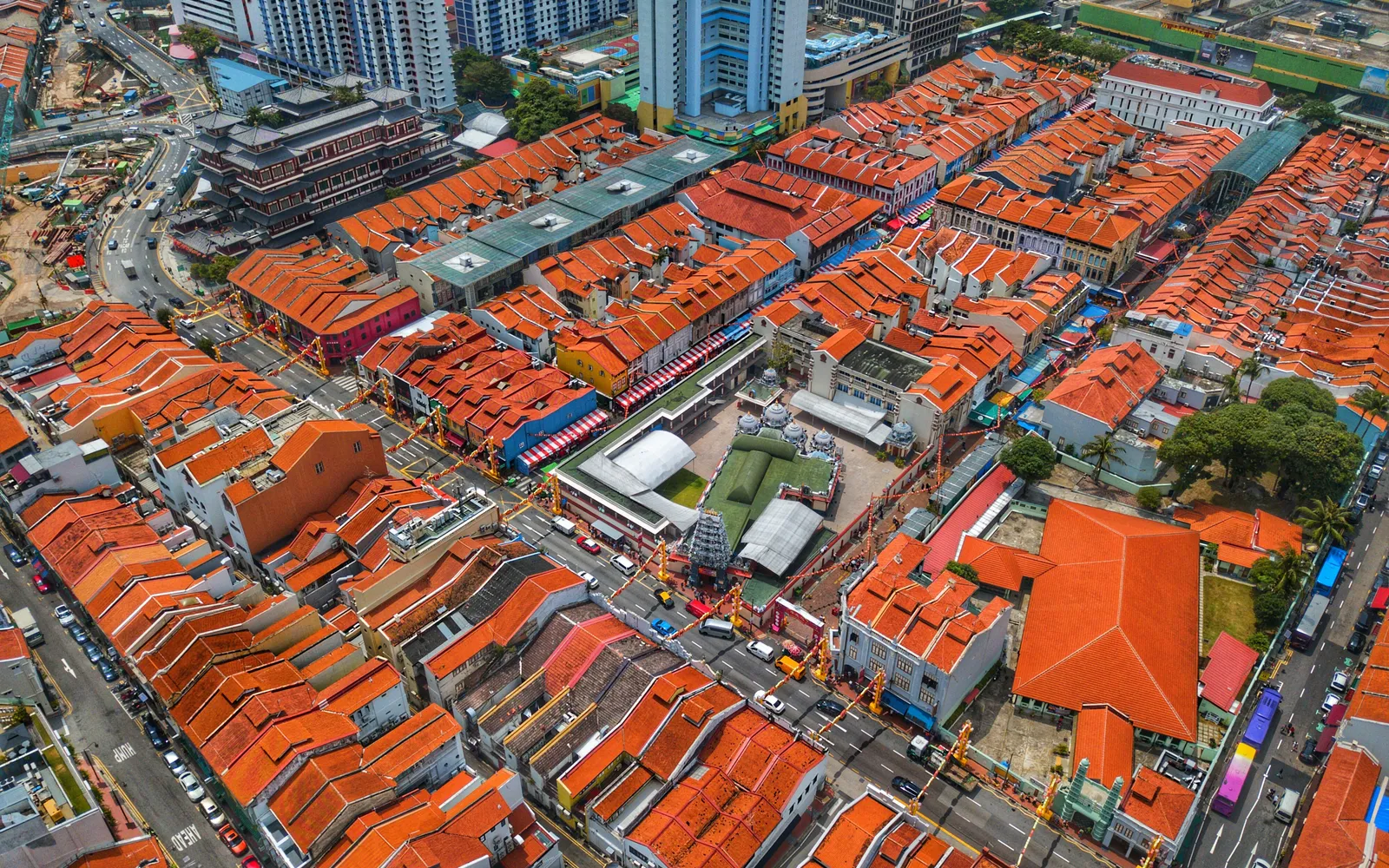
Singapore's Chinatown tells the story of Chinese immigrant life during the colonial era better than almost anywhere else in Southeast Asia. A Buddhist temple, a Hindu temple, and a mosque all stand within a few hundred metres of each other — a compressed reflection of Singapore's plural identity. The district spans 5 sub-quarters: Kreta Ayer, Telok Ayer, Tanjong Pagar, Bukit Pasoh, and Ann Siang, each with its own distinct character waiting to be explored.
 #1
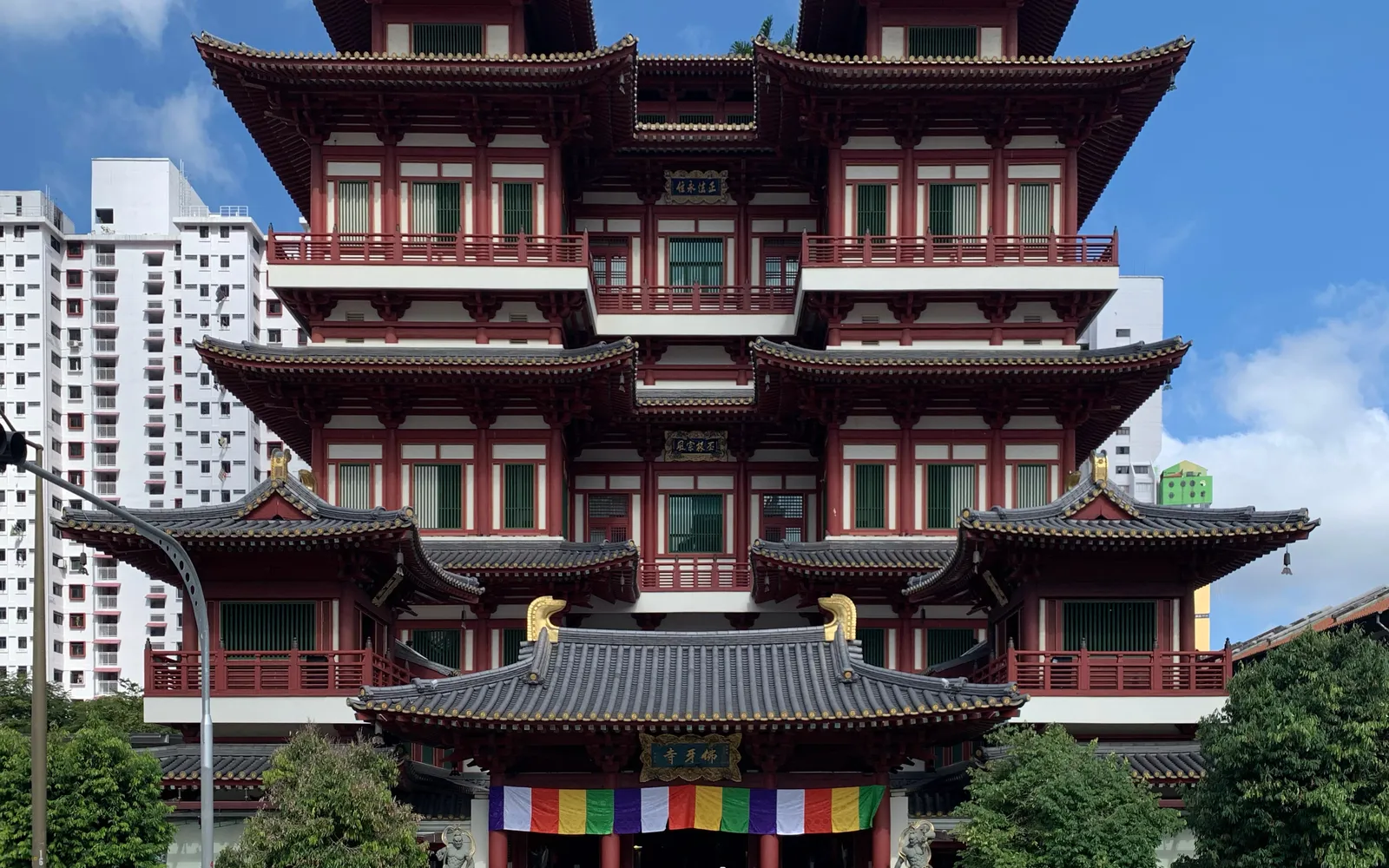
#1 Buddha Tooth Relic Temple and Museum
One of the most striking examples of Buddhist architecture in Southeast Asia. The temple opened in 2007, designed in the style of the Tang Dynasty. Inside, a sacred tooth relic of the Buddha is enshrined in the Sacred Light Chamber within a 3,500-kilogram gold stupa on the fourth floor. That same floor holds a lotus garden and a museum displaying Buddhist art from across Asia. Entry is free every day.
- Dress modestly — no shorts or sleeveless tops; sarongs are available to borrow at the entrance.
- The fourth-floor rooftop Buddhist garden is exceptionally peaceful and well worth the climb.
- Open 07:00–17:00 daily, free admission.
 #2
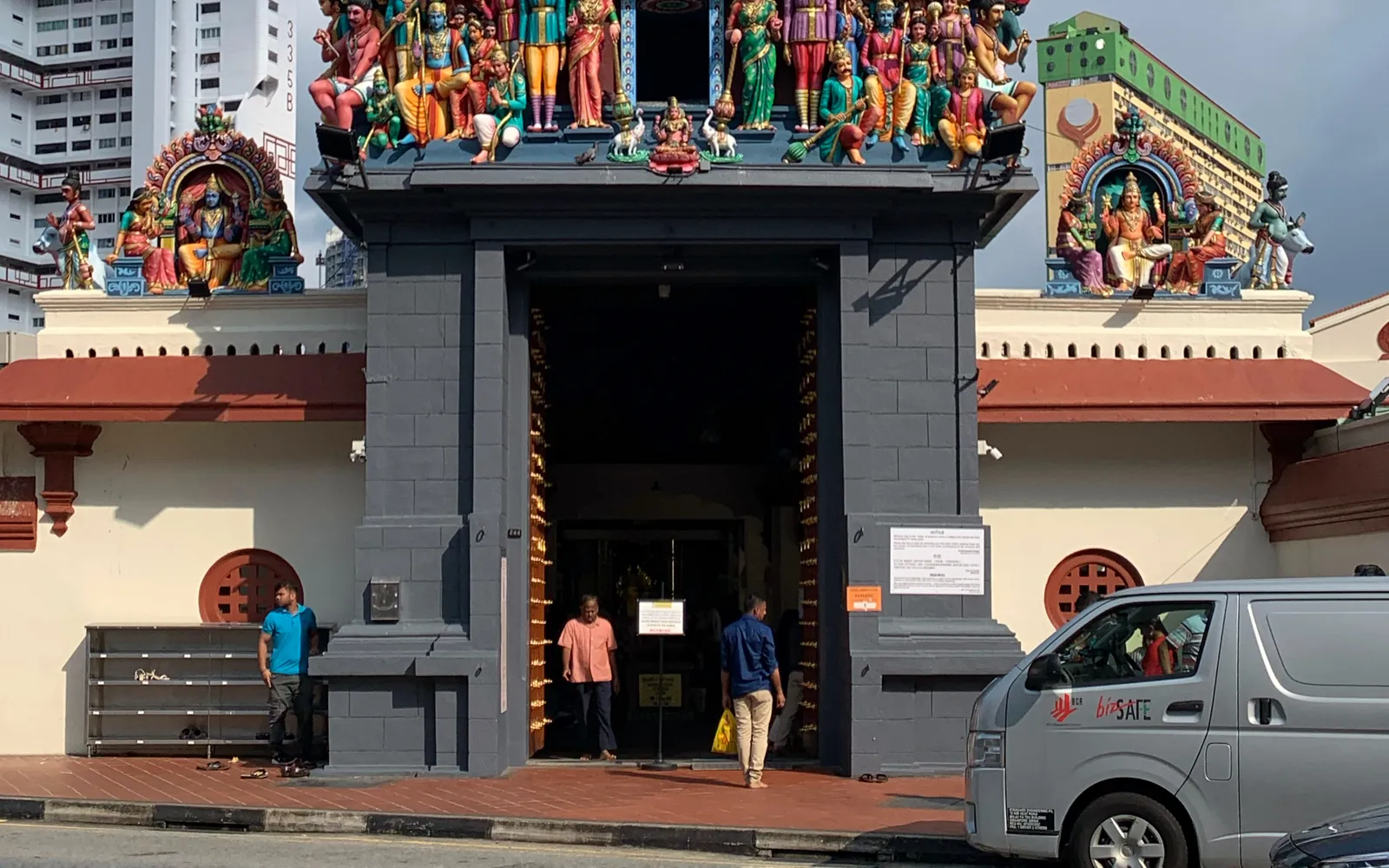
#2 Sri Mariamman Temple
Singapore's oldest Hindu temple, founded in 1827 by Naraina Pillai, who arrived with Sir Stamford Raffles. The six-tiered gopuram tower at the entrance is covered with over a hundred brightly coloured deity figures in the Dravidian architectural style. Gazetted as a National Monument, the temple remains an active place of worship to this day.
- Remove shoes before entering the inner sanctum; a S$3 entry fee applies for non-Hindus.
- October–November brings the spectacular Thimithi firewalking ceremony.
- Open 07:45–12:00 and 18:00–21:00 daily.
 #3
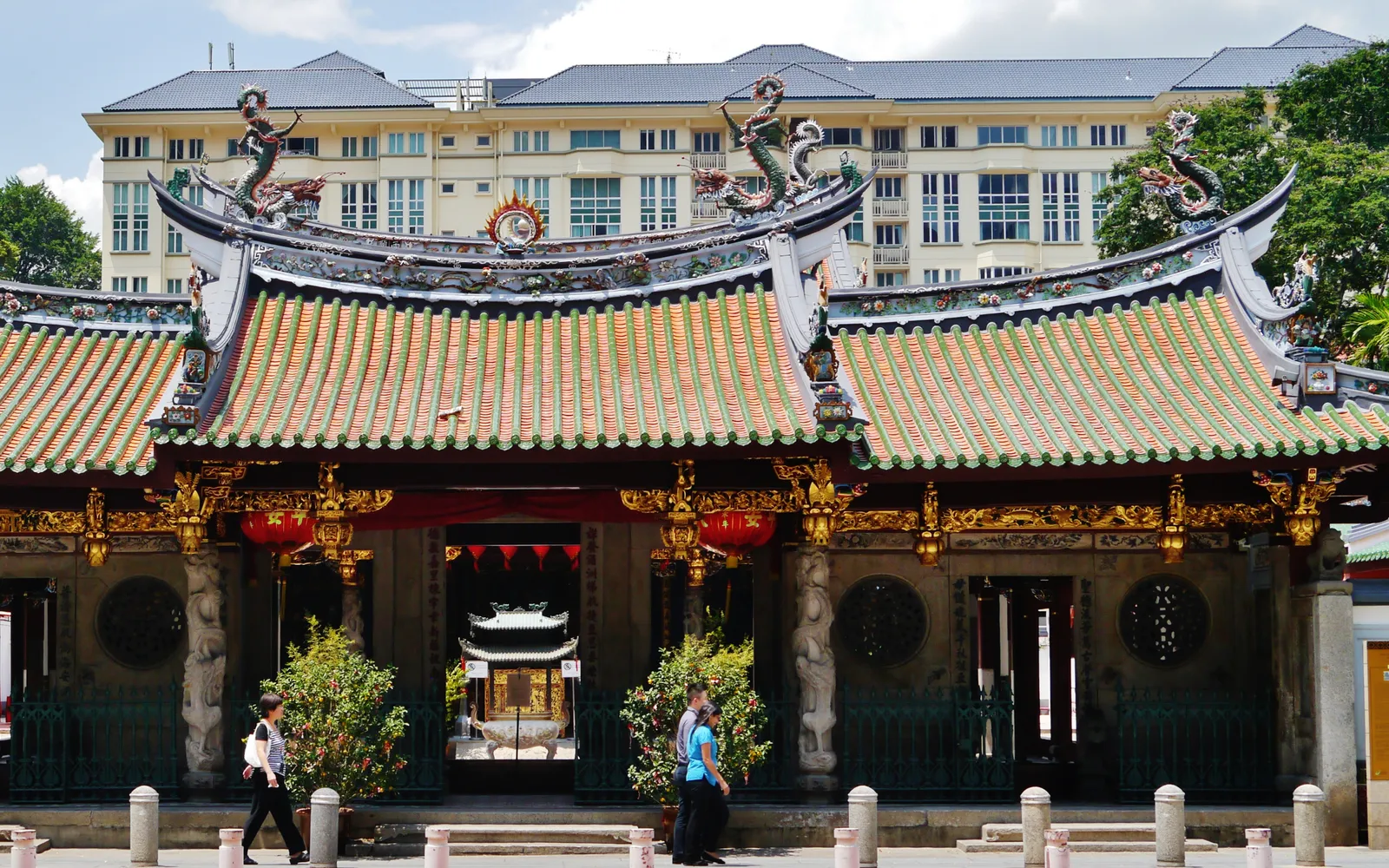
#3 Thian Hock Keng Temple
Singapore's oldest and most important Hokkien temple, built between 1839 and 1842 using materials shipped entirely from China — without a single nail. It is dedicated to Mazu, goddess of the sea, whom Hokkien migrants venerated in gratitude for their safe passage across the water to Singapore. It received the UNESCO Asia-Pacific Heritage Conservation Award in 2001 and was gazetted as a National Monument in 1973.
- Free admission; open 07:30–17:30 daily.
- Look closely at the intricate dragon carvings and ornate timber columns.
- Directly opposite stands Al-Abrar Mosque — a vivid illustration of religious diversity within a single neighbourhood.
 #4
#4 Chinatown Heritage Centre
The most effective museum in Singapore for understanding the Overseas Chinese pioneers who shaped the city. Housed in 3 beautifully restored shophouses, it features meticulously reconstructed 1950s-era cubicle rooms that convey the cramped but communal life of earlier generations. Three floors of exhibitions trace the full arc from immigration and World War II through to modern Singapore.
- Admission S$25 for adults (S$15 for Singapore residents); open 10:00–20:00.
- Budget 1.5–2 hours — the content is substantial and moving, not a quick walk-through.
- Buy tickets online at chinatownheritagecentre.com.sg to avoid queues.
 #5
#5 Pagoda Street & Trengganu Street Market
The beating heart of Chinatown for shoppers and photographers. Pagoda and Trengganu Streets were pedestrianised in 1997 and are now canopied by cascading red paper lanterns. Shops line both sides selling souvenirs, leather goods, Chinese medicinal herbs, silk, and jewellery. After dark the market takes on a different energy — street food stalls open and the whole stretch glows red.
- Weekend evenings are the liveliest — more stalls, better atmosphere.
- Bargaining is acceptable on souvenirs, though prices are already reasonable.
- The traditional Chinese herbal shops on Pagoda Street are worth browsing if you're interested in wellness.
 #6
#6 Ann Siang Hill
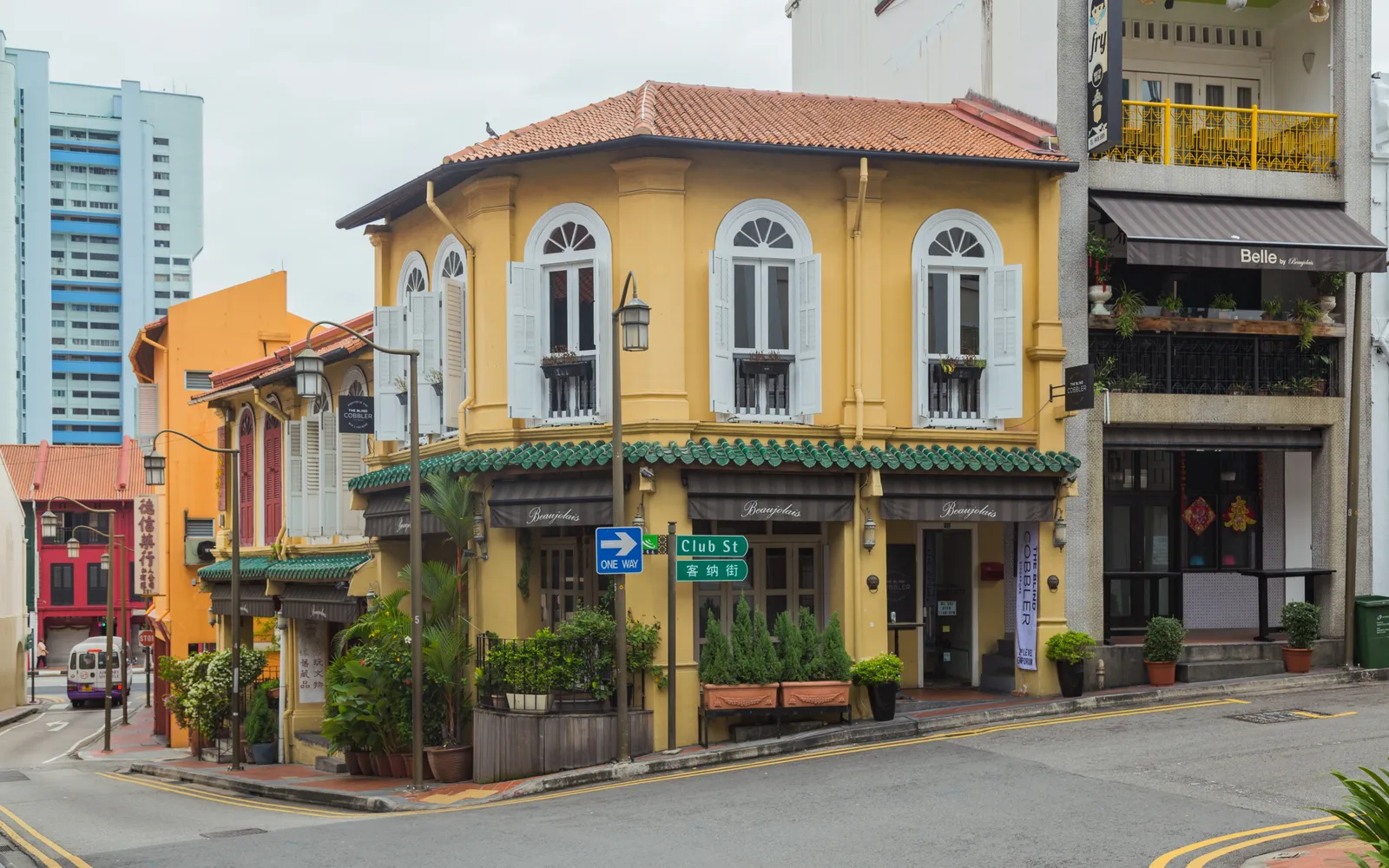
The most picturesque street in Chinatown — a shaded, gently rising lane flanked by beautifully restored pastel colonial shophouses. It is named after Chia Ann Siang, a wealthy Hokkien merchant of the 19th century. Today the ground floors of those shophouses are occupied by serious cocktail bars, sleek coffee shops, and inventive restaurants that draw both locals and visitors from around the world.
- Daytime is ideal for photographing the shophouses in peace; evenings are for cocktails.
- Club Street, which continues from Ann Siang Hill, has equally good spots.
- Many bars run happy hour 17:00–19:00 — solid value.
 #7
#7 Maxwell Road & Tanjong Pagar Area
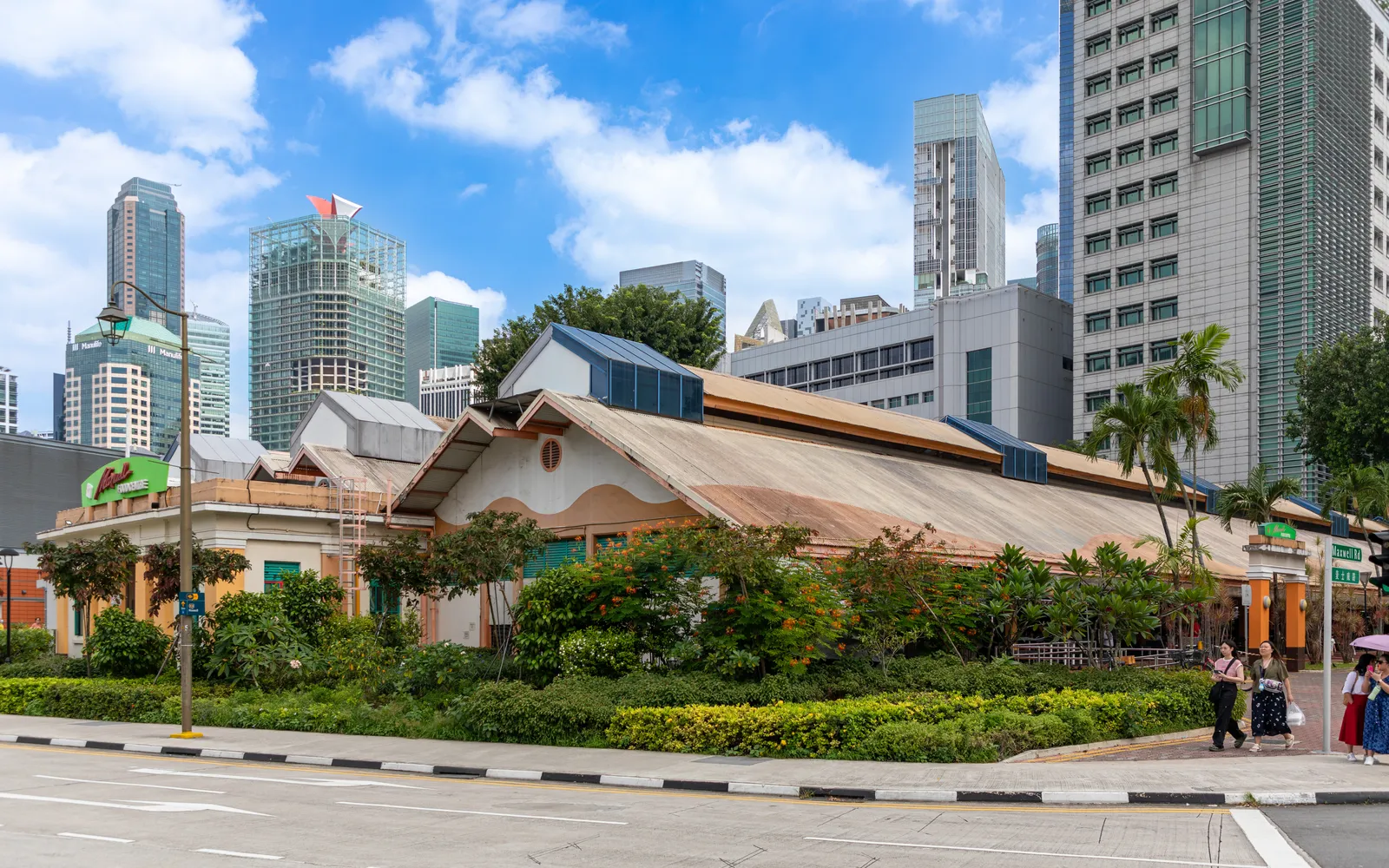
The southern edge of Chinatown is framed by Conservation shophouses and colonial-era buildings from the 1920s. The anchor is Maxwell Food Centre — the neighbourhood's most famous hawker centre, built in 1928 and now home to over 100 stalls, including Tian Tian chicken rice, a Michelin Bib Gourmand holder. Nearby Tanjong Pagar Plaza and Duxton Hill add further good restaurants and bars to the mix.
- Maxwell Food Centre opens early — some stalls from 06:00 — making it ideal for breakfast or lunch.
- Tian Tian Chicken Rice (#01-10/11) draws long queues; arrive before 11:00.
- Duxton Hill, about 5 minutes away, has excellent design shops and specialty coffee.
Where to stay in Chinatown for this trip
A well-located hotel means less commuting and more sightseeing. Here are real, top-rated stays in Chinatown — compare Agoda · Booking · Trip.com in one click.
The Clan Hotel Singapore by Far East Hospitality
Affiliate links — we may earn a commission at no extra cost to you. Details
Mondrian Singapore Duxton
Affiliate links — we may earn a commission at no extra cost to you. Details
AMOY by Far East Hospitality
Affiliate links — we may earn a commission at no extra cost to you. Details
Duxton Reserve Singapore, Autograph Collection
Affiliate links — we may earn a commission at no extra cost to you. Details
Tours, tickets & activities in Chinatown
Day tours, attraction tickets and travel essentials for Chinatown — book ahead on Klook with mobile e-tickets.
Affiliate links — we may earn a commission at no extra cost to you.
Before You Pack
Chinatown is straightforward to reach on the MRT — Northeast Line and Downtown Line both stop at Chinatown station (NE4/DT19). The recommended approach: temples and Heritage Centre in the morning, Pagoda Street market in the afternoon, cocktails at Ann Siang Hill after dark.