
Chengdu is a city built around the pleasure of eating. Sichuan food is known for málà (麻辣) — numbing-spicy, a sensation that comes from dried chilies and Sichuan peppercorns and leaves your mouth tingling like nowhere else. UNESCO chose Chengdu as Asia's first City of Gastronomy in 2010, not just for the flavor but because the food here has been tied to Sichuan culture, history, and daily life for centuries. Whether you like a little heat or a lot, Chengdu has more to try than you can finish.
 #1
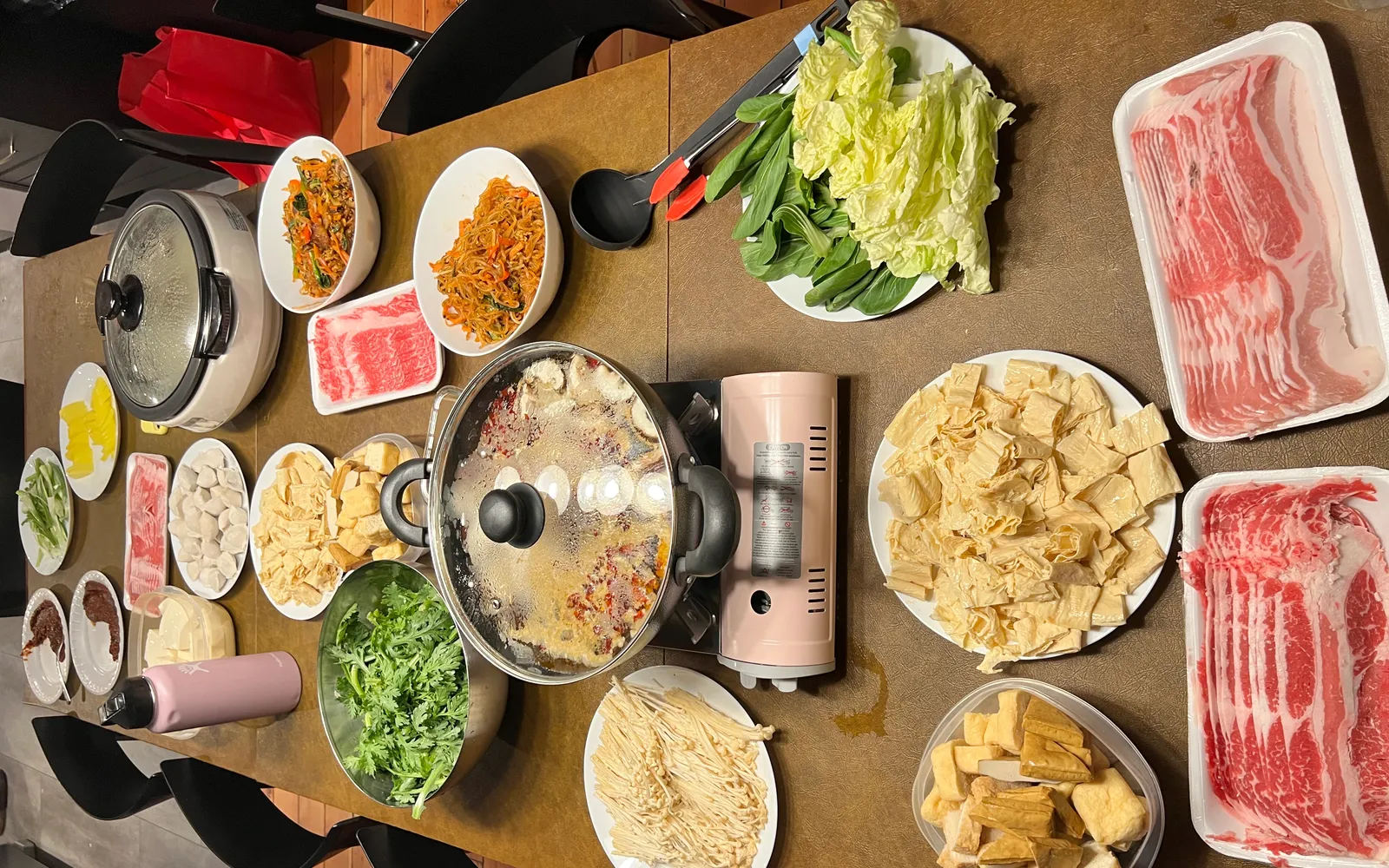
#1 Sichuan Hotpot
The king of the Sichuan table. A deep-red broth bubbles with dried chilies, chili oil, and dozens of kinds of Sichuan peppercorn. It started in the late Qing dynasty, when dock workers boiled cheap beef offal in spicy broth. Today it's the meal that brings family and friends together better than any other. You can dip everything from beef intestine, brain, and duck head to fresh vegetables.
- Order the 'twin pot' (鸳鸯锅), which splits a spicy broth and a clear one for anyone who can't take the heat
- Dip into the sesame-and-garlic sauce to cut the spice and add flavor
- Popular spots like Little Sheep, Haidilao (海底捞), and Shu Jiuxiang need a booking ahead on holidays
 #2
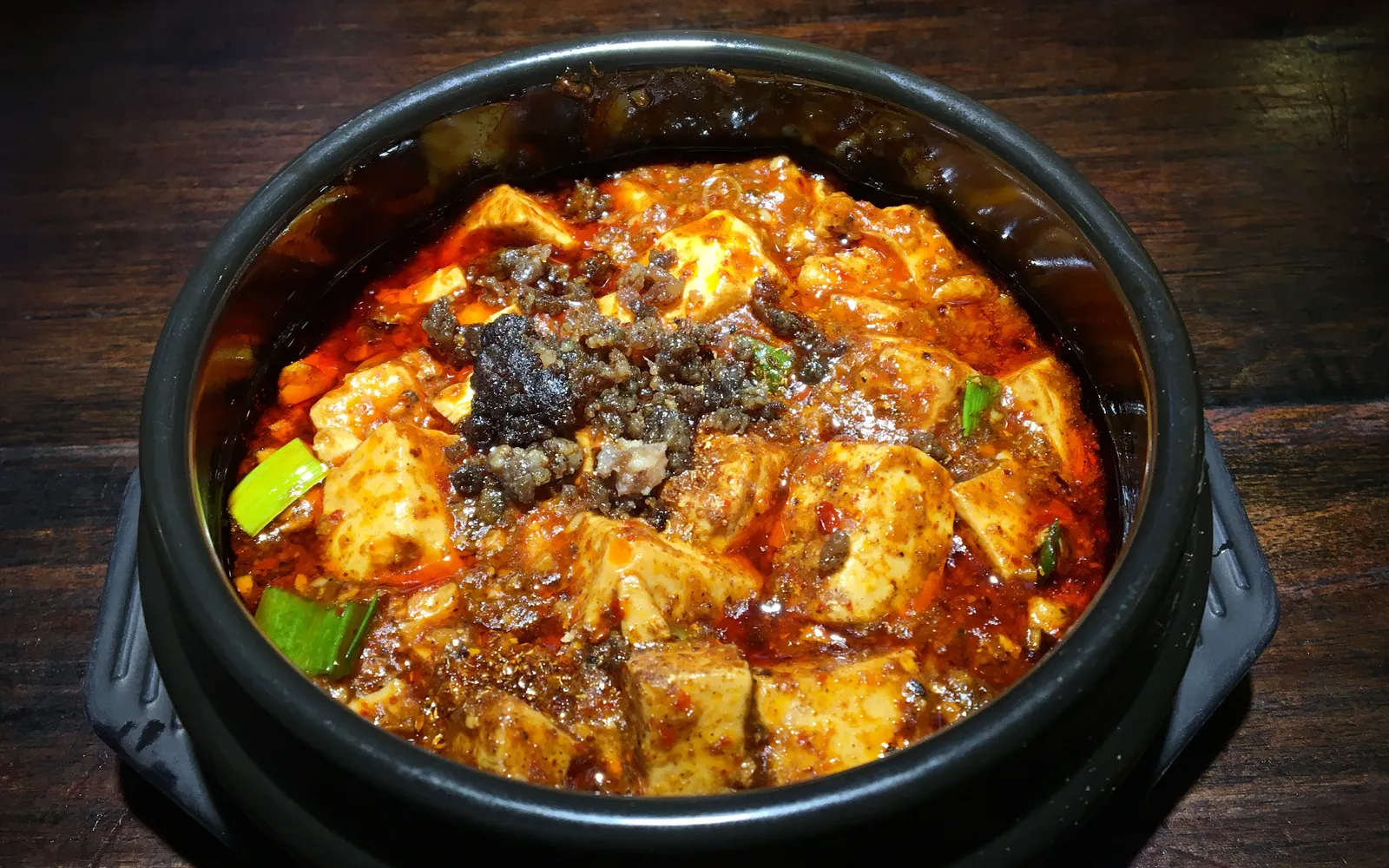
#2 Mapo Tofu
A celebrated tofu dish whose history goes back to 1862. The name comes from a pockmarked woman who sold stir-fried tofu in Chengdu. Soft tofu sits in a sauce of fermented chili bean paste, minced meat, chili oil, and Sichuan peppercorn, with a fierce málà (麻辣) numbing-spicy kick. The smell of the chili oil drifts up and gets your mouth watering.
- Chen Mapo Tofu (陈麻婆豆腐) is the original; the branch is on Xiyulong Street
- Ask for 'medium spicy' (中辣) if you're not used to a lot of heat, but try at least a little of that Sichuan-peppercorn numbing-spice
- Always eat it with a bowl of hot steamed rice to soak up the thick sauce
 #3
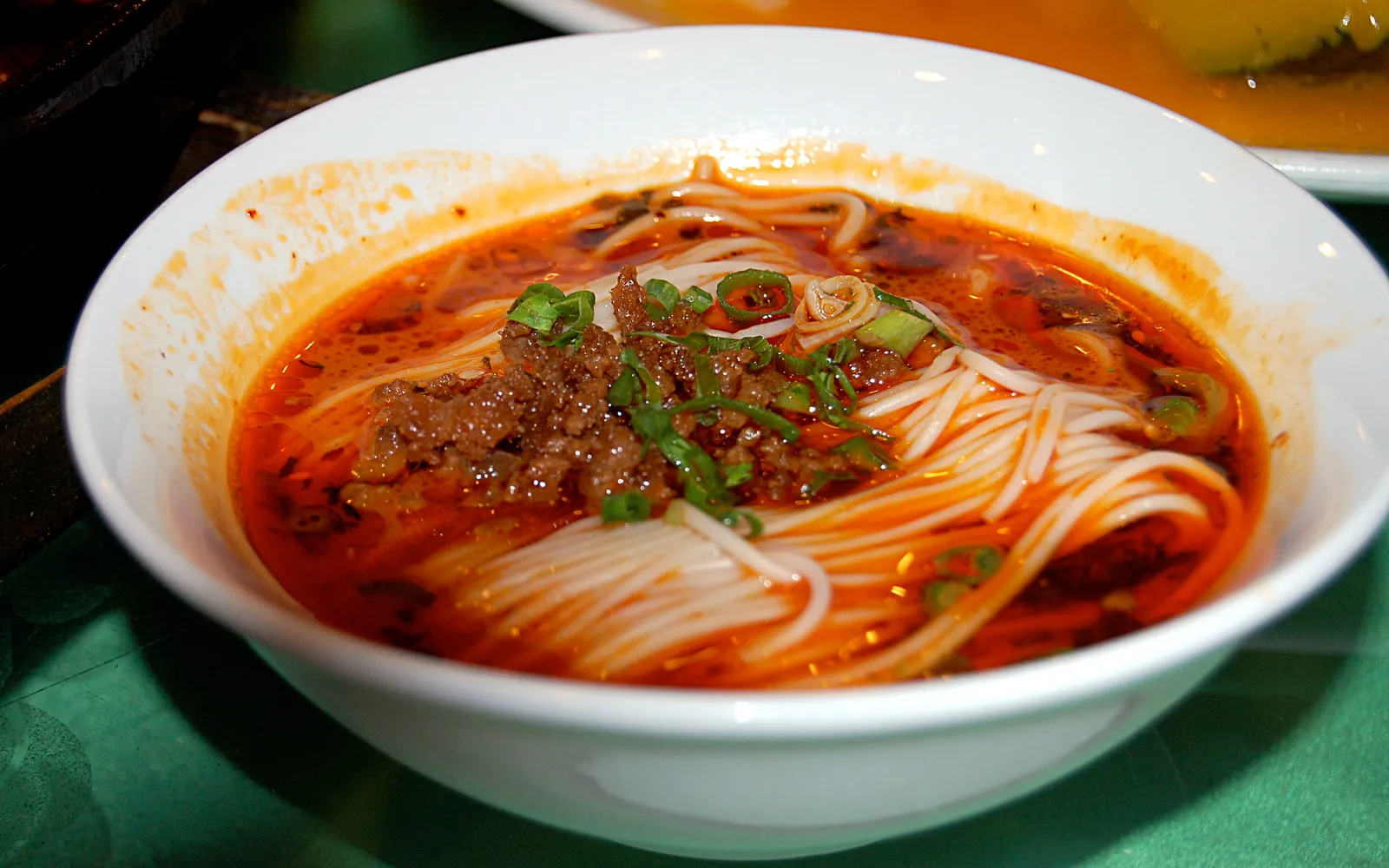
#3 Dandan Noodles
A street-food noodle named after the carrying pole (担担) that vendors balanced on their shoulders, walking and selling around Chengdu from 1840. Chewy noodles get topped with chili oil, sesame paste, minced meat fried with spices, and boiled greens. The flavor is bold and savory-spicy, with a fragrant sesame note. It's a popular breakfast and snack that locals eat any day of the week.
- Very cheap, around 10–20 yuan a bowl, perfect as breakfast or a snack
- Say 'less spicy' (少辣) if you can't take heat; the sesame and soy flavors are still all there
- Try both the soup version (汤面) and the dry-tossed version (拌面) — they taste very different
 #4
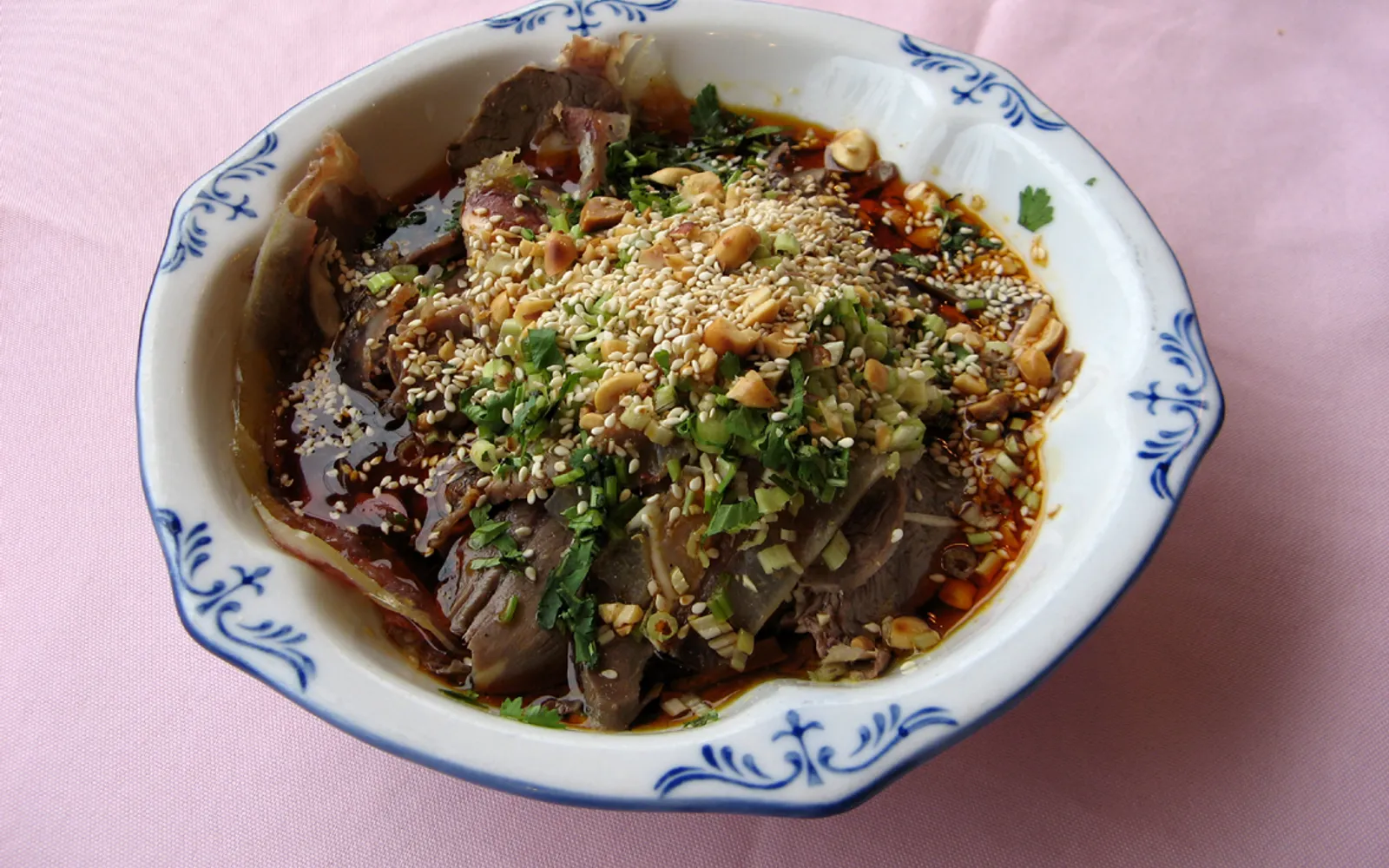
#4 Fuqi Feipian
A cold dish whose name translates literally as 'husband-and-wife lung slices,' though these days it rarely uses actual lung. Instead it's beef tongue, heart, intestine, and tripe, thinly sliced and tossed with red chili oil, Sichuan peppercorn, roasted peanuts, and sesame, served cold. The chili oil is fragrant, the flavor is numbing-spicy, and the peanuts add crunch. It started in the late Qing dynasty, created by a couple named Guo and Zhang.
- If you're wary of the organ meats, many places will do an all-beef version (纯牛肉) instead
- The longer the chili oil soaks in, the better it gets; eat it as an appetizer before the main meal
- Almost every hotpot and Sichuan restaurant has this on the menu
 #5
#5 Zhong Dumplings
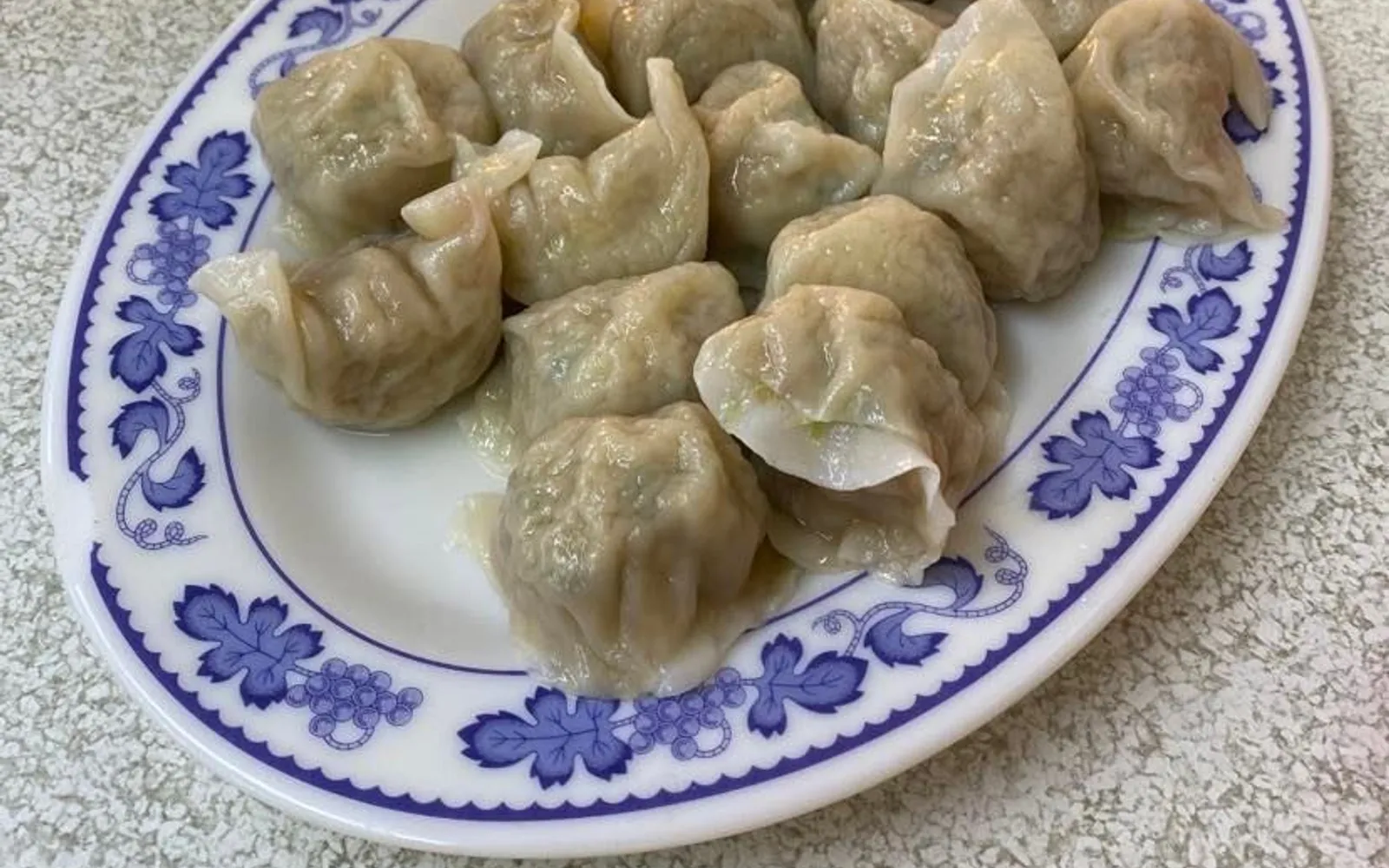
Chengdu's original dumpling, created in 1893 by Zhong Xie'er. They differ from northern Chinese dumplings by being served dry, tossed in chili oil, sweet soy sauce, and minced garlic. Crescent-shaped, with a soft, fragrant pork filling, they carry a sweet-spicy flavor that's distinctly Sichuan. They're counted among Chengdu's 'three famous street foods.'
- Order 10–15 pieces as a snack, around 15–25 yuan
- The original Zhong Shui Jiao branch on Central Linjiang Street is the most popular
- Try them with congee or a hot tofu soup for a Chengdu-style breakfast
 #6
#6 Fuqi Pao Mo and Gong Bao Chicken
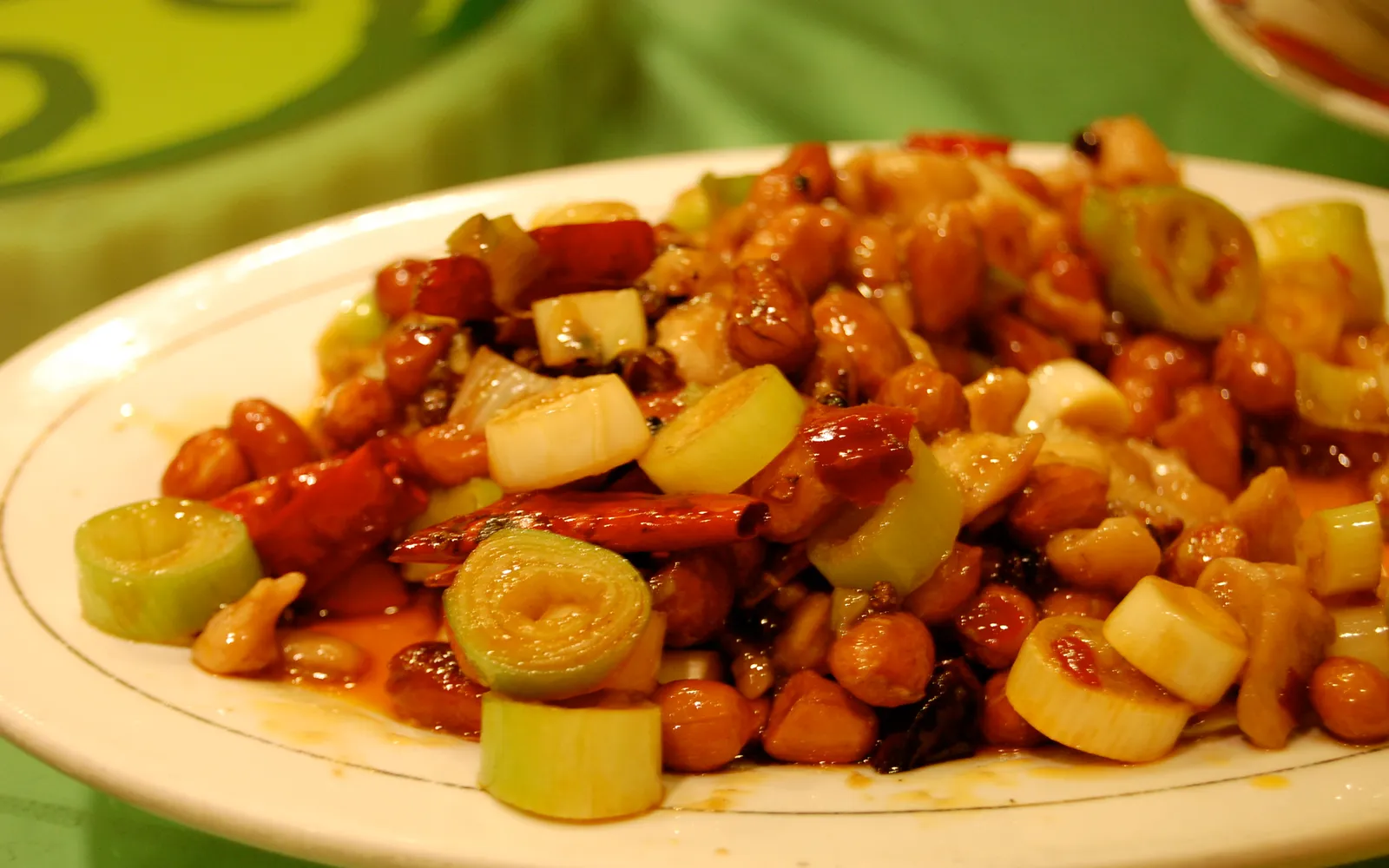
Gong bao chicken, or gōngbǎo jīdīng (宫保鸡丁), is a classic Sichuan dish that's famous worldwide. Diced chicken is stir-fried with dried chilies, roasted peanuts, onion, and a sweet-sour-spicy sauce. It's named after a Qing dynasty official. The flavor balances numbing-spice, the crunch of peanuts, and a smoky note — very different from the much sweeter Western version.
- Ask for 'traditional Sichuan style' (四川传统) to get the Sichuan-peppercorn numbing-spice, not the sweet version
- Eat it with a bowl of hot steamed rice; this dish is the best thing to put over rice
- Mid-range restaurants in Chengdu often make it better than expensive places abroad
Where to stay in Chengdu for this trip
A well-located hotel means less commuting and more sightseeing. Here are real, top-rated stays in Chengdu — compare Agoda · Booking · Trip.com in one click.
Fraser Suites Chengdu
Affiliate links — we may earn a commission at no extra cost to you. Details
Niccolo Chengdu
Affiliate links — we may earn a commission at no extra cost to you. Details
Tianfu Square Serviced Suites by Lanson Place
Affiliate links — we may earn a commission at no extra cost to you. Details
Grand Hyatt Chengdu
Affiliate links — we may earn a commission at no extra cost to you. Details
Tours, tickets & activities in Chengdu
Day tours, attraction tickets and travel essentials for Chengdu — book ahead on Klook with mobile e-tickets.
Affiliate links — we may earn a commission at no extra cost to you.
Before You Pack
Sichuan food in Chengdu is more varied than you'd expect, from street food costing a few yuan up to Michelin-level restaurants. We'd wander the Jinli area and the streets near Wenshu Monastery to taste a lot of it in a single trip.