
The English call Canterbury the spiritual heart of their country, and once you walk inside the old city — Roman walls still standing on all sides — you understand why 2,000 years of history feel so close. Canterbury Cathedral is a UNESCO World Heritage Site, inscribed alongside St Augustine's Abbey and St Martin's Church. The entire old town is walkable in a day without getting bored, and the city sits just 1 hour from London by train.
 #1
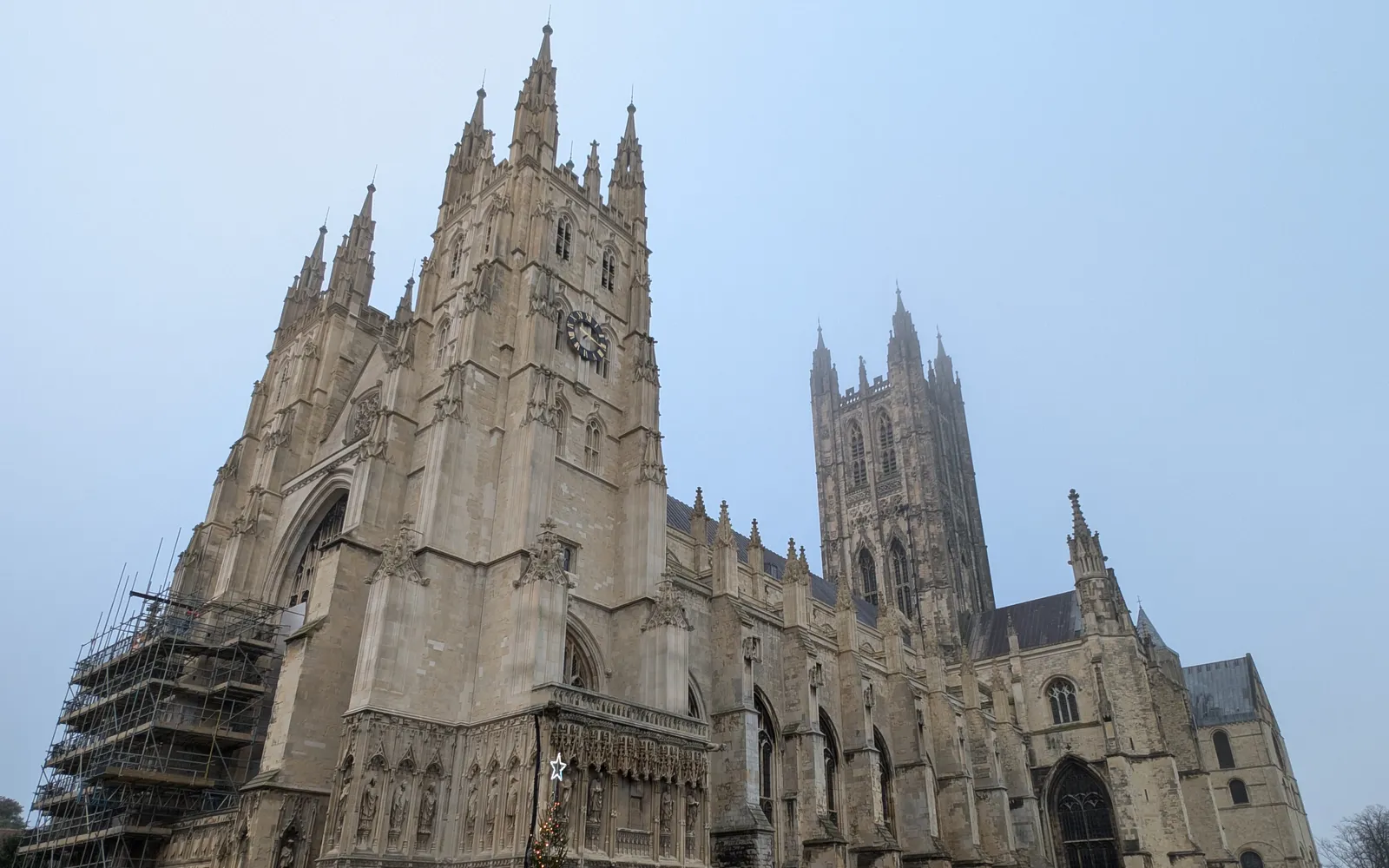
#1 Canterbury Cathedral
One of the greatest buildings in England, the cathedral was begun in <strong>597 AD</strong> and has held UNESCO World Heritage status ever since. Inside, it contains one of the most complete sets of medieval stained glass in Europe, as well as the spot where Archbishop Thomas Becket was murdered in <strong>1170</strong> — an event that turned Canterbury into the most famous pilgrimage destination in medieval Europe and inspired Geoffrey Chaucer's <em>Canterbury Tales</em>.
- Buy tickets online in advance — adult entry is <strong>£16</strong> — to skip the long summer queues.
- Guided tours (included in the ticket price) run several times a day and go far deeper than self-guided wandering.
- High heels are banned in certain sections; dress modestly, as the cathedral remains an active place of worship.
 #2
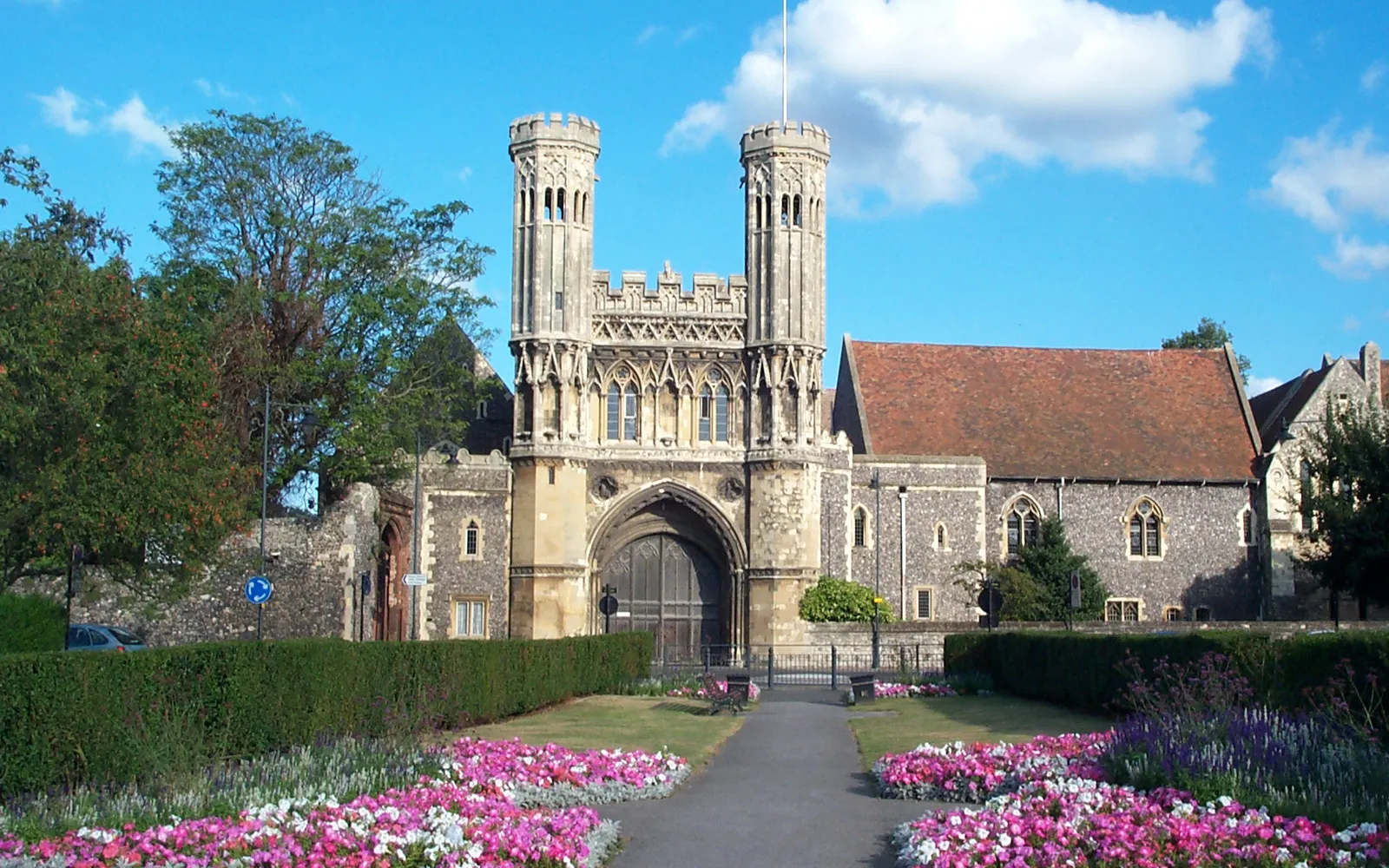
#2 St Augustine's Abbey
The ruins of a Benedictine abbey founded by St Augustine in <strong>598 AD</strong> — one year after he arrived in England to spread Christianity — making it the most important birthplace of English Christianity. Henry VIII dissolved and destroyed the abbey; today it opens as a museum with medieval architectural remains and engaging multimedia displays. It forms part of the same UNESCO World Heritage inscription as the Cathedral.
- Admission is <strong>£10</strong>; free audio guides in English are available — they help enormously in visualising what the complex once looked like.
- A combined ticket covering the Abbey and the Cathedral is available at a saving.
- The abbey grounds are a good spot for a quiet picnic before continuing on to St Martin's Church.
 #3
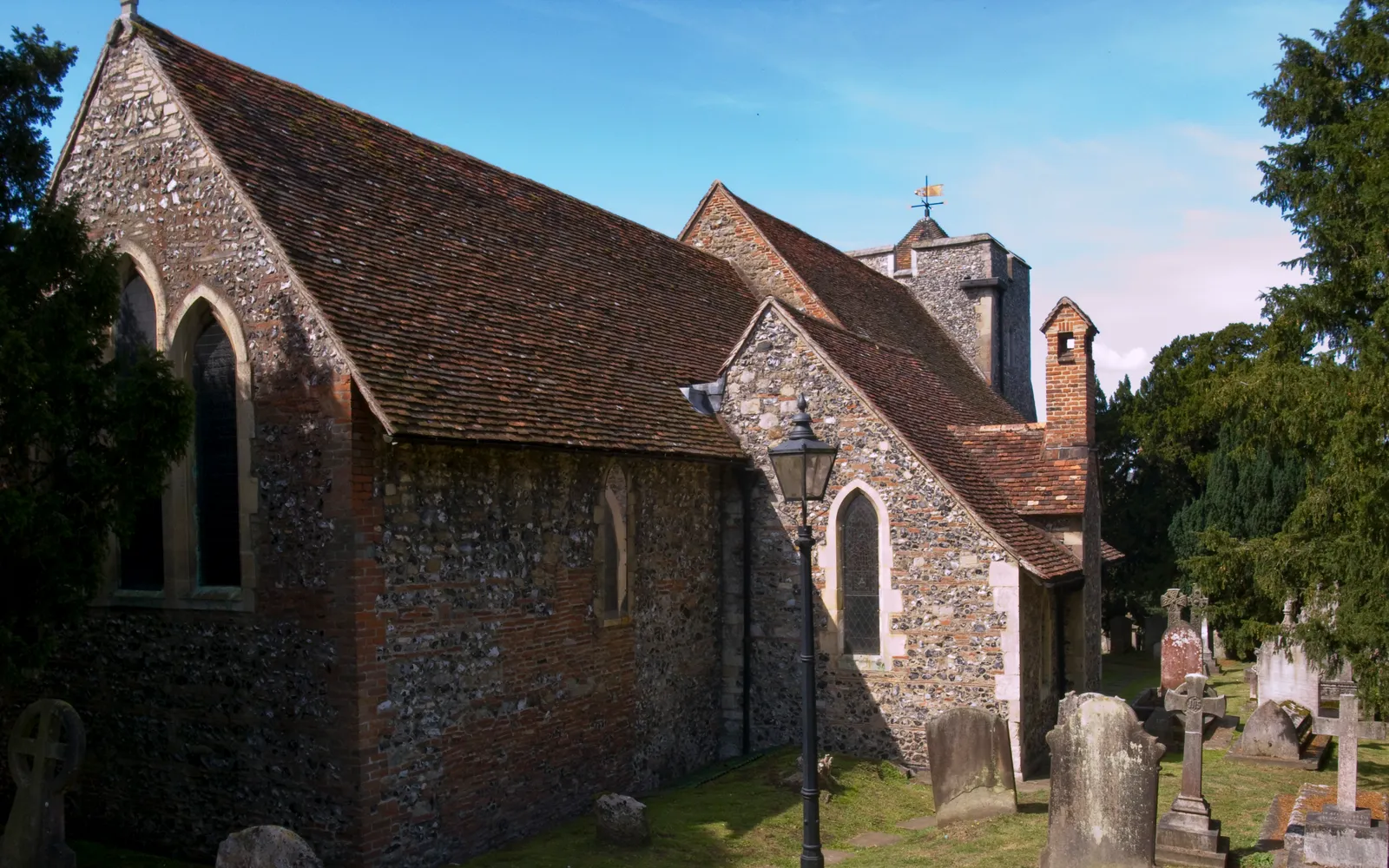
#3 St Martin's Church, Canterbury
The oldest working church in the English-speaking world — in continuous use since the late 6th century, and possibly earlier in the Roman period. Queen Bertha of Kent worshipped here before St Augustine even arrived. The interior is small and surprisingly plain, but the quiet and the awareness that people have come here to pray for more than <strong>1,400 years</strong> is genuinely arresting.
- Entry is free during set opening hours — check the schedule before visiting, as the church closes during services.
- The churchyard headstones are worth reading; some are several hundred years old.
- This is the quietest of the three UNESCO sites in Canterbury — set aside at least 30 minutes for it.
 #4
#4 Westgate, Canterbury
The largest and most intact medieval city gate remaining in England, built in <strong>1380</strong>. It served as a prison through the medieval period and now operates as a small museum holding armour, historic weapons, and records of notable inmates. Climb to the tower roof for a 360-degree view of the old city — the Cathedral spires and the Roman walls both come into clear sight from up there. It is one of Canterbury's most photographed landmarks.
- Museum entry is <strong>£4.50</strong>, roof access included — strong value for the city views.
- The gate itself can be photographed for free from outside at any time; the best angle is looking up from St Peter's Street in morning light.
- Westgate Gardens next door is a good riverside rest stop along the small River Stour as it passes through the city.
 #5
#5 Canterbury Roman Walls and Museum
Canterbury — <em>Durovernum Cantiacorum</em> in Roman times — retains stretches of Roman wall visible across the old city, all walkable for free. The Canterbury Museum on Stour Street displays Roman mosaics and thousands of locally excavated objects, including skeletons and household items spanning the Roman, Anglo-Saxon, and Norman periods. History-minded visitors will find it absorbs at least <strong>1.5 hours</strong>.
- Walking the Roman walls around the city is free; allow half a day if you want to cover every surviving section.
- Museum admission is <strong>£8</strong> — a Canterbury Heritage Pass, which bundles several sites, saves money if you're visiting more than two.
- The Roman floor mosaics are displayed <em>in situ</em> — exactly where they were unearthed under the old city — which is the museum's standout exhibit.
 #6
#6 Burgate and Canterbury City Centre
The core of the old city has kept its medieval character to a remarkable degree. Narrow cobbled streets, leaning Tudor half-timbered houses, second-hand bookshops, a chocolate shop, independent boutiques, and proper cafés run the full length of the lanes. The small <strong>Great Stour river</strong> threads through the centre, and punting tours operate along it in summer. The whole area is compact enough to cover on foot — plan the last half-day for wandering and a meal in the old town.
- <strong>The Old Weavers House</strong> on the River Stour is one of the most striking Tudor buildings in the city — worth a photograph and a possible lunch stop.
- Punting on the river launches from the Westgate Gardens area in summer; prices run around <strong>£12–15 per person</strong>.
- An open-air market runs every Wednesday and Friday morning in the old market area, selling local Kent fruit, cheese, and crafts.
Where to stay in Canterbury for this trip
A well-located hotel means less commuting and more sightseeing. Here are real, top-rated stays in Canterbury — compare Agoda · Booking · Trip.com in one click.
Cathedral Gate Hotel
Affiliate links — we may earn a commission at no extra cost to you. Details
Canterbury Cathedral Lodge
Affiliate links — we may earn a commission at no extra cost to you. Details
The Millers Arms Inn
Affiliate links — we may earn a commission at no extra cost to you. Details
The Falstaff
Affiliate links — we may earn a commission at no extra cost to you. Details
Tours, tickets & activities in Canterbury
Day tours, attraction tickets and travel essentials for Canterbury — book ahead on Klook with mobile e-tickets.
Affiliate links — we may earn a commission at no extra cost to you.
Before You Pack
Canterbury is good year-round, but spring (March–May) and autumn (September–October) give the best walking weather in the old city. Plan at least one overnight stay to see the Cathedral towers lit up at dusk, then walk the morning market the next day.