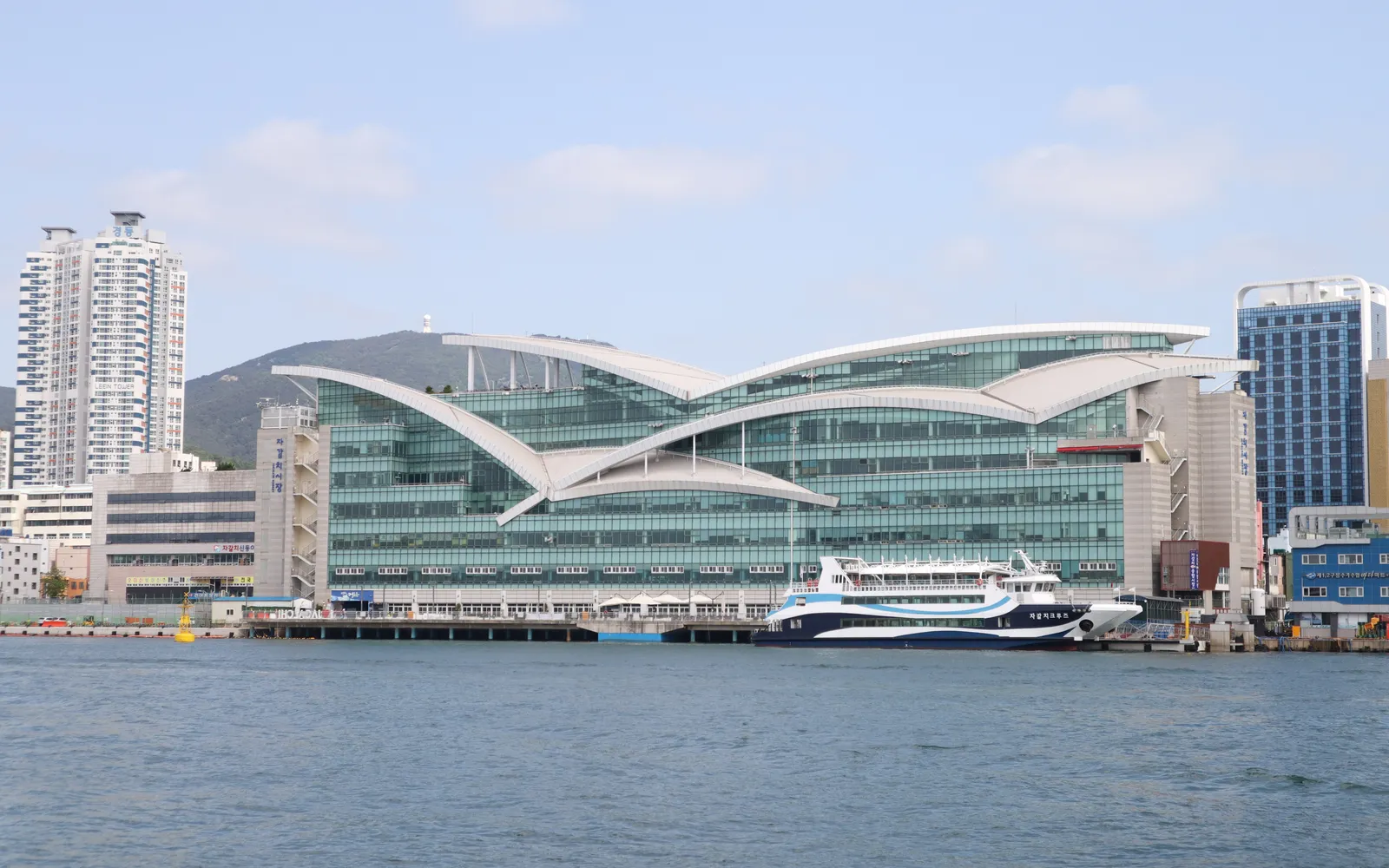
Busan is the second-largest port city in South Korea, sitting at the southernmost tip of the Korean Peninsula with sea on one side and mountains on the other. It has long white-sand beaches, a 650-year-old Buddhist temple built directly into sea cliffs, a hillside village compared to Korea's own Santorini, and the country's most lively seafood market. Every district has its own character — which is exactly why travelers keep coming back.
 #1
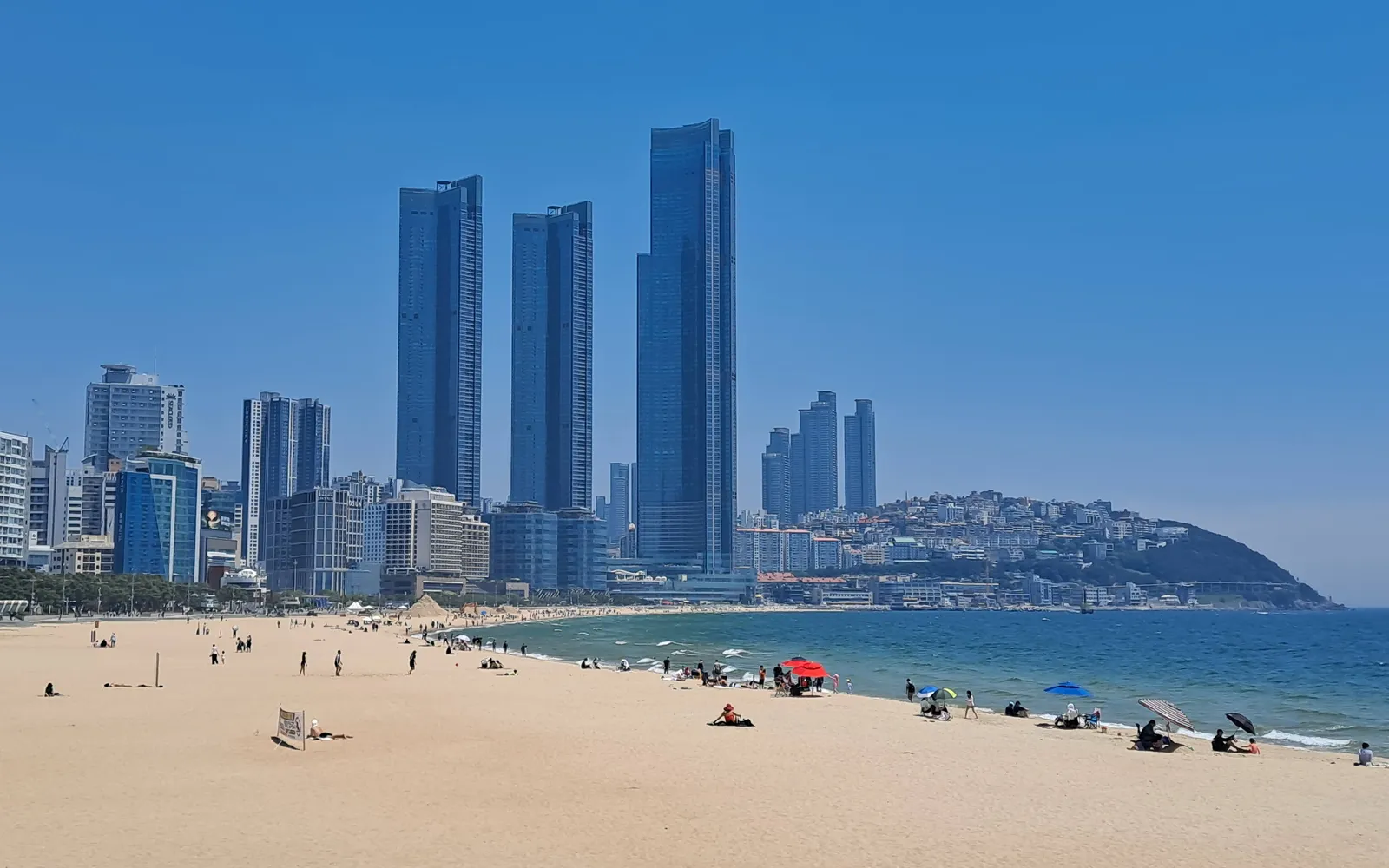
#1 Haeundae Beach
South Korea's most famous beach stretches over 1.5 kilometres of fine white sand along a gentle bay. More than 10 million visitors arrive each summer, drawn by a front row of luxury hotels, restaurants, and cafés. July and August bring the annual sea festival; winter brings a quieter crowd who come to walk the shoreline and eat fresh seafood at the beach-side stalls.
- Arrive early in the morning during summer to beat the crowds.
- Rent a beach chair and umbrella, then order fresh seafood from the stalls nearby.
- Walk west to Dongbaekseom Island at the end of the beach for a clear view of Gwangan Bridge.
 #2
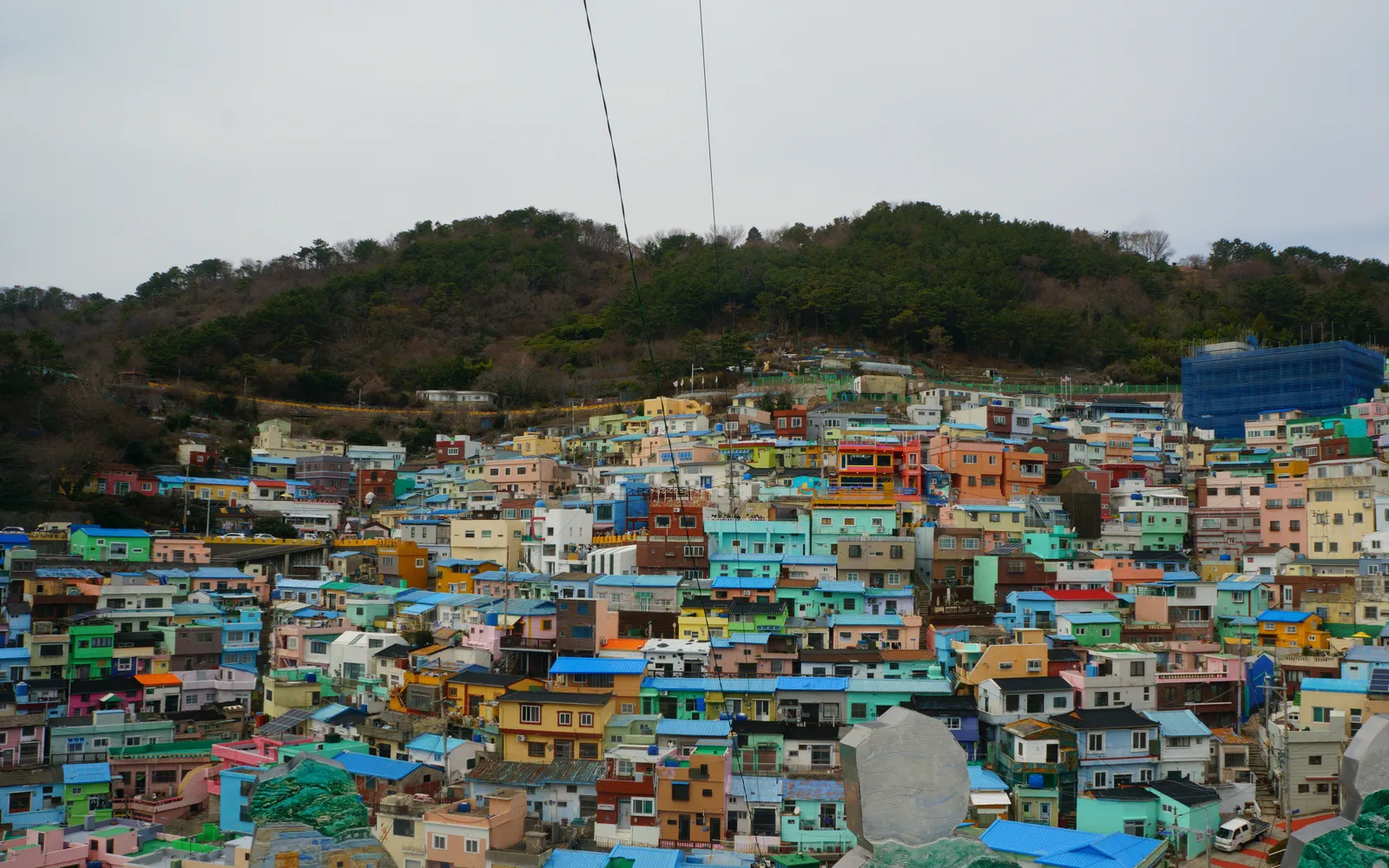
#2 Gamcheon Culture Village
Known as the 'Santorini of Korea,' this steep hillside neighbourhood has hundreds of houses painted in vivid colours stacked tier upon tier. It started as a refugee settlement during the Korean War in 1950, then was reborn as an art district in 2009. Narrow alleyways wind between murals, sculptures, and small shops — walking through feels like navigating a maze made of colour.
- Pick up a stamp-tour map at the information centre and collect stamps at points around the village.
- Wear comfortable shoes — there are a lot of stairs up and down.
- Go before 10 am to take photos without crowds in the frame.
 #3
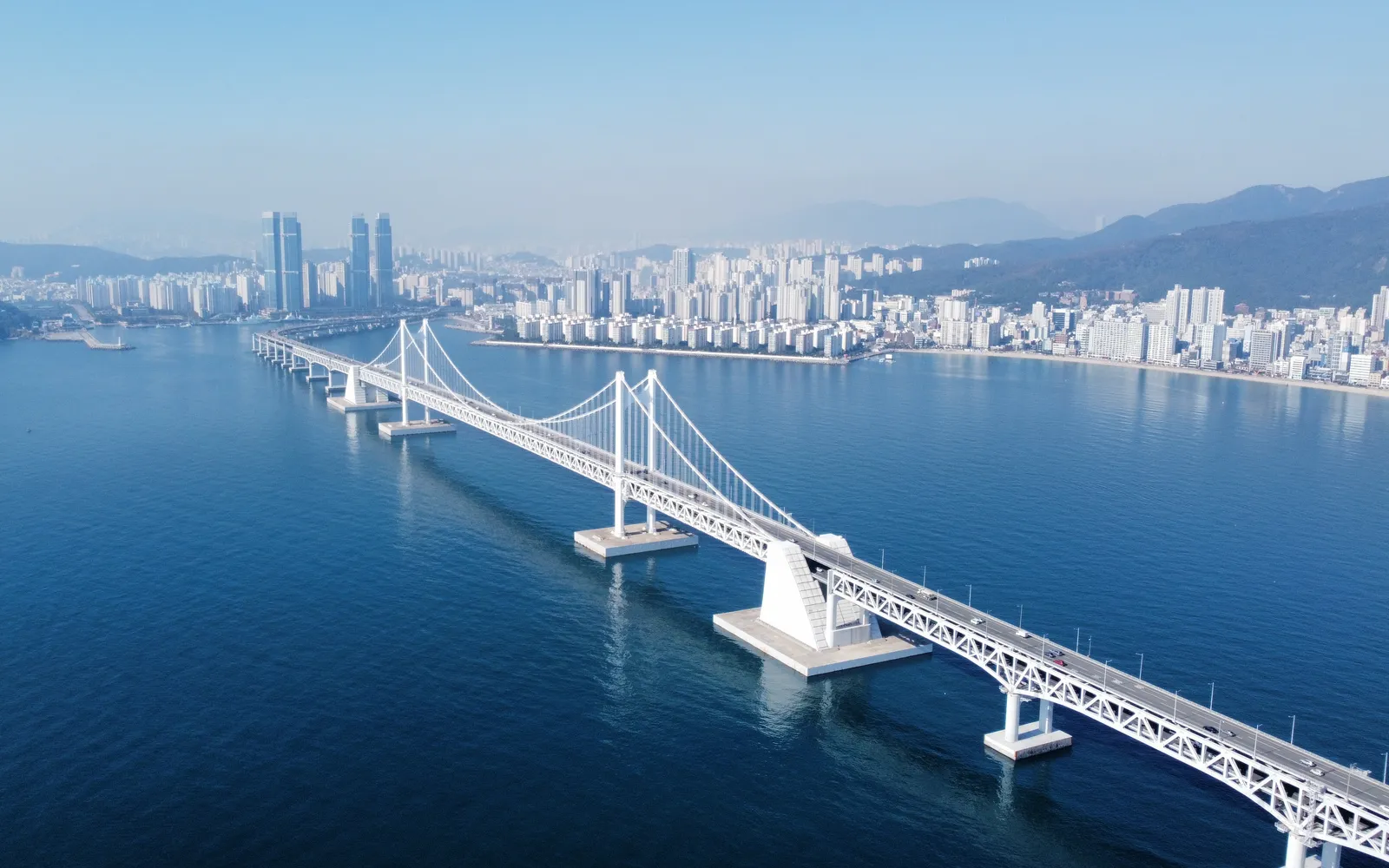
#3 Gwangalli Beach and Gwangan Bridge
Gwangalli Beach is the quieter alternative to Haeundae, rimmed by hundreds of bars, cafés, and restaurants. The centrepiece is Gwangan Bridge — also called Diamond Bridge — which runs more than 7 kilometres and is strung with over 7,000 LED lights capable of displaying more than 100,000 colours. After dark the bridge becomes a light show in itself. Sitting at a waterfront spot with coffee or fresh seafood while watching the bridge is one of Busan's most unhurried pleasures.
- Come at dusk to watch the bridge's colours shift as the sky darkens.
- Restaurants and bars along the beach stay open until 1 or 2 am — good for a late dinner.
- During events like the Busan International Fireworks Festival in October, the bridge serves as the backdrop for fireworks over the water.
 #4
#4 Haedong Yonggungsa Temple
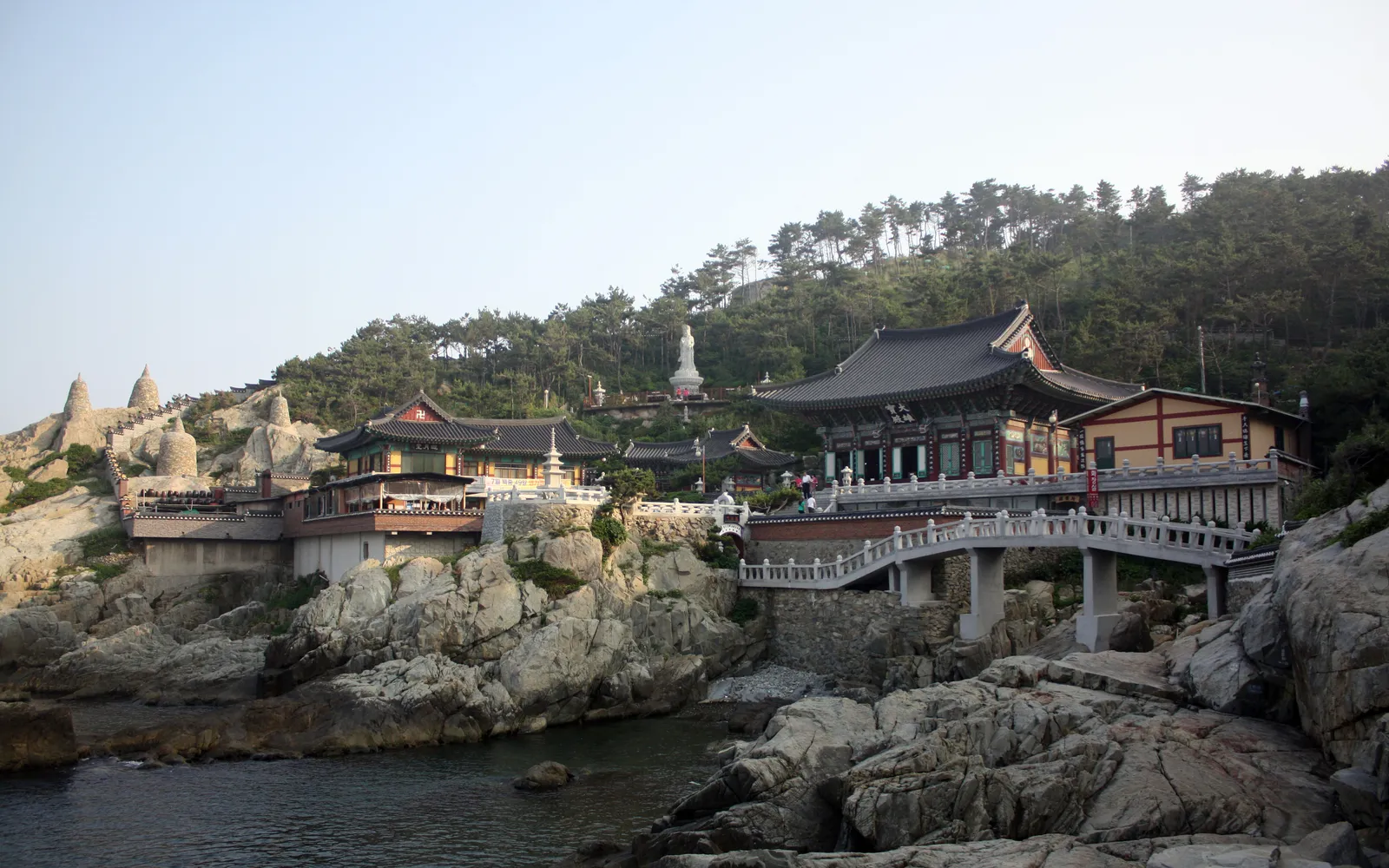
The most striking temple in Busan stands directly on a sea cliff — one of the very few Buddhist temples in Korea built right at the ocean's edge. Founded in 1376, it is dedicated to Haesu Gwaneum Daebul, the sea goddess. The stone path leading down to the temple passes lion and turtle sculptures and guardian figures, while the sound of waves against the rocks and the red-and-gold buildings together create an atmosphere hard to find anywhere else.
- Arrive before dawn or just after for the quietest, most atmospheric visit.
- On Buddha's Birthday (a national holiday), the entire temple is decorated with lanterns — outstanding for photos.
- At the top of the path, local vendors sell <em>pajeon</em> (savory pancakes) and fresh kimchi.
 #5
#5 Jagalchi Market
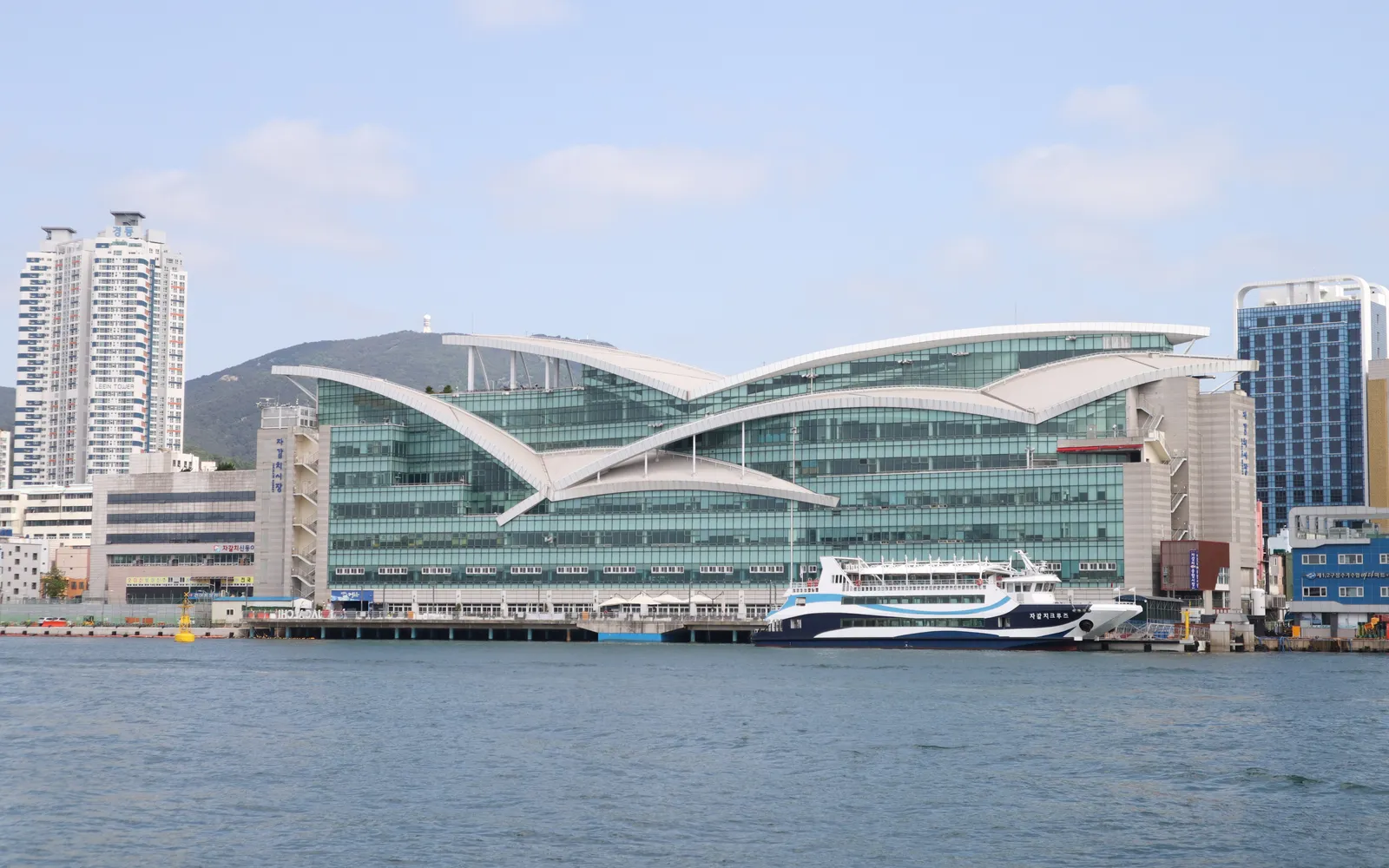
South Korea's largest seafood market runs for 3 kilometres along the waterfront. The women vendors known as 'Jagalchi ajumma' sell hundreds of varieties of live and fresh seafood — crab, shrimp, clams, squid, raw fish. The ground floor is the wet market; the second floor of the main building has restaurants where you can bring seafood bought downstairs and have it cooked for a small preparation fee. It is the kind of place serious food travellers come specifically for.
- Bargaining is fine — do it with a smile and a light touch.
- Buy seafood on the ground floor and take it upstairs to be cooked; you pay only for the cooking service.
- Try <em>saengseonhoe</em> — thinly sliced raw fish served with Korean chilli sauce and fresh citrus.
 #6
#6 Taejongdae
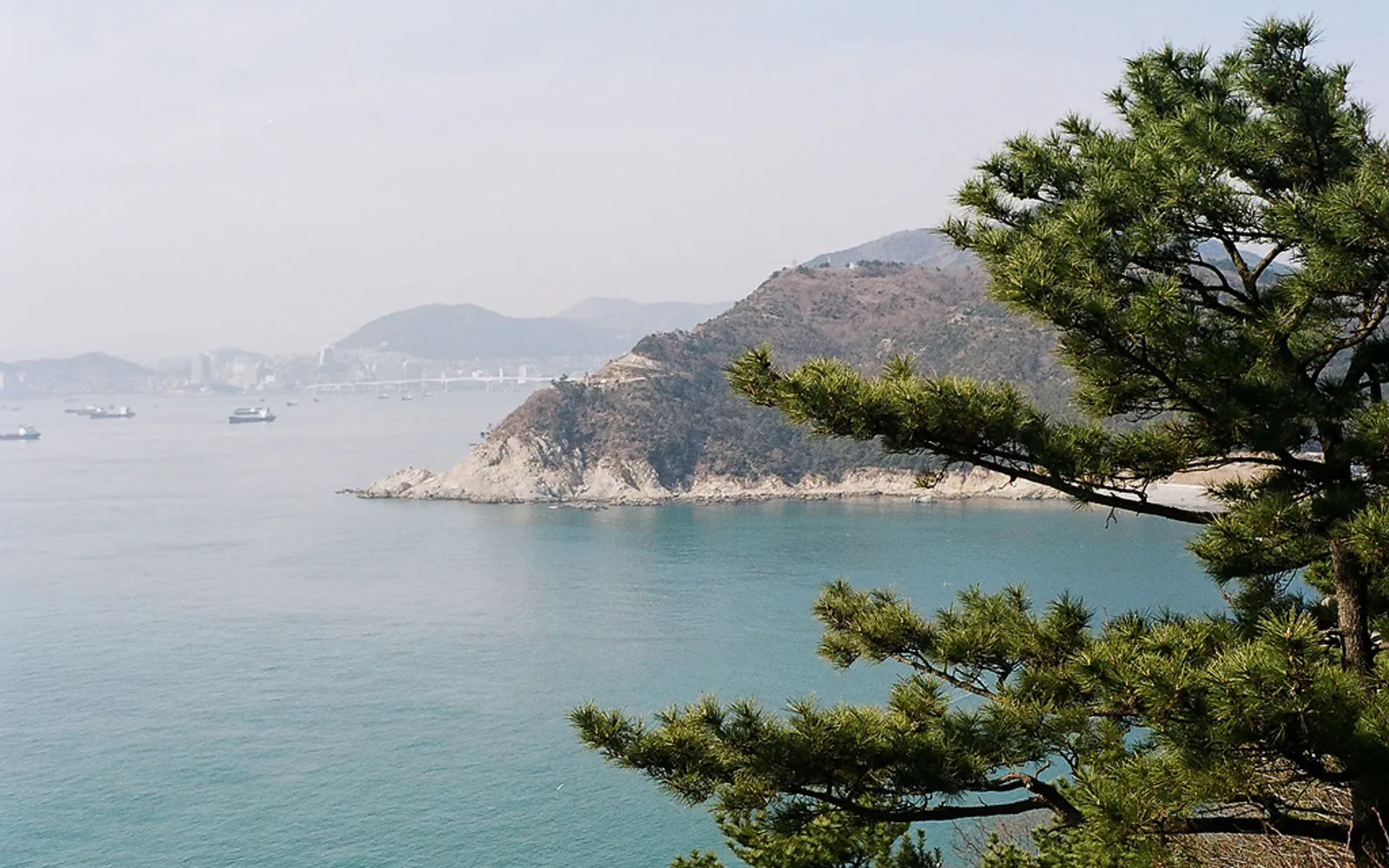
At the southern tip of Yeongdo Island, Taejongdae is a natural park where cliff faces dating back over 70 million years to the Cretaceous period drop straight to the sea. Dense pine forest covers the hillside, interspersed with walking trails, an observatory, a lighthouse, and a pier for boat tours of the cliffs from the water. The park takes its name from King Taejong Muyeol of the Silla Kingdom, who came here to practice archery.
- Ride the Taejo Train (a tourist tram) if you don't want to walk the full 4-kilometre trail.
- Take a boat tour from the pier — the cliffs look completely different from the sea.
- Wear non-slip shoes; parts of the trail are steep and rocky.
 #7
#7 Gukje International Market
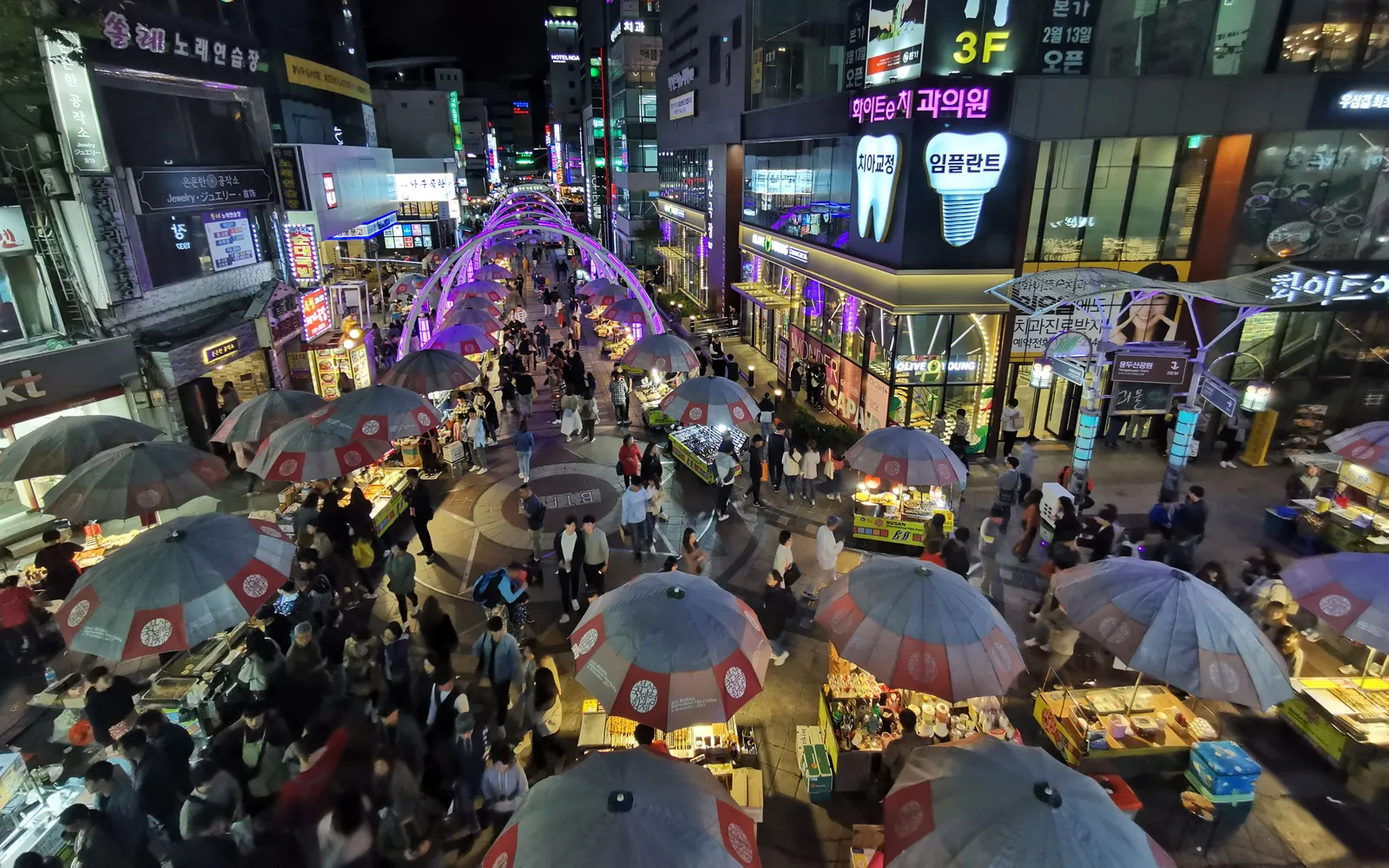
One of Busan's oldest and largest markets, Gukje was born during the Korean War when refugees gathered to sell whatever goods they could find. Today it holds more than 5,000 shops selling clothing, bedding, souvenirs, dried foods, electronics, and seasonal produce. The energy stays high all day, and local Koreans genuinely shop here for value rather than just treating it as a tourist stop.
- Look for <em>ssiat hotteok</em> — a sweet, seed-filled pancake that is the market's most famous snack.
- Bargaining is expected, especially for clothing and textiles.
- Opens in the morning and runs until evening; most shops close on Mondays.
 #8
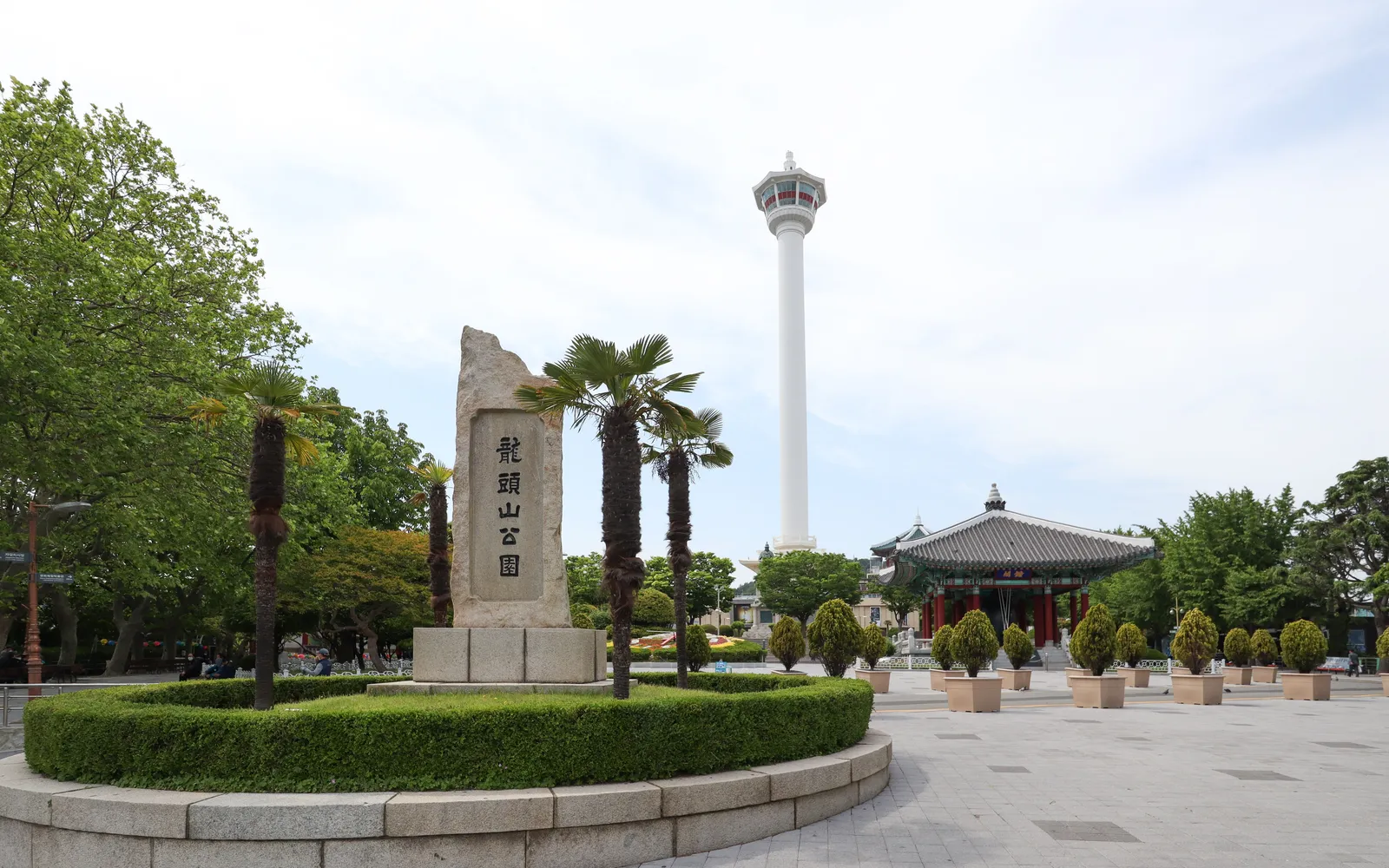
#8 Busan Tower at Yongdusan Park
Busan's 120-metre landmark tower stands in the middle of Yongdusan Park on a hilltop in the city centre. The top-floor observation deck gives a 360-degree view across the city, the port, the sea, and the bridges in every direction. Down in the park below, there is a statue of Admiral Yi Sun-sin, many cherry trees, and a large floral clock. The area doubles as a popular local meeting point, right next to the lively Nampo-dong shopping district.
- The top floor has a glass-floored section where you can look straight down at the city — dizzying but the view is excellent.
- Walk 10 minutes to Nampo-dong for street food and shopping.
- Come at dusk to watch the city lights of Busan's port come on.
Where to stay in Busan for this trip
A well-located hotel means less commuting and more sightseeing. Here are real, top-rated stays in Busan — compare Agoda · Booking · Trip.com in one click.
Park Hyatt Busan
Affiliate links — we may earn a commission at no extra cost to you. Details
Signiel Busan
Affiliate links — we may earn a commission at no extra cost to you. Details
Grand Josun Busan
Affiliate links — we may earn a commission at no extra cost to you. Details
Paradise Hotel Busan
Affiliate links — we may earn a commission at no extra cost to you. Details
Tours, tickets & activities in Busan
Day tours, attraction tickets and travel essentials for Busan — book ahead on Klook with mobile e-tickets.
Affiliate links — we may earn a commission at no extra cost to you.
Before You Pack
Busan balances coastline, culture, and local food in a way that few port cities manage. Two to three days covers the main highlights; four to five days lets you slow down and explore every district properly.