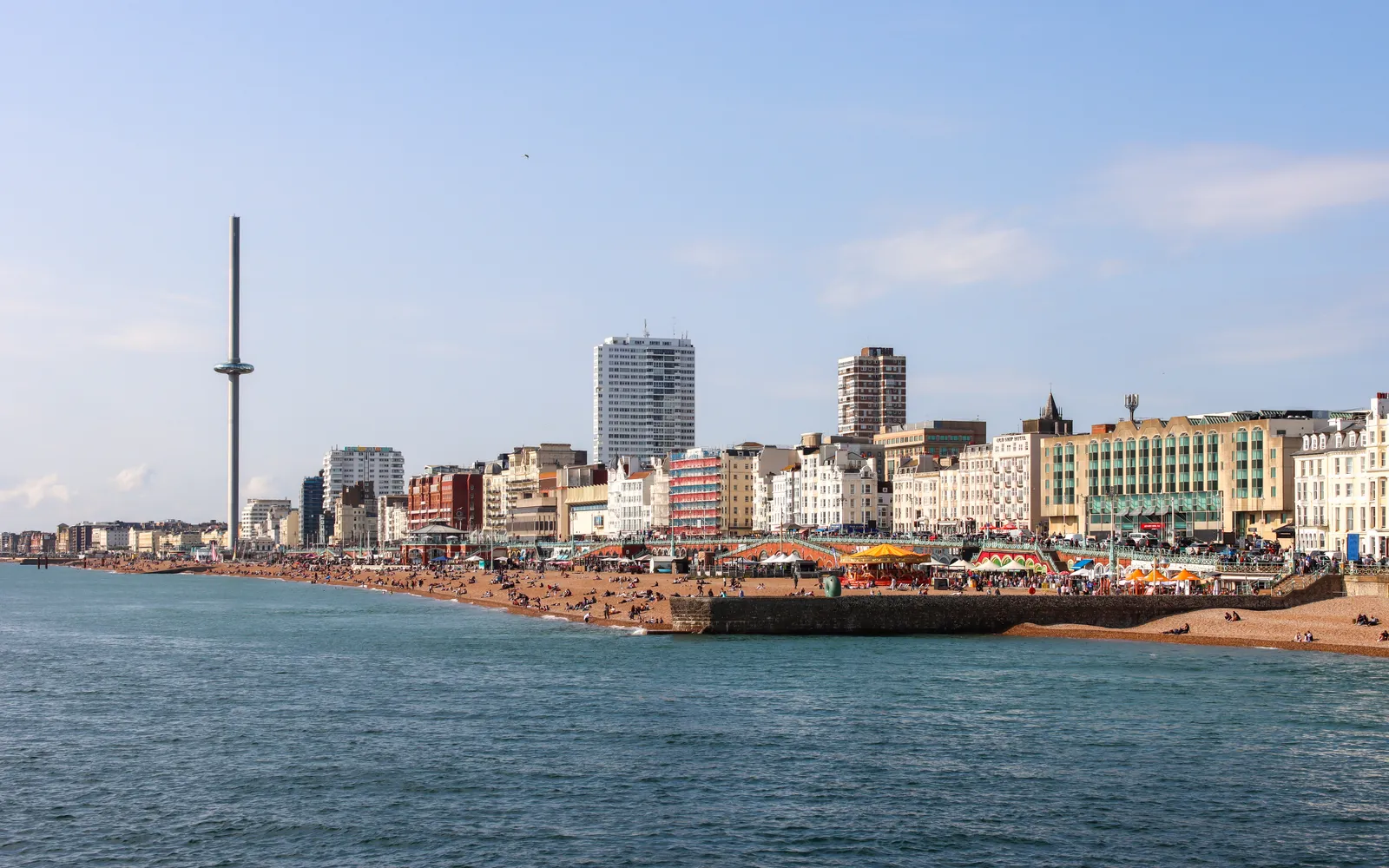
Brighton's food has been tied to the sea and the spirit of the seaside holiday since the Victorian era. Fish and chips here is more than fast food — it's a cultural ritual: eat it from paper on the pebble beach, sea wind in your face, seagulls eyeing your chips. Beyond seafood, the town has its own classic sweets, a proper English cream tea tradition, and ice cream stands that have been scooping for generations. Come hungry and work through the list.
 #1
#1 Fish and Chips
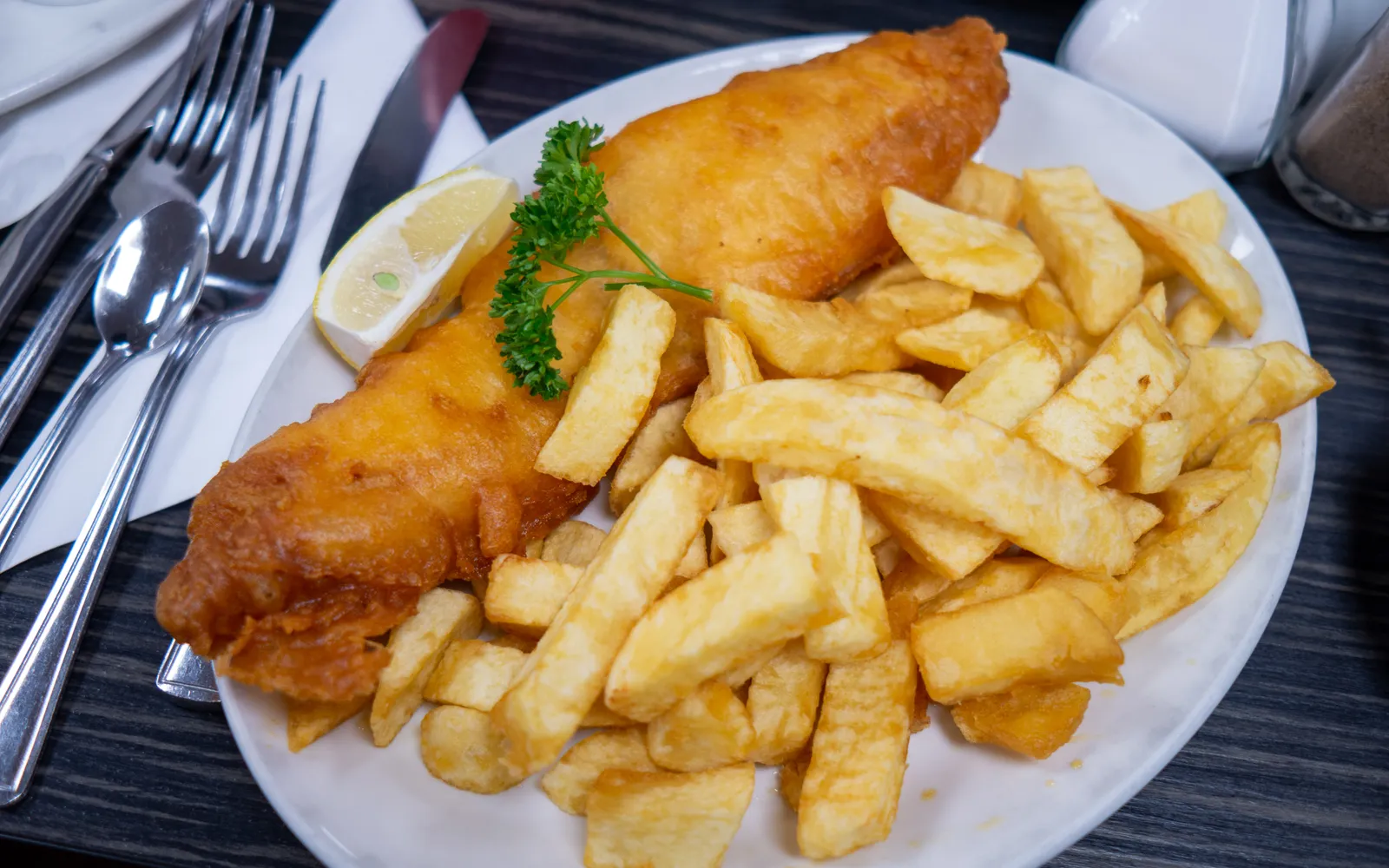
England's national dish gets a particular edge in Brighton because the fish comes fresh from nearby Shoreham Harbour. The go-to species are cod and haddock, beer-battered and fried to a crisp, served with thick-cut chips, mustard, a splash of malt vinegar and a pinch of salt. Tartare sauce always comes on the side. The correct way to eat it: wrapped in paper, walking the beach — not sitting in a restaurant.
- Bardsley's on Baker Street and Rock-A-Nore in nearby Hastings both rank among the best in the region.
- Order mushy peas as a side — they look odd but pair surprisingly well with the fish.
- Expect to pay £8–14 a portion. Shops tucked into side streets or away from the seafront are usually cheaper and the fish is often fresher than tourist-facing beachfront spots.
 #2
#2 Brighton Rock
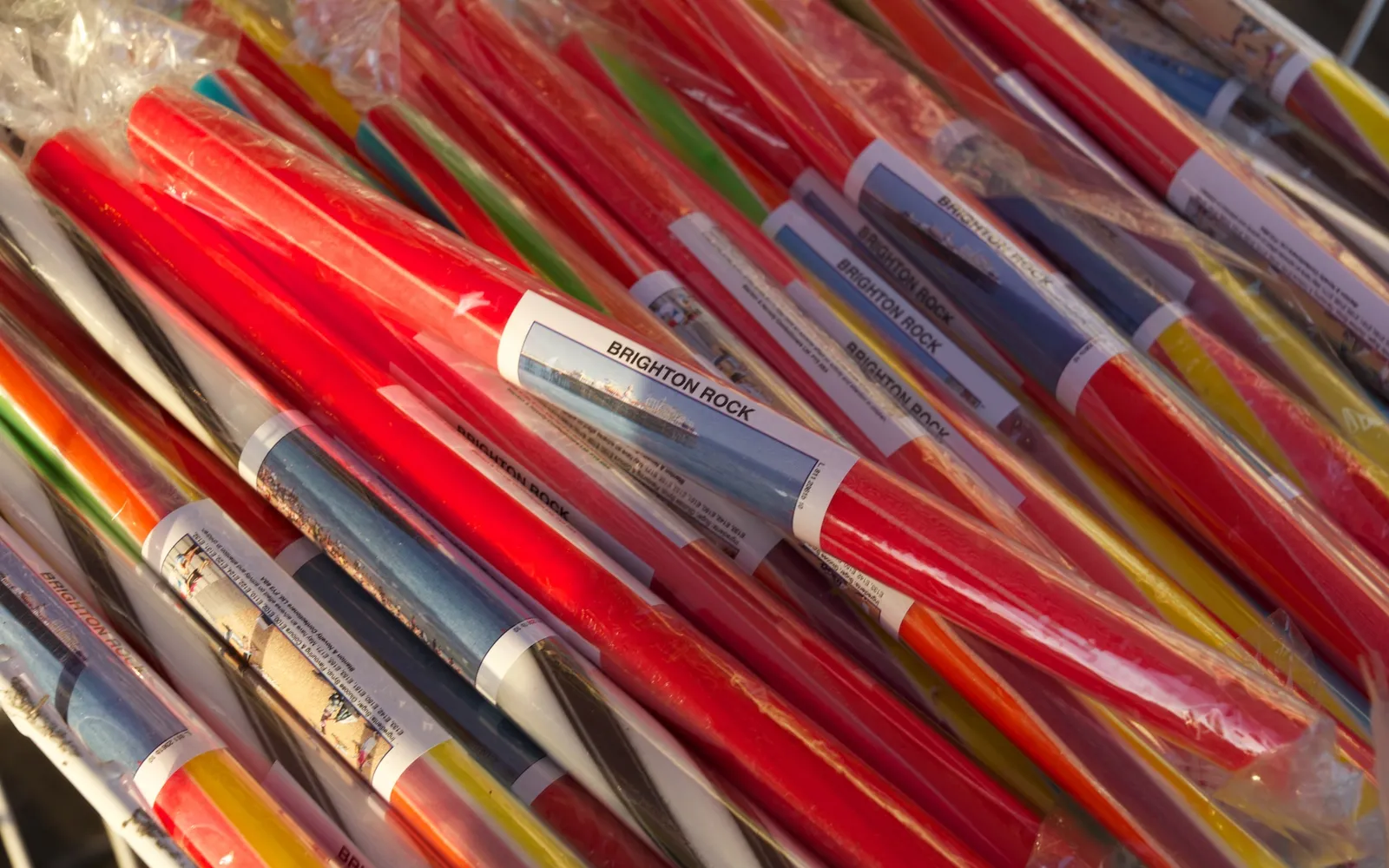
The hard sugar stick has been a symbol of the English seaside resort since the Victorian era. What makes it distinctive: the word BRIGHTON runs through the entire length of the stick — break it anywhere and you can still read the name. The flavour is mild mint or fruit, very sweet. It's more of a souvenir than a serious snack, but picking up a stick for the photo and the story is part of coming to Brighton.
- Buy from one of the old sweet shops in The Lanes — they stock multiple versions including sugar-free and unusual flavours.
- A classic 150 g pink stick runs about £2–4. Tourist-area shops may charge more.
- If you're taking it home as a gift, seal it in an airtight box — hard sugar candy picks up moisture quickly in warm air.
 #3
#3 Cream Tea
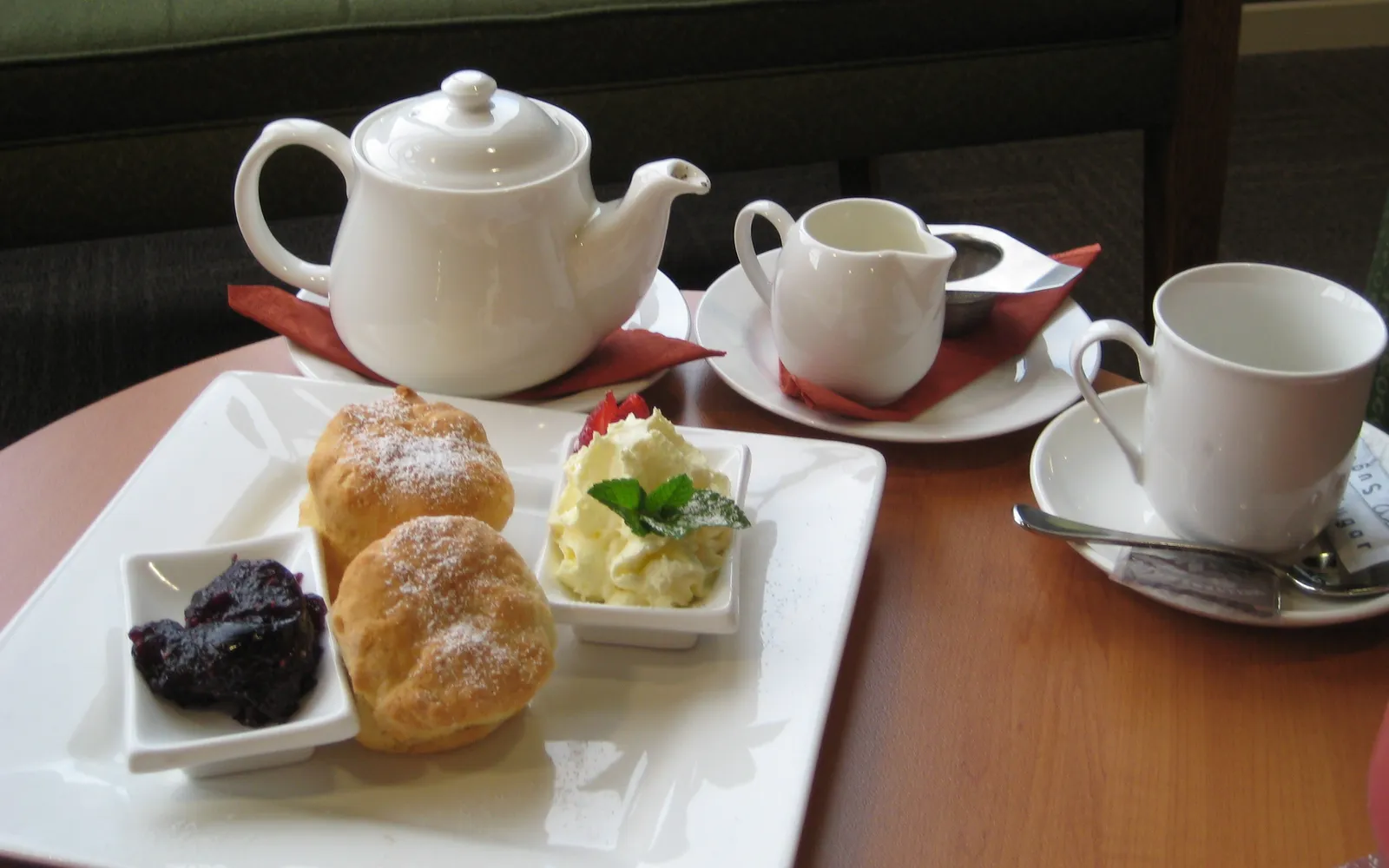
An English ritual worth doing at least once. Cream tea means scones — thick, soft-crumbed baked rounds — spread with clotted cream and strawberry jam, served with a pot of strong brewed tea. The eternal debate is whether to apply cream or jam first; the answer depends on whether you ask someone from Devon or Cornwall. Brighton has several genuinely good classic English cafés tucked into its side streets that do this well.
- Order an English Breakfast tea, not a teabag in a mug — a good café will brew it in an earthenware or silver pot.
- Spread the clotted cream first, then place the jam on top — that's the Devon method, which most cafés in southern England follow.
- A set runs £8–12 including tea and two scones. Cafés inside The Lanes tend to have a better atmosphere than beachfront spots.
 #4
#4 Fresh Seafood at the Seafront
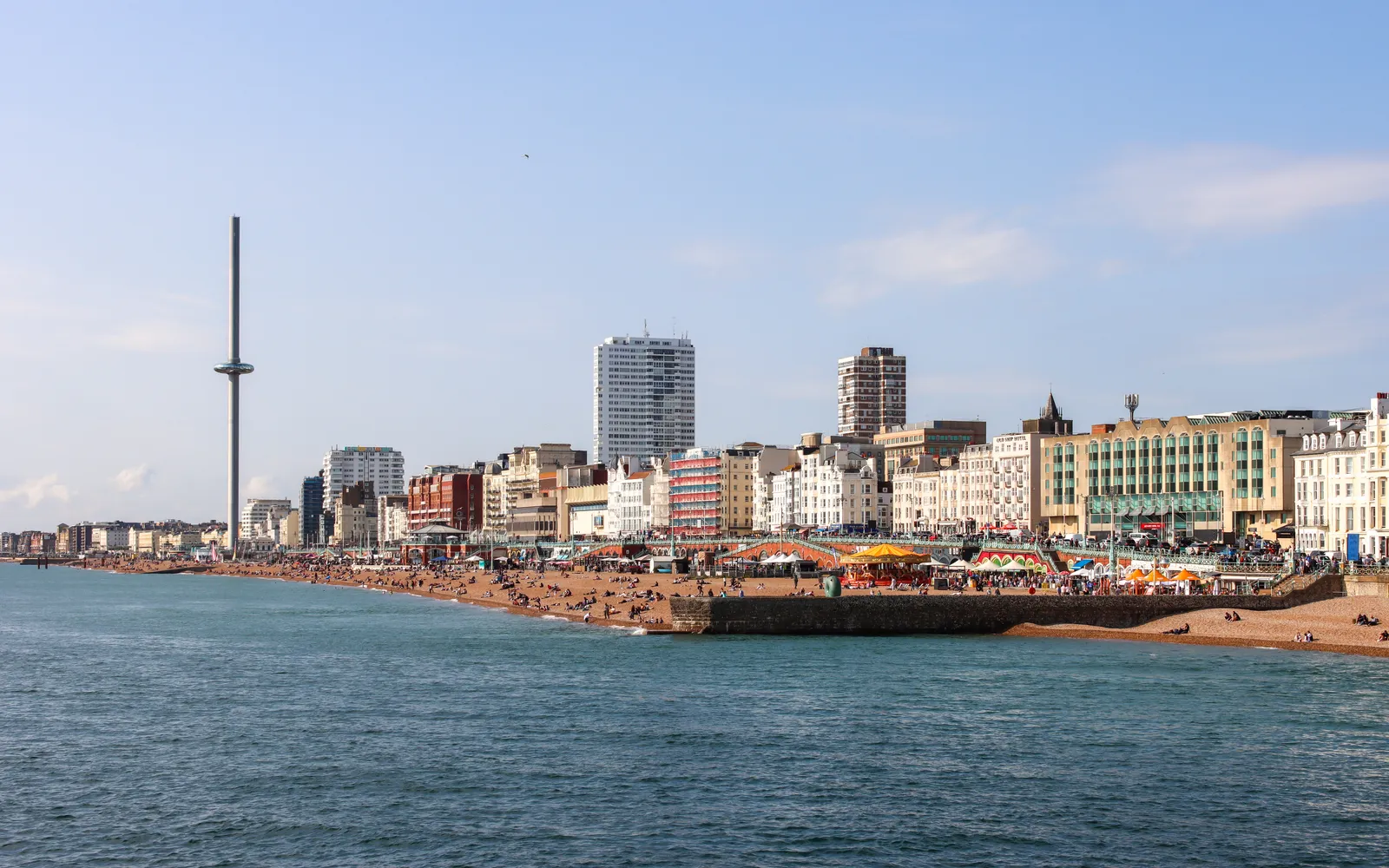
Fresh English seafood eaten right on the beach, no table required. The stalls sell prawns, oysters, crab and whelks — everything landed that morning from local boats. Boiled prawns with salt and lemon are the most popular quick snack among locals. The flavour is clean, direct, and tastes exactly of the sea.
- Stall prices: a small bag of fresh prawns is around £4–6; fresh oysters run £2–3 each. Check whether stalls are open year-round — some close outside the summer season.
- If raw shellfish smells puts you off, ask the stall for plain boiled prawns — simple and excellent.
- Eat facing away from the gulls. Seagulls in Brighton will snatch food directly from your hand — locals know this well.
 #5
#5 Traditional English Ice Cream
Seaside ice cream is an inseparable part of the English beach experience. The classic is a vanilla soft-serve — smoothly swirled into a waffle cone with a Flake chocolate bar pressed in at the top, known as a 99 Flake. The texture is lighter and airier than a scoop of hard ice cream, and the flavour is a gentle, not-too-sweet vanilla. Eating one on the beach makes you feel like you've walked into a British film.
- Order a 99 Flake — soft-serve with a Cadbury Flake bar — for £2–3. It's an English icon.
- Long-established Brighton ice cream shops use fresh local milk from Sussex farms — noticeably different from chain-brand products.
- Eat quickly in the sun. Soft-serve melts fast, especially in sea wind.
 #6
#6 Sussex Pond Pudding
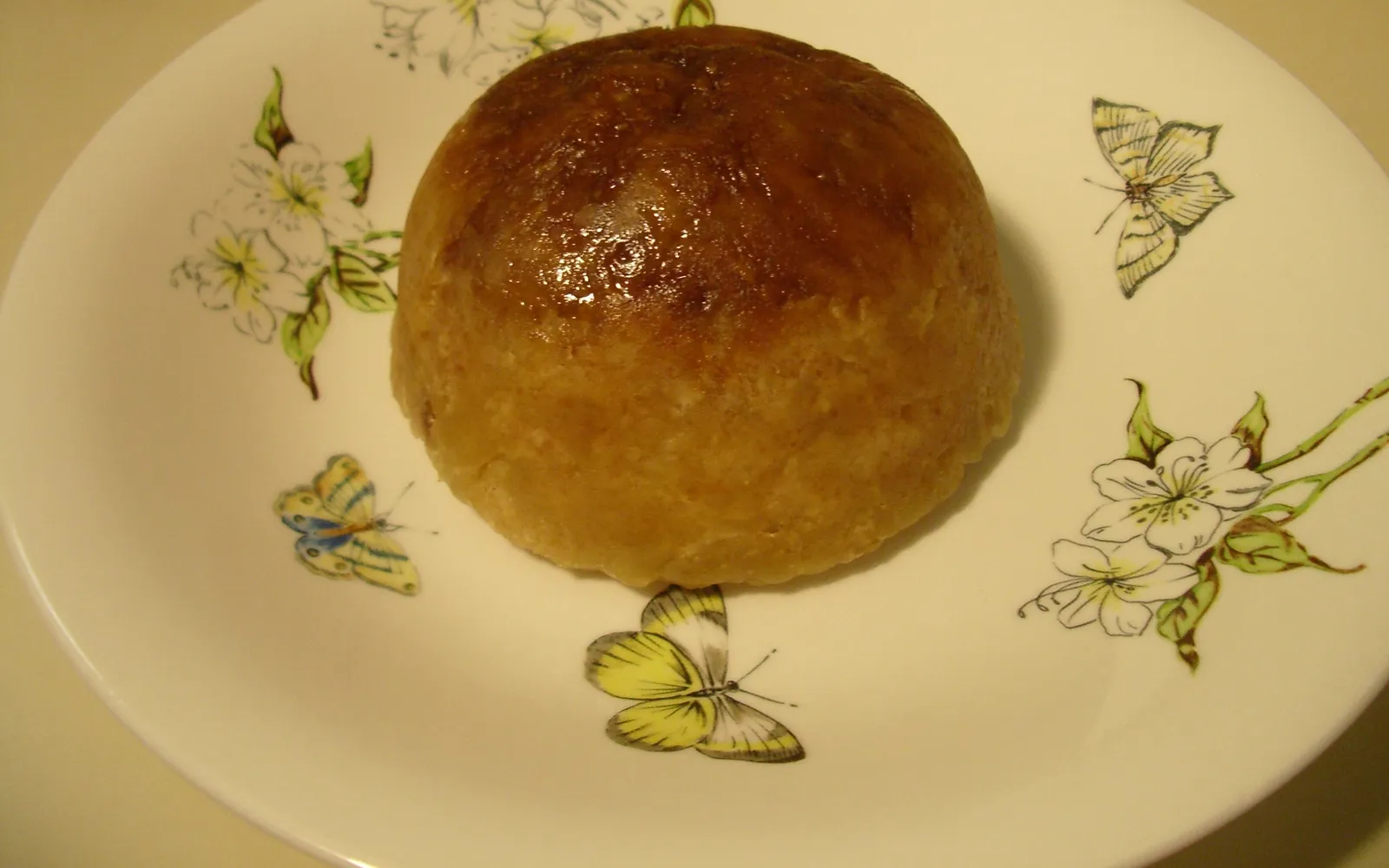
A centuries-old steamed pudding and one of Sussex's oldest culinary inheritances — recipes trace back to the 17th century. A whole lemon, along with butter and raw sugar, is wrapped inside a soft suet pastry and steamed for 3–4 hours until the butter and sugar melt into a thick, fragrant golden sauce. When you cut it open, that sauce flows out like a small pond — hence the name. The flavour is rich, sweet, buttery, with a gentle citrus pull from the lemon. One serving is a meal in itself.
- This dish has become increasingly rare on modern menus. Your best chance is a traditional English pub or a restaurant that focuses on classic British cooking.
- Eat it with vanilla custard — a warm custard sauce that any good kitchen will serve alongside it.
- Expect to pay £7–10. Think of it as a food experience rather than everyday eating — worth trying once.
Where to stay in Brighton for this trip
A well-located hotel means less commuting and more sightseeing. Here are real, top-rated stays in Brighton — compare Agoda · Booking · Trip.com in one click.
Jurys Inn Brighton Waterfront
Affiliate links — we may earn a commission at no extra cost to you. Details
Sea Spray Brighton
Affiliate links — we may earn a commission at no extra cost to you. Details
The Charm Brighton Boutique Hotel & Spa
Affiliate links — we may earn a commission at no extra cost to you. Details
The Grand Brighton
Affiliate links — we may earn a commission at no extra cost to you. Details
Tours, tickets & activities in Brighton
Day tours, attraction tickets and travel essentials for Brighton — book ahead on Klook with mobile e-tickets.
Affiliate links — we may earn a commission at no extra cost to you.
Before You Pack
The best eating in Brighton tends to be in The Lanes and North Laine rather than on the tourist-heavy seafront. If you see a queue of locals at a shop around noon, that's a better signal than any review. For sweets and pastries, walk the side streets and follow your nose — the smell of butter and sugar will lead you there.