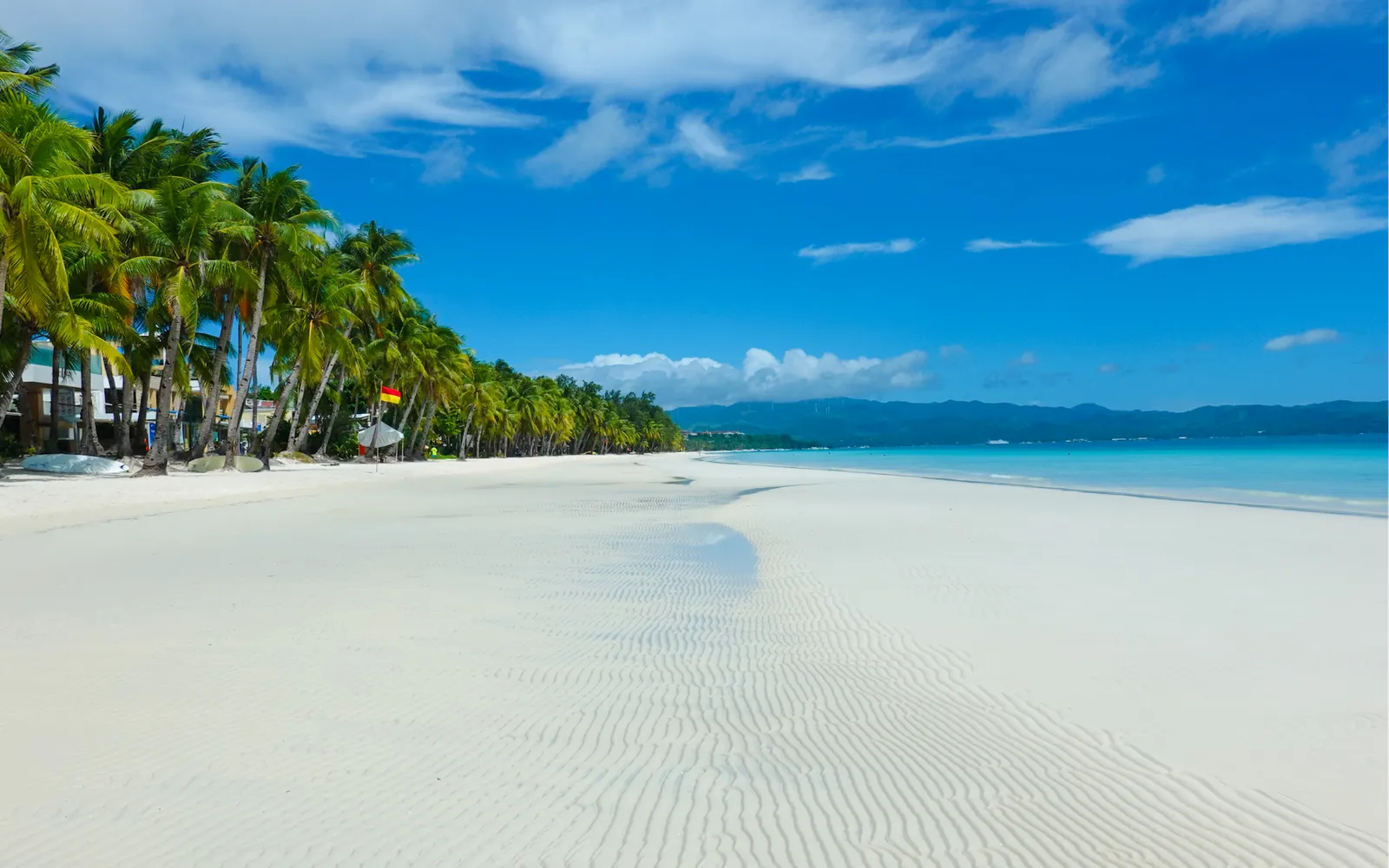
Boracay's food scene blends the freshness of the sea with the distinct character of the Filipino kitchen. Whether you're after kinilaw — seafood cured in calamansi juice — grilled rice by the beach, or a mango halo-halo to beat the heat, the food here works at every budget, from roadside plates to full hotel dining.
 #1
#1 Fresh Seafood at D'Talipapa Market
D'Talipapa is the fresh seafood market you shouldn't leave Boracay without visiting. The best way to do it: pick your prawns, oysters, crab, lapu-lapu fish, or squid straight from the wet stalls, then walk them over to one of the adjacent cook-to-order kitchens and have them grilled or stir-fried for a small extra fee. The result is far fresher than anything on a standard restaurant menu.
- Bargaining is expected — especially late afternoon when vendors want to clear stock.
- Tell the kitchen your preference: grilled, steamed, or as sinigang (sour tamarind broth).
- The local Aklan oysters are known for their freshness — order them first.
 #2
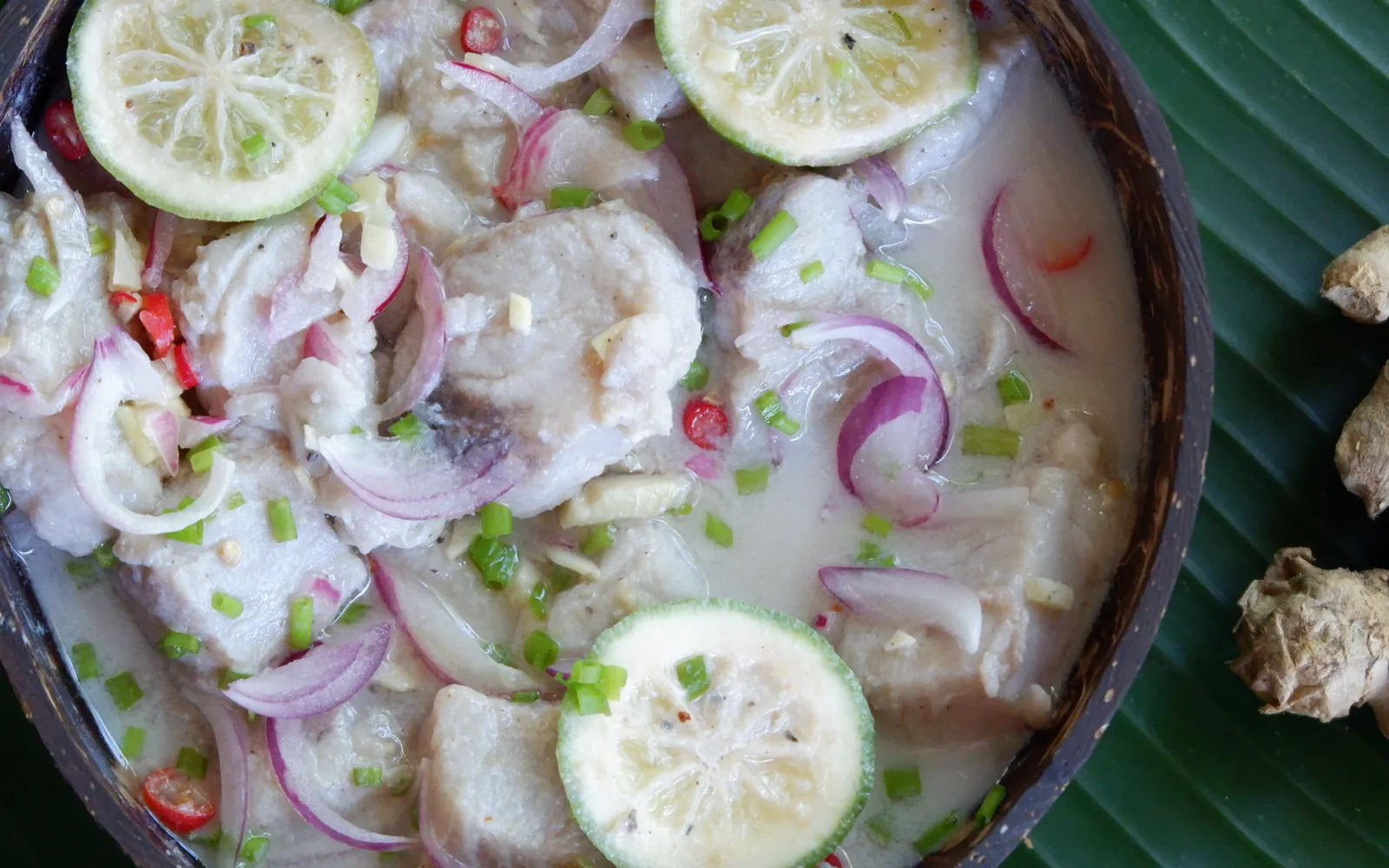
#2 Kinilaw
Kinilaw is the Filipino take on ceviche, with roots going back over a thousand years. Fresh fish or seafood is 'cooked' by the acid in calamansi juice and sugarcane vinegar, then seasoned with ginger, onion, and chilli. The result is bright and lightly sour — a natural opener before the main course.
- Ask whether the fish came in fresh before ordering — kinilaw demands it.
- Tuna and tanigue (Spanish mackerel) kinilaw are the standout versions.
- A cold San Miguel beer alongside is a pairing that works every time.
 #3
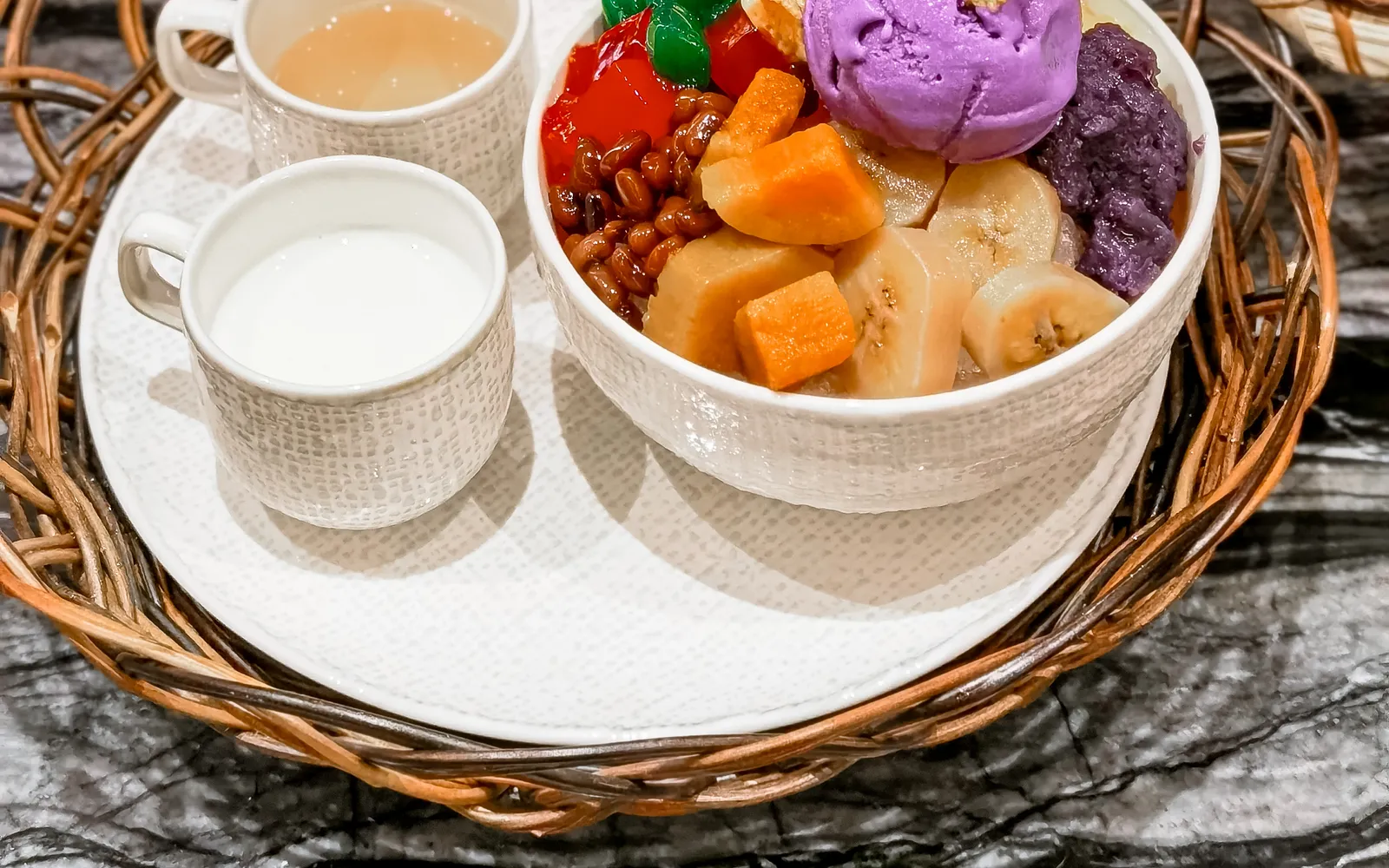
#3 Halo-Halo with Mango
Halo-halo is the Philippines' national dessert: finely shaved ice, sweetened condensed milk, jellies, boiled beans, taro, and ice cream, all layered in a tall glass. The Boracay version typically adds fresh mango — the island's Philippine mangoes are widely regarded as among the sweetest in the world. On a humid tropical afternoon, it does exactly what you need it to do.
- Mix everything together before eating — halo-halo literally means 'mix mix' in Tagalog.
- Ask to add ube (purple yam) and leche flan for a fuller flavour profile.
- Boracay mangoes are at their sweetest from March through June.
 #4
#4 Filipino Adobo
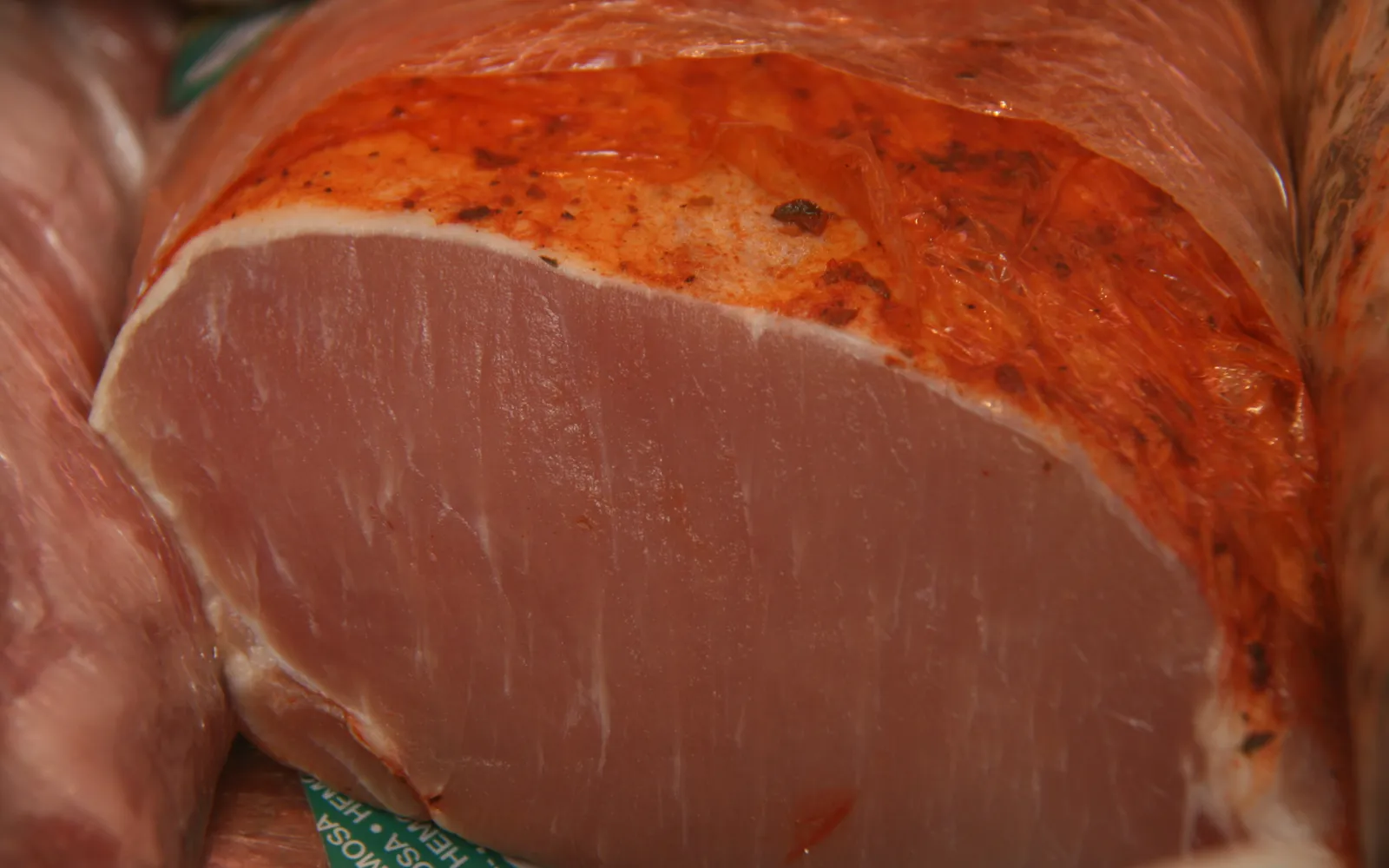
Adobo is what Filipinos call their national dish — chicken or pork slow-braised in vinegar, soy sauce, garlic, bay leaves, and black pepper until the meat is tender and the sauce thick and glossy. The flavour is sour-salty-faintly sweet in a way that's entirely its own. Served over white rice, it's the dish that keeps many visitors thinking about the Philippines long after they've left.
- Try both the chicken and pork versions — they taste noticeably different.
- Adobo keeps well and improves overnight; some spots serve a dry version, fried until the edges are crisp, which is even better.
- Local Filipino restaurants in Station 3 tend to cook it closer to the original than the more tourist-facing spots.
 #5
#5 Boodle Fight (Kamayan)
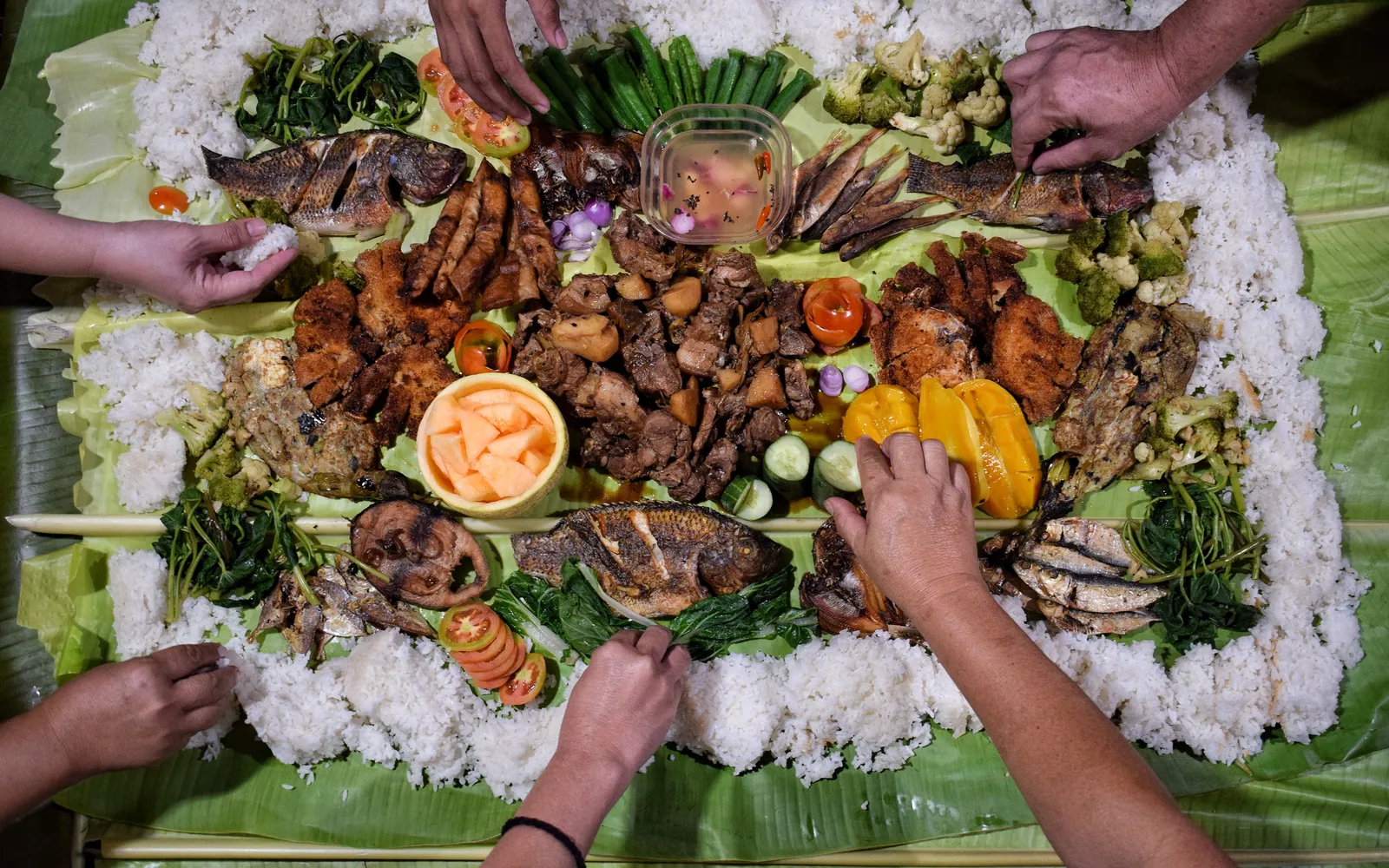
A boodle fight is a Filipino communal eating tradition that is as fun as it is memorable. Rice, grilled seafood, pork, boiled vegetables, and several sides are served on a long 'plate' of banana leaves that runs the length of the table. Everyone eats with bare hands — no cutlery. It's best done with a group of friends or family.
- Book ahead — good restaurants portion the spread to the exact headcount.
- Let the kitchen know in advance if anyone has a seafood allergy.
- Eating with your hands is the point — that's the spirit of a proper boodle fight.
 #6
#6 Lechon
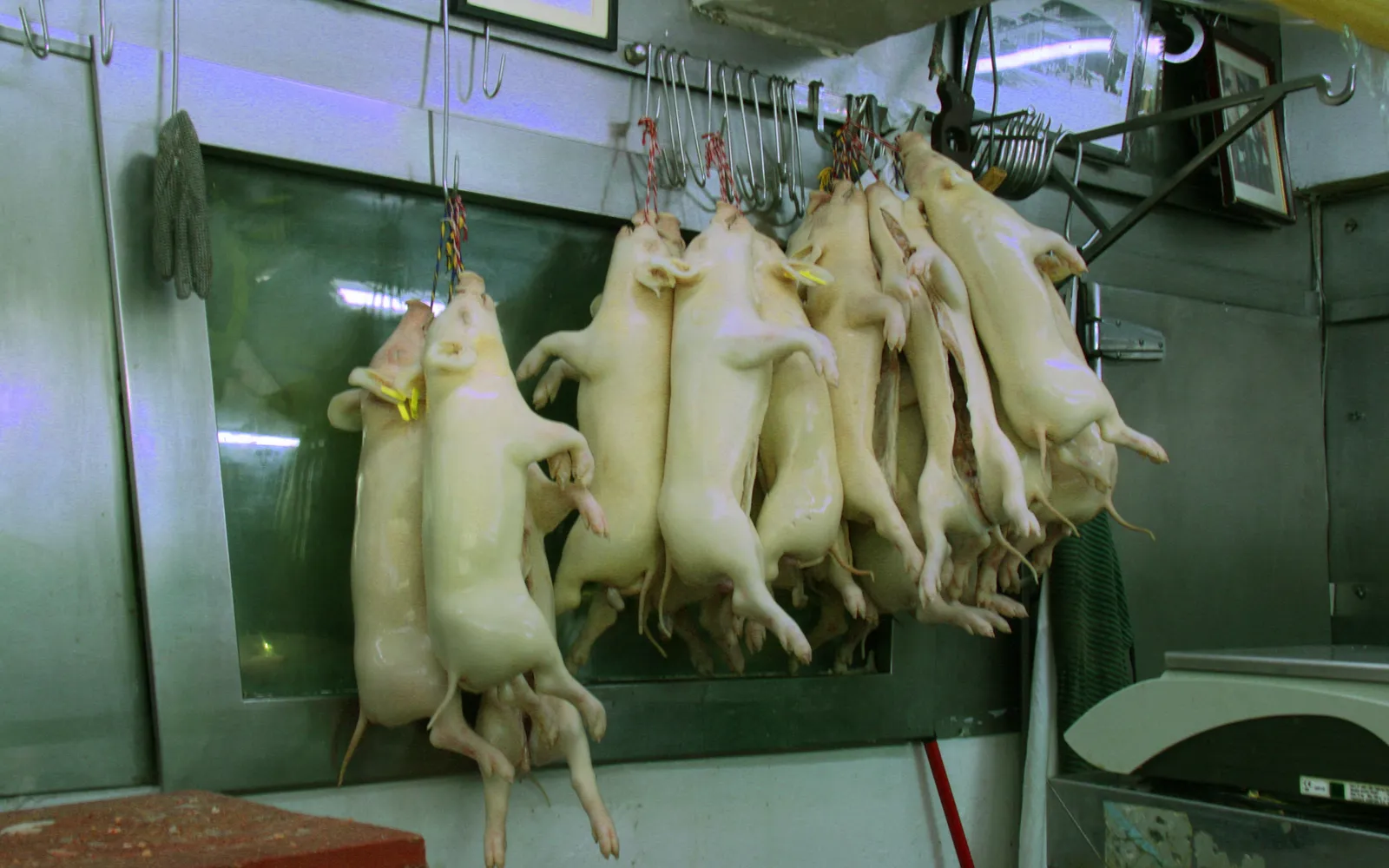
Lechon is whole pig roasted over charcoal until the skin turns glass-crisp and the meat stays moist and richly flavoured — the centerpiece of any major Filipino celebration. In Boracay, the Visayan style is common: lemongrass and herbs are stuffed inside the cavity before roasting, giving it a more fragrant finish than the Manila version. Served with a special liver-based sauce.
- Freshly roasted lechon is far superior to reheated — ask when it came off the spit.
- The back skin is the crispiest section — worth asking for specifically.
- Many shops sell lechon by the kilo, so you don't need to order a whole pig.
Where to stay in Boracay for this trip
A well-located hotel means less commuting and more sightseeing. Here are real, top-rated stays in Boracay — compare Agoda · Booking · Trip.com in one click.
Astoria Current
Affiliate links — we may earn a commission at no extra cost to you. Details
Shangri-La Boracay
Affiliate links — we may earn a commission at no extra cost to you. Details
Discovery Boracay
Affiliate links — we may earn a commission at no extra cost to you. Details
The Lind Boracay
Affiliate links — we may earn a commission at no extra cost to you. Details
Tours, tickets & activities in Boracay
Day tours, attraction tickets and travel essentials for Boracay — book ahead on Klook with mobile e-tickets.
Affiliate links — we may earn a commission at no extra cost to you.
Before You Pack
Don't leave Boracay without trying fresh kinilaw from D'Talipapa market and at least one bowl of mango halo-halo. Those two things alone are worth remembering the trip for.