
Beijing has one of the deepest local food traditions in China, handed down from imperial court cooking and the eating cultures of the Mongols and the Manchu. Peking duck is the highlight the world knows, but there are plenty of other dishes locals eat every day — from zhajiangmian noodles to hot, crisp jianbing in the morning — that make Beijing a genuinely rewarding city to eat your way through.
 #1
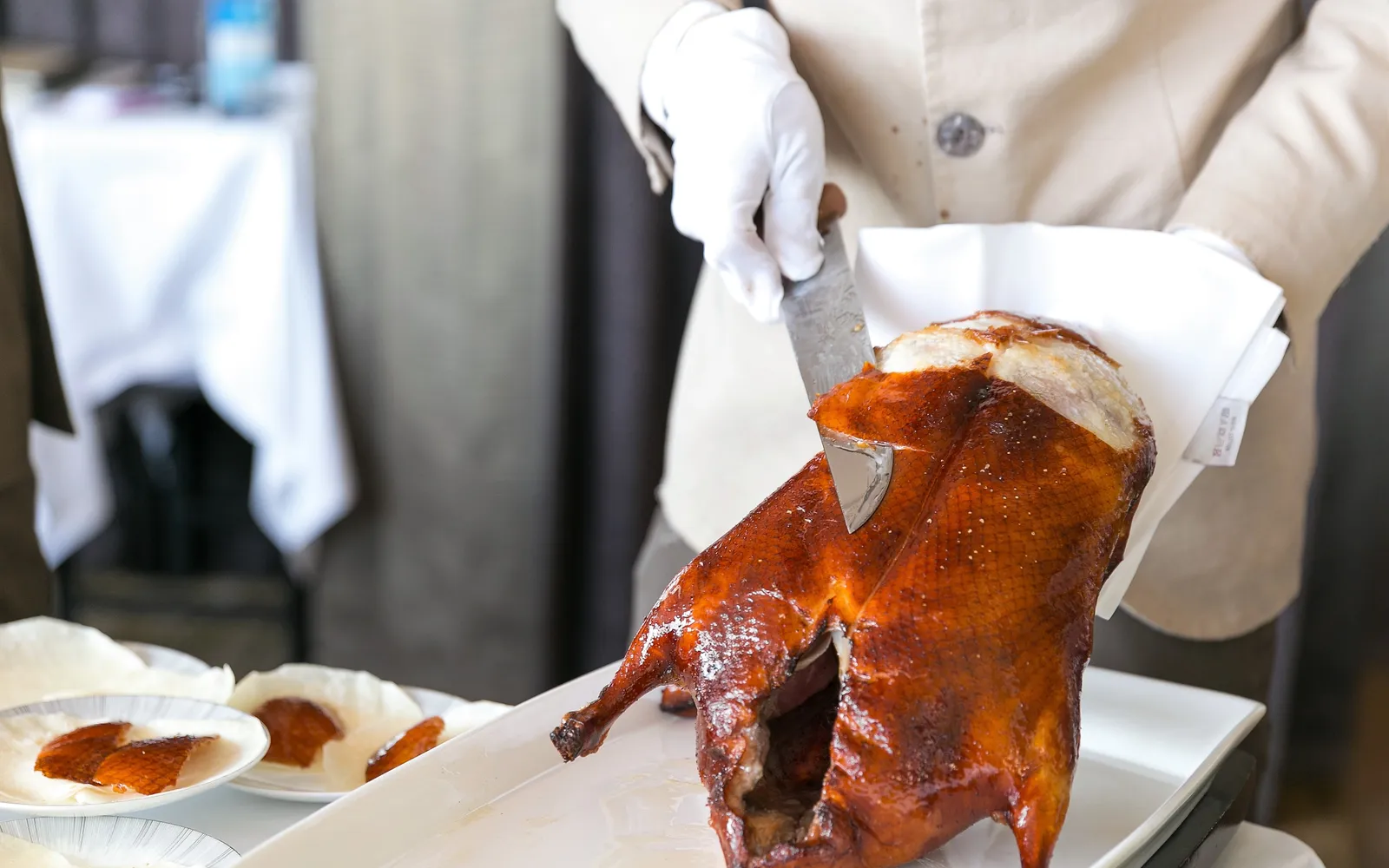
#1 Peking Duck (Beijing Kaoya)
Peking duck, or 'Beijing kaoya', is the city's signature dish, with a history that goes back to the Ming dynasty. The duck is roasted over a wood-fired oven until the skin turns thin, crisp and glossy and the meat stays moist and tender. The cook slices the skin and meat in front of you, to be wrapped in thin pancakes with spring onion, cucumber and hoisin sauce. Quanjude, founded in 1864, is the best known; Dadong leans premium with a more modern flavour.
- A whole duck runs 200-400 yuan and suits 3-4 people
- Try the skin first with no filling to taste how crisp it really is
- Famous spots may mean a wait or a reservation during holidays
 #2
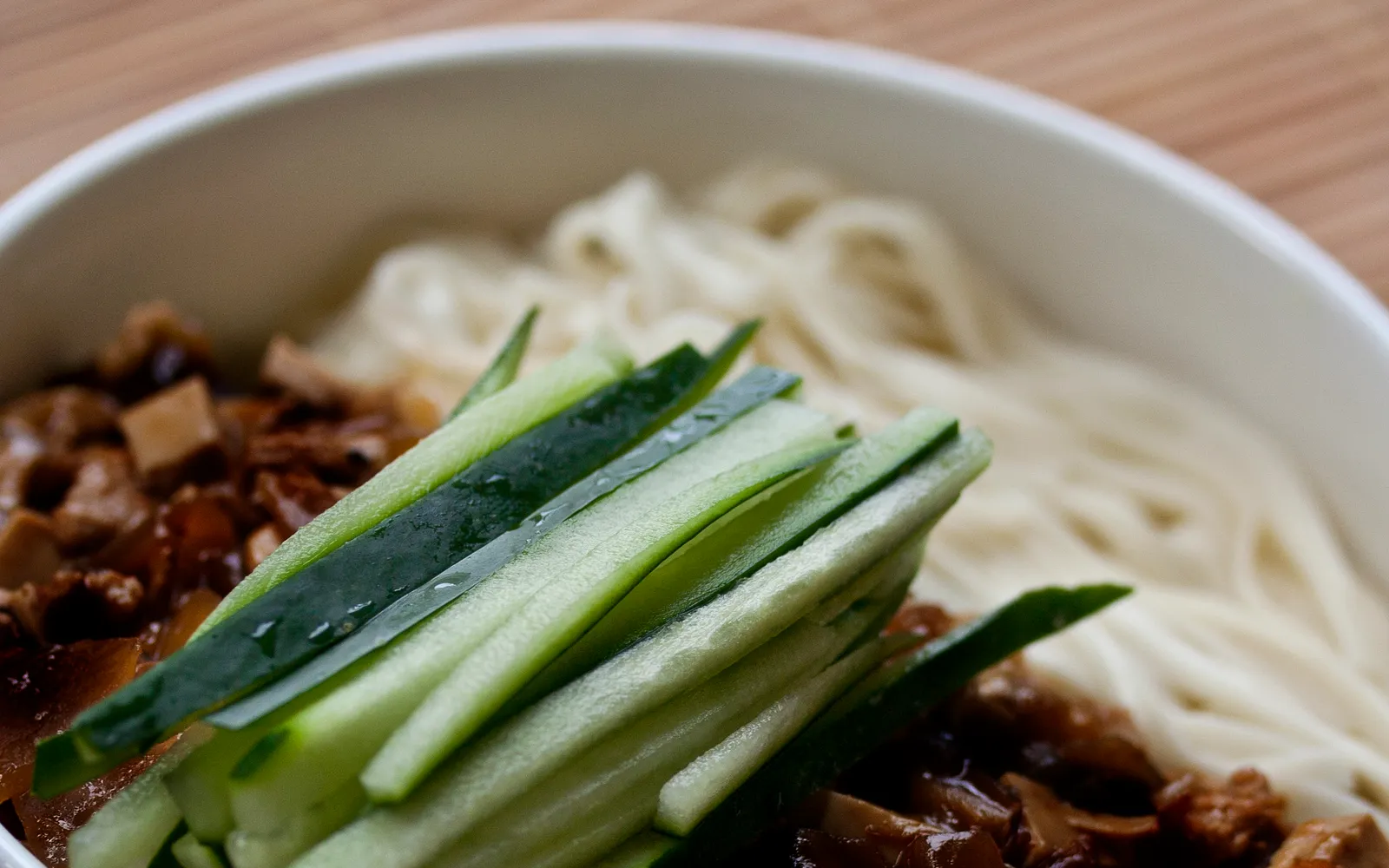
#2 Zhajiangmian (Fried Sauce Noodles)
Zhajiangmian is a Beijing local dish ranked among the 'Top 10 Noodles of China'. It's built on thick, hand-made noodles boiled until done, topped with zhajiang sauce made from black fermented bean paste and minced pork, fried until thick, rich and fragrant. You eat it with raw vegetables — cucumber, bean sprouts, carrot and spring onion — and season it to taste yourself. The flavour is bold in the northern Chinese style, cheap and very filling.
- Toss the noodles, sauce and vegetables together before eating — that's the local way
- A bowl usually costs 15-30 yuan, firmly in budget-meal territory
- Small shops in the hutongs often taste better than big tourist-focused places
 #3
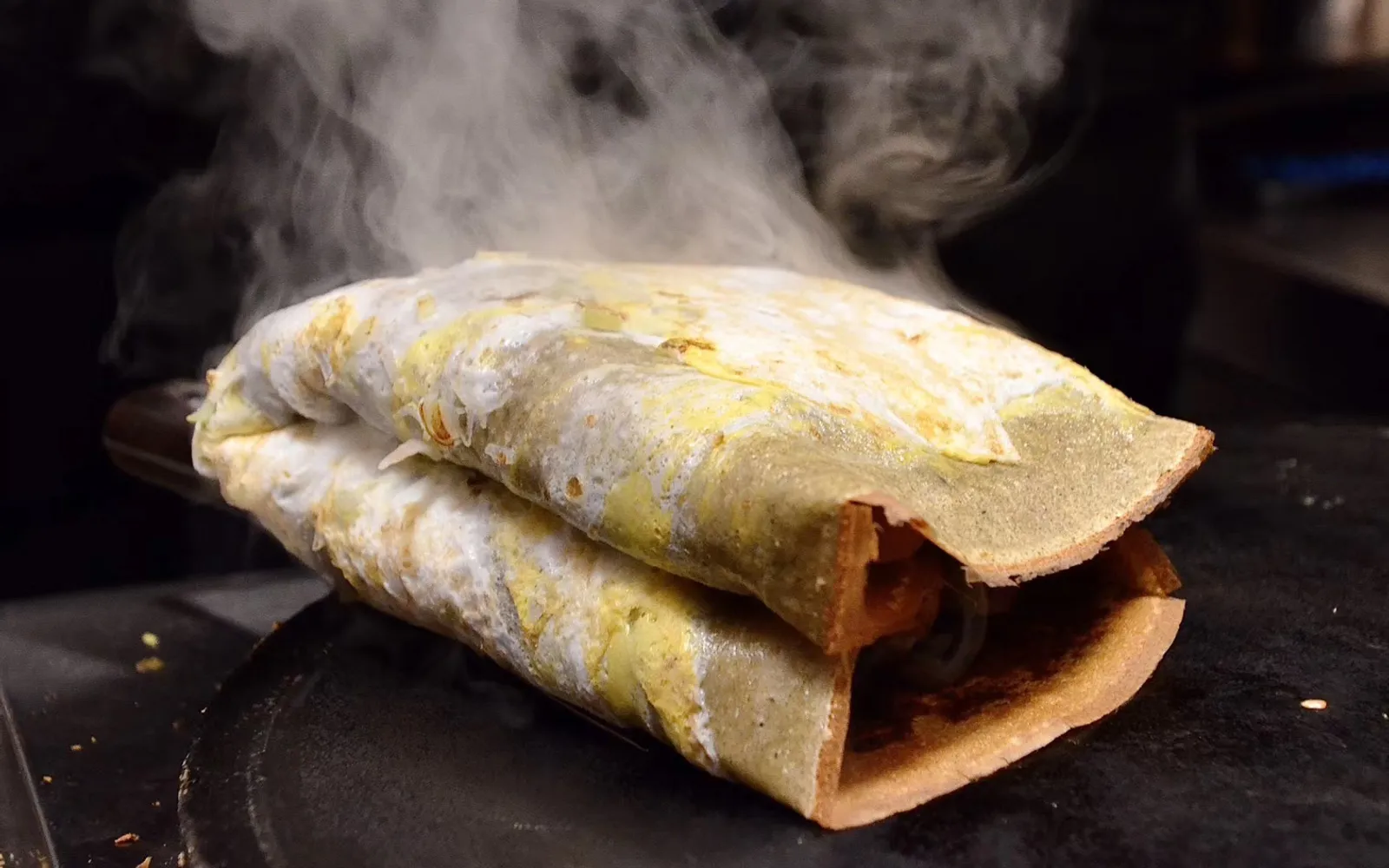
#3 Jianbing (Chinese Savory Crepe)
Jianbing is a breakfast rooted deep in Beijing life for more than 2,000 years. Legend traces it to the strategist Zhuge Liang during the Three Kingdoms era. Vendors make it fresh in front of you — spreading a thin batter, cracking in an egg, scattering spring onion and coriander, brushing on hoisin sauce and chilli, then adding a crisp cracker or fried dough strip before folding it up. It looks like a galette, eats hot and delicious, and costs just 8-15 yuan.
- Easy to find from roadside carts in the morning, 6:00-10:00
- Tell the vendor you want it 'mild' or 'no spice' if you're worried about heat
- Eat it hot the moment you get it — it tastes best fresh off the griddle
 #4
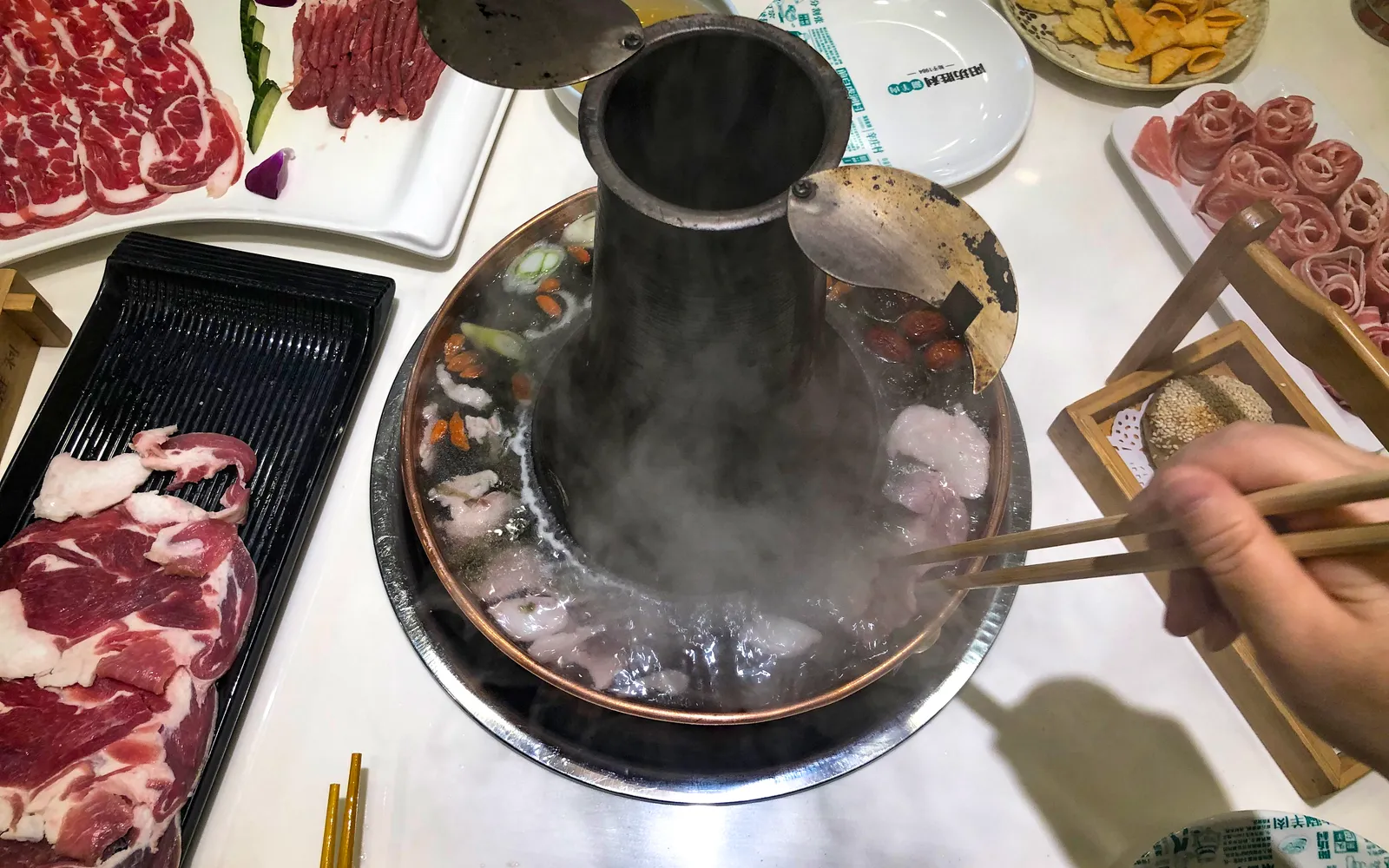
#4 Beijing Instant-Boiled Mutton (Shabu Shabu)
Beijing mutton hotpot, or 'shuan yang rou', has its origins in Mongol culture during the Yuan dynasty. It uses a donut-shaped copper pot set over a charcoal stove in the middle of the table, with a clear, gently flavoured broth. You dip specially selected thin-sliced mutton until it cooks in seconds. The dipping sauce is made from ground sesame, fermented bean paste and pickled vegetables. Donglaishun, founded in 1903, is Beijing's most famous spot for it.
- Order the 'qianli xuan' (traditional copper pot) for the real experience
- The mutton has to be sliced very thin — check whether light passes through it; thinner is better
- Sesame sauce is the essential dip — mix your own from the ingredients on the table
 #5
#5 Tanghulu & Traditional Beijing Snacks
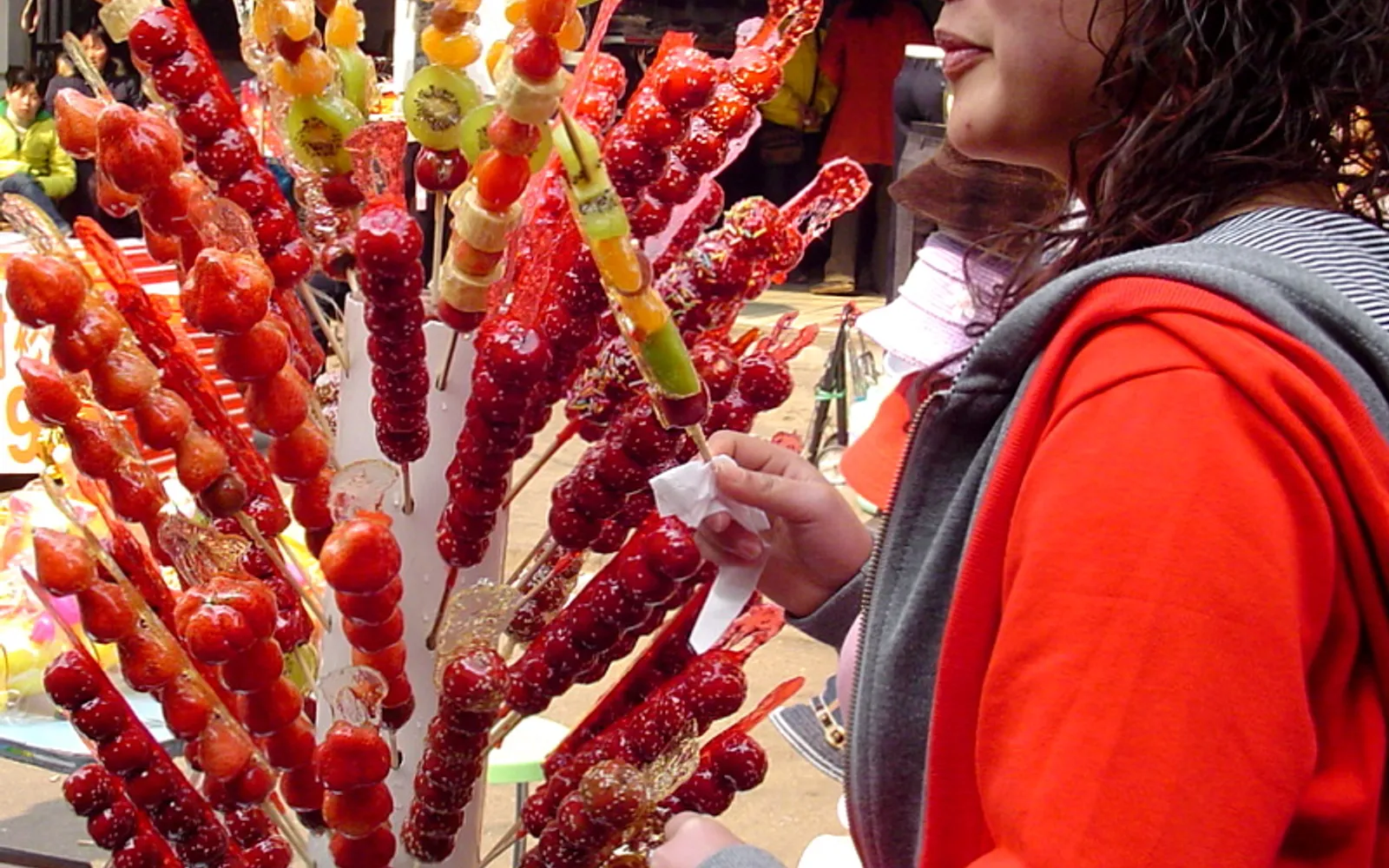
Tanghulu is a skewer of fruit coated in crisp, clear sugar — a symbol of Beijing's winter. Legend says it appeared in the Southern Song dynasty to cure an emperor's concubine. It traditionally used Chinese hawthorn; today there are many versions, including strawberry, kiwi and mixed fruit. Daoxiangcun, meanwhile, is a traditional confectioner more than 130 years old, selling lotus-filled pastries, Beijing cakes and a wide range of festival sweets.
- Strawberry tanghulu in winter is the best — easy to find at Wangfujing market
- Daoxiangcun has more than 200 branches across Beijing — look for the genuine red label
- Boxed sweets from Daoxiangcun make excellent gifts to take home
 #6
#6 Beijing Dumplings & Baozi (Guotie / Jiaozi)
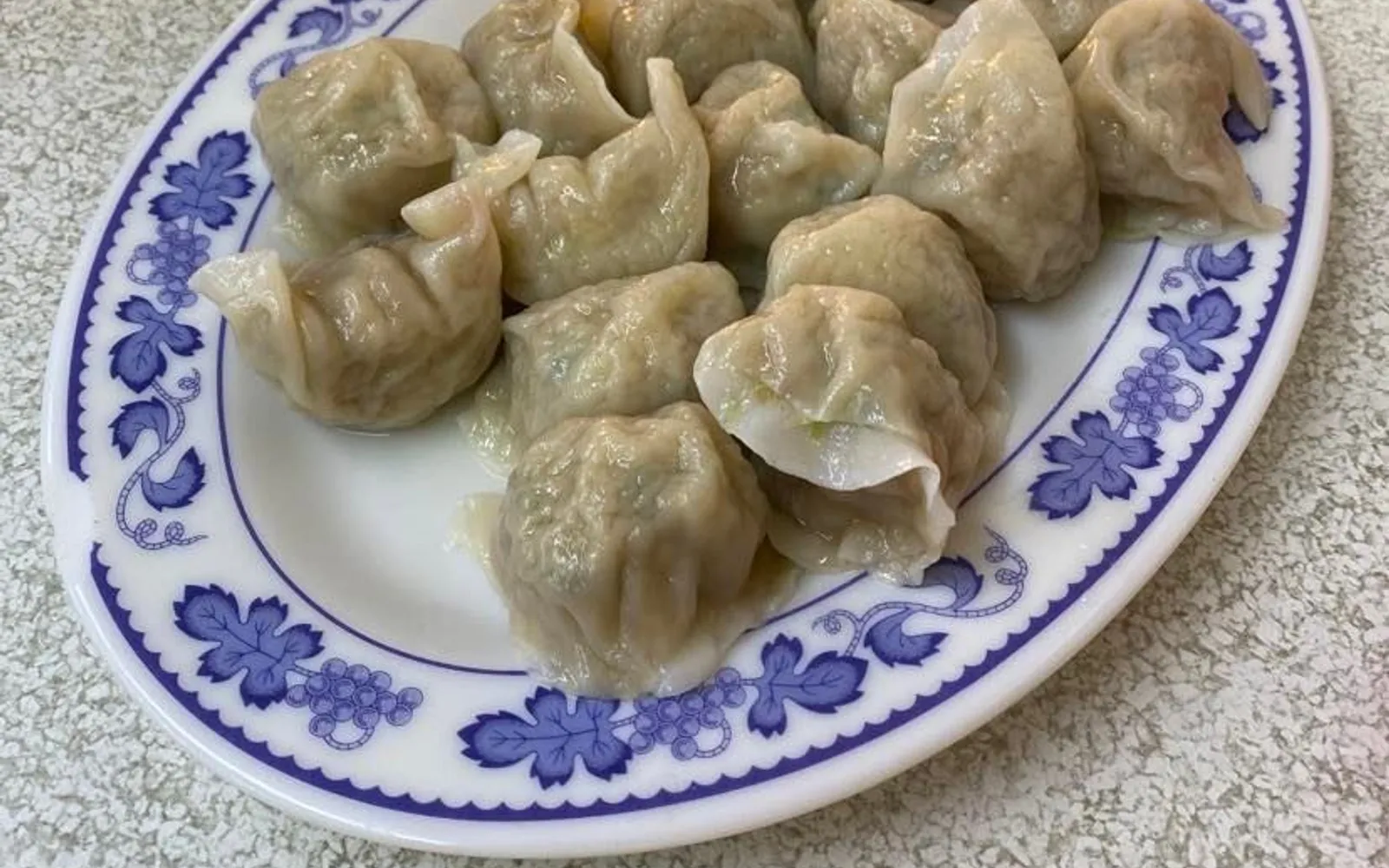
Dumplings, or 'jiaozi', are an auspicious food that northern Chinese eat during Chinese New Year and on special days. They're made from thin dough filled with pork and cabbage, or shrimp, boiled or steamed. Guotie, meanwhile, are pan-fried dumplings with a crisp golden bottom, eaten with black vinegar and pickled ginger. Beijing baozi — 'baozi' filled with thick pieces of pork — at the old shops in the Qianmen district is another dish you shouldn't miss.
- Eat them with Zhenjiang black vinegar — the correct Beijing pairing
- If you see a blue line in the dough, the filling is cabbage — pure pork has no line
- The well-known Baoyuan Dumplings near Yuanmingyuan Road is worth a try for dinner
Where to stay in Beijing for this trip
A well-located hotel means less commuting and more sightseeing. Here are real, top-rated stays in Beijing — compare Agoda · Booking · Trip.com in one click.
Grand Hyatt Beijing
Affiliate links — we may earn a commission at no extra cost to you. Details
Hilton Beijing Wangfujing
Affiliate links — we may earn a commission at no extra cost to you. Details
Citytel Inn
Affiliate links — we may earn a commission at no extra cost to you. Details
base-Wangfujing Serviced Apartment
Affiliate links — we may earn a commission at no extra cost to you. Details
Tours, tickets & activities in Beijing
Day tours, attraction tickets and travel essentials for Beijing — book ahead on Klook with mobile e-tickets.
Affiliate links — we may earn a commission at no extra cost to you.
Before You Pack
Beijing food has its own character, different from the southern Chinese food many travelers know — bolder in flavour, oilier, and built around meat, especially mutton and pork. Try to get through every dish on this list before you leave.