
Georgian food ranks among the best in Eastern Europe and the Caucasus. Batumi, as the capital of Adjara, is the birthplace of boat-shaped khachapuri — the cheese-stuffed bread that became an icon of Georgian food everywhere. The cooking here layers Mediterranean, Middle Eastern, and Caucasian influences into something that feels entirely its own. Georgian wine fermented in 8,000-year-old clay vessels has a flavour profile you simply cannot find elsewhere, and the price-to-quality ratio for meals in Batumi is exceptional.
 #1
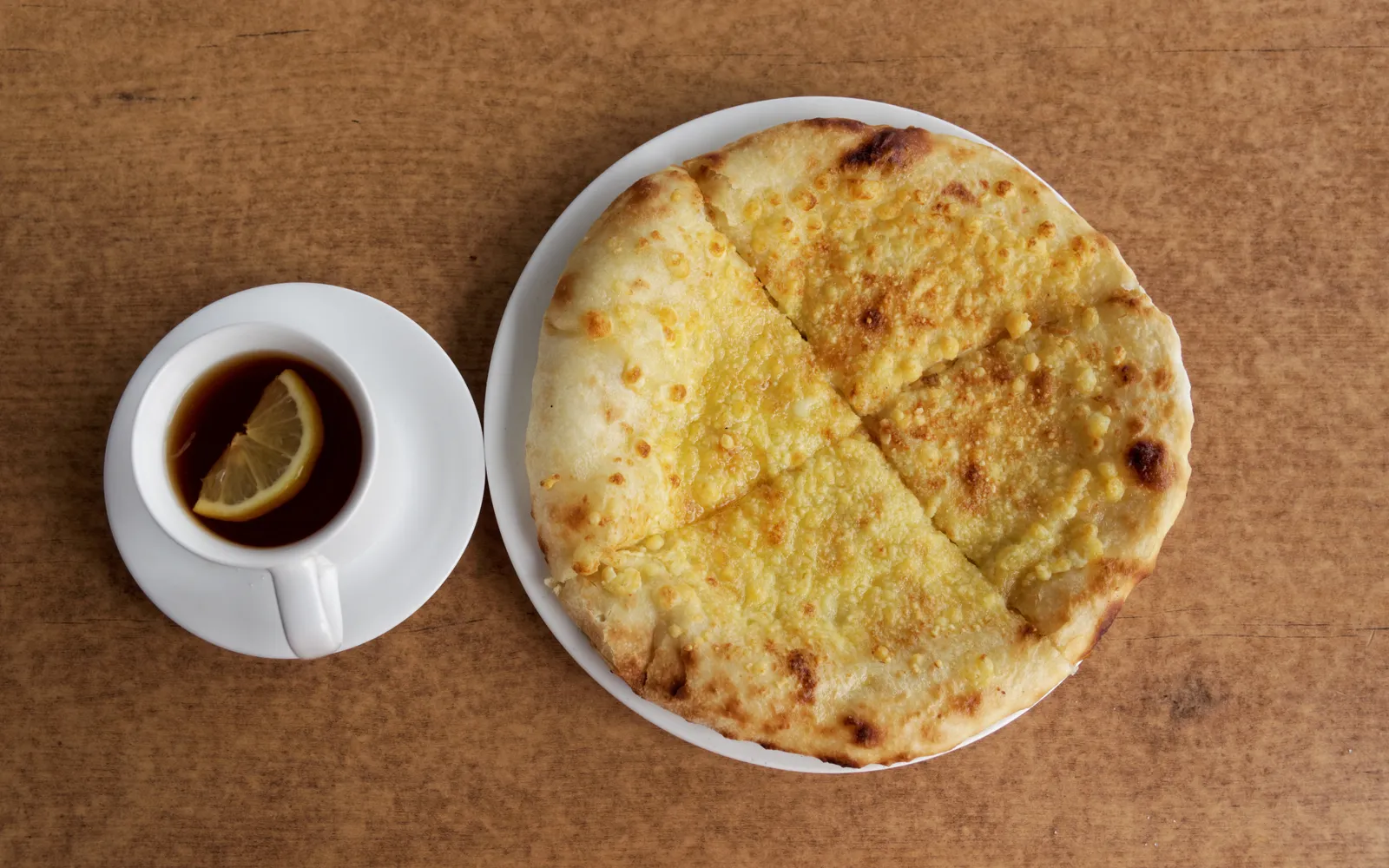
#1 Adjaruli Khachapuri
This dish sits at the heart of Georgian food culture, and Batumi is where the Adjarian recipe was born. Soft dough is stretched into a boat shape, packed with melted Suluguni cheese, and baked in a charcoal oven until the edges turn a deep crisp gold. A fresh egg and a knob of butter go in the centre just before it reaches your table. The traditional way to eat it: tear off a piece of the rim and use it to stir the runny egg and cheese together, then scoop. The flavour is rich, savoury, and deeply satisfying — and by value, it is the best thing Georgian food has to offer.
- Eat it straight from the oven while it is hot. Once the cheese sets, the dish loses most of its character — khachapuri does not travel well as takeaway.
- One portion (roughly 300-400 g) feeds 1-2 people as a main. Prices run 8-12 lari per pan.
- Old Town restaurants and market stalls usually follow the traditional recipe with fresh local cheese and will consistently outdo the bigger spots along the boulevard.
 #2
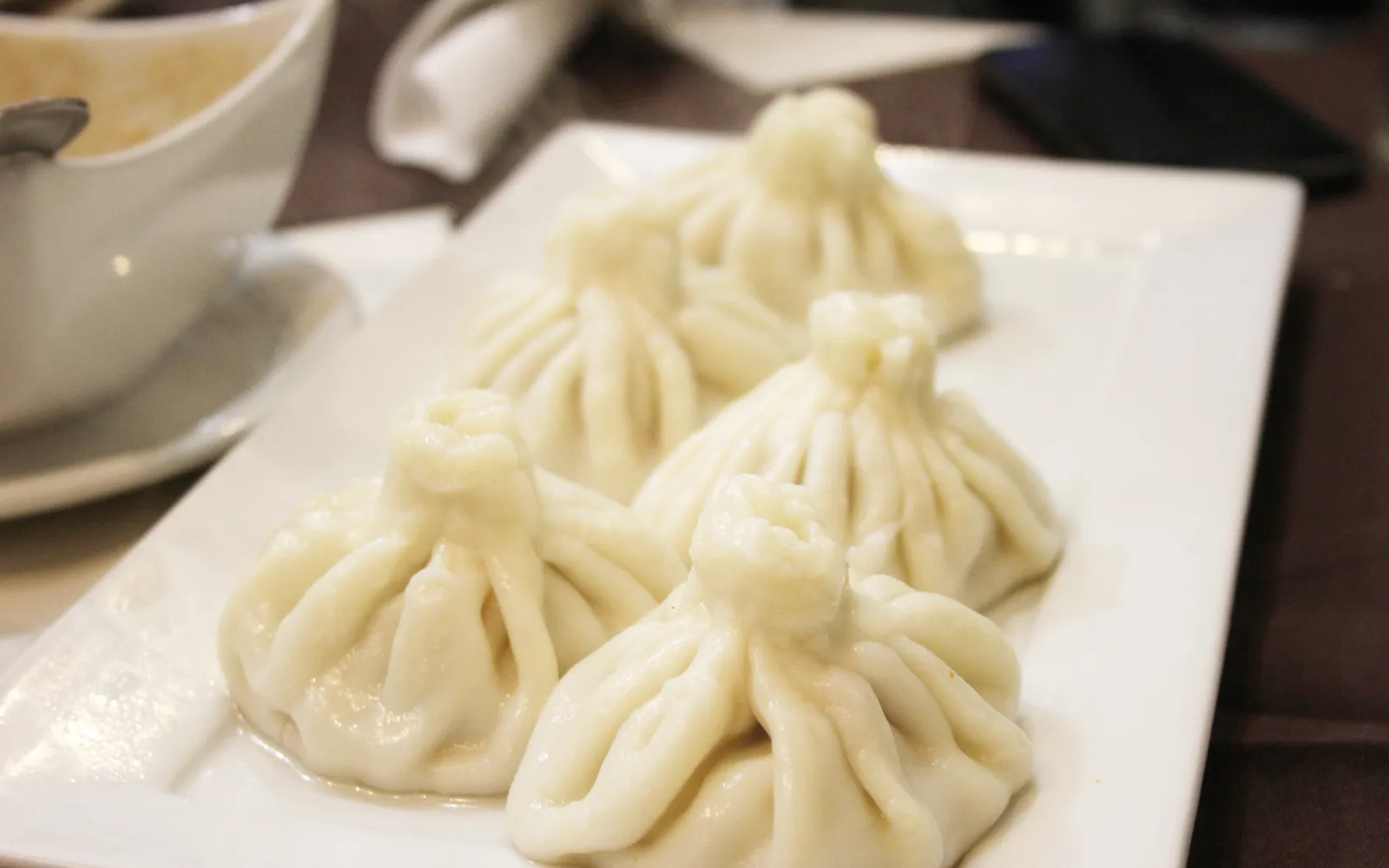
#2 Khinkali
These oversized dumplings are a Georgian signature, and Batumi makes a particularly good version. Thick, yielding dough wraps a filling of spiced beef or lamb with fresh coriander, onion, and black pepper — and inside each dumpling sits a pocket of hot broth. The traditional method: grip the top knot, bite a small hole, suck out the broth first, then eat the filling. The pleated top knot is too thick to eat and is left on the plate — that is correct Georgian etiquette, not waste. A good khinkali has smooth, well-seasoned broth and filling that is neither greasy nor bland. Order 5-8 per person as a main.
- Hold the top knot, pierce a small hole, and drink the broth before biting the dumpling — this is the proper technique and keeps the broth from spilling.
- Khinkali cost about 1-1.5 lari each. Ordering a mixed batch (beef and mushroom) lets you compare fillings.
- They drop noticeably in quality as they cool — eat immediately.
 #3
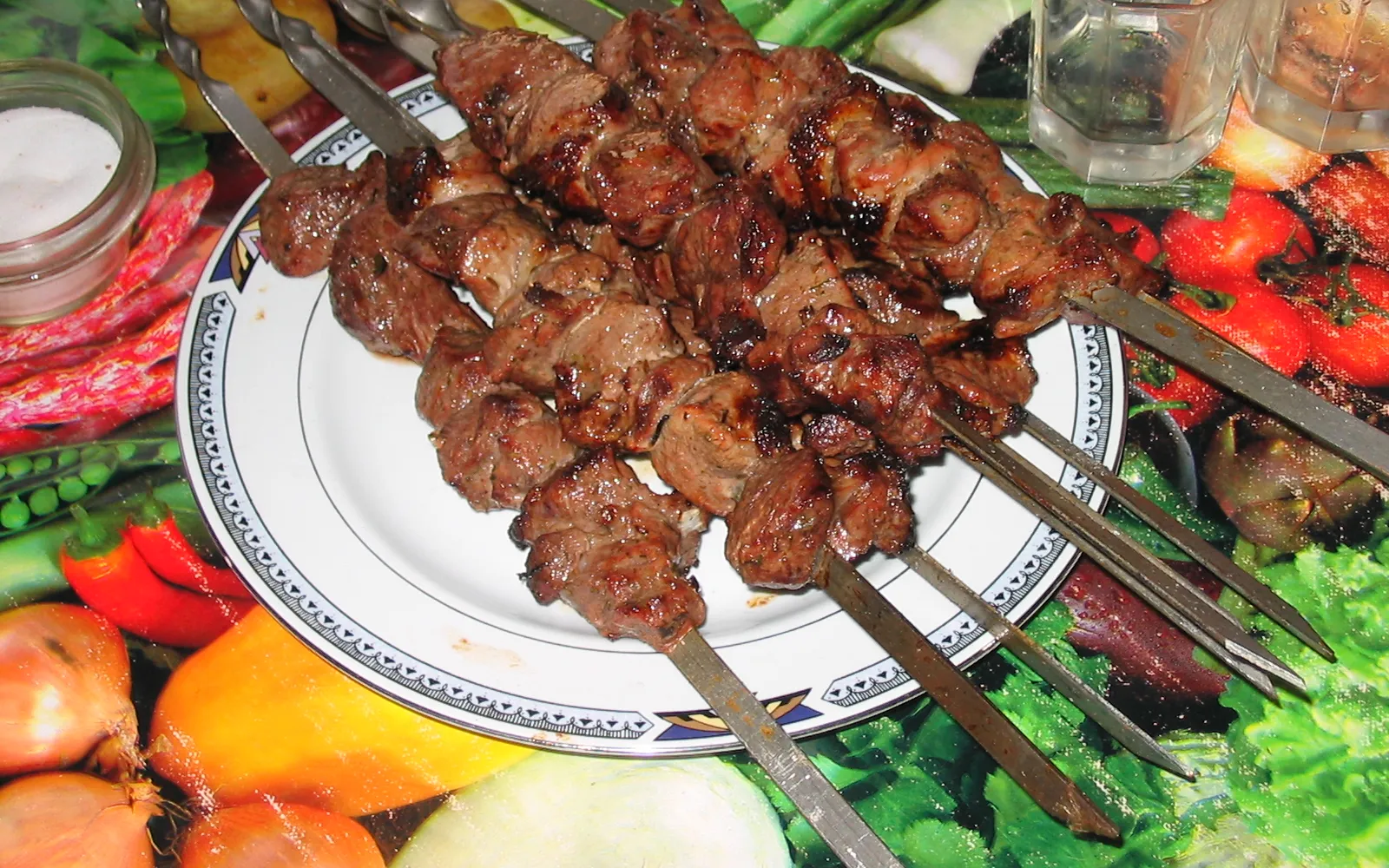
#3 Mtsvadi
Charcoal-grilled meat in the Caucasian style, and Batumi has a regional reputation for doing it well. Pork, beef, or lamb is cut into bite-sized pieces, marinated overnight in onion, vinegar, salt, and black pepper, then grilled over oak charcoal until the outside is smoky and just charred while the inside stays juicy. It comes with Shotis Puri flatbread and tkemali — a tart sauce made from sour plums. The cooking is unfussy, but the quality of the meat and the heat of real charcoal make it exceptional.
- Pick a spot where you can see live coals glowing — charcoal heat versus an electric grill is the difference that matters here.
- Tkemali is a tart-sweet plum sauce that pairs brilliantly with grilled meat. Most restaurants refill it for free.
- Beachfront grill spots stay open until midnight in summer — good for a late meal after an evening walk along the boulevard.
 #4
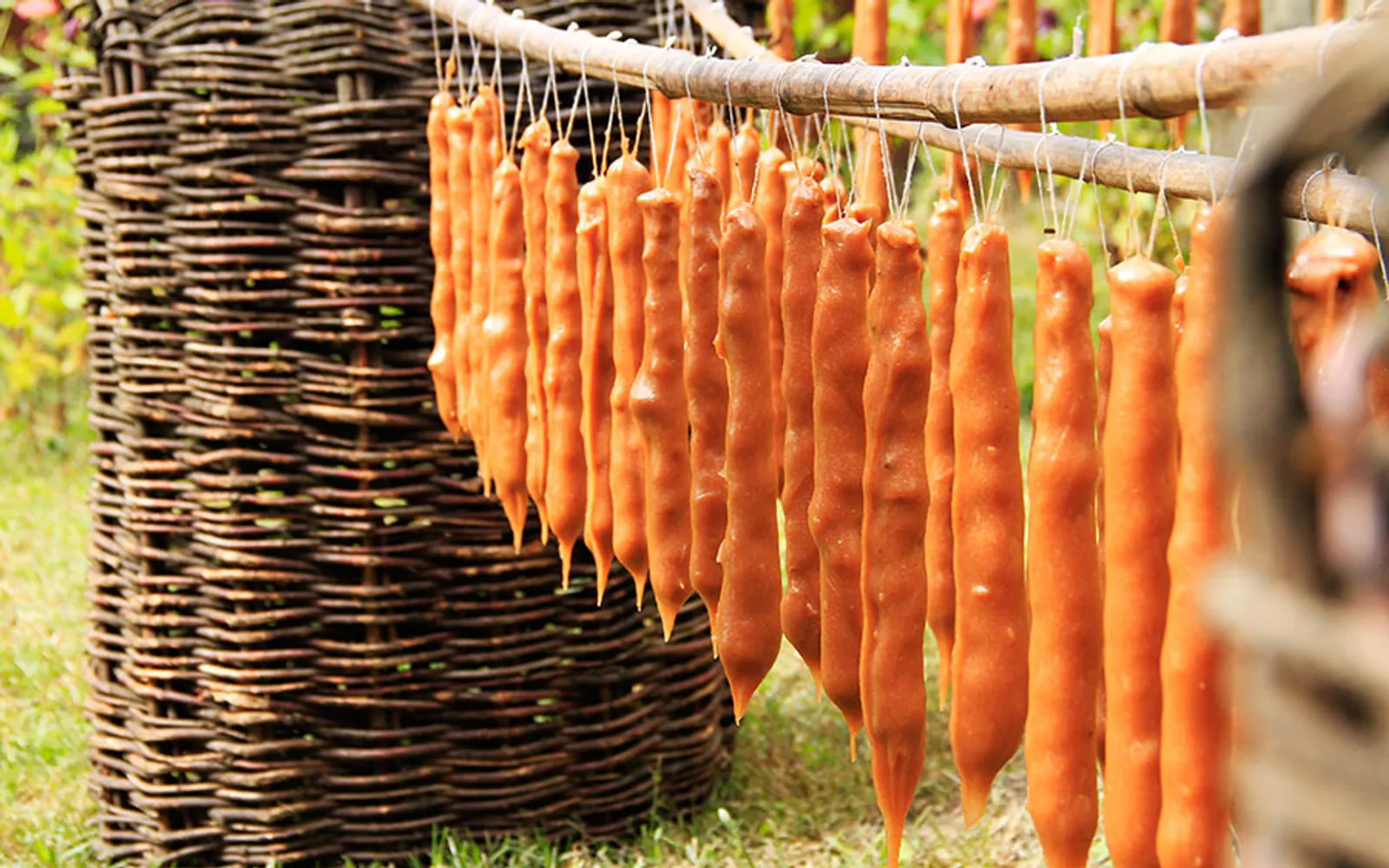
#4 Churchkhela
An ancient Georgian confection with a practical past: soldiers once carried it as field rations for its concentrated energy. Walnut halves are threaded on a string, dipped repeatedly into thickened grape must (tatara) until the coating builds up and dries firm. The colour and flavour depend on the grape variety — deep purple from Saperavi, golden from Rkatsiteli — and both are worth trying. The texture is chewy, the flavour sweet-tart, with a slight crunch from the walnut inside. It keeps for months, which makes it the most practical food souvenir Batumi offers.
- Always taste before buying. Good churchkhela is soft rather than rock-hard, with a clear grape flavour throughout.
- Fresh-market prices run 2-4 lari per piece — considerably cheaper than tourist-facing souvenir shops.
- Store it cool and dry, wrapped in cloth or paper rather than plastic — plastic traps moisture and causes mould.
 #5
#5 Qvevri Wine
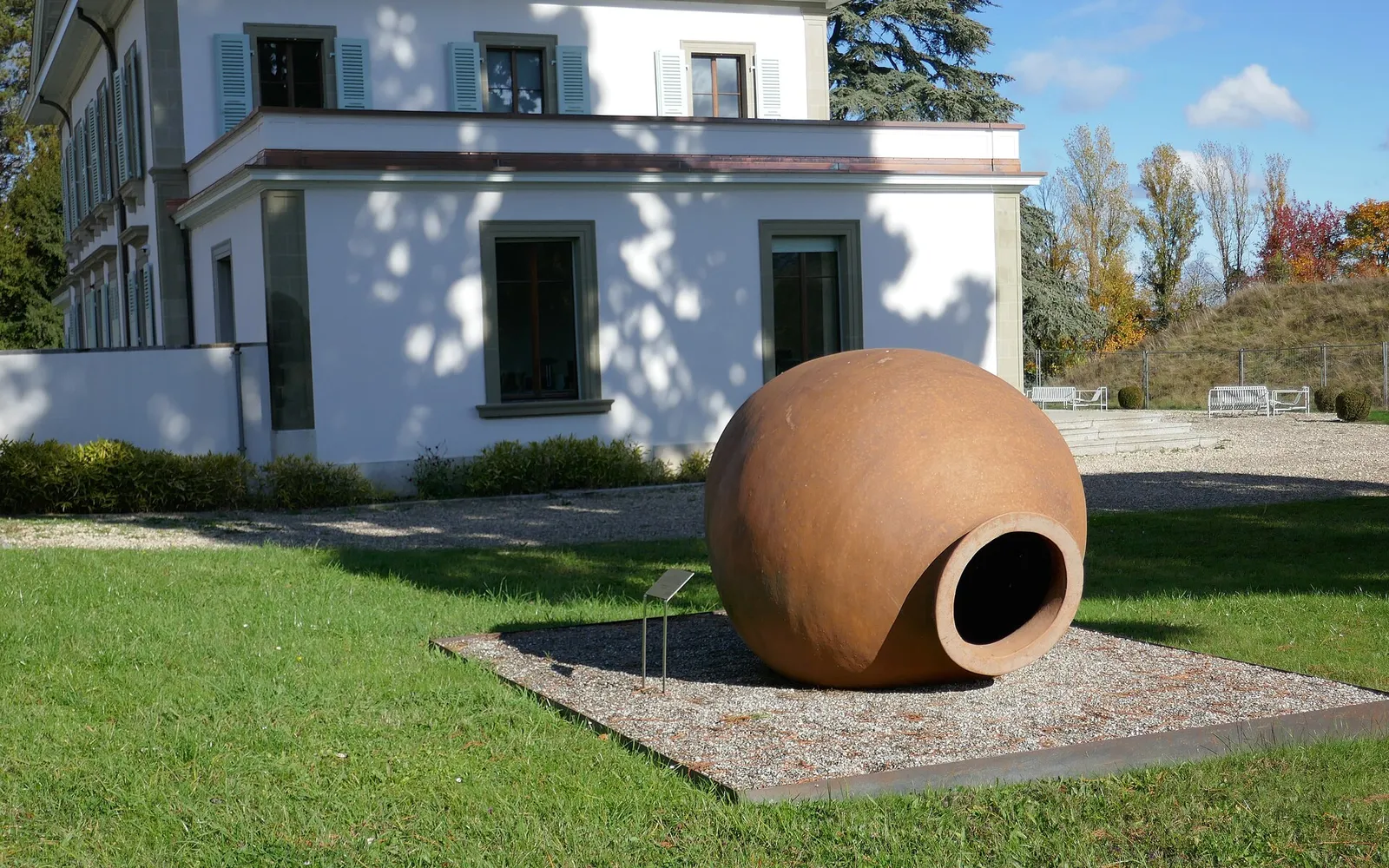
Georgia is the oldest wine-producing country on earth — 8,000 years of continuous tradition — and its qvevri method of fermenting wine in clay vessels buried underground is a UNESCO Intangible Cultural Heritage. Amber wine (sometimes called orange wine) is white wine fermented together with the grape skins, producing a depth and tannin structure you simply will not find in European-style whites: a light astringency, dried-flower aromatics, and a colour that sits between gold and copper. For reds, Saperavi is the signature local variety and consistently Georgia's most compelling bottle.
- Start with Amber wine — it is the style that exists nowhere outside Georgia and will taste unlike anything you already know.
- Several Old Town wine shops offer free tastings before purchase. Bottles run 10-20 lari, which is remarkable value for the quality.
- Buying from a local market or a family producer rather than a tourist-facing shop typically costs half the price — ask the owner to recommend a local variety.
 #6
#6 Pkhali
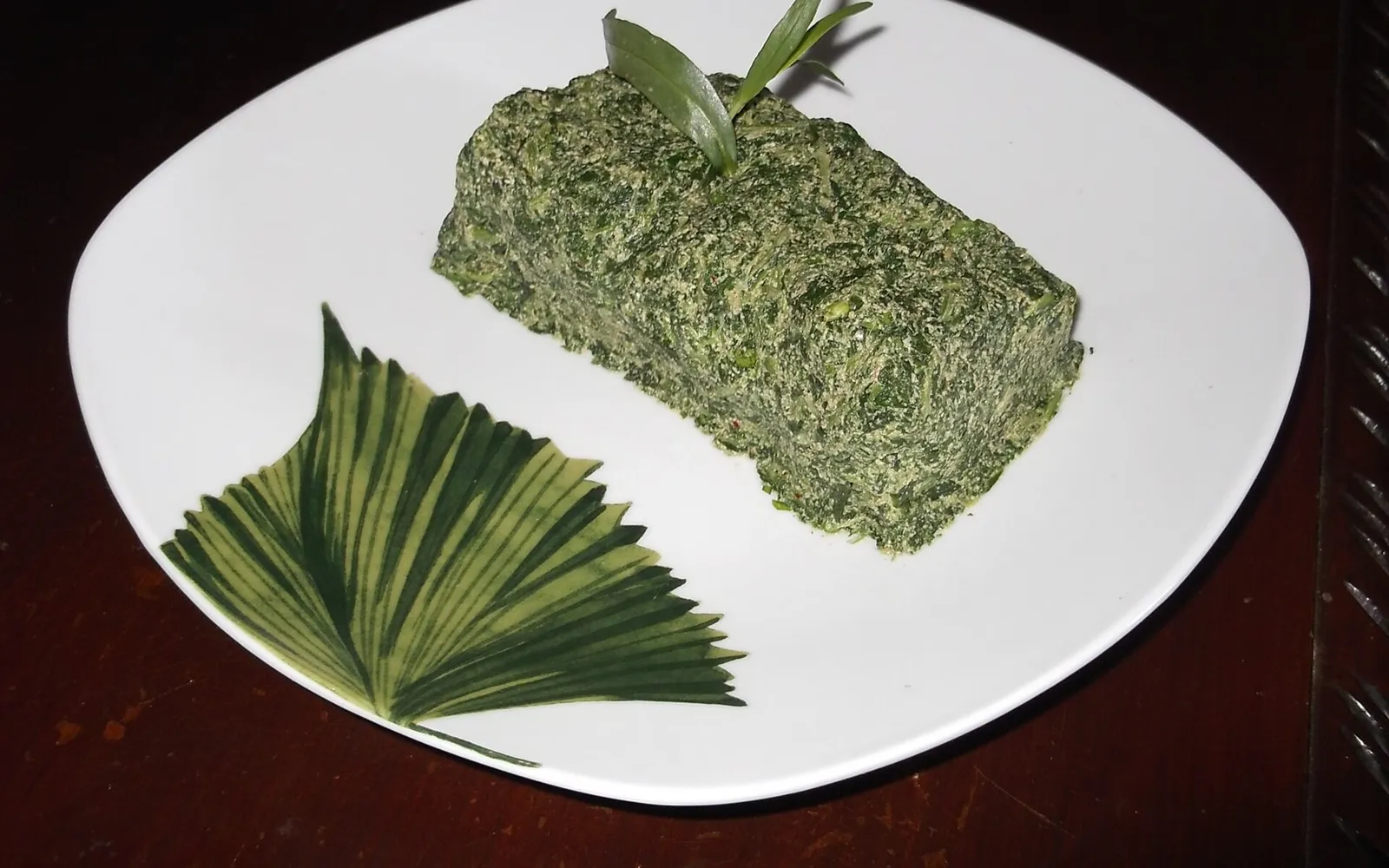
A Georgian starter that looks modest but delivers a genuinely complex flavour. Fresh vegetables — spinach, beetroot, cabbage, or green beans — are finely ground and mixed with crushed walnut, garlic, fresh coriander, and the Georgian spice blend utskho suneli, then shaped into small balls and finished with pomegranate seeds. Each colour tastes different: green from spinach is fresh and herbal, red from beetroot is earthy-sweet. Most restaurants serve several varieties together on one plate.
- Order the Assorted (three-colour) plate for 5-8 lari — good value and it covers all the flavour profiles in one go.
- The walnut must be freshly ground. If the walnuts taste stale or pre-roasted, the whole dish suffers — a sign the kitchen is cutting corners.
- Best alongside warm Shotis Puri flatbread, which is the classic Georgian way to start a meal.
Where to stay in Batumi for this trip
A well-located hotel means less commuting and more sightseeing. Here are real, top-rated stays in Batumi — compare Agoda · Booking · Trip.com in one click.
Hotel Indigo Batumi - Old Town by IHG
Affiliate links — we may earn a commission at no extra cost to you. Details
Radisson Blu Hotel, Batumi
Affiliate links — we may earn a commission at no extra cost to you. Details
Hotel London 1889 & Casino
Affiliate links — we may earn a commission at no extra cost to you. Details
Hilton Batumi
Affiliate links — we may earn a commission at no extra cost to you. Details
Tours, tickets & activities in Batumi
Day tours, attraction tickets and travel essentials for Batumi — book ahead on Klook with mobile e-tickets.
Affiliate links — we may earn a commission at no extra cost to you.
Before You Pack
The best food in Batumi tends to come from small family-run spots tucked into Old Town side streets, where the owner is also the cook — not from the large boulevard restaurants that bake a tourist premium into their prices. Ask your hotel or a local to point you to places that do not appear on Google Maps. That is where the real cooking is.