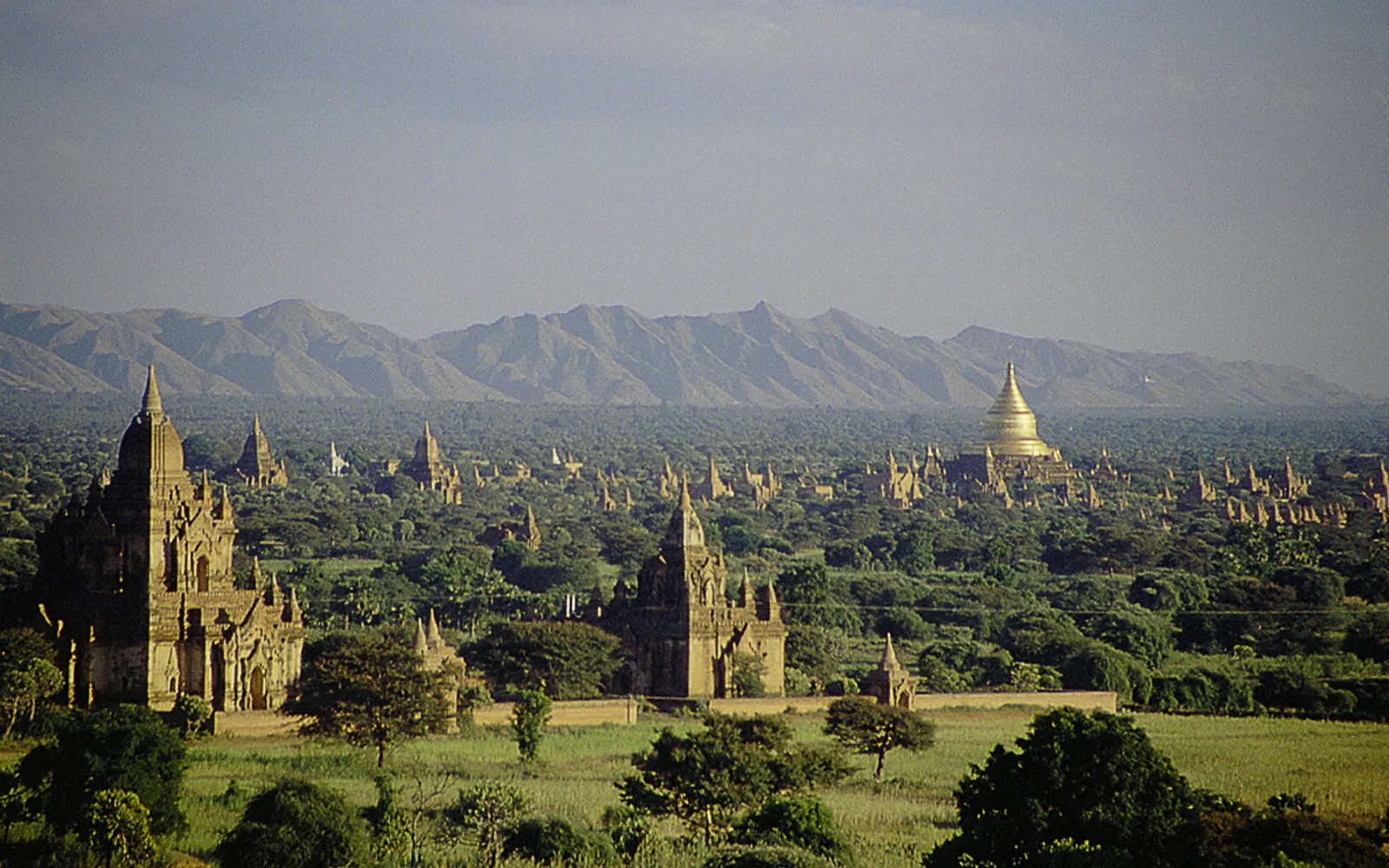
Bagan is one of the most important historical sites in Southeast Asia. A flat plain packed with more than 3,500 pagodas and temples — built between the 9th and 13th centuries during the height of the Pagan Kingdom — it defies easy comparison. Ride an e-bike through the dust, or drift above it all in a hot-air balloon, and the sight of gilded spires cutting through dry savannah and the silver thread of the Irrawaddy will make you feel you've slipped into a different dimension of time entirely.
 #1
#1 Ananda Temple
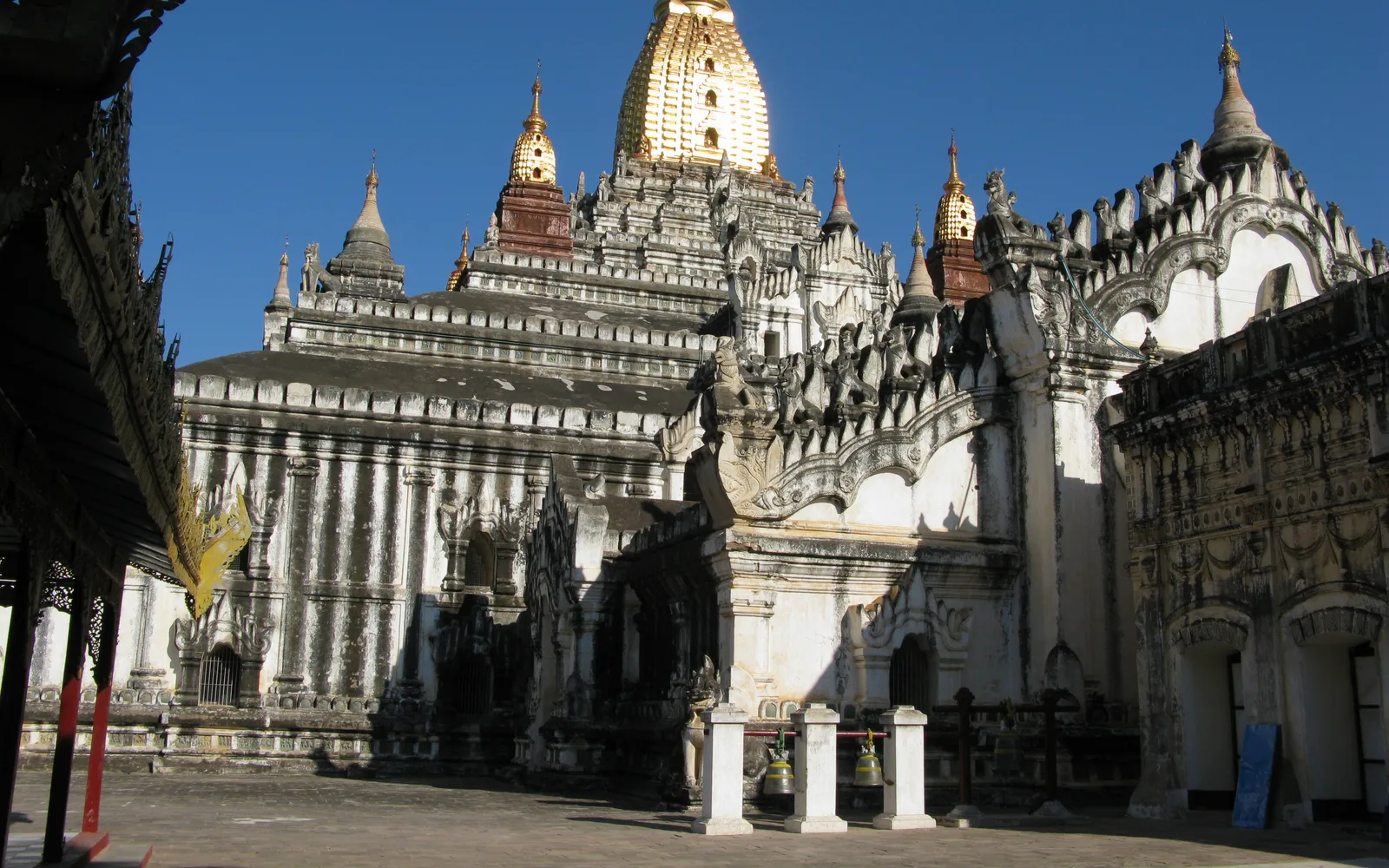
Widely regarded as the finest temple in Bagan, Ananda was built around 1105 AD by King Kyansittha and modelled on the Himalayan cave temples of India. Inside, four standing Buddhas — each 9.5 metres tall — face the cardinal directions from a white-plastered base, their crowns finished in hammered gold. The temple has been restored several times, including after the 2016 earthquake that damaged structures across the plain. It remains a living religious site: monks reside here and ceremonies are held regularly.
- Remove shoes before entering any temple in Bagan — the stone gets very hot by midday, so wear thick socks or arrive at first light.
- Shorts and sleeveless tops are not permitted inside. Several visitors are turned away each day for dress-code violations.
- The Ananda Temple Festival in January draws huge crowds of Burmese dressed in traditional regional clothing — an extraordinary sight if your dates align.
 #2
#2 Dhammayangyi Temple
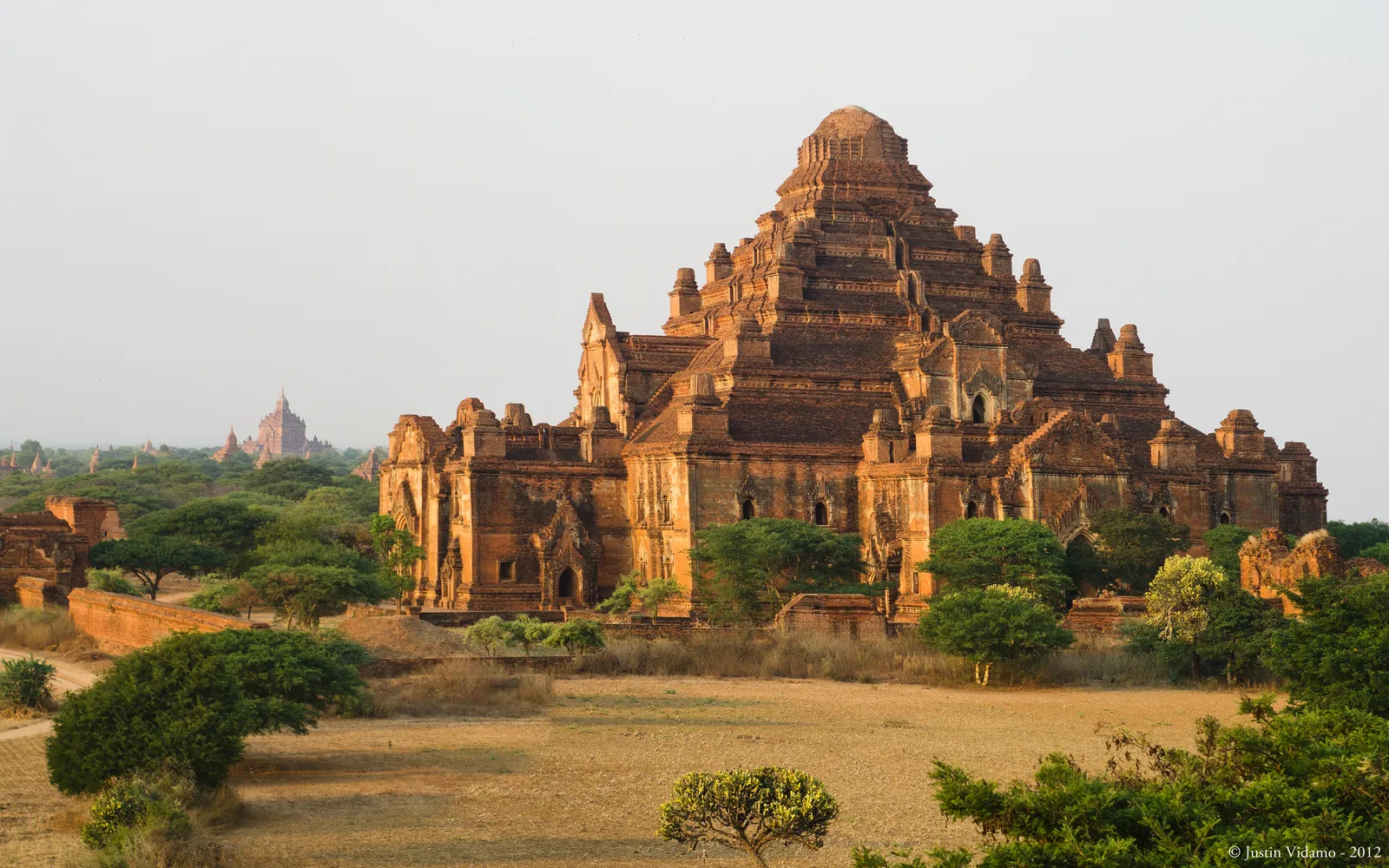
The largest temple on the Bagan plain and the one with the darkest legend. Built around 1170 AD by King Narathu — a man who killed both his father and his brother to take the throne — it was reportedly constructed as an act of penance. The inner passageways were bricked up for reasons scholars still debate. The oversized bricks used in construction were held to a brutal quality standard: the king tested the mortar joints by pushing a needle between them, and any bricklayer whose work failed the test had his hands cut off. The current spire is a modern replacement — the original collapsed long ago, giving Dhammayangyi a silhouette unlike any other temple on the plain.
- The exterior is freely walkable, but interior access has been restricted since the 2016 earthquake — check the current status before visiting.
- The upper terrace, formerly accessible, is closed for repairs. The best exterior photography angles come in the late afternoon.
- The visible spire today is a modern reconstruction; the original is long gone — which is why the profile looks different from other Bagan temples.
 #3
#3 Shwezigon Pagoda
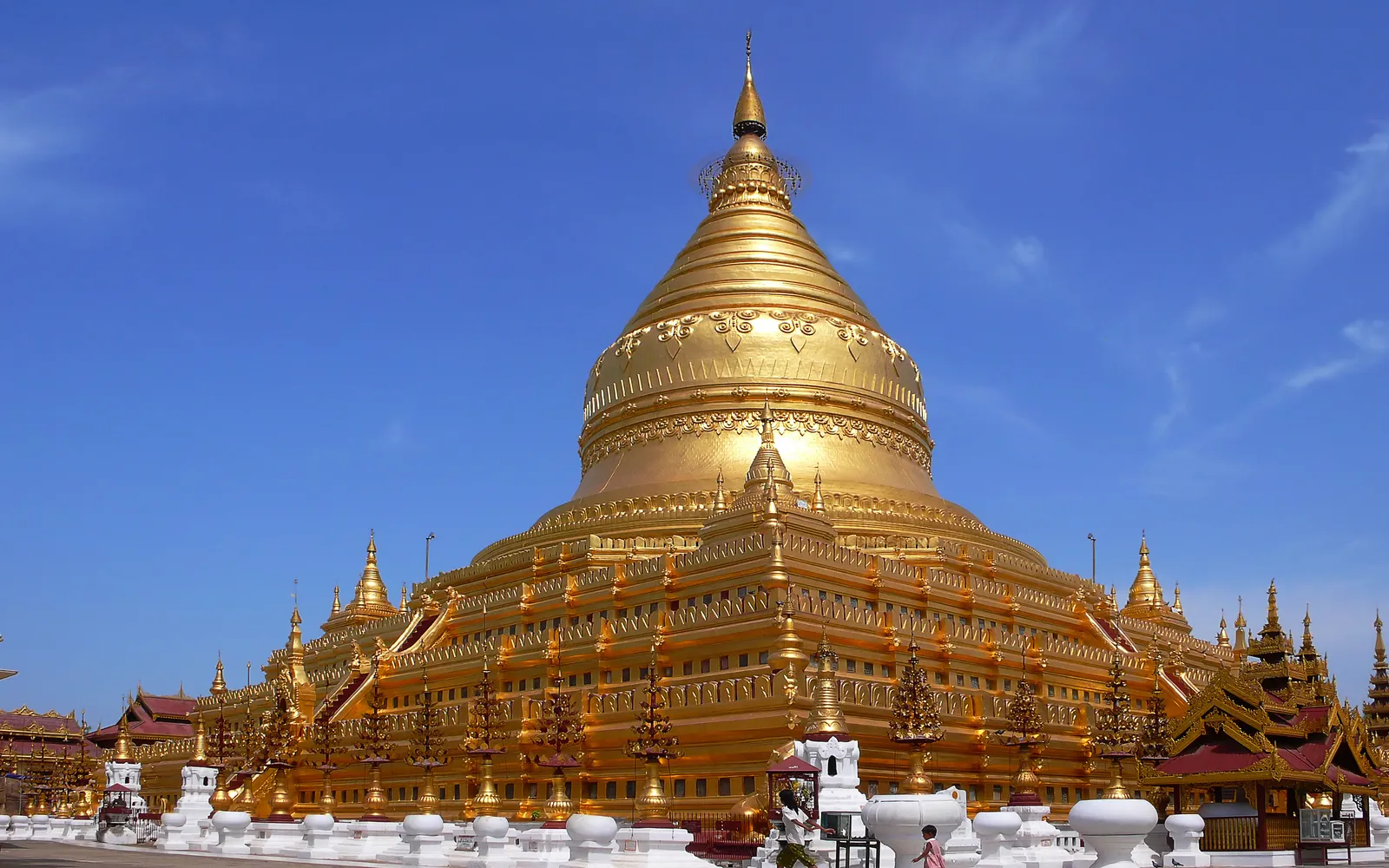
The purest example of Burmese pagoda architecture in Bagan, begun under King Anawrahta around 1059 AD and completed in the reign of Kyansittha. Its bell-shaped gilded stupa set the template for Buddhist architecture that spread across the entire country. Inside are venerated relics said to include a frontal bone of the Buddha. This is Bagan's holiest site — pilgrims come year-round, and the atmosphere is unmistakably different from the tourist-circuit temples: real devotion fills the air, especially at dusk when monks chant.
- Women must wear a longyi (wrap skirt) around the waist before entering. Loaner cloths are available at the entrance, but bringing your own lightweight wrap is easier.
- The pagoda opens from dawn to dusk. Evenings are particularly atmospheric, with monks chanting and incense smoke drifting through the courtyard.
- The souvenir stalls surrounding the pagoda sell Burmese Nat spirit figures and hand-carved items worth browsing — prices are negotiable.
 #4
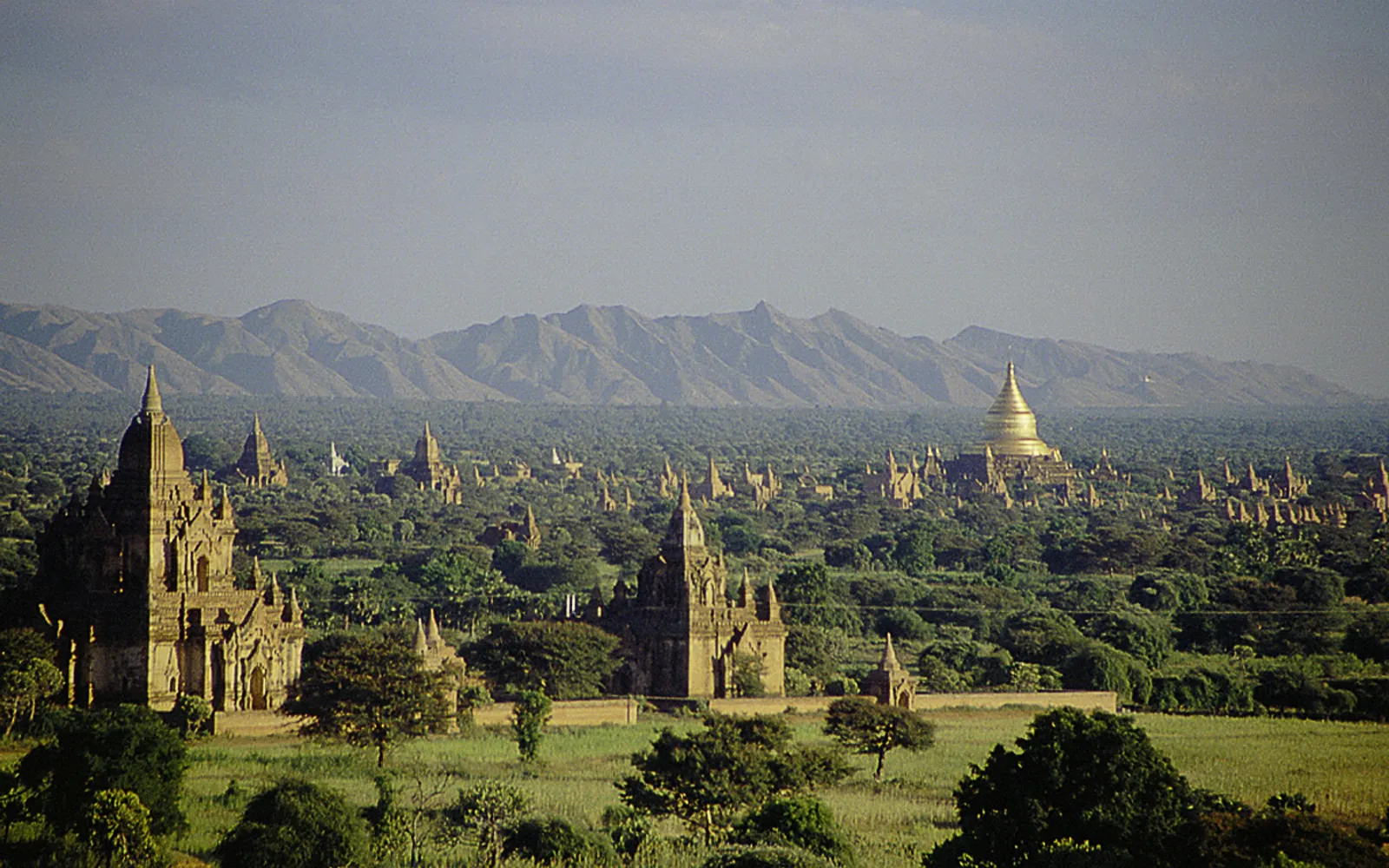
#4 Hot Air Balloon over Bagan
Universally cited as the single defining experience of Bagan, the sunrise balloon flight lets you look down on all 3,500 temples at once as the sky turns orange and red. Below you, roughly 40 square kilometres of monuments are visible at a glance, the Irrawaddy glinting silver to the west, brown savannah rolling to the horizon. Flights last around an hour and finish with a sparkling wine toast on landing. The two most reputable operators are Balloons over Bagan and Oriental Ballooning.
- Prices run USD 380–450 per person. Book 3–6 months ahead for the high season (November–February) — flights sell out well in advance.
- Balloons operate only October–April during the dry season. Wind speeds during the monsoon are too high.
- If weather is poor or wind is too strong, the crew will call to cancel from around 4–5 am. Always have a backup plan for the morning.
 #5
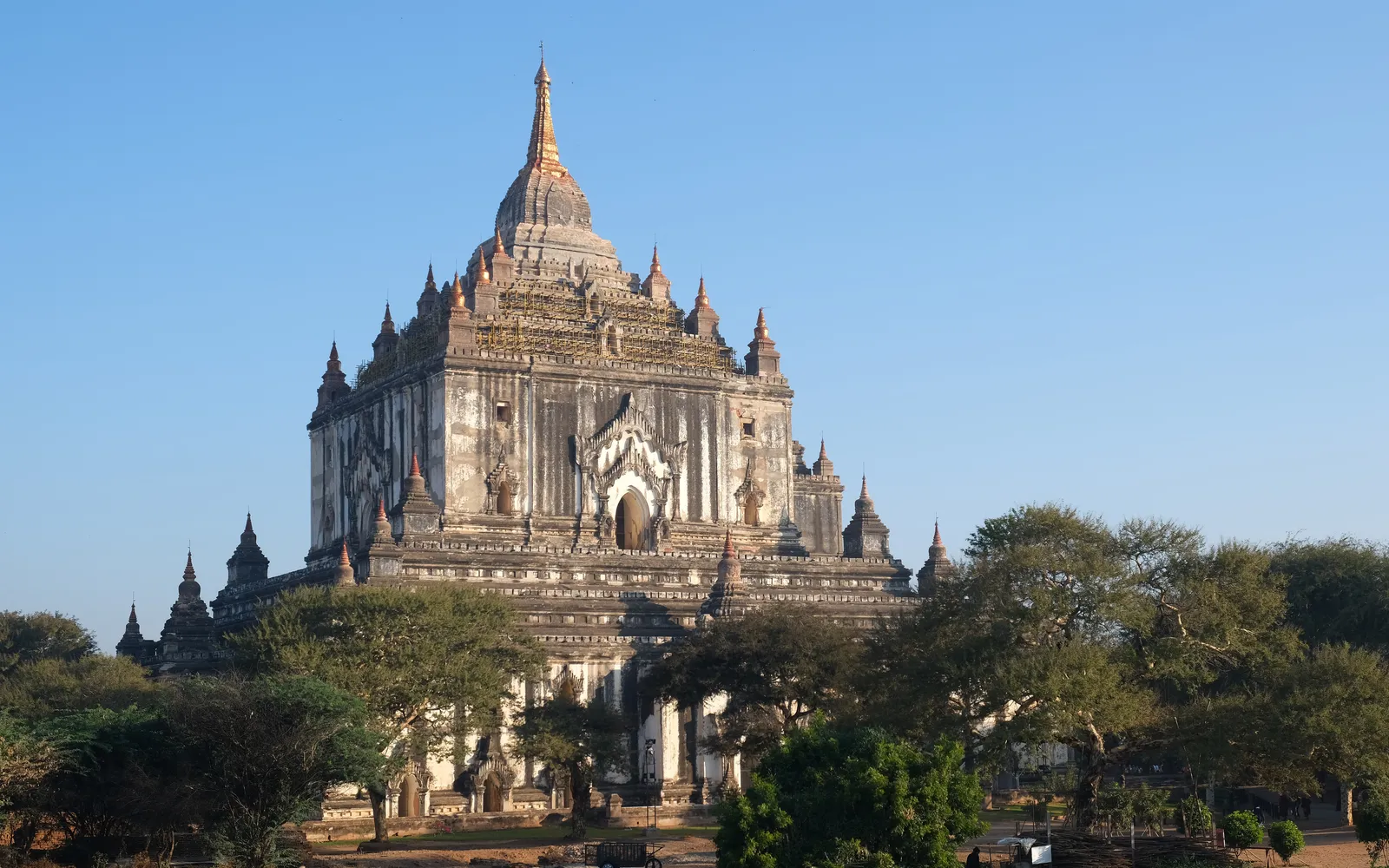
#5 Thatbyinnyu Temple
At 61 metres, Thatbyinnyu is the tallest temple on the Bagan plain. Built around 1150 AD by King Alaungsithu, its name translates as 'omniscient' — knowing all things. The design is clearly two-storeyed: a heavy solid base supporting the main sanctuary above. Before the Myanmar government built a dedicated viewing platform nearby, this upper hall offered the most sweeping panorama of the plain. The 2016 earthquake caused significant structural damage, and restoration work continues on parts of the complex, though the main structure still stands.
- Thatbyinnyu and Ananda Temple are a short walk apart — combine both in a single morning visit.
- Climbing to the upper terrace is currently prohibited for safety reasons following the earthquake. The government's new viewing tower is the designated alternative for elevated views.
- Walk a full circuit around the exterior before shooting — the 360-degree angles vary considerably and the best light shifts with the hour.
 #6
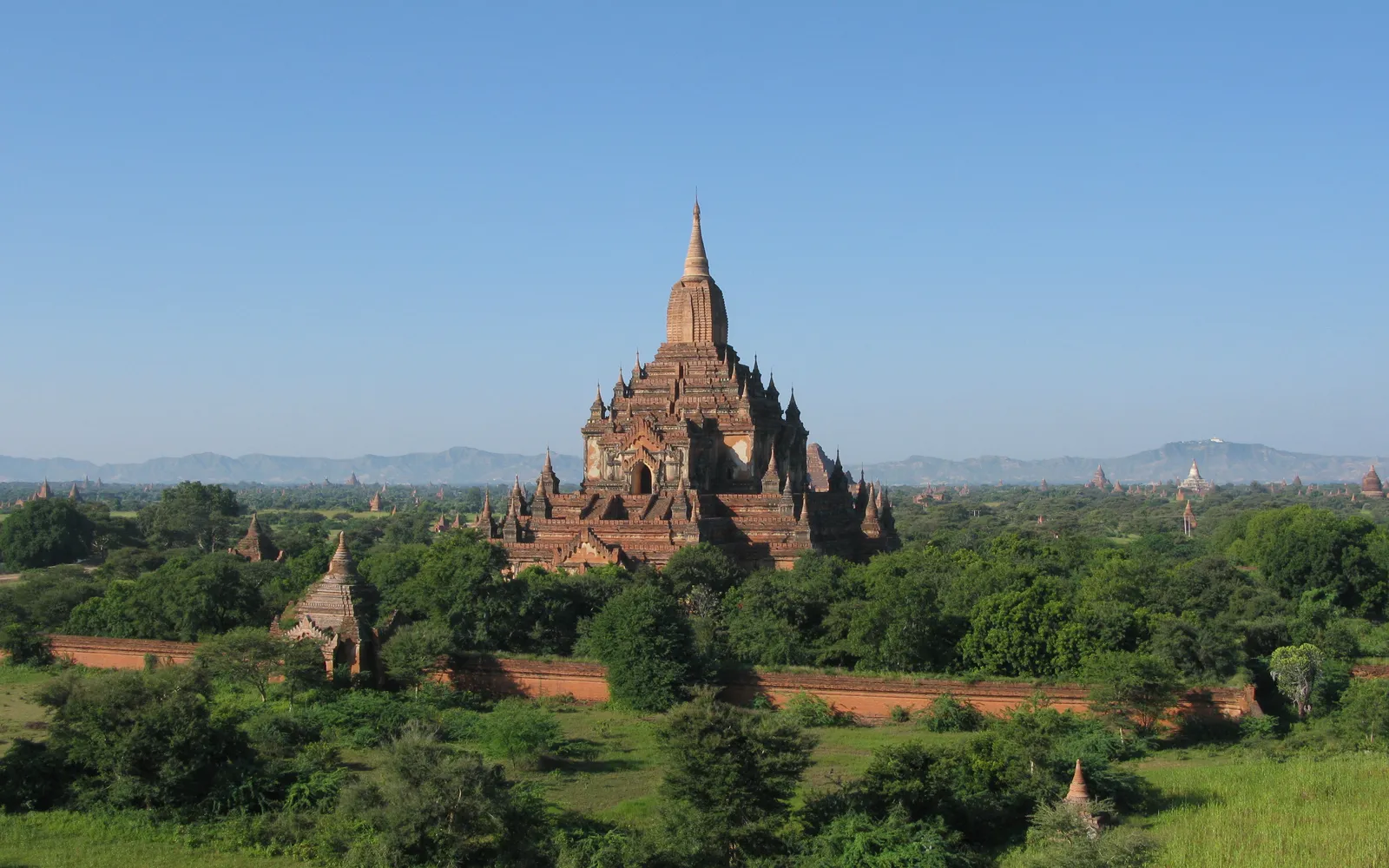
#6 Sulamani Temple
Built around 1183 AD by King Narapatisithu, Sulamani is often called the jewel of the Bagan plain — a label earned by its two-storey proportions, which many regard as the most harmonious of any temple on the site. Original Bagan-era mural paintings survive inside, though sections were damaged by intruders at various points in history. Sitting further from the main temple cluster, Sulamani draws noticeably fewer visitors, and the quieter atmosphere makes it a good place to sit for a while and absorb the plain at a pace the busier sites don't allow.
- The interior murals are extremely fragile — do not touch them. Morning natural light is sufficient to see them clearly without flash.
- Souvenir sellers, often children, wait outside. A polite refusal is fine; buying from the Nyaung-U market tends to offer fairer prices.
- Combine with nearby Htilominlo Temple on the same trip to make efficient use of travel time between the central plain and Old Bagan.
Tours, tickets & activities in Bagan
Day tours, attraction tickets and travel essentials for Bagan — book ahead on Klook with mobile e-tickets.
Affiliate links — we may earn a commission at no extra cost to you.
Before You Pack
Bagan is at its best from November through February — cool, clear, and far more comfortable than the dry season heat of March to May, when temperatures regularly hit 40 °C. Budget at least 3 days to cover the major sites properly, and book your balloon flight weeks ahead of time; seats during high season fill up fast.