
Burmese food in Bagan rarely gets the attention that the temples and pagodas do — but for anyone seriously interested in Southeast Asian dishes, it is well worth exploring. Mohinga is the fish soup breakfast that every Burmese person grows up eating, and fermented tea leaf salad — found nowhere else on earth — is the quiet gem of the entire Burmese food culture. The overall flavor profile leans sour and garlicky, with sesame oil as a base, which sets it clearly apart from Thai and Vietnamese food.
 #1
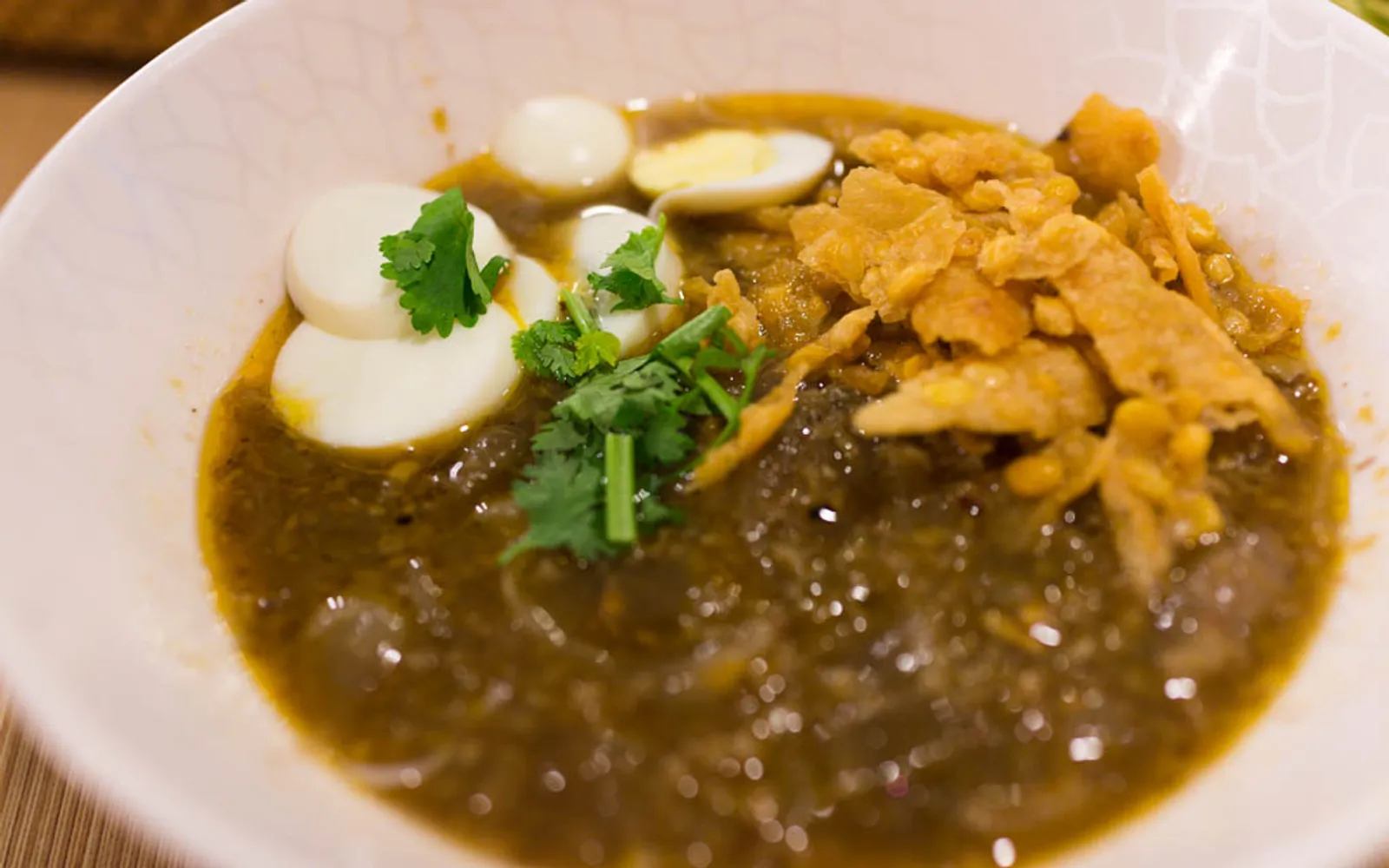
#1 Mohinga
Myanmar's national breakfast dish, eaten by everyone from childhood to old age. Freshwater fish is simmered with lemongrass, ginger, garlic, turmeric, and ground chickpeas to produce a thick, fragrant golden broth. Served with thin rice noodles, a halved boiled egg, crispy pork rinds (optional), and a squeeze of lime — the flavor is tangy, lightly salty, and warm with lemongrass. Light and comforting in the early morning. People in Bagan eat mohinga for breakfast every day, and it is both cheap and easy to find.
- Order extra crispy fritters or other fried accompaniments — they change the flavor profile significantly, and Burmese people almost always eat them alongside.
- A bowl costs around 500–800 kyat (roughly USD 0.25–0.40). Do not bargain at breakfast stalls.
- Nyaung-U morning market opens from 5 a.m. — mohinga is freshest before 8 a.m., after which the broth becomes too thick.
 #2
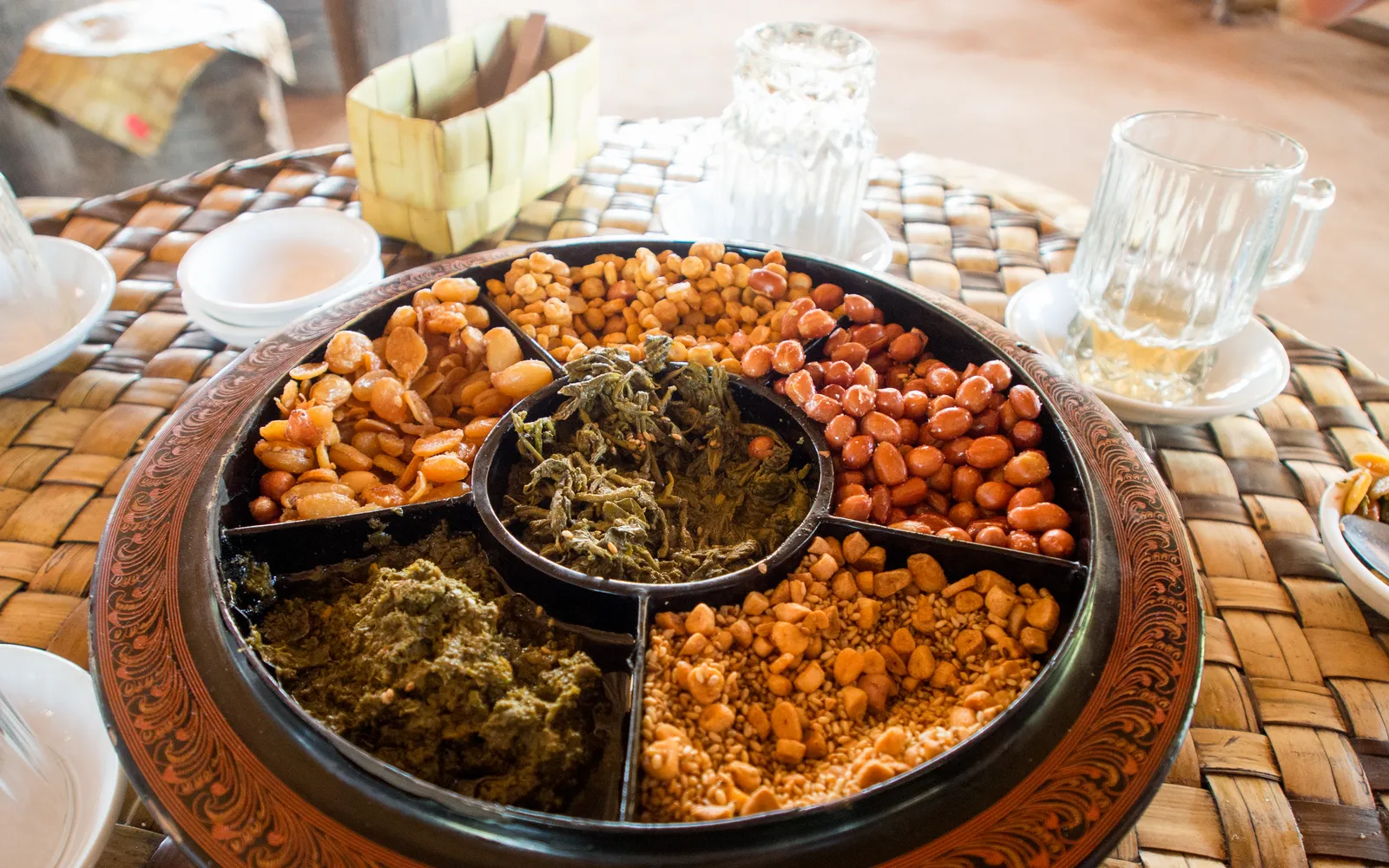
#2 Tea Leaf Salad
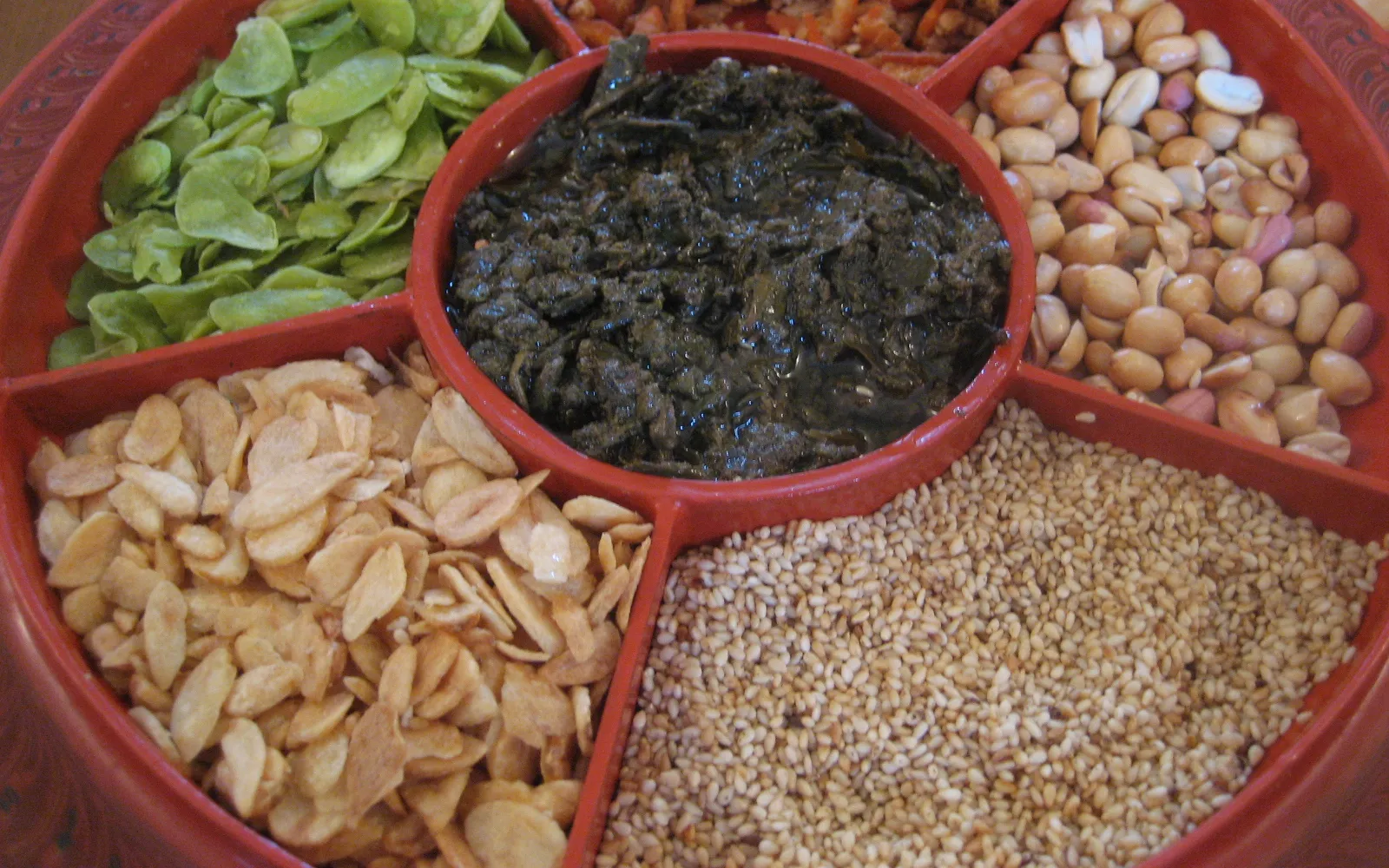
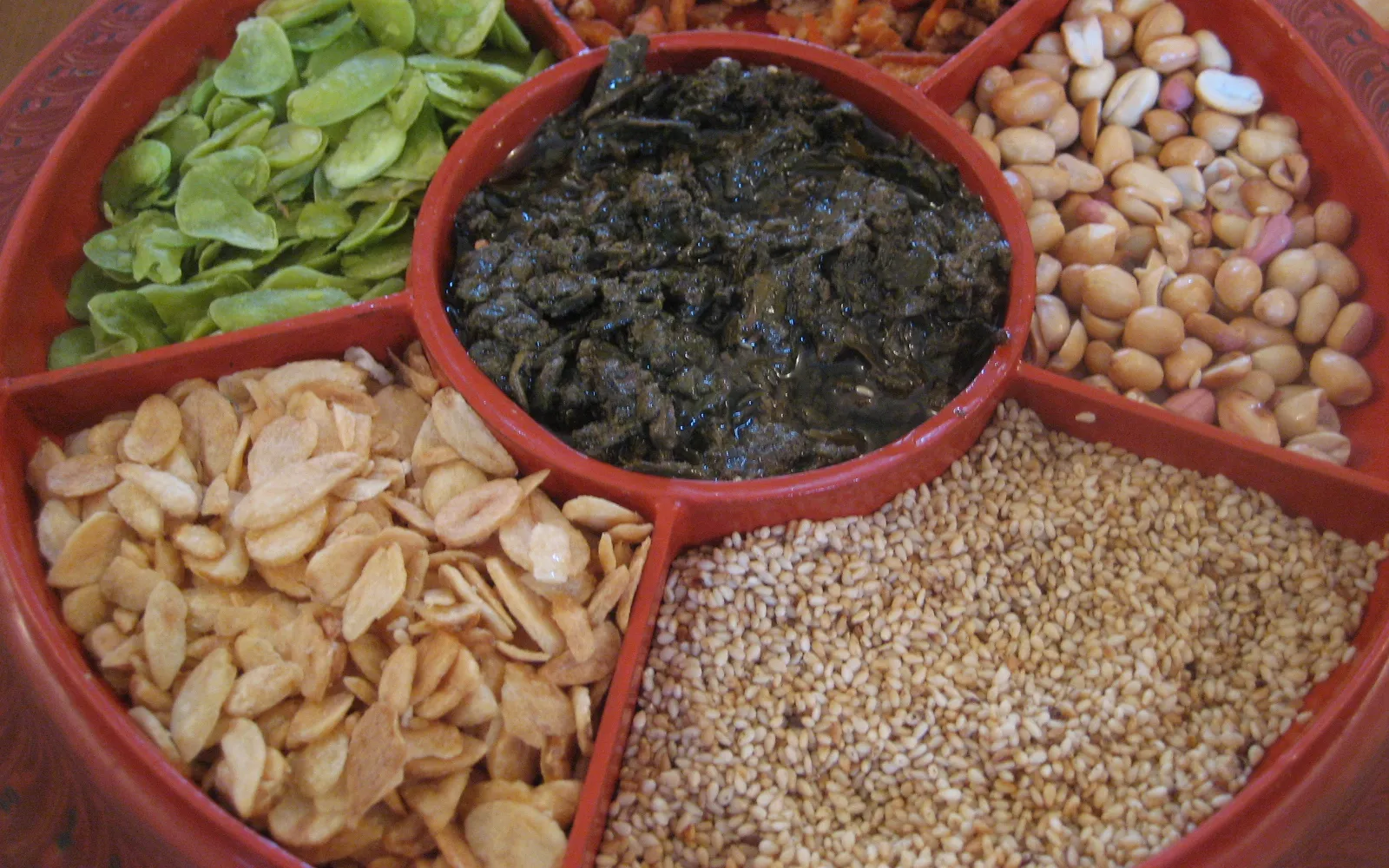
Myanmar's most distinctive dish, found nowhere else in the world. Young tea leaves are fermented for several weeks until soft and pleasantly bitter-sour, then tossed with multiple types of fried crunchy beans, toasted white sesame, fried garlic, fresh tomato, lime juice, and sesame oil — all mixed together in front of you. The flavor is multi-dimensional in a single bite: bitter from the tea, sweet from the beans, sour from the lime, and crunchy from the garlic. Burmese people eat it as a salad, a snack, and a dish served to guests at festivals.
- Try ordering the mixing ceremony version — some restaurants serve each component separately so you can control the proportions yourself.
- If you are concerned about raw fermented leaves, order from a mid-range hotel restaurant first where hygiene standards are more reliable than street stalls.
- Vacuum-packed fermented tea leaves make an excellent souvenir — buy them at Nyaung-U market, which is far cheaper than the airport.
 #3
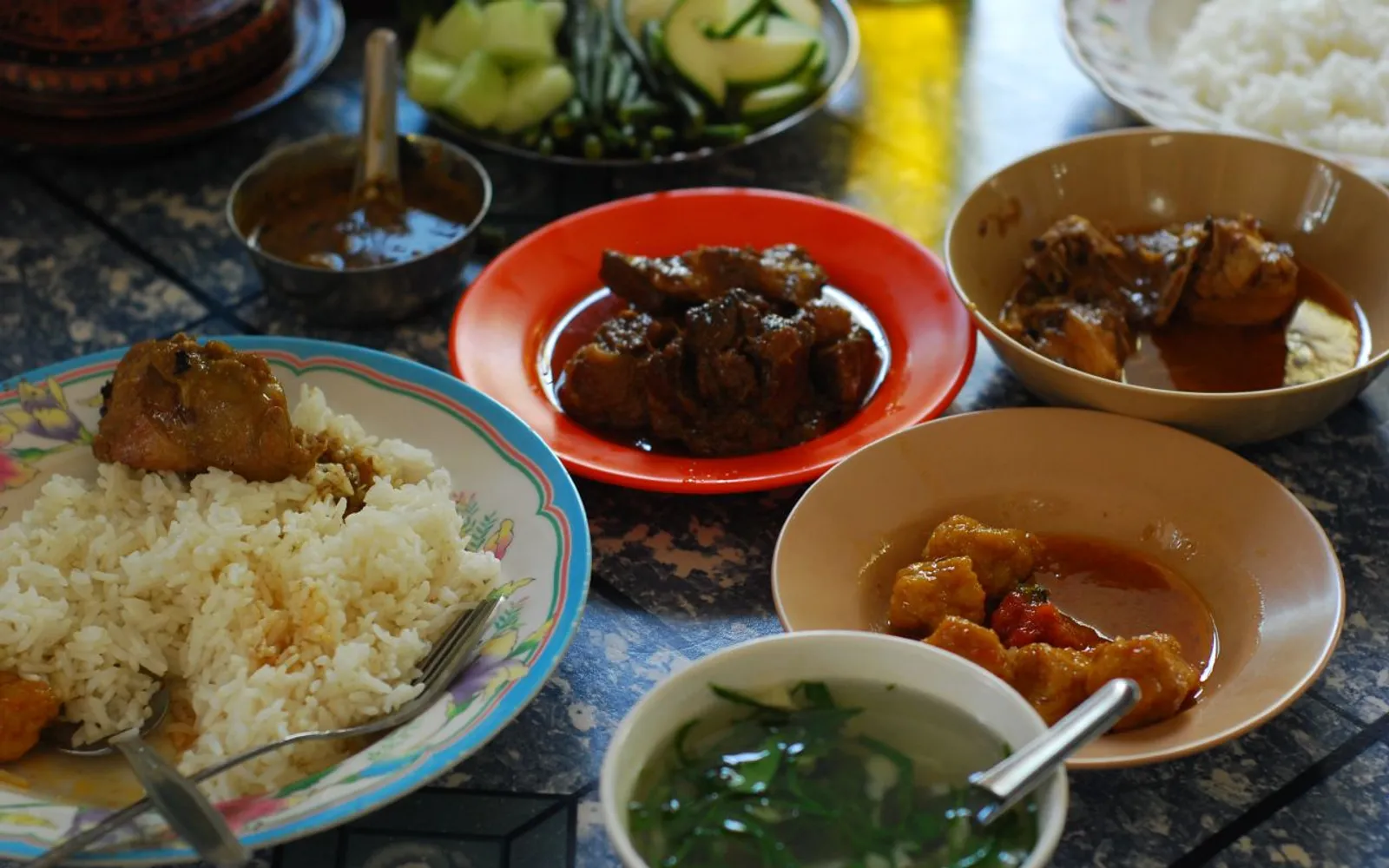
#3 Burmese Curry
Traditional Burmese curry is entirely different from Thai coconut curries or Indian preparations — no coconut milk is used. The golden oil that pools on the surface is the hallmark of an authentic Burmese curry, indicating it is fully cooked. It is made by frying sesame or vegetable oil with onion, garlic, turmeric, and tomato until fragrant, then adding meat and slow-cooking for a long time. The result is rich, deeply garlicky, not sweet, and only mildly spicy. Served with white rice, a clear vegetable soup, and an array of pickled vegetables — it is Burmese food at its most complete.
- Order the curry set: it comes with rice, soup, pickles, and the main curry for around 3,000–5,000 kyat — excellent value.
- Do not skim off the oil floating on top — Burmese people consider it the best part, eaten together with white rice.
- Chicken curry and fish curry are good first choices. Beef curry can be heavy for those not used to the oil-forward style.
 #4
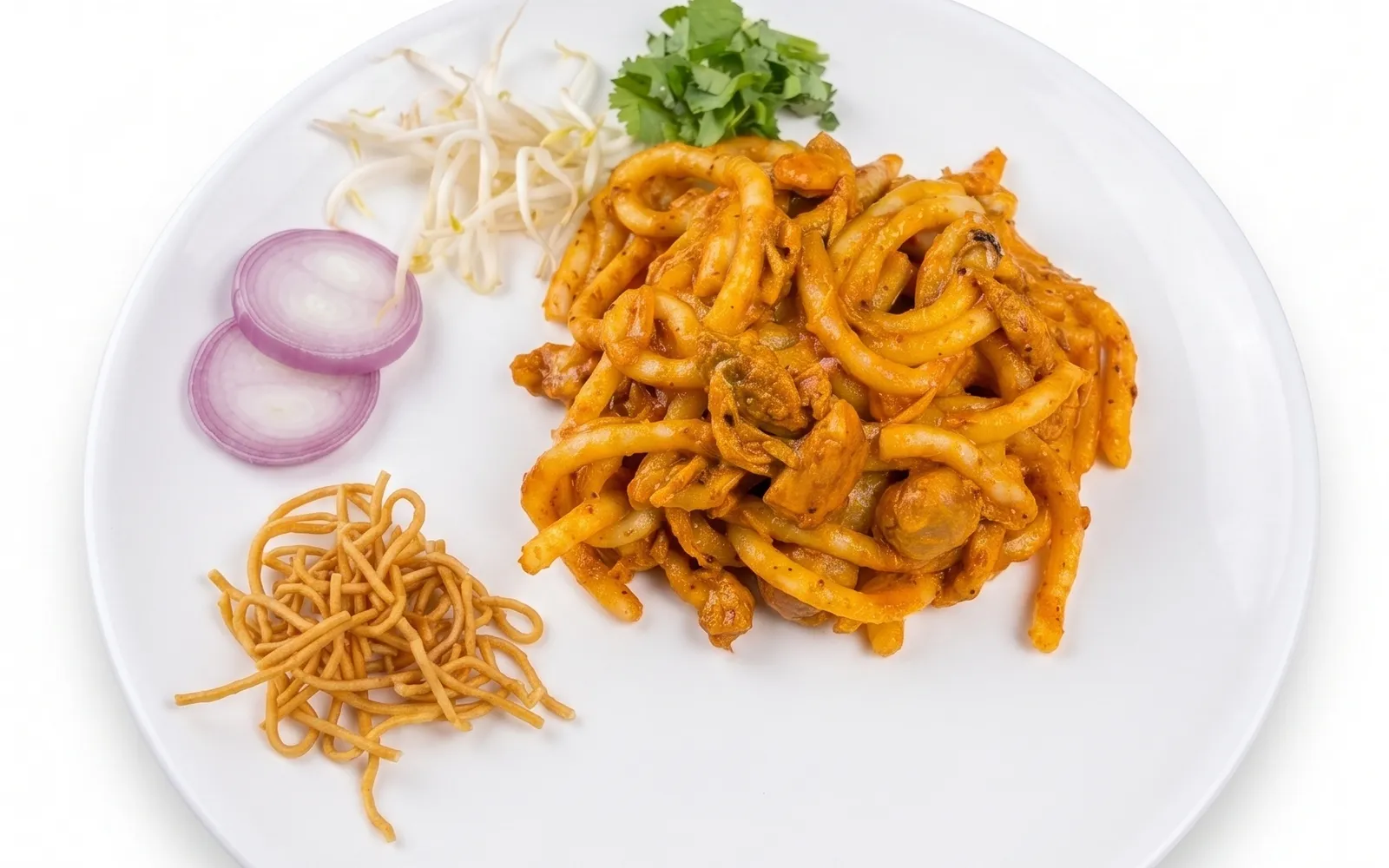
#4 Shan Noodles
Rice noodles from Shan State in eastern Myanmar that have become popular across the whole country. Medium-thick rice noodles served either in a clear golden chicken broth or dry, topped with garlic-fried minced chicken, ground peanuts, spring onions, shredded cabbage, and garlic oil. The flavor is clean and lighter than mohinga — a good option for those who find the strong fish broth too intense. The northern Burmese version uses raw tomato and is more sour; the Bagan version is generally a little richer.
- Order dry (Dry Shan Noodles) for a more concentrated flavor, or with broth if you want a hot soup — the two versions taste quite different.
- Add lime juice and chili flakes to taste — tables usually have a small condiment set available.
- Slightly cheaper than mohinga, around 500–700 kyat — a solid alternative for a light breakfast.
 #5
#5 Burmese Green Papaya Salad
Green papaya salad made the Burmese way is clearly different from the Thai version — no fermented fish sauce, and it is not aggressively spicy. The flavor is bright and sour from lime juice, with a hint of sweetness from palm sugar, topped with dried shrimp and peanuts. Some recipes add raw green mango for extra tartness. Travelers used to the Thai version may find it milder, but it is genuinely refreshing in Bagan's heat. Burmese people eat it as a daytime snack or alongside rice and curry.
- Ask for a small amount of chili (small chili) to gauge how spicy you want it — most vendors can communicate fine through hand gestures.
- Eat it alongside Burmese curry to cut the richness and add freshness — a classic local combination.
- Street stalls in Nyaung-U charge 300–500 kyat. Watch the vendor make it fresh in front of you before buying.
 #6
#6 Burmese Coconut Jelly Dessert
A traditional Burmese sweet made from glutinous rice flour or sago starch mixed with coconut milk and palm sugar, then baked or steamed in a coconut shell or banana leaf. The texture is smooth and silky, with a round sweetness from real palm sugar, finished with a pour of thick coconut cream and a sprinkle of black sesame. Some versions add black beans or barley for extra texture. Well-suited to Bagan's heat, the cool sweetness is genuinely refreshing. Travelers familiar with Thai sweets will notice the Burmese version carries a stronger, more pronounced palm sugar depth.
- Choose a shop that makes it fresh daily — the texture is softer and the coconut aroma much better than versions that have been sitting out.
- Burmese desserts tend to be quite sweet — if you prefer less sugar, ask the vendor to go lighter on the palm sugar.
- Nyaung-U evening market has a wide variety of Burmese sweets at low prices — walk along and taste from several stalls.
Tours, tickets & activities in Bagan
Day tours, attraction tickets and travel essentials for Bagan — book ahead on Klook with mobile e-tickets.
Affiliate links — we may earn a commission at no extra cost to you.
Before You Pack
Most restaurants in Bagan open from the early hours for breakfast and close relatively early. The best local spots are concentrated in Nyaung-U morning market, where vendors set up from 5 a.m. Food is freshest before 8 a.m. No need to hesitate — point and order; most vendors understand well enough even without a common language.