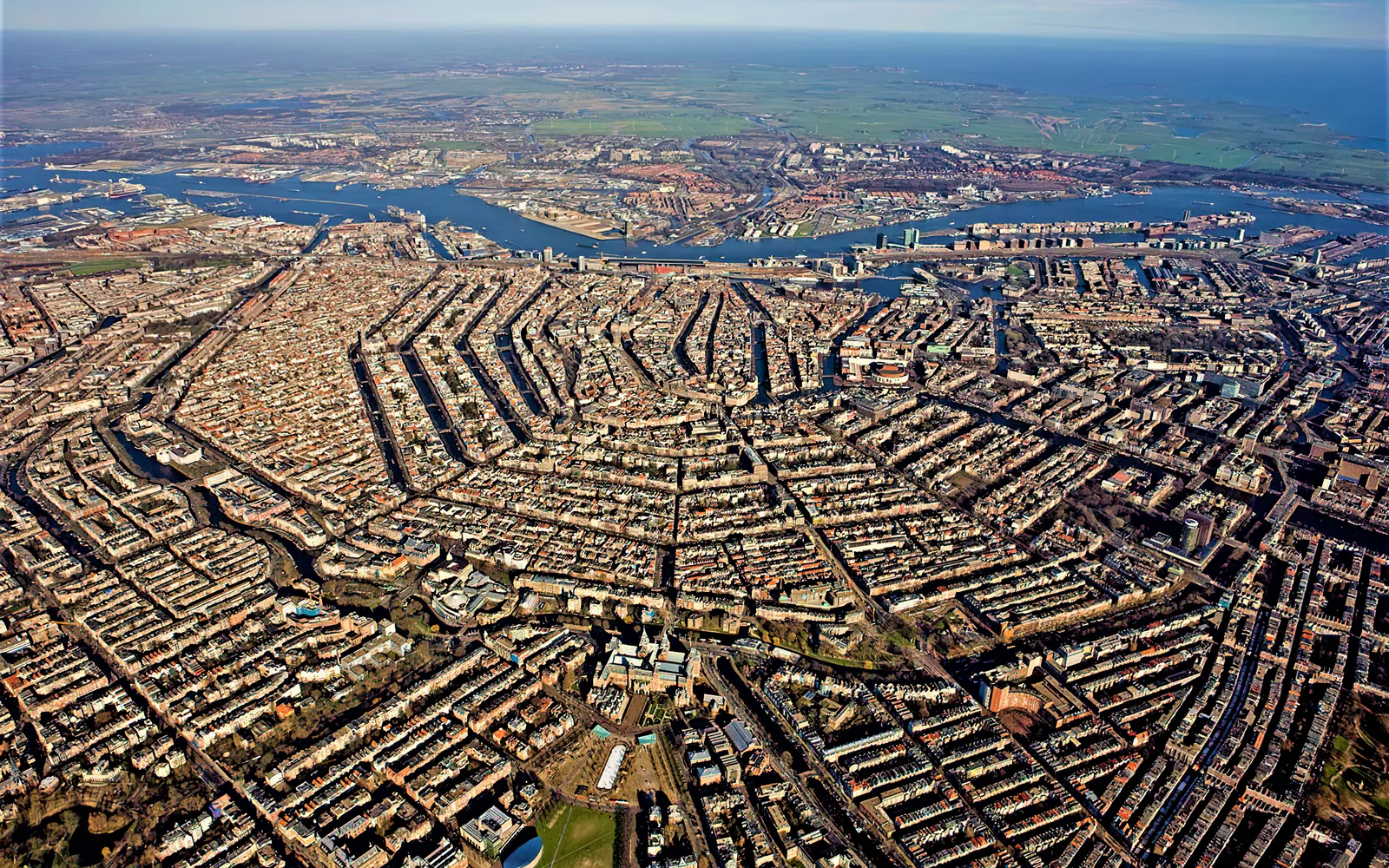
Dutch food rarely gets the international attention that French or Italian cooking does, but Amsterdam hides far more great eating than most visitors expect. Raw herring eaten standing at a market stall, bitterballen fried crisp alongside a cold beer in a century-old brown café, a fresh stroopwafel set on top of a hot coffee until the caramel centre softens — everything is reasonably priced and easy to find across the city. You don't need to travel far to eat well here.
 #1
#1 Stroopwafel
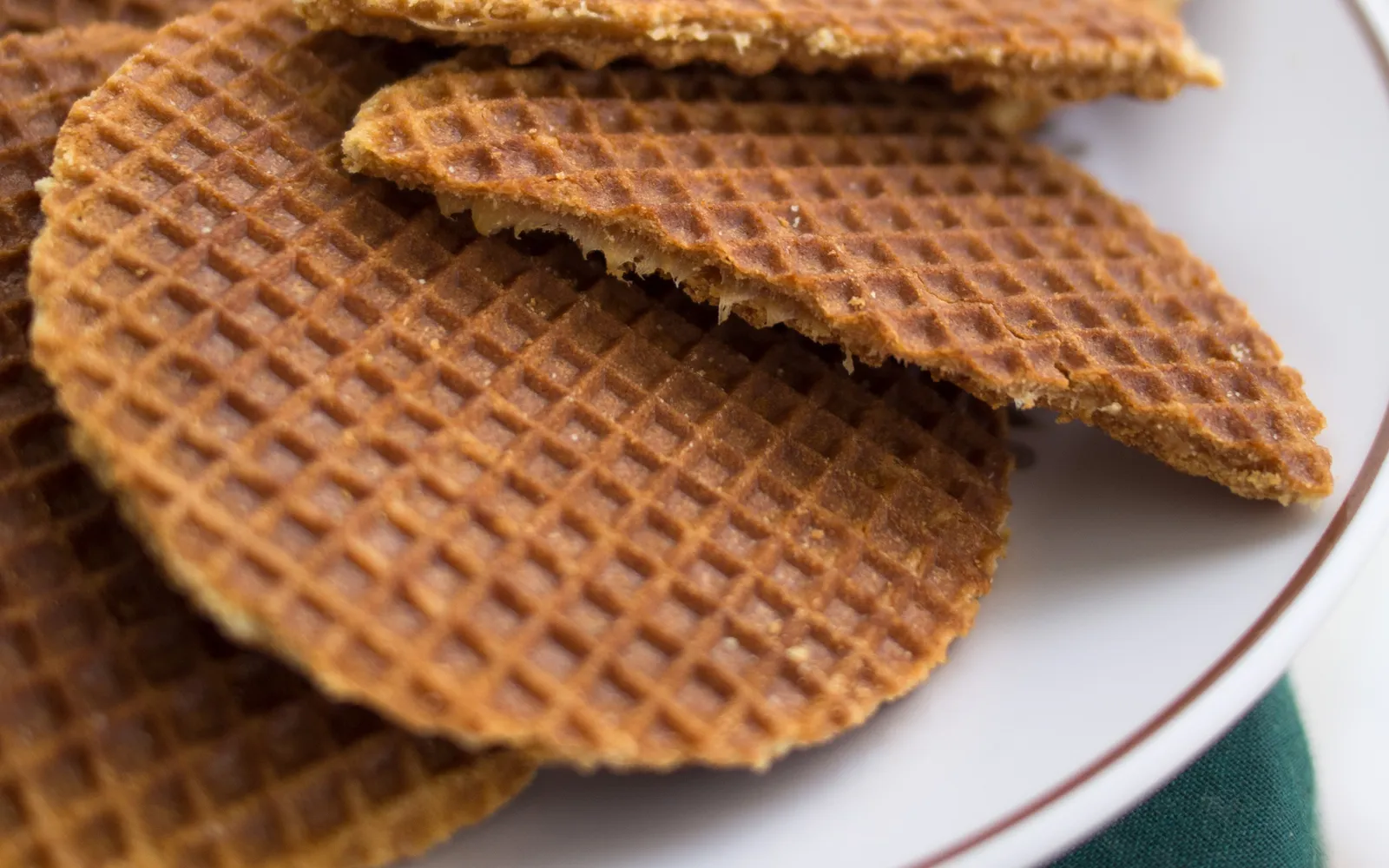
The most iconic Dutch baked good, invented in the city of Gouda around 1810. Two thin, crisp waffle rounds are pressed together with a warm cinnamon caramel filling — and a fresh-off-the-iron version is a completely different experience from the factory-packaged kind you find in airport shops. The traditional method: rest the stroopwafel on top of a hot cup of coffee or tea for 1–2 minutes so the steam softens the caramel in the middle. The shell stays crisp; the centre turns soft and sticky. Simple, but hard to forget.
- Buy fresh from a stall at Albert Cuypmarkt or from Van Wonderen Stroopwafels near Spui — eat it while it's still warm for the best possible flavour.
- Rest it on a hot cup of tea or coffee for one minute before eating. The steam softens the caramel and intensifies the aroma significantly.
- They make excellent gifts to bring home, but choose vacuum-sealed or well-packaged versions — loose ones lose their crispness quickly in transit.
 #2
#2 Soused Herring
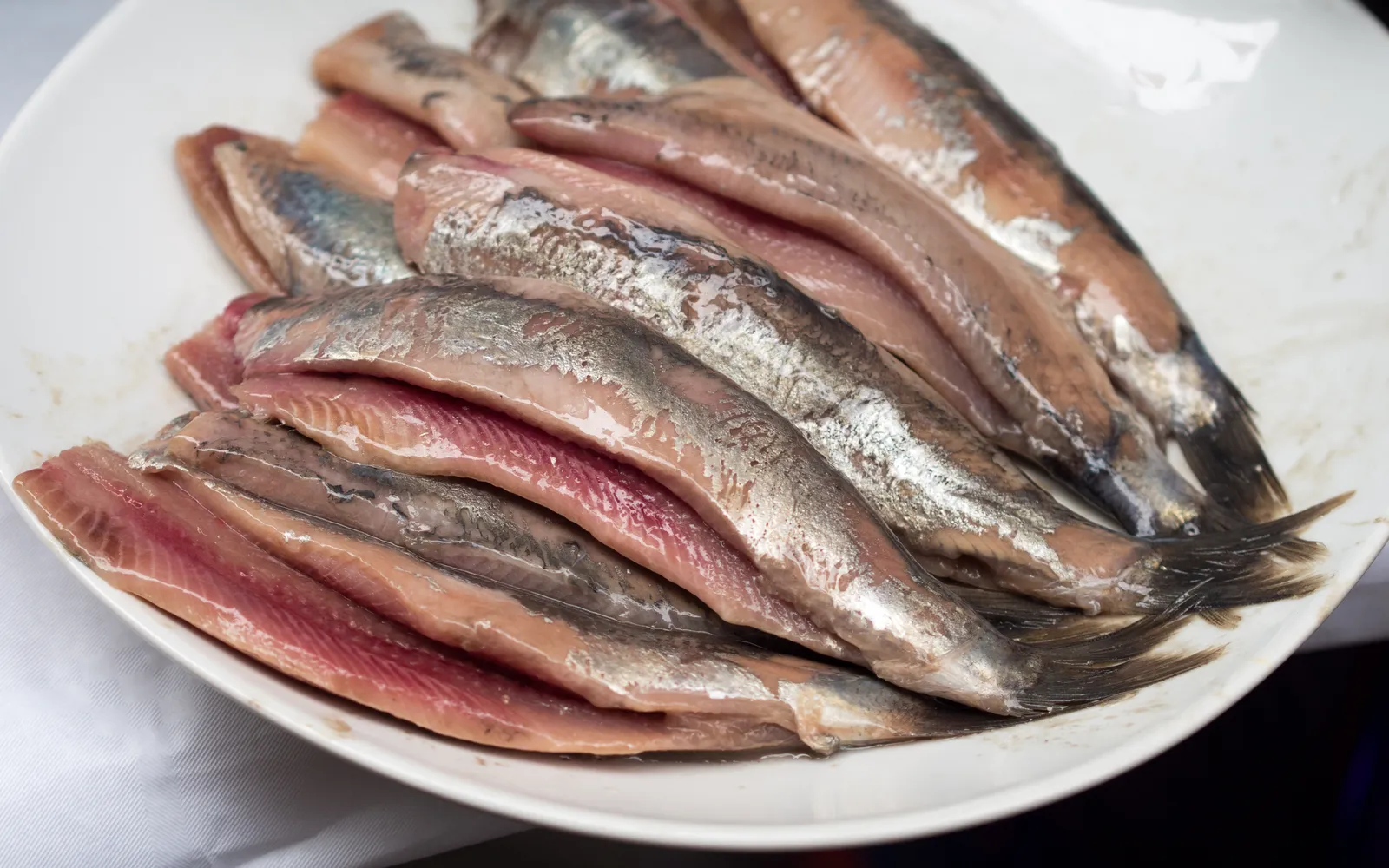
One of the oldest Dutch foods still eaten daily. Lightly salt-cured herring (maatjesharing) is caught in spring through early summer, served cold and raw with chopped raw onion and pickled gherkin. The classic Dutch way to eat it is to hold the fish by the tail, tilt your head back, and take bites. If that feels too committed, order it sliced into pieces in a small cup instead. The flavour is mildly salty and creamy — nothing like sardines or other pickled fish — provided the herring is genuinely fresh.
- Find a Haringhandel stall with a queue of locals, not the tourist-facing stands right outside Centraal Station that charge twice the price.
- Ask when the fish arrived. Same-day or yesterday's catch tastes noticeably better. June and July are peak new-season herring — the best time of year.
- Stalls charge €3–5 per serving, which is very good value for fresh seafood. It works well as a snack between sights.
 #3
#3 Bitterballen
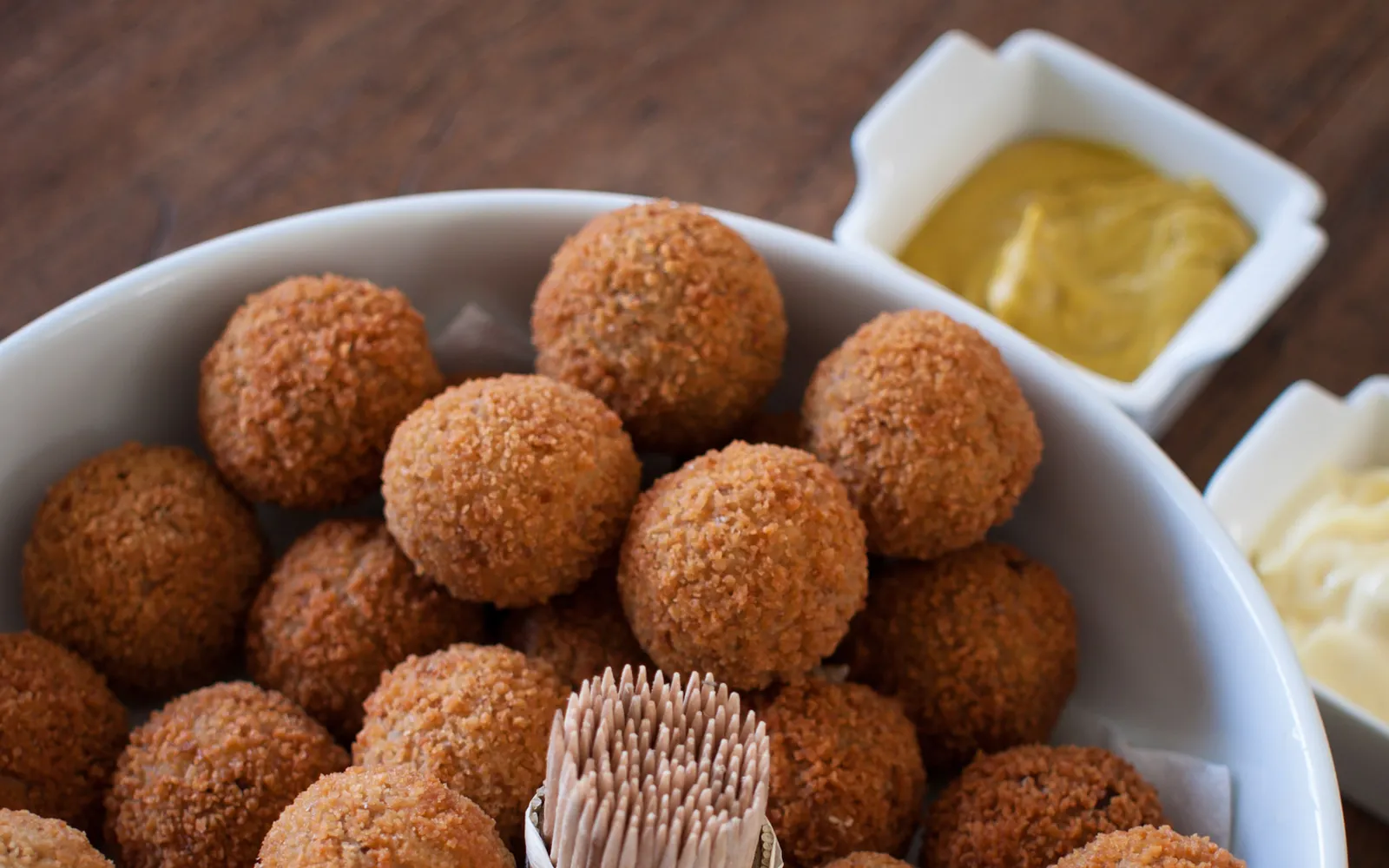
The classic Dutch bar snack, eaten alongside beer in brown cafés for several hundred years. Each ball is made from a creamy beef stew filling that is breaded and deep-fried until the outside is shatteringly crisp while the inside stays hot and soft. That inside temperature is worth respecting — bite one in half before eating the whole thing, because the filling stays scalding even five minutes after frying. Served with Dutch yellow mustard. You'll find them in every Amsterdam bar, but especially in the bruine kroeg (brown café) — old, smoke-stained pubs with Heineken on tap.
- Bite the ball in half before eating it whole — the filling stays extremely hot even after five minutes. Locals know this and never skip the step.
- Cafe Hoppe on Spui has been open since 1670. The bitterballen here are considered a benchmark version.
- A plate runs €6–9. Order with a draft Heineken or Amstel for the full Dutch experience — good value for a proper local bar session.
 #4
#4 Patat
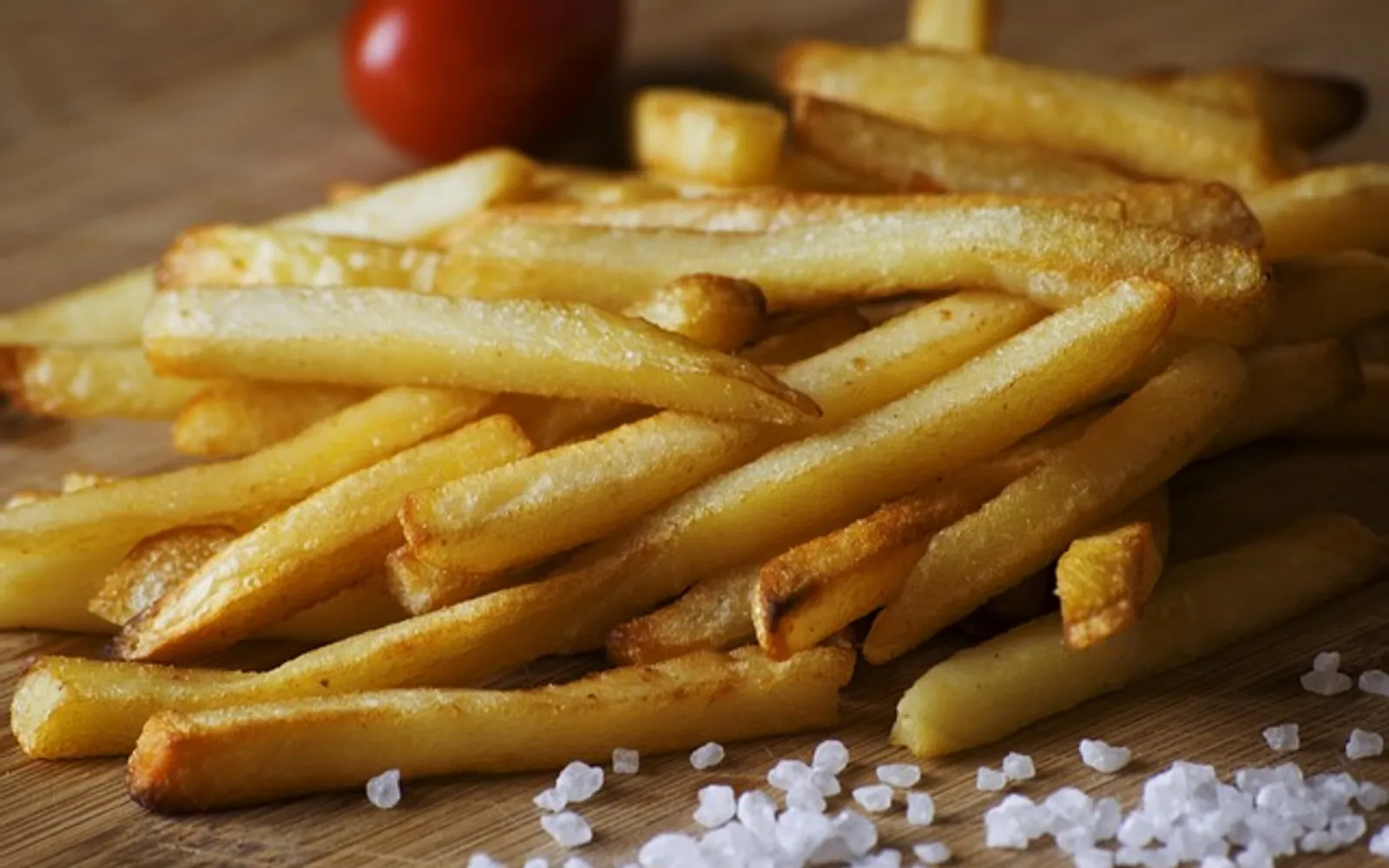
Dutch patat are not ordinary French fries. They are cut thicker, partially cooked, then fried twice until the outside is genuinely crisp while the inside stays fluffy. Served in a paper triangle cone loaded with sauce. The most authentically Dutch topping is Dutch mayo — thicker and slightly sweeter than standard mayonnaise, and distinctly different from the condiment most people picture. Other options include satay (peanut sauce), Oorlog (mayo + peanut sauce + raw onion), and ketchup, but locals almost always order plain mayo.
- Order mayo straight or Oorlog (mayo mixed with peanut sauce and raw onion) for a genuinely Dutch experience — skip the ketchup.
- Vleminckx on Voetboogstraat near Spui has had a queue every day since it opened in 1957. Worth the wait.
- Eat immediately — Dutch frites lose their texture quickly and are worth nothing cold.
 #5
#5 Poffertjes
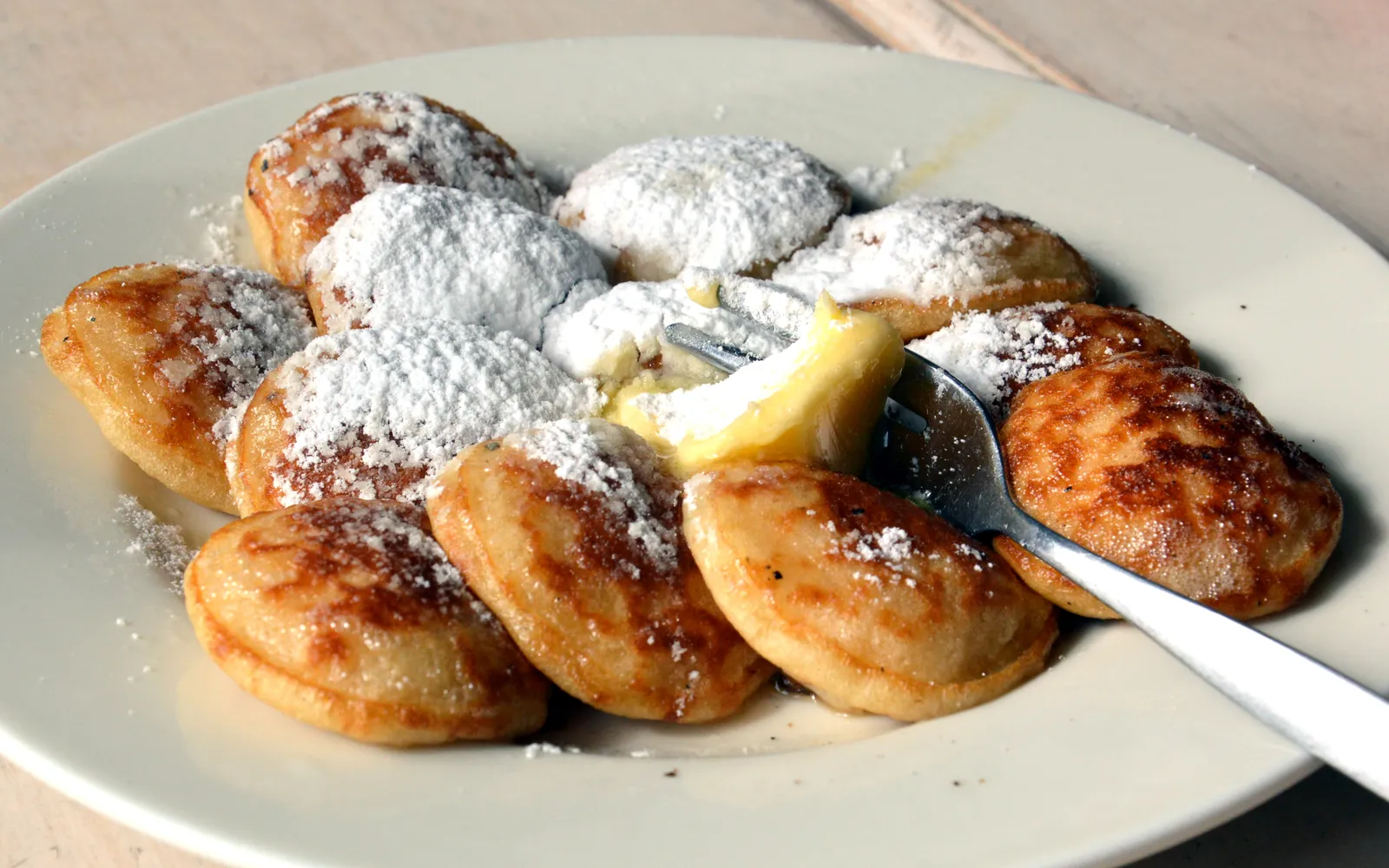
Small Dutch pancakes made in a special cast-iron pan with shallow round moulds. The batter uses buckwheat flour and yeast, which gives them a distinctively airy, light texture. Served hot with melted butter and a dusting of powdered sugar, they work as a dessert or an afternoon snack — one plate comes with 15–20 pieces, each about one bite. They are different from the large pannenkoeken that Dutch people eat as a main meal. Poffertjes are a festival and market staple that has been eaten by Dutch adults and children alike for centuries.
- Watch the cook flip each poffertje with a wooden skewer in the traditional method — it is part of the experience and genuinely satisfying to watch.
- Eat them immediately while hot. The butter soaks into the batter and the sugar melts just right — once cold, the flavour goes flat.
- Poffertjes in de Jordaan or the Albert Cuypmarkt stalls charge €3–5 per plate, which is reasonable.
 #6
#6 Gouda cheese
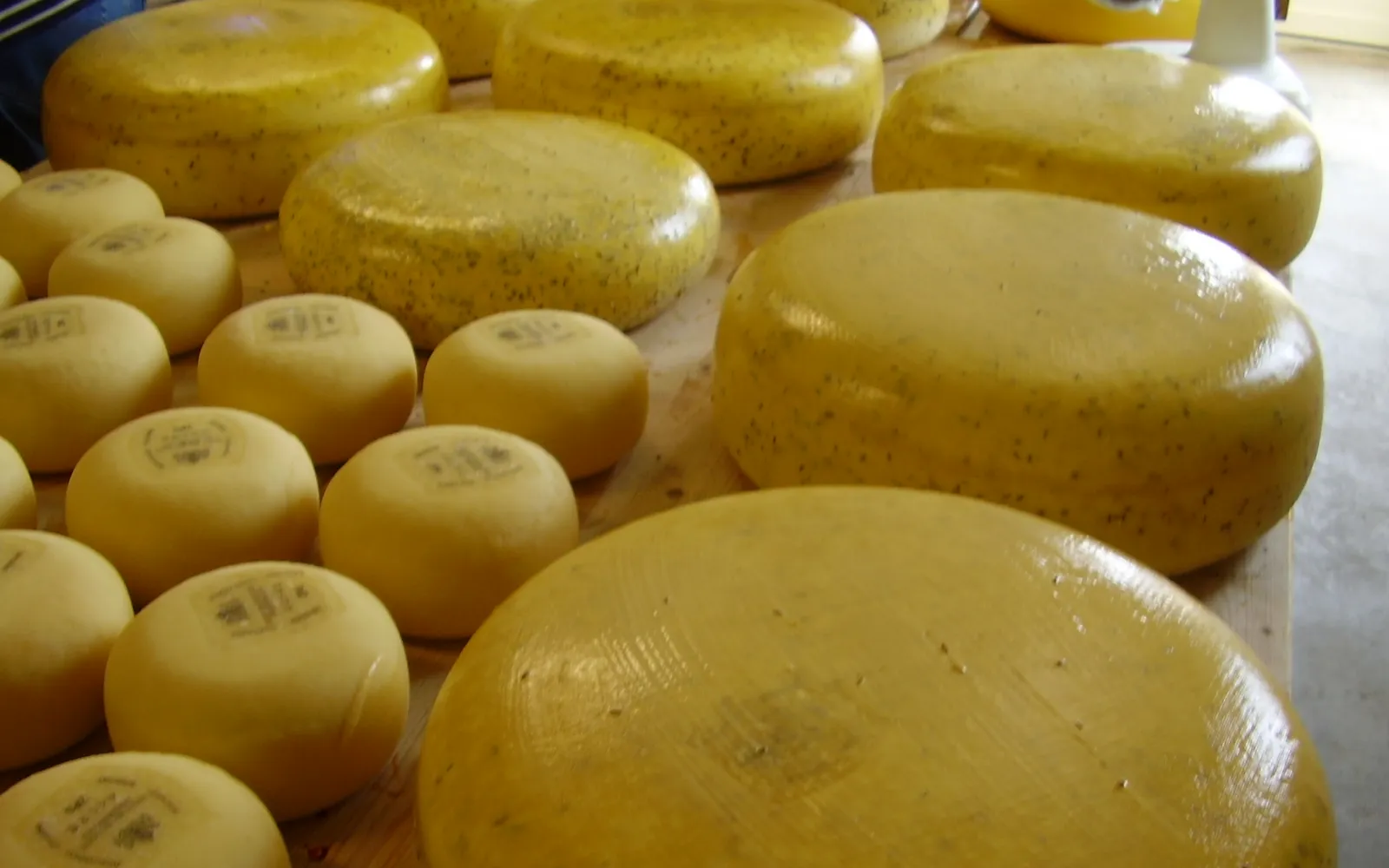
The Netherlands is the world's largest cheese exporter, and Amsterdam is one of the easiest places to find good-quality cheese at sensible prices. Age makes a dramatic difference with Gouda: young Gouda is soft and milky, medium-aged is firmer with a nutty edge, and extra-aged becomes hard, crystalline, and intensely flavoured. A good cheese shop will always let you taste before you buy — ask freely and try several.
- Always ask to taste before buying. Dutch cheese shops treat this as completely normal — it is not an imposition.
- Aged Gouda (1–2 years old) travels well and keeps longer than soft cheese, making it a practical choice to bring home.
- De Kaaskamer on Runstraat in the Jordaan stocks over 300 varieties and the staff speak English and give genuinely useful recommendations.
Where to stay in Amsterdam for this trip
A well-located hotel means less commuting and more sightseeing. Here are real, top-rated stays in Amsterdam — compare Agoda · Booking · Trip.com in one click.
Mr. Jordaan
Affiliate links — we may earn a commission at no extra cost to you. Details
Motel One Amsterdam-Waterlooplein
Affiliate links — we may earn a commission at no extra cost to you. Details
NH Collection Amsterdam Barbizon Palace
Affiliate links — we may earn a commission at no extra cost to you. Details
Park Plaza Victoria Amsterdam
Affiliate links — we may earn a commission at no extra cost to you. Details
Tours, tickets & activities in Amsterdam
Day tours, attraction tickets and travel essentials for Amsterdam — book ahead on Klook with mobile e-tickets.
Affiliate links — we may earn a commission at no extra cost to you.
Before You Pack
The best Dutch food in Amsterdam is almost always found at fresh markets, small canal-side shops, and the kind of local bar where people stop for a drink on the way home. Albert Cuypmarkt — the largest open-air market in the Netherlands, open Monday through Saturday — covers fish, cheese, pastries, and fresh produce in a single walk. If you have more than two days in the city, it is not worth skipping.