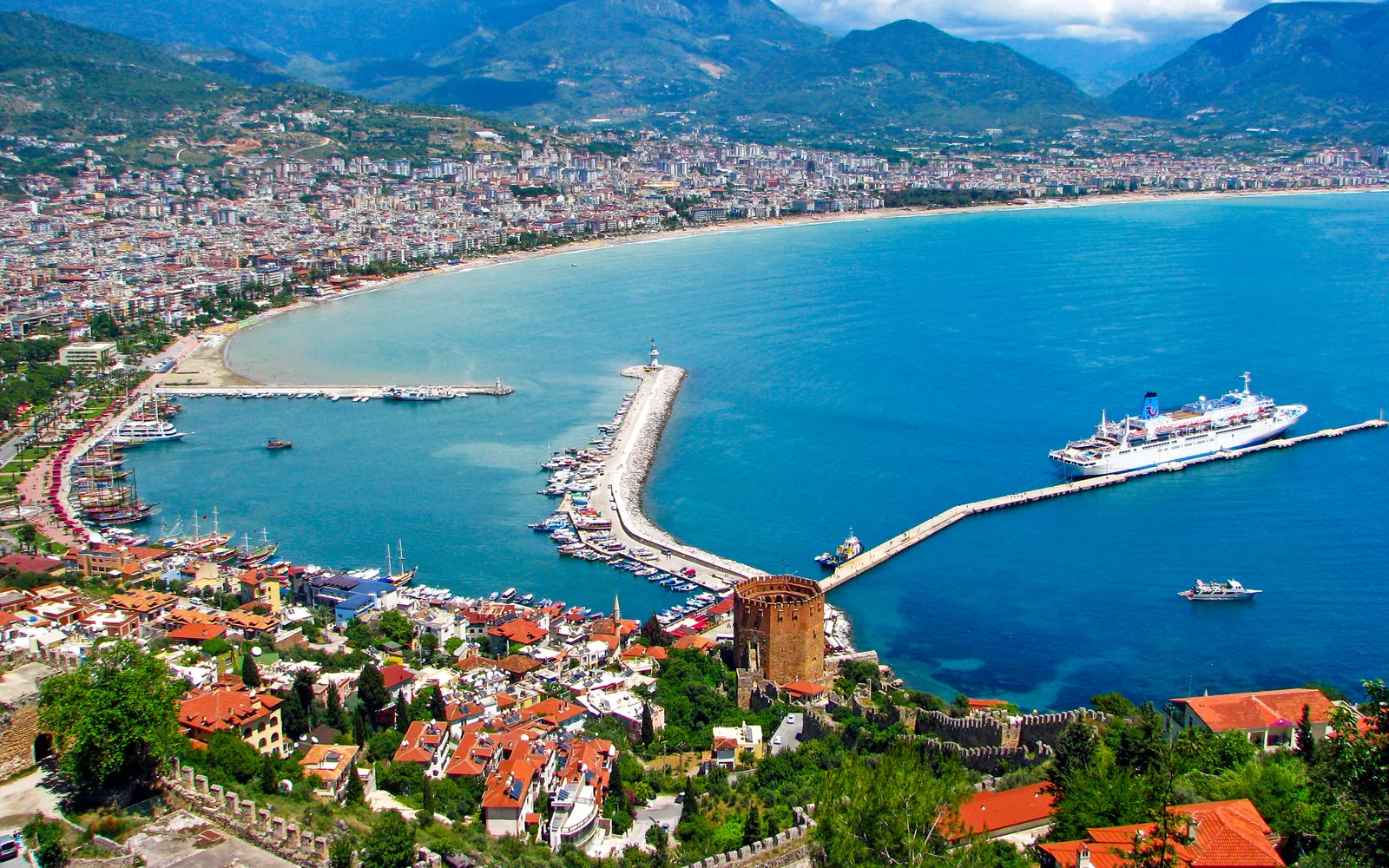
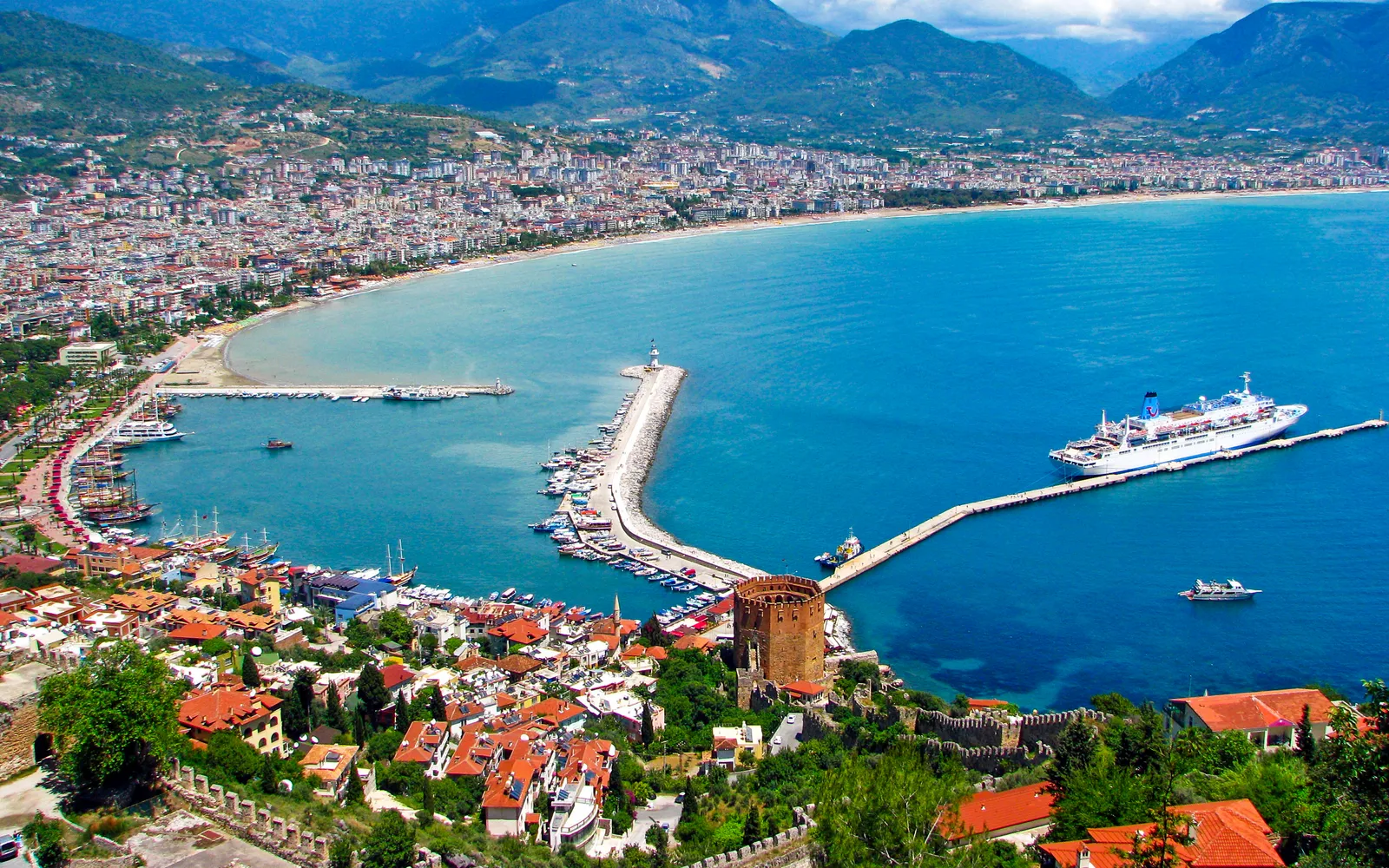
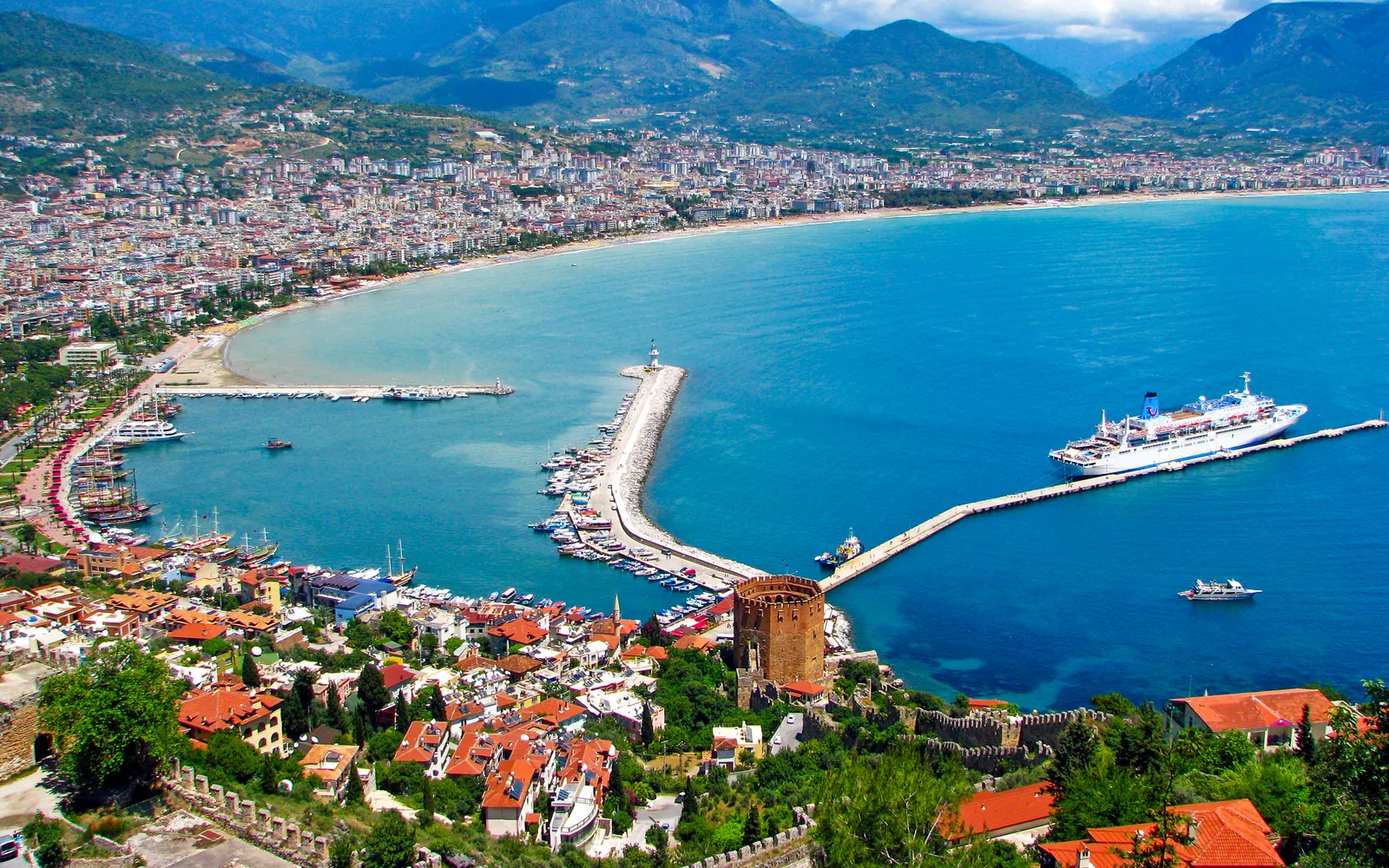
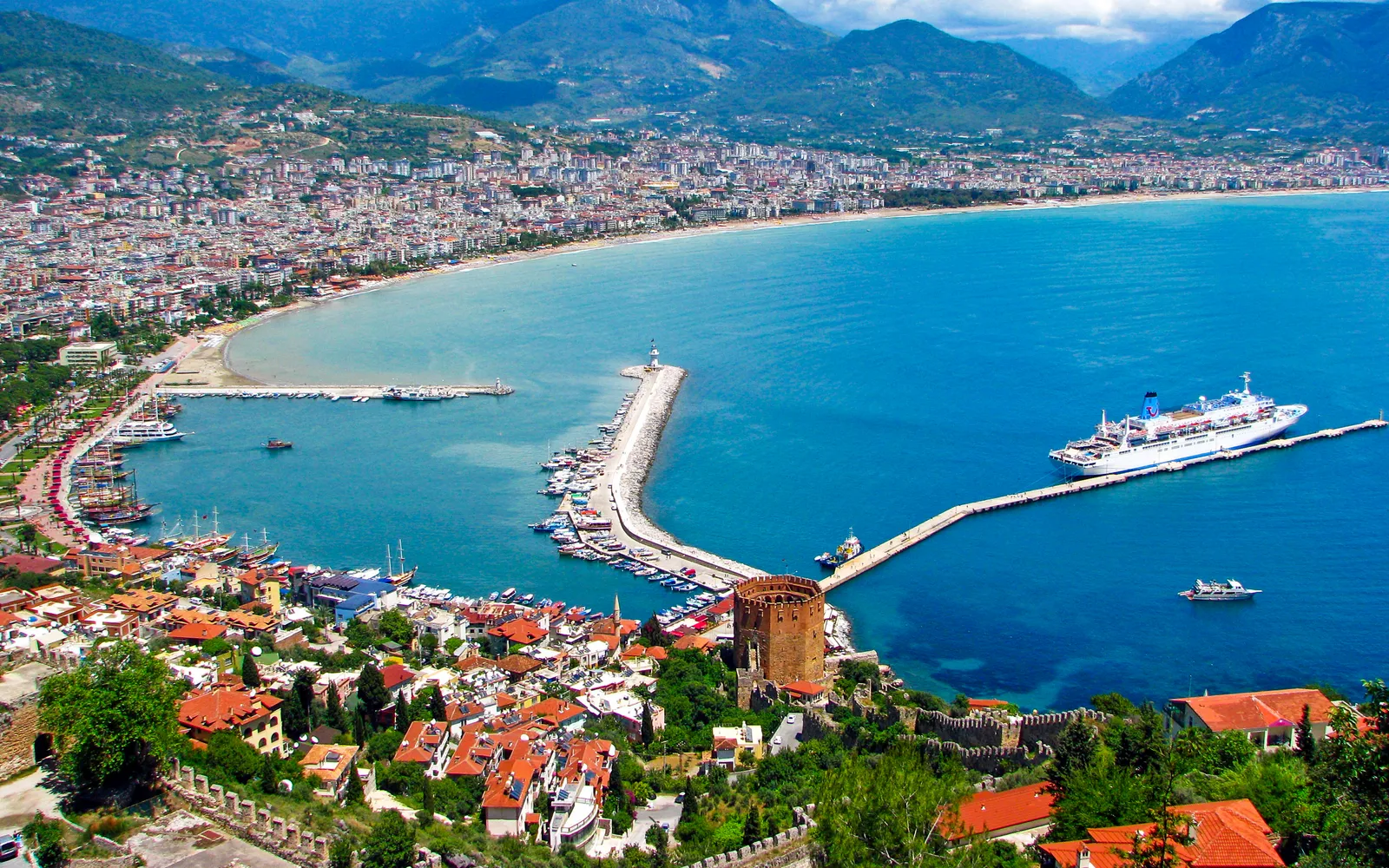
Alanya is more than a beach resort — it's a history-laden town perched on a rocky peninsula jutting into the Mediterranean. The Seljuk castle crowning a 250-metre cliff and the 800-year-old Red Tower guarding the harbour are proof that this was once a vital port of the Anatolian kingdoms. Then there's Cleopatra Beach: fine white sand, warm sea, and that particular shade of deep blue that explains why so many travelers come back season after season.
 #1
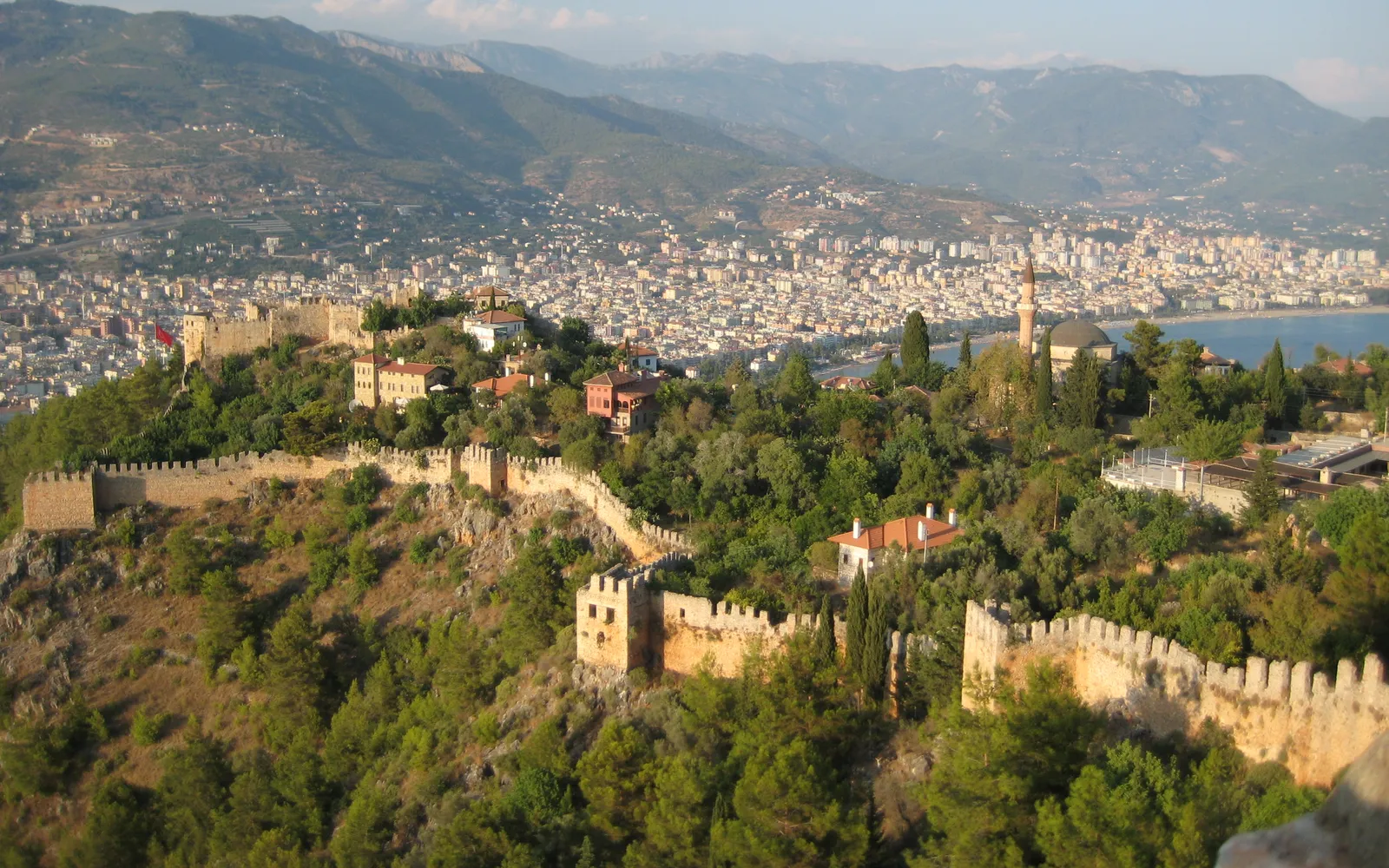
#1 Alanya Castle
A castle on a 250-metre rocky peninsula, built by Sultan Alaeddin Keykubad I of the Seljuk dynasty in 1226. More than 6.5 kilometres of stone walls wrap the entire headland. From the summit you get a full 360-degree panorama — sea, mountains, and town spread below. Byzantine churches, ancient cisterns, and the castle interior are all well preserved and worth exploring. Budget at least 2 hours.
- Take the shuttle bus from the lower town (around 20–30 lira) to save your legs, then walk the historic path back down at your own pace.
- Admission is around 200 Turkish lira; open daily 08:00–19:00. The western battlements have the best sea views.
- It gets very hot at the top in summer — bring a hat and plenty of water.
 #2
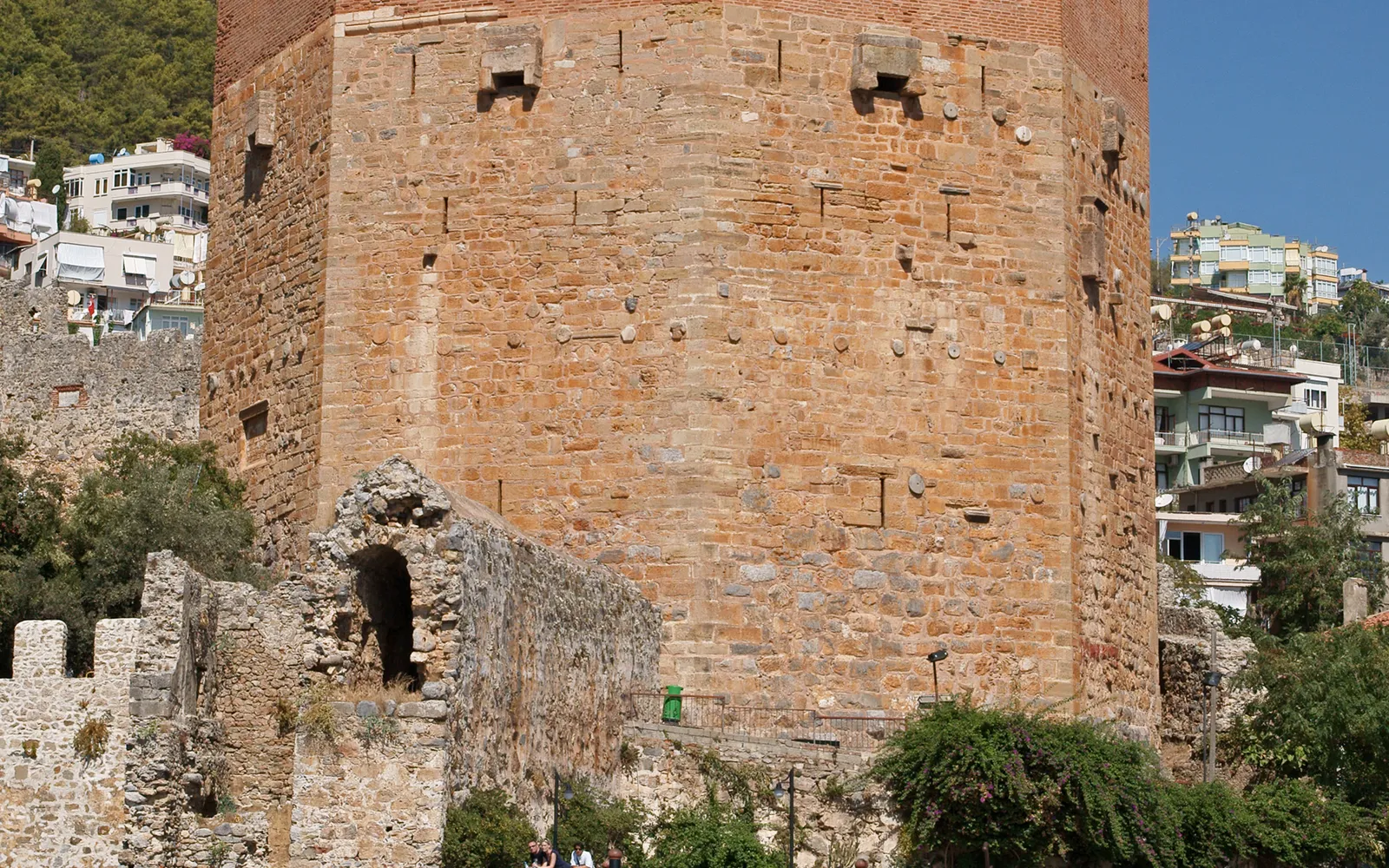
#2 Red Tower (Kizil Kule)
Alanya's most recognisable landmark — a 33-metre octagonal tower built by Sultan Keykubad I in 1225 to defend the harbour. The top floor offers a panoramic view of the port, castle, and open sea. Inside, an ethnography museum displays maritime tools, local costumes, and Seljuk-era artefacts. The building has been carefully restored and is the single most photogenic structure in town.
- Museum admission is around 60–100 lira; open 08:00–19:00. The Muzekart museum pass is accepted here.
- Come between 5 and 6 PM — golden-hour light hits the red brick walls at its best for photos.
- The harbour in front of the tower is the departure point for bay-tour boats; it's easy to book a sea excursion right here.
 #3
#3 Cleopatra Beach
Alanya's most celebrated stretch of sand — legend says Queen Cleopatra herself once swam here. The unusually fine quartz sand is soft underfoot, and the Mediterranean stays warm and clear all summer. At more than 2 kilometres long, it never feels overcrowded even at peak season. Sun loungers, restaurants, and water sports line the full length. Entry is free.
- The western end of the beach is quieter and cleaner. Avoid the central section between 11 AM and 3 PM when it's at its busiest.
- Sea temperatures here stay warm year-round — 25–29°C even into October, making it excellent for swimming well into autumn.
- Sun-lounger rental runs 100–150 lira per pair, umbrella included. Buy bottled water at a supermarket before you head down — it's cheaper than buying on the beach.
 #4
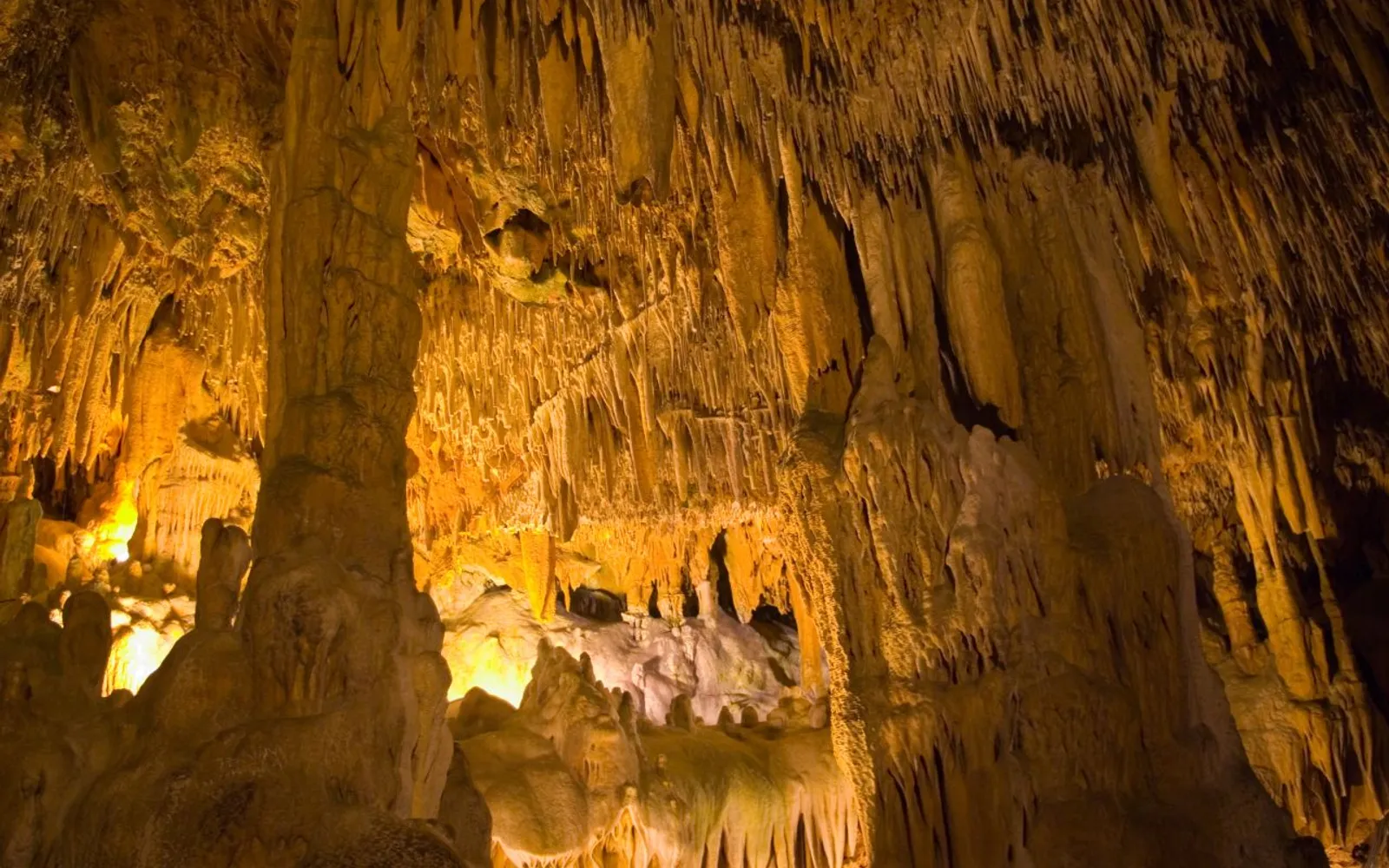
#4 Damlatas Cave
A stalactite and stalagmite cave discovered by accident in 1948 during harbour construction. Inside, the temperature holds steady at 22–23°C with humidity between 90 and 98%, conditions thought to help ease asthma, respiratory conditions, and allergies. The cave runs 50 metres deep, lined with impressive formations throughout. A visit takes only 15–20 minutes, but it's an easy add-on given that it sits right next to Cleopatra Beach.
- Admission is around 30–50 Turkish lira; open 10:00–19:00, closed Tuesdays — confirm before you go.
- The cave air is cool and very damp even on the hottest days outside — bring a light layer.
- You can walk straight here from Cleopatra Beach in 2–3 minutes, so it pairs perfectly with a morning swim.
 #5
#5 Pirates Cave (Alanya Cave)
A sea cave carved into the peninsula cliffs, reachable only by boat. Local legend holds that it was used as a pirate hideout in the Middle Ages. Emerald-green water reflects light far into the interior, making it one of the most photogenic stops on any boat tour. Peninsula boat trips typically visit this cave along with 2–3 others in a single package. It's an experience you simply can't have from shore, and the tour also gives you views of the cliff face and castle walls from the sea.
- Peninsula boat tours (around 300–500 lira per person) depart from the Red Tower harbour every morning, lasting 2–3 hours and covering several caves.
- Morning departures mean calmer seas and better light inside the caves — afternoon trips can get choppy.
- Wear sandals with grip and bring a towel; some operators stop at a sheltered bay for a swim along the way.
 #6
#6 Alanya Shipyard (Tersane)
An 800-year-old dry dock considered the best-preserved ancient shipyard in the world. Built by Sultan Keykubad I alongside the Red Tower in 1228, its five pale-sandstone arched bays open directly to the sea. The yard was used to build and repair Seljuk warships. Today you can enter on foot from a gate above, or glide past by boat. The sight of the arched bays reflected in green Mediterranean water is genuinely striking.
- Entry on foot from the land side is free — walk down the stairs from the road above, or approach from the harbour.
- Boat tours of the peninsula pass directly in front of the arched bays, which gives a better photo angle than standing inside.
- The stone walls still carry Seljuk inscriptions and architectural details worth examining — allow 20–30 minutes to look around properly.
Where to stay in Alanya for this trip
A well-located hotel means less commuting and more sightseeing. Here are real, top-rated stays in Alanya — compare Agoda · Booking · Trip.com in one click.
Sunprime C-Lounge (Adults Only)
Affiliate links — we may earn a commission at no extra cost to you. Details
Caligo Apart Hotel
Affiliate links — we may earn a commission at no extra cost to you. Details
Oba Star Hotel — Ultra All Inclusive
Affiliate links — we may earn a commission at no extra cost to you. Details
HMA Apart Hotel
Affiliate links — we may earn a commission at no extra cost to you. Details
Tours, tickets & activities in Alanya
Day tours, attraction tickets and travel essentials for Alanya — book ahead on Klook with mobile e-tickets.
Affiliate links — we may earn a commission at no extra cost to you.
Before You Pack
Alanya is at its best in April–June and September–October, when the weather is pleasant and crowds are thinner than the summer peak. July and August are hot and busy. Plan for at least 3–4 days to cover the castle, caves, beach, and harbour properly.